Specimen set 2: Paper 1 96 marks · 18 question parts · Paper, mark scheme and report on AQA's site
This paper was set on the previous specification. 3 parts are on content removed in the 2025 specification and are marked "Old spec only".
Question by question The questions Show old-spec parts
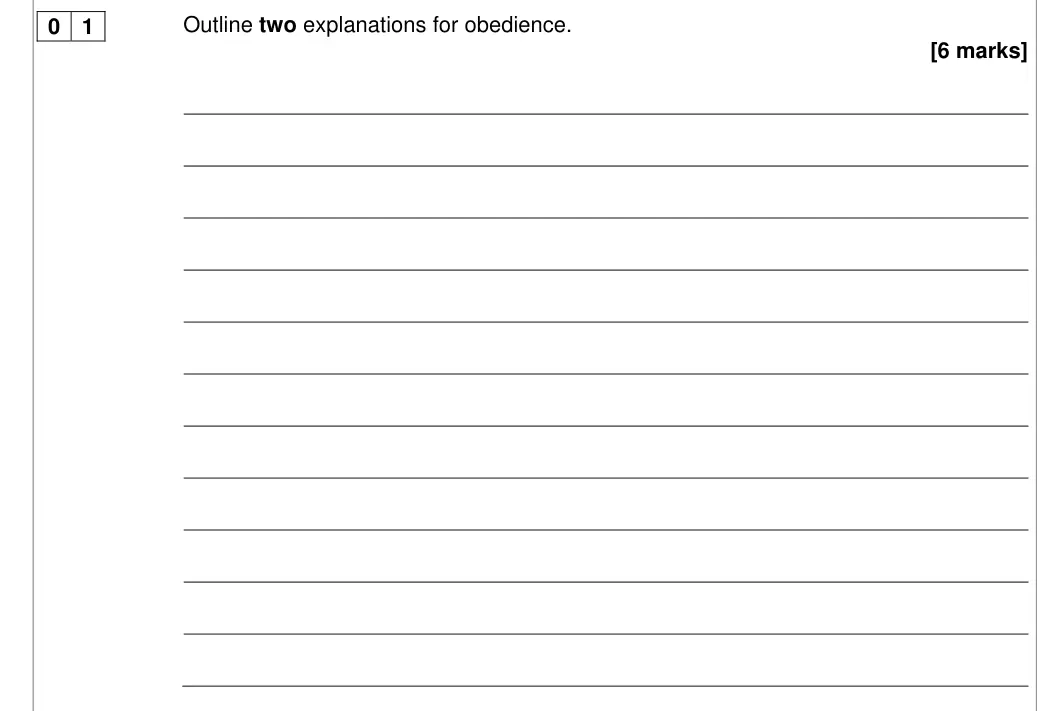
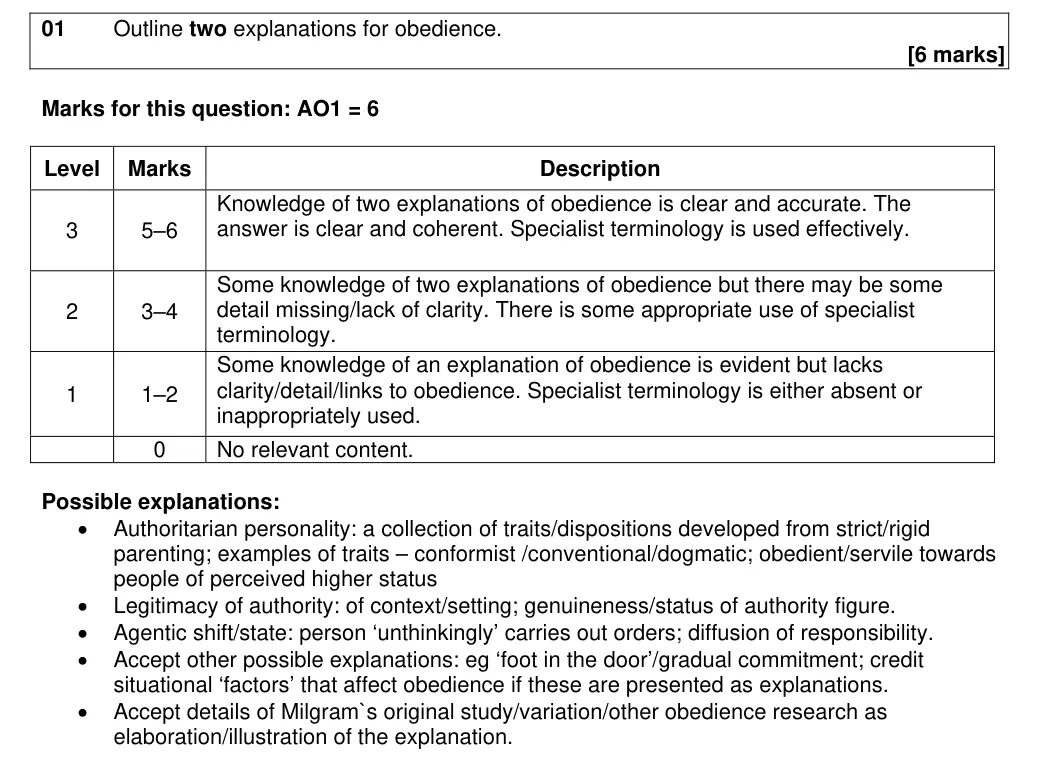
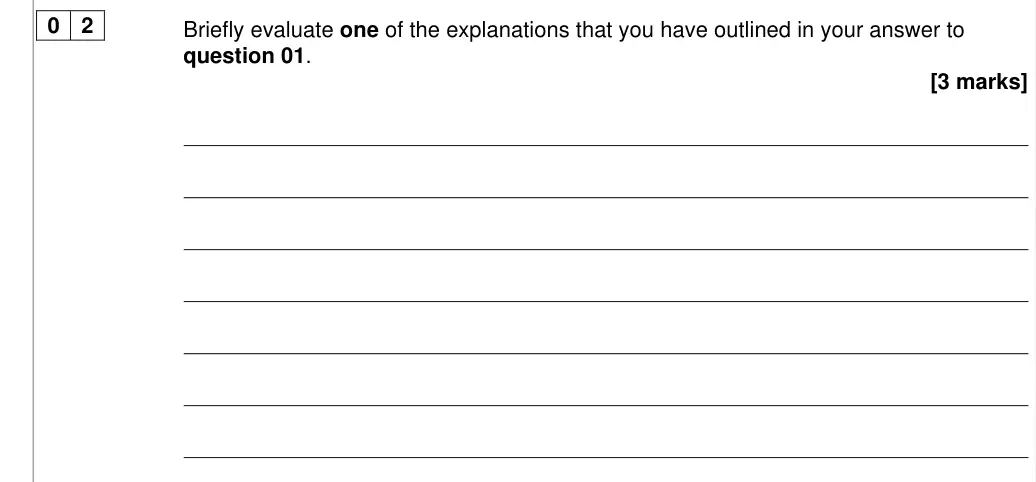
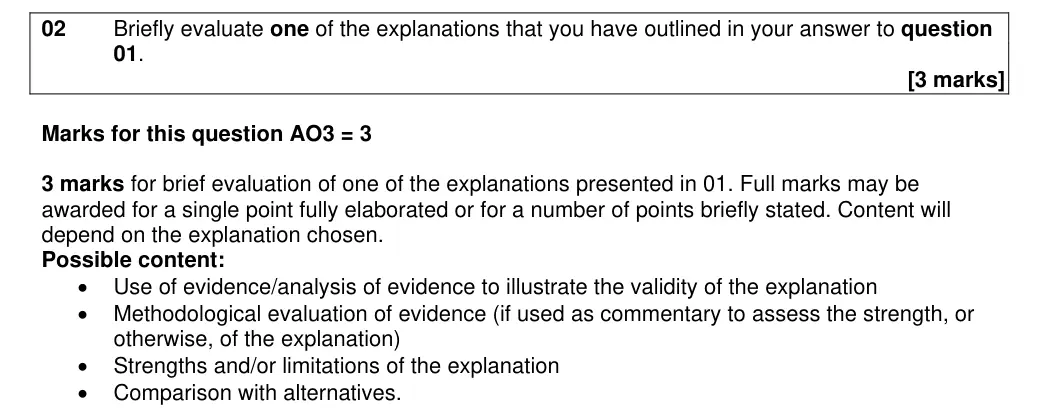
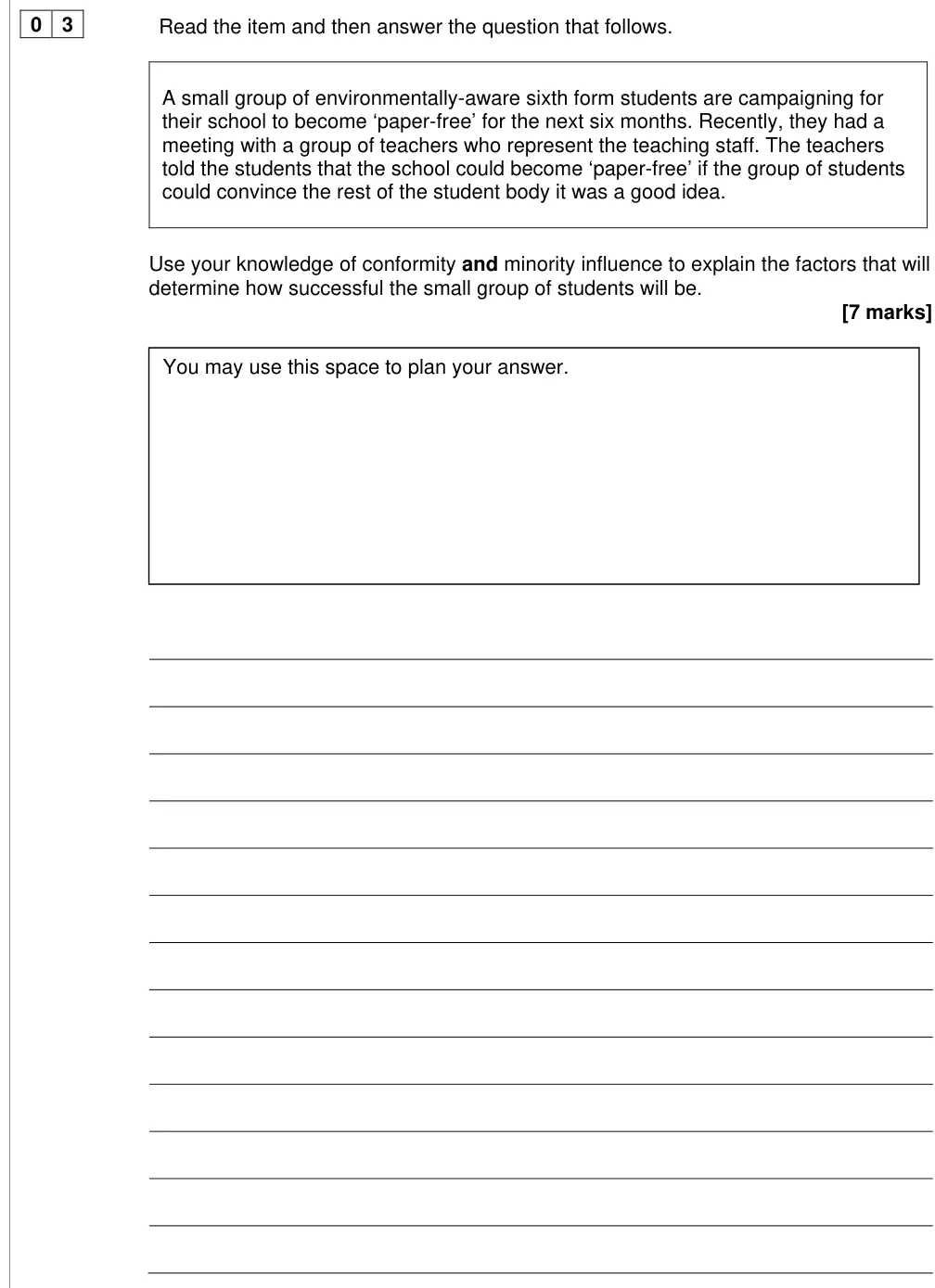
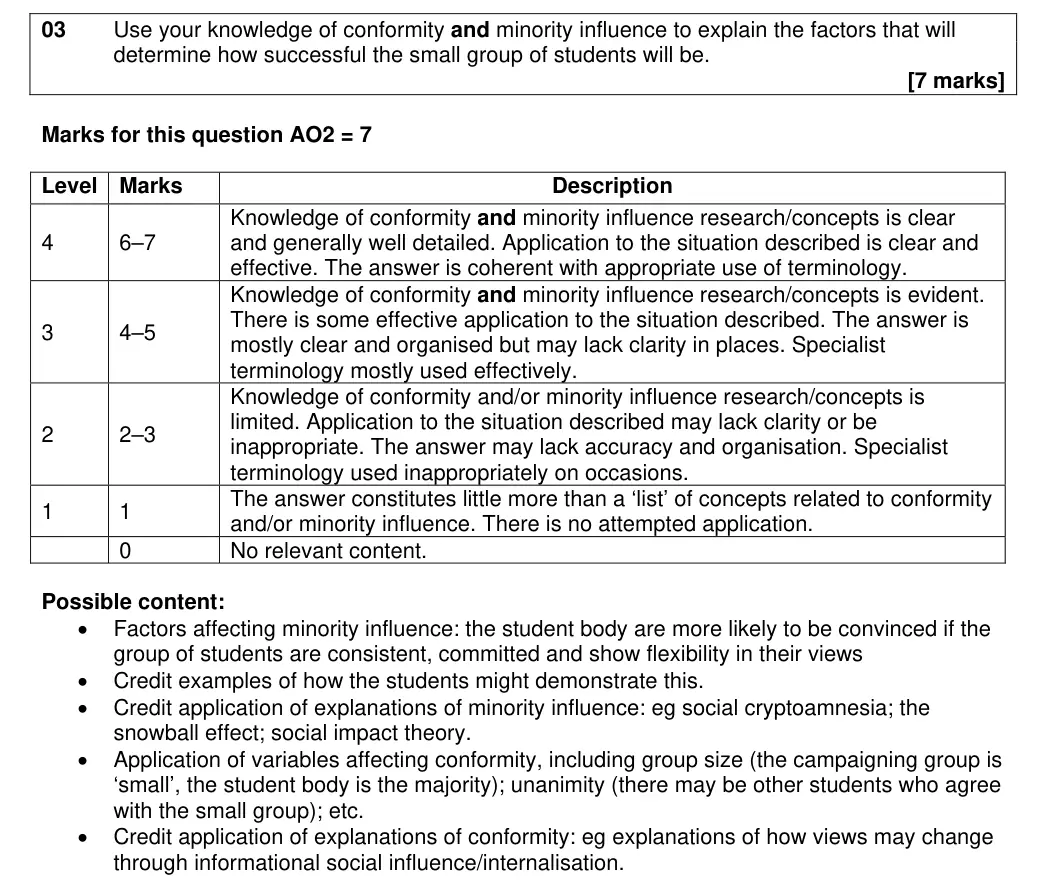
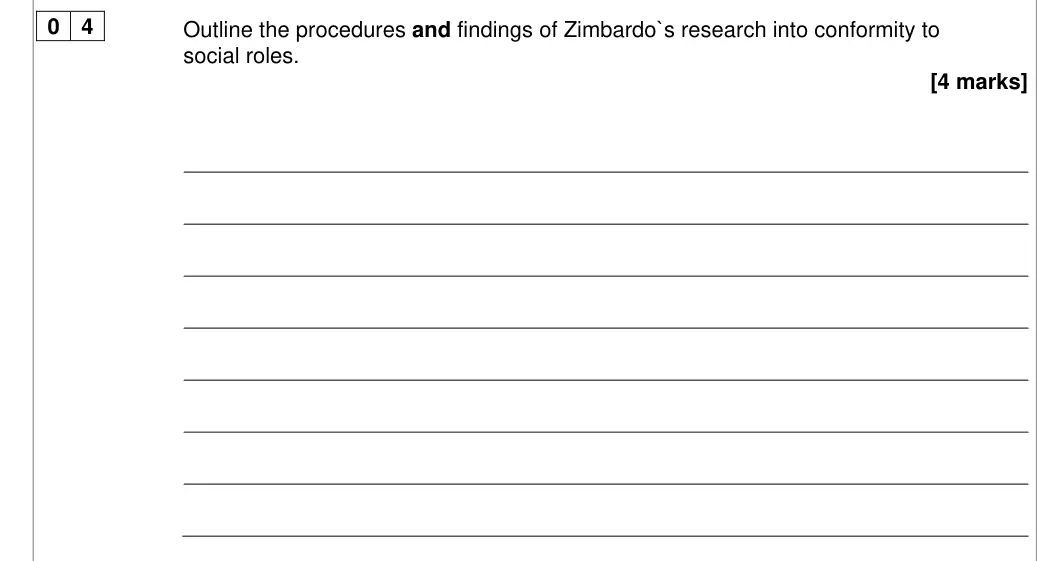
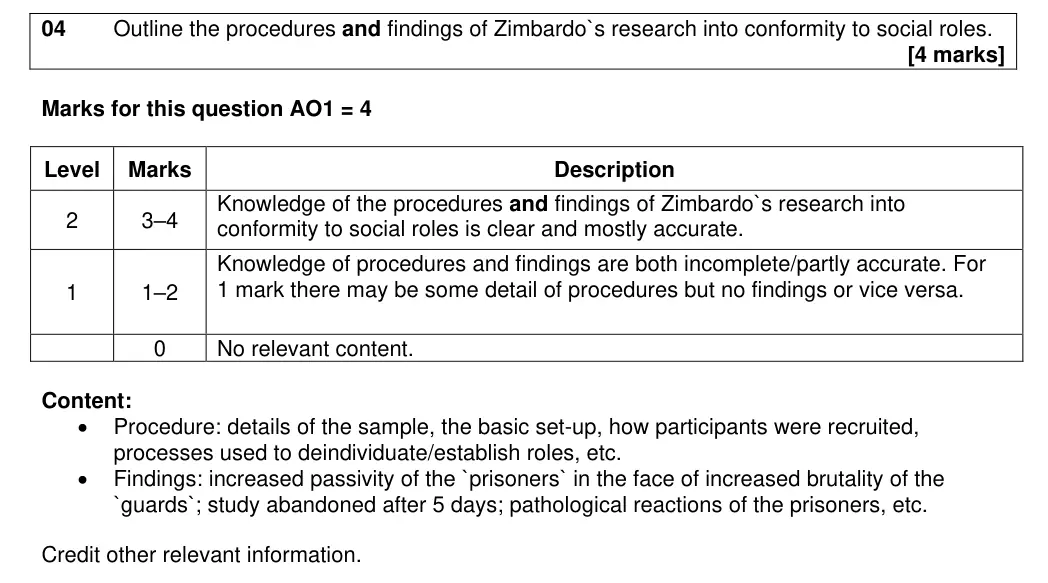
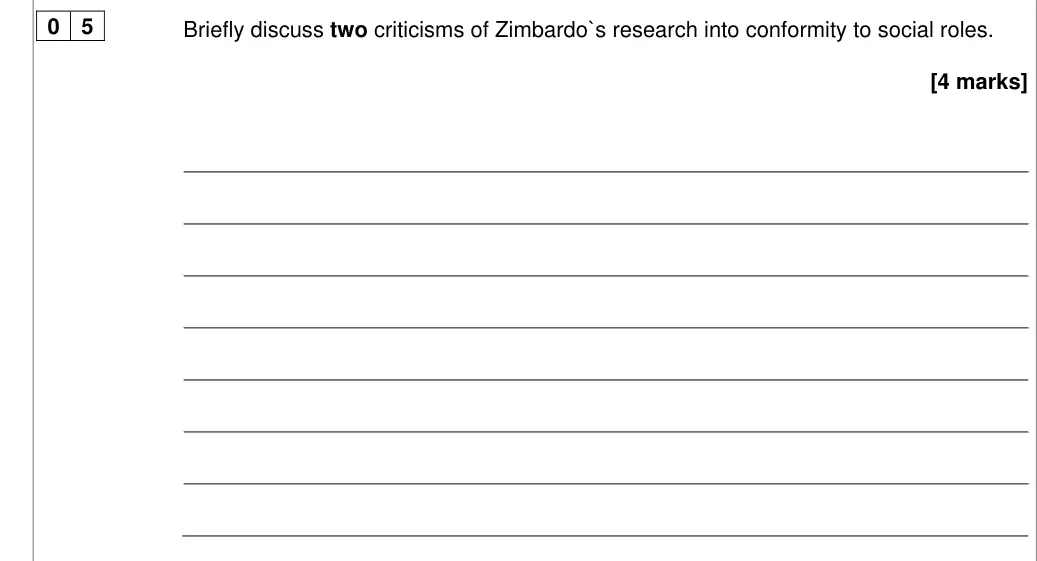
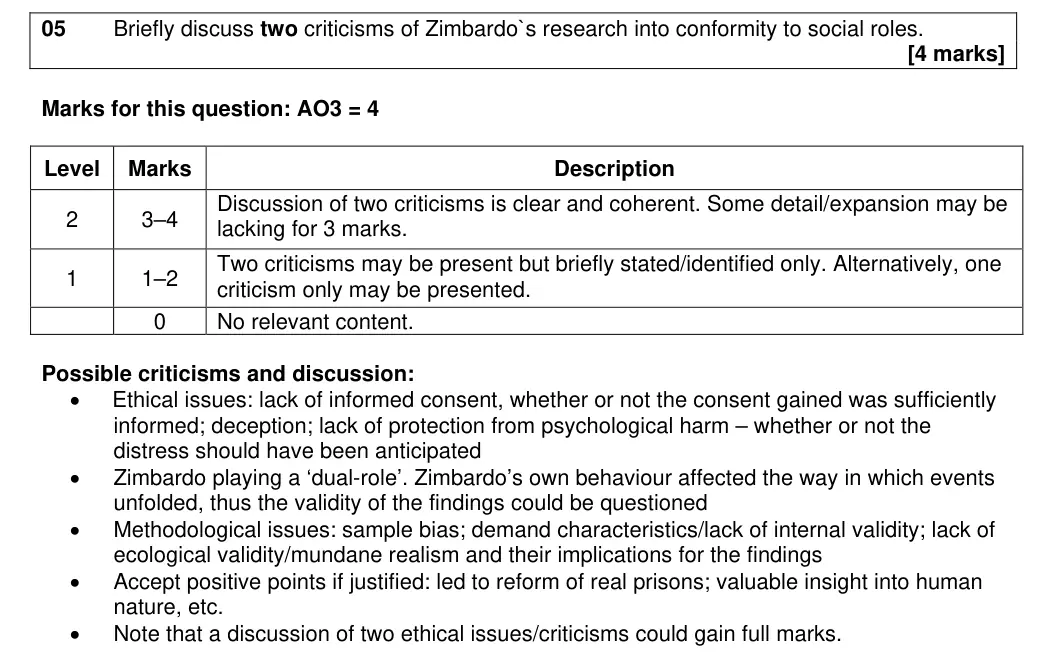
Mark scheme, including level descriptors and indicative content Notes from the mark scheme and report e.g. authoritarian personality, legitimacy of authority, agentic state gradual commitment and situational factors accepted if presented as explanations Milgram research credited as elaboration Mark scheme, including level descriptors and indicative content Notes from the mark scheme and report evaluation of one explanation from 01: evidence, methodology only as commentary on the explanation, strengths/limitations, comparison one elaborated point or several brief points Mark scheme, including level descriptors and indicative content Notes from the mark scheme and report consistency, commitment, flexibility applied to the campaigning students group size and unanimity, informational social influence/internalisation a list of concepts with no application = 1 mark MS also credits social cryptomnesia/snowball effect (social change), removed in v1.4 Mark scheme, including level descriptors and indicative content Notes from the mark scheme and report (procedures and findings of Zimbardo's Stanford prison study conformity to social roles removed in v1.4) procedures without findings or vice versa = max 2 Not on the 2025 specification: criticisms of Zimbardo's research into conformity to social roles, removed in v1.4
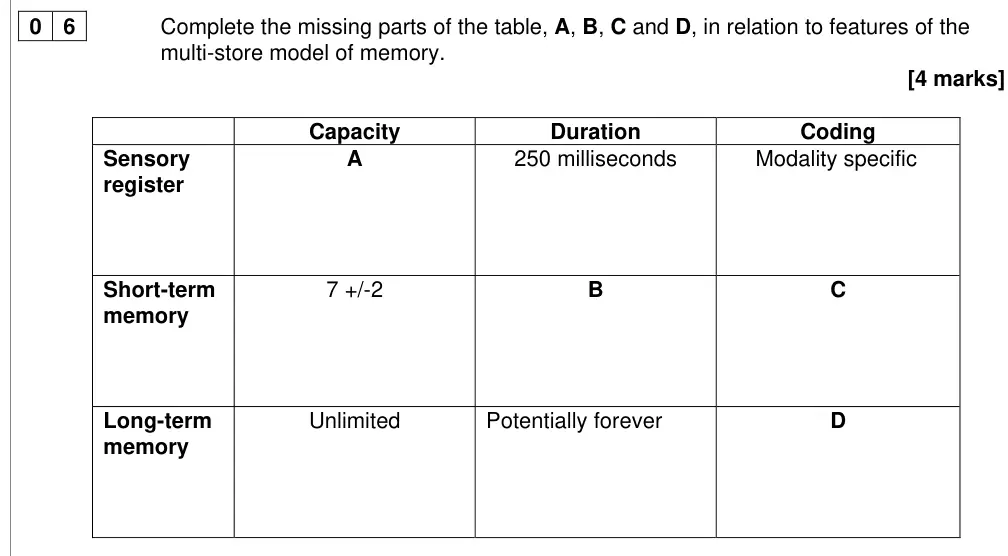
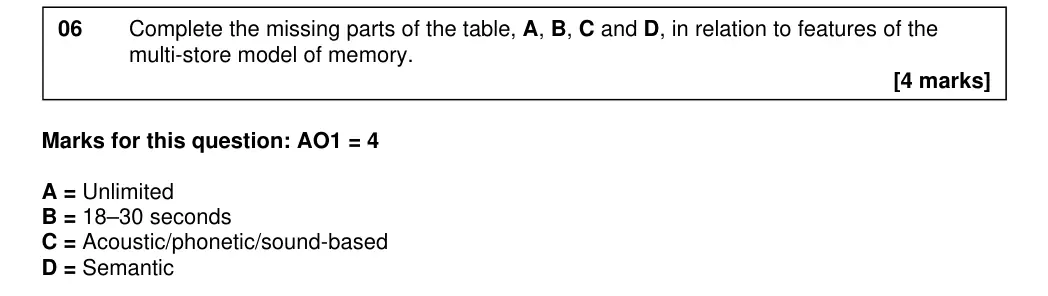
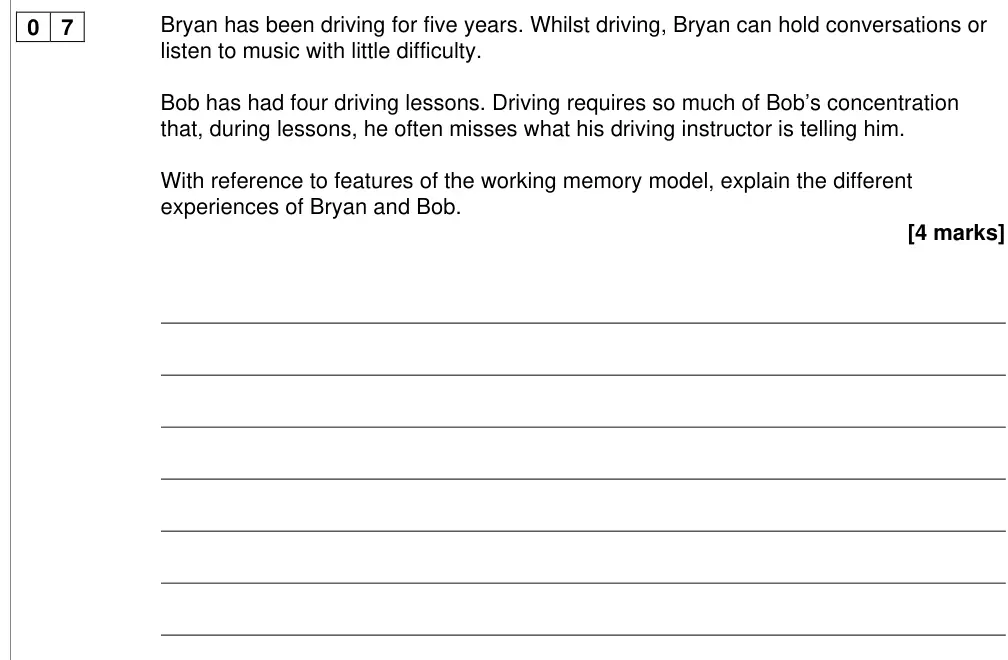
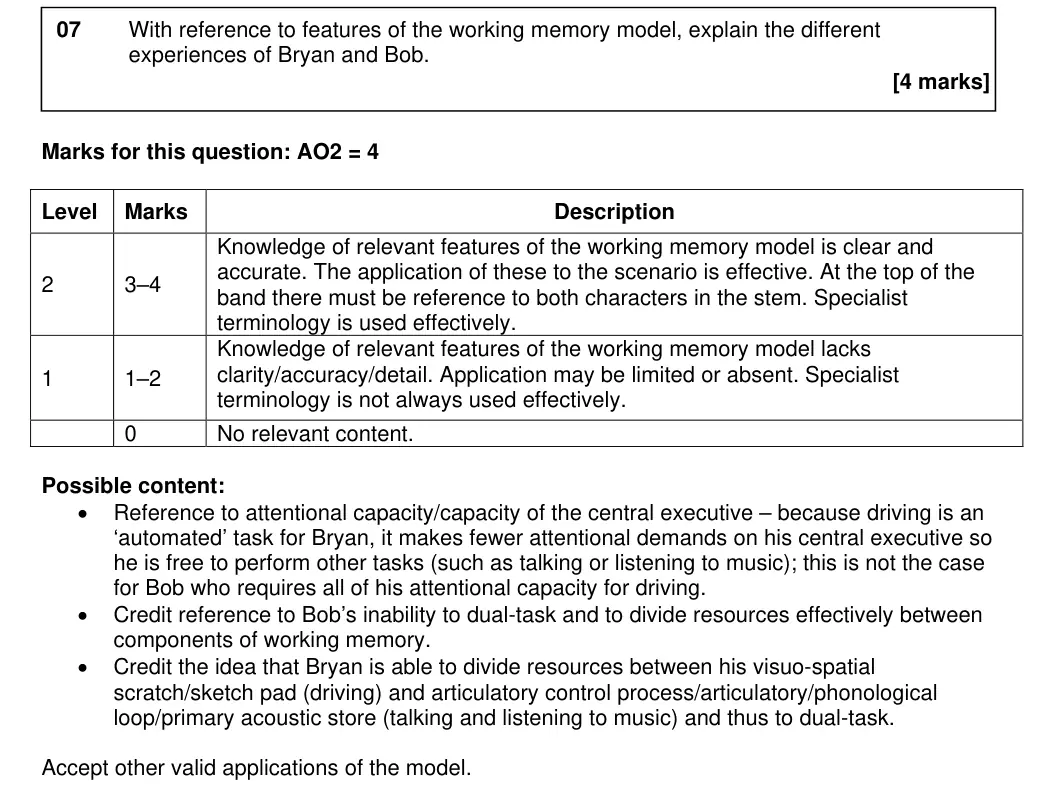
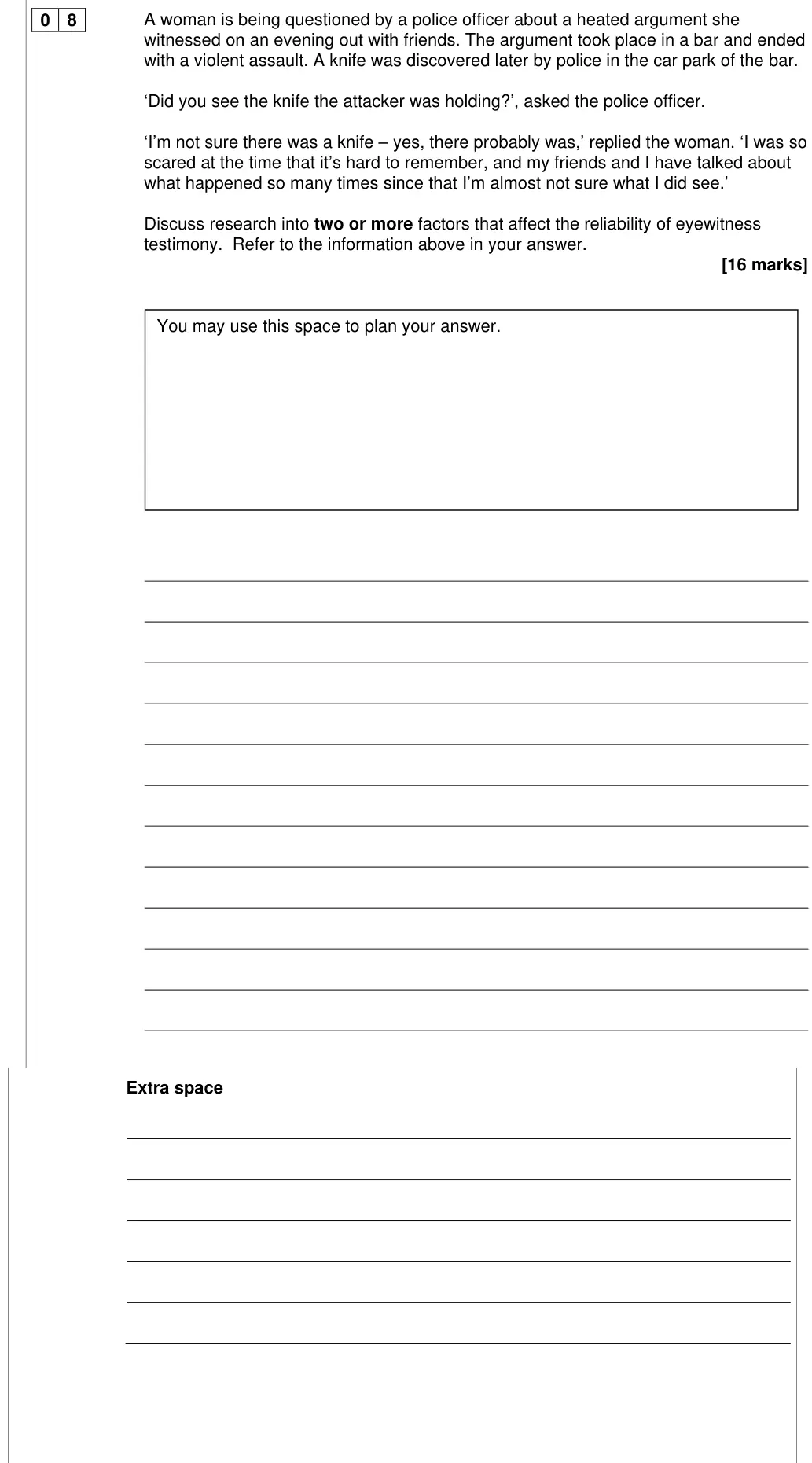
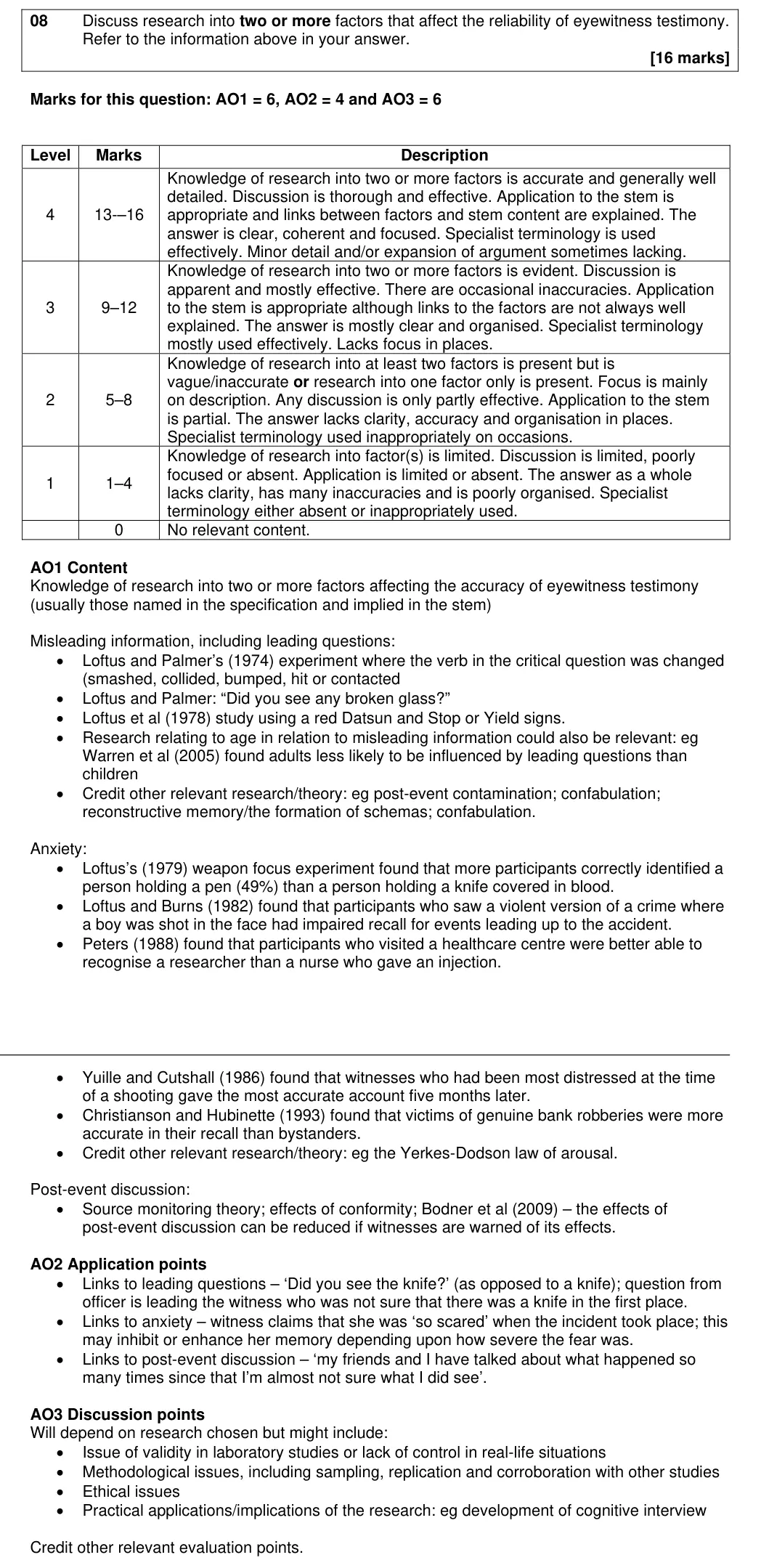
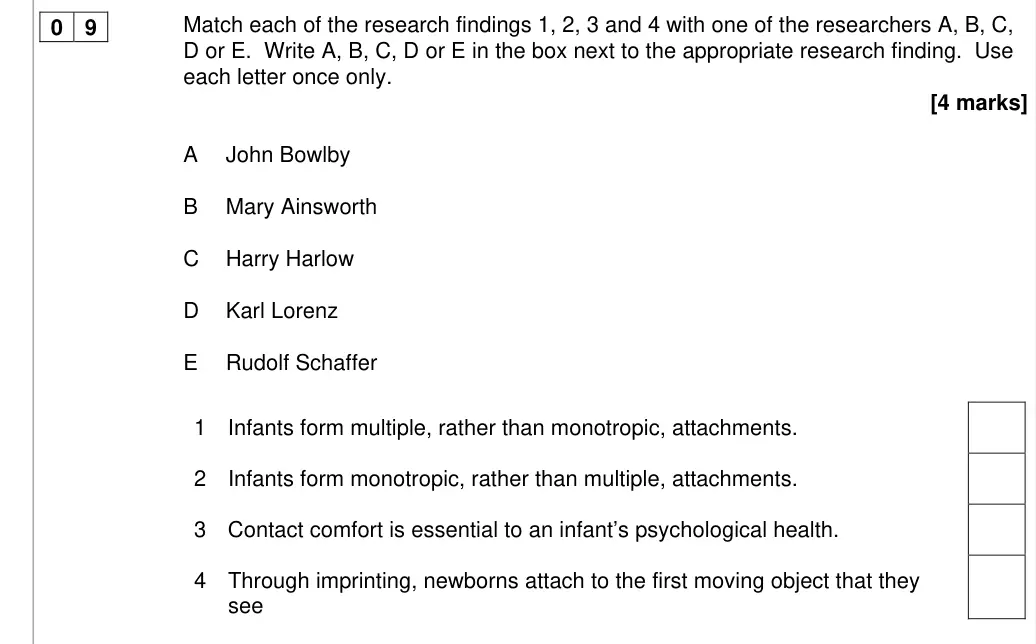
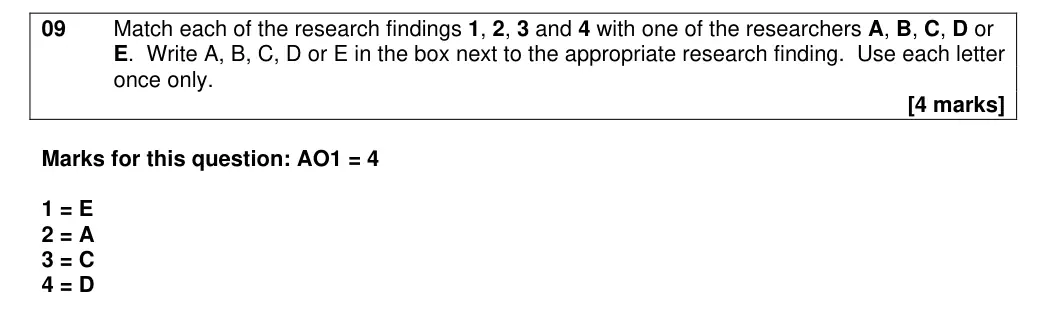
Mark scheme, including level descriptors and indicative content Notes from the mark scheme and report Off-spec: criticisms of Zimbardo's research into conformity to social roles, removed in v1.4 ethics, dual role, demand characteristics, sample bias two ethical criticisms can gain full marks Mark scheme, including level descriptors and indicative content Notes from the mark scheme and report A = unlimited, B = 18-30 seconds, C = acoustic, D = semantic Mark scheme, including level descriptors and indicative content Notes from the mark scheme and report central executive attentional capacity, automated driving for Bryan Bryan divides between VSS (driving) and phonological loop (talking/music), Bob cannot dual-task top band needs reference to both characters Mark scheme, including level descriptors and indicative content Notes from the mark scheme and report leading questions ('the knife'), anxiety ('so scared'), post-event discussion (talking with friends) applied to the stem research into one factor only = max Level 2 Loftus and Palmer, weapon focus, Yuille and Cutshall Mark scheme, including level descriptors and indicative content Notes from the mark scheme and report 1 = E (Schaffer), 2 = A (Bowlby), 3 = C (Harlow), 4 = D (Lorenz) finding 1 (Schaffer, multiple attachments) removed in v1.4 so 1 of the 4 marks is off-spec Not on the 2025 specification: research into caregiver-infant interaction, removed in v1.4
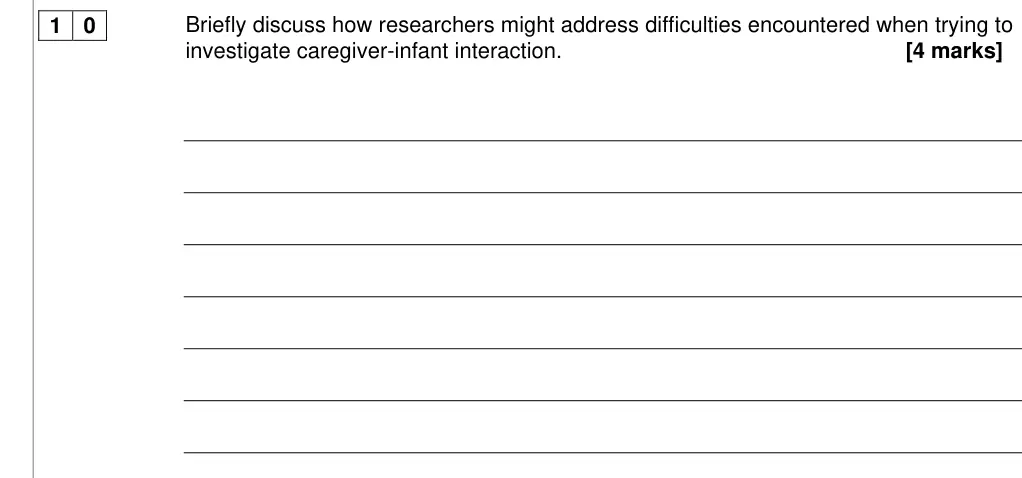
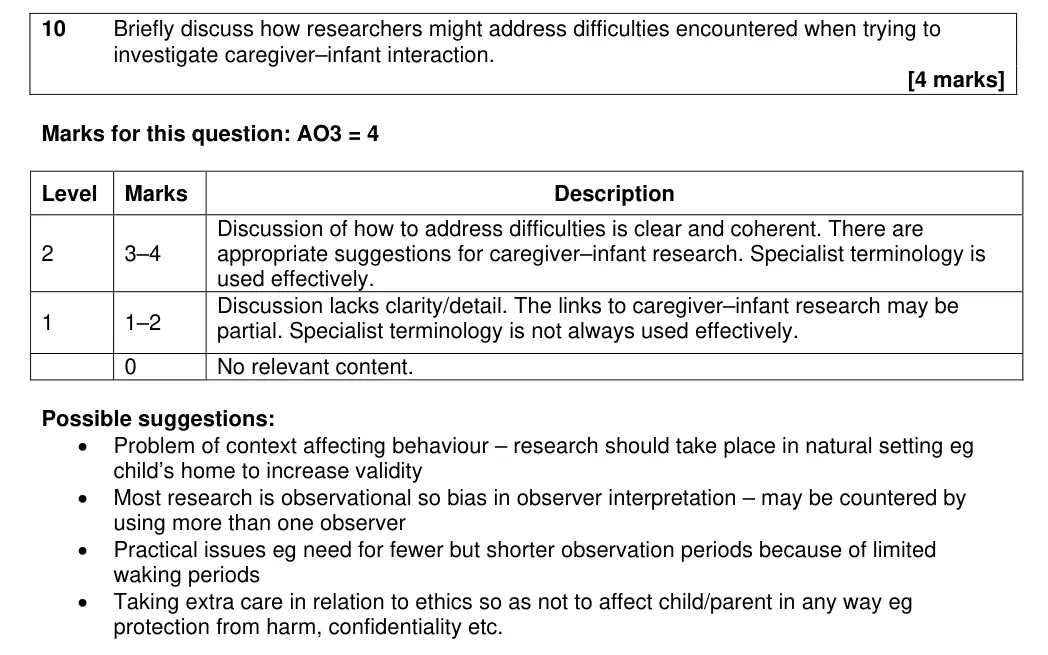
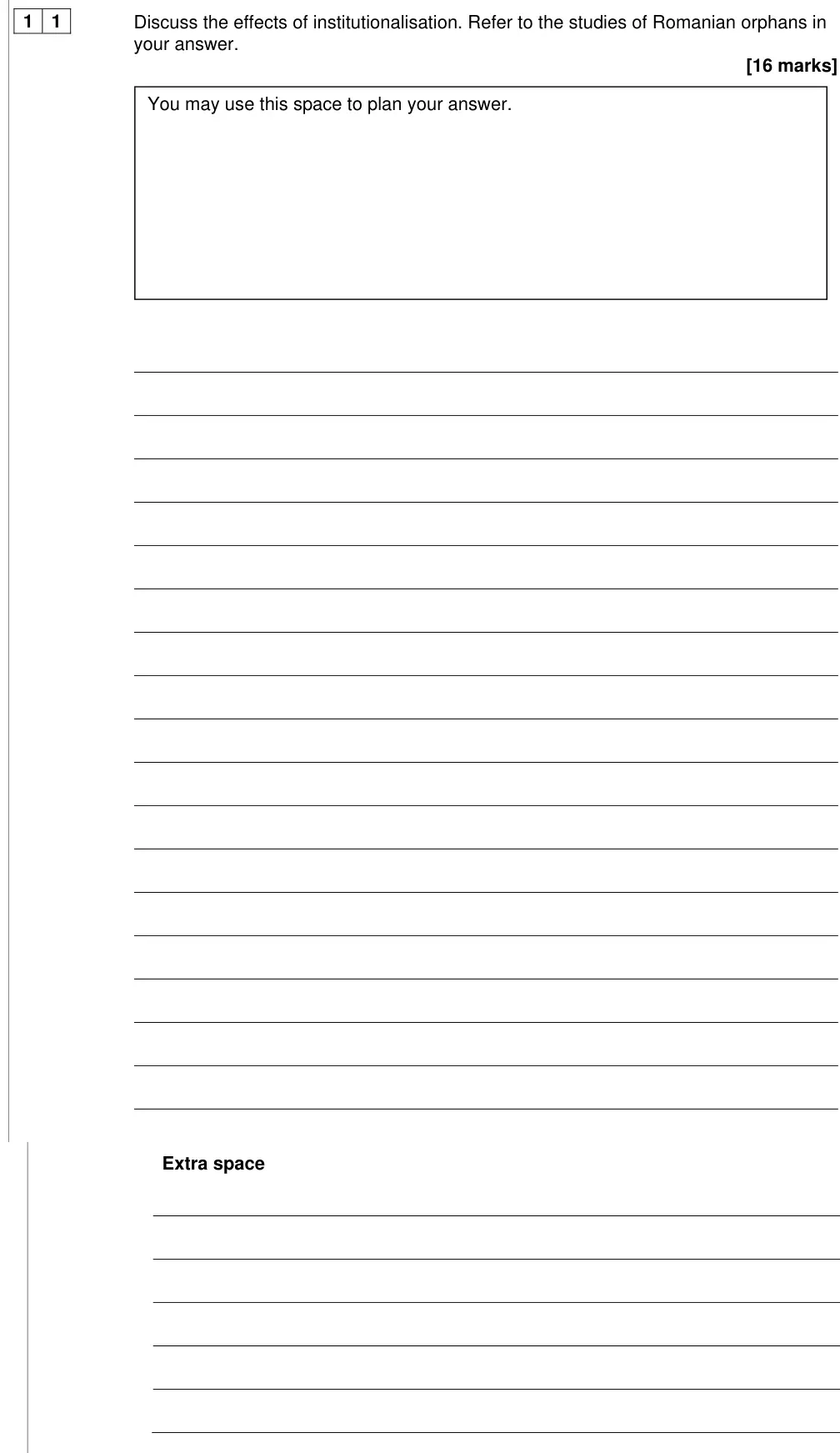
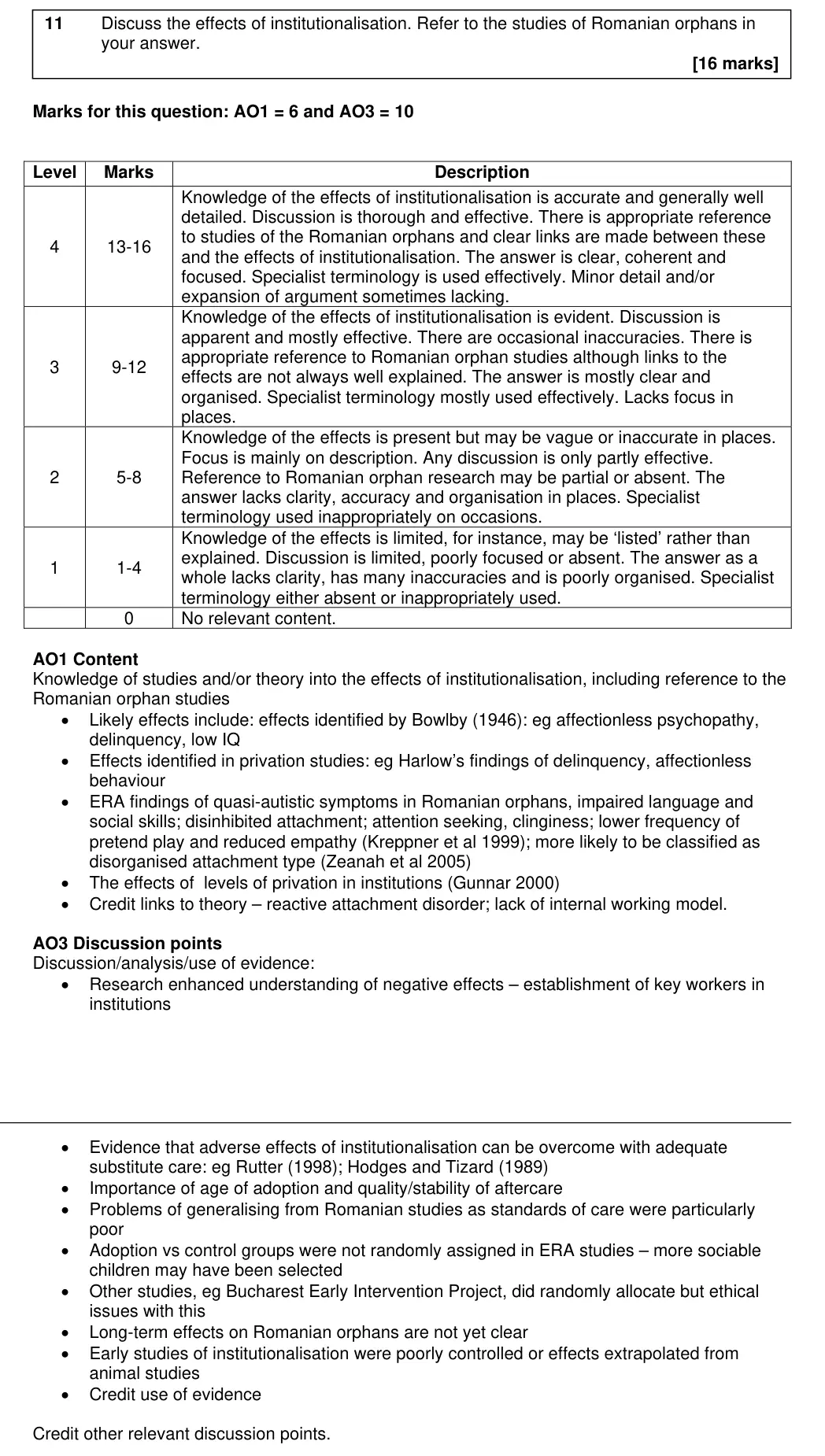
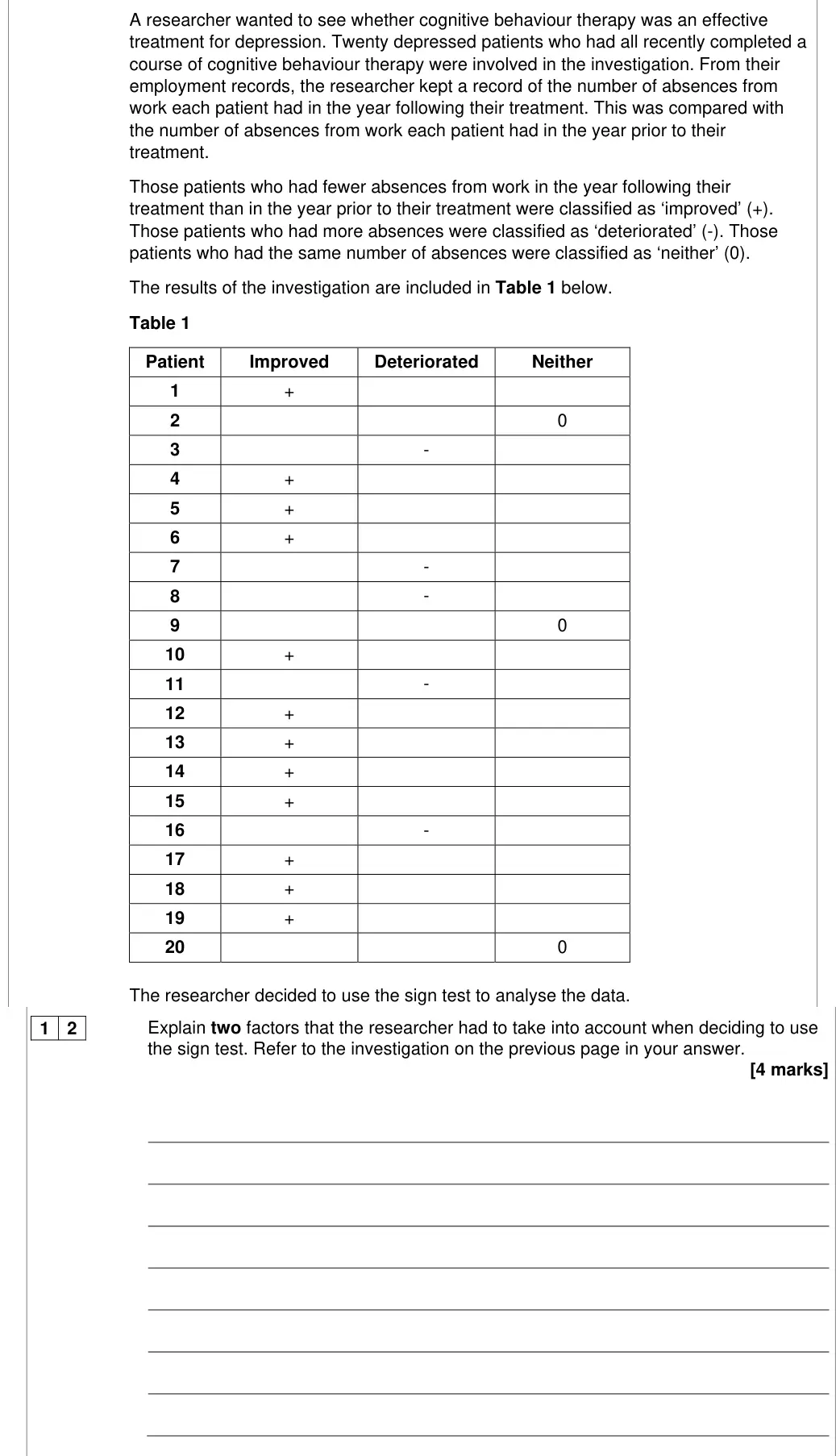
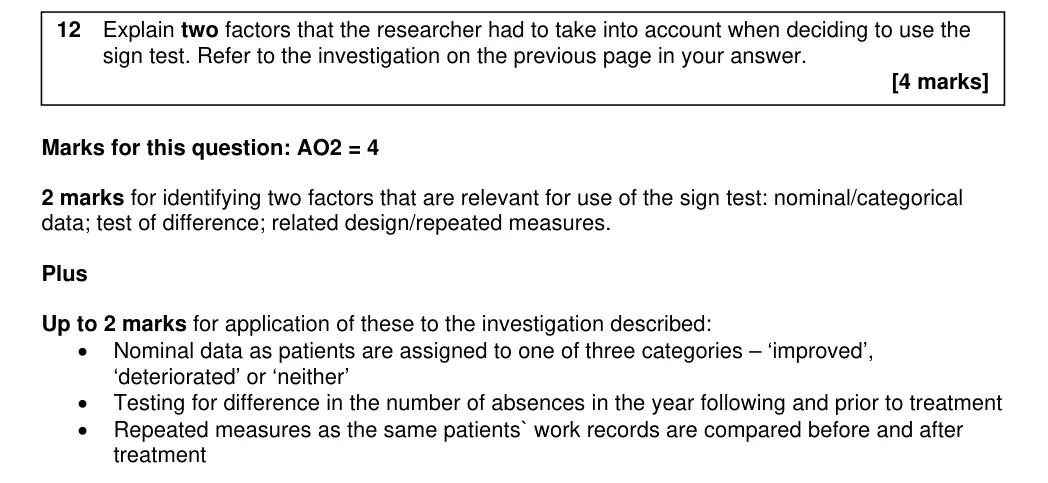
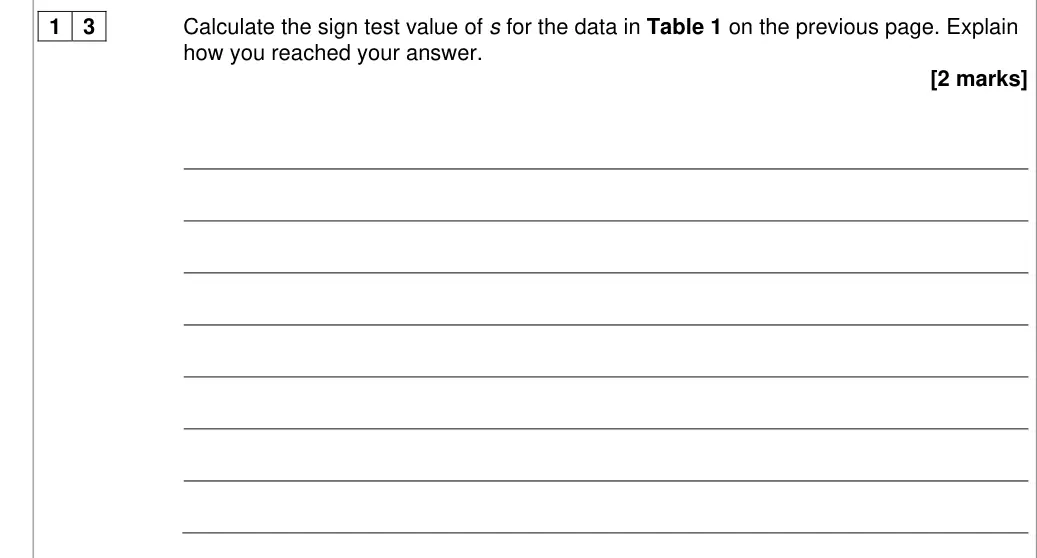
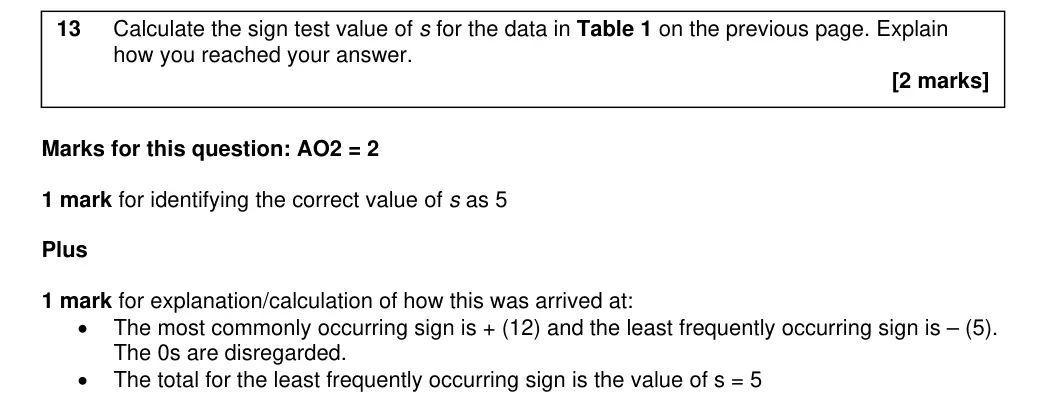
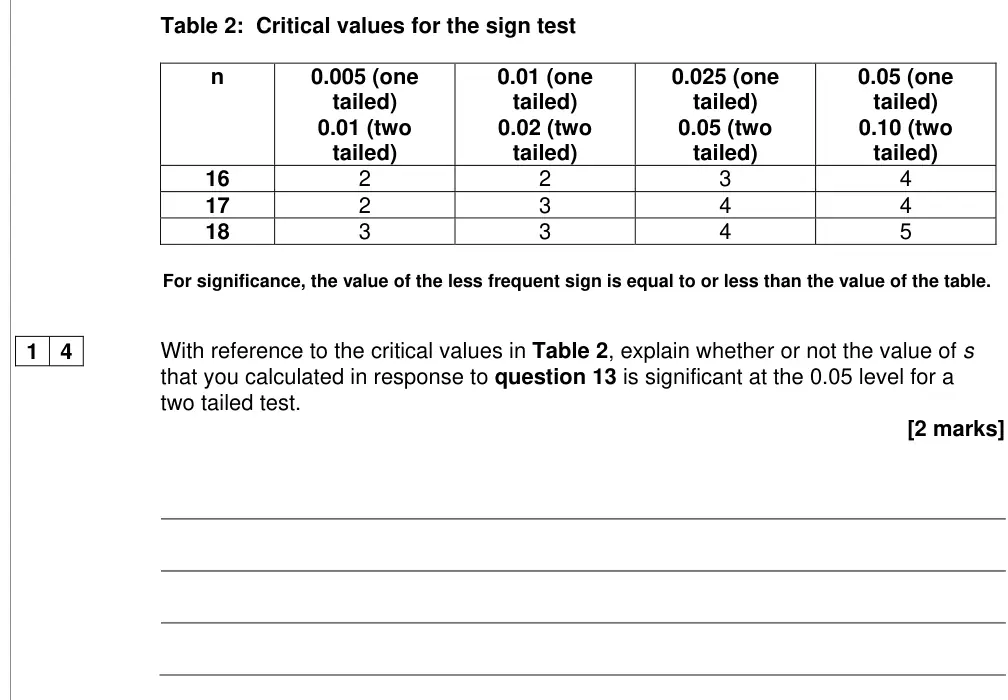
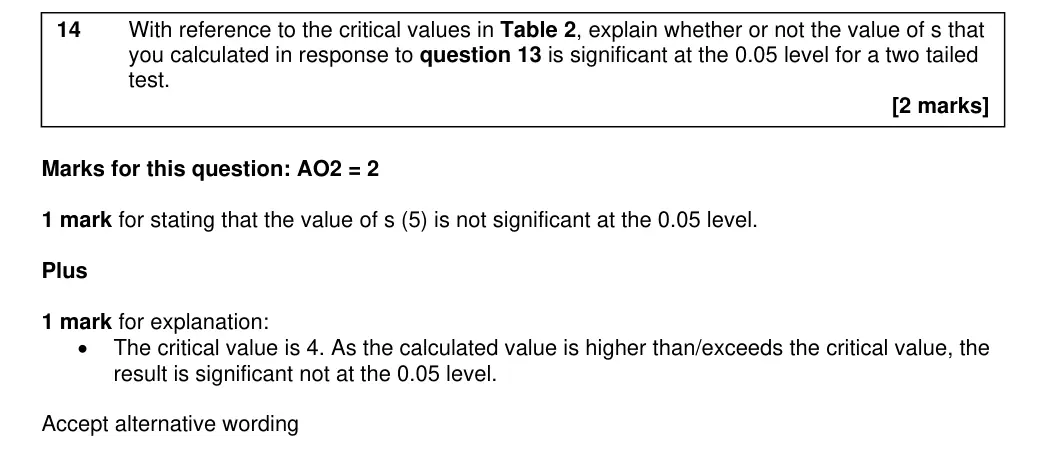
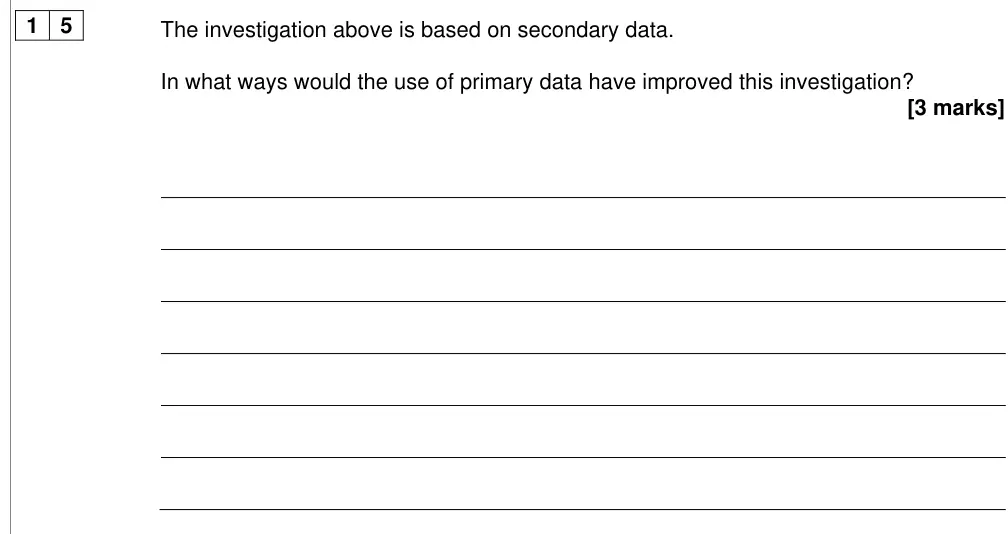
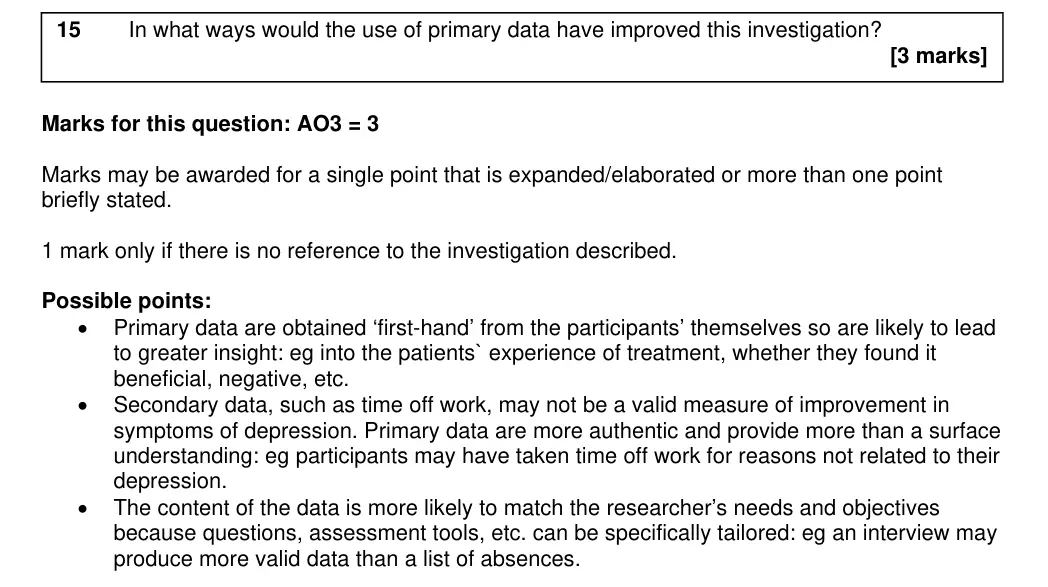
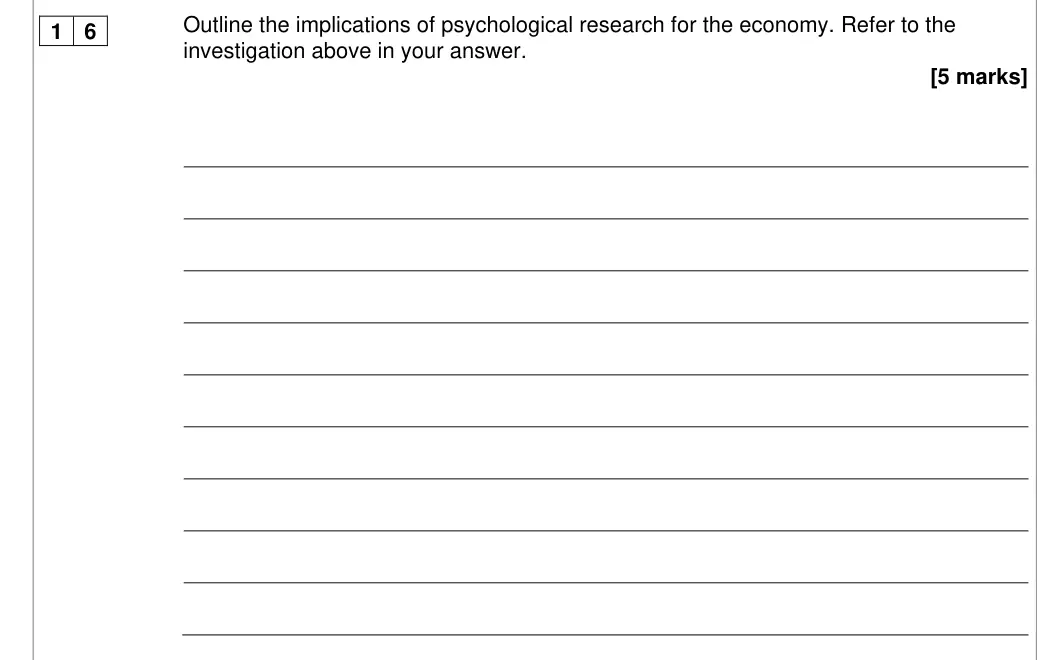
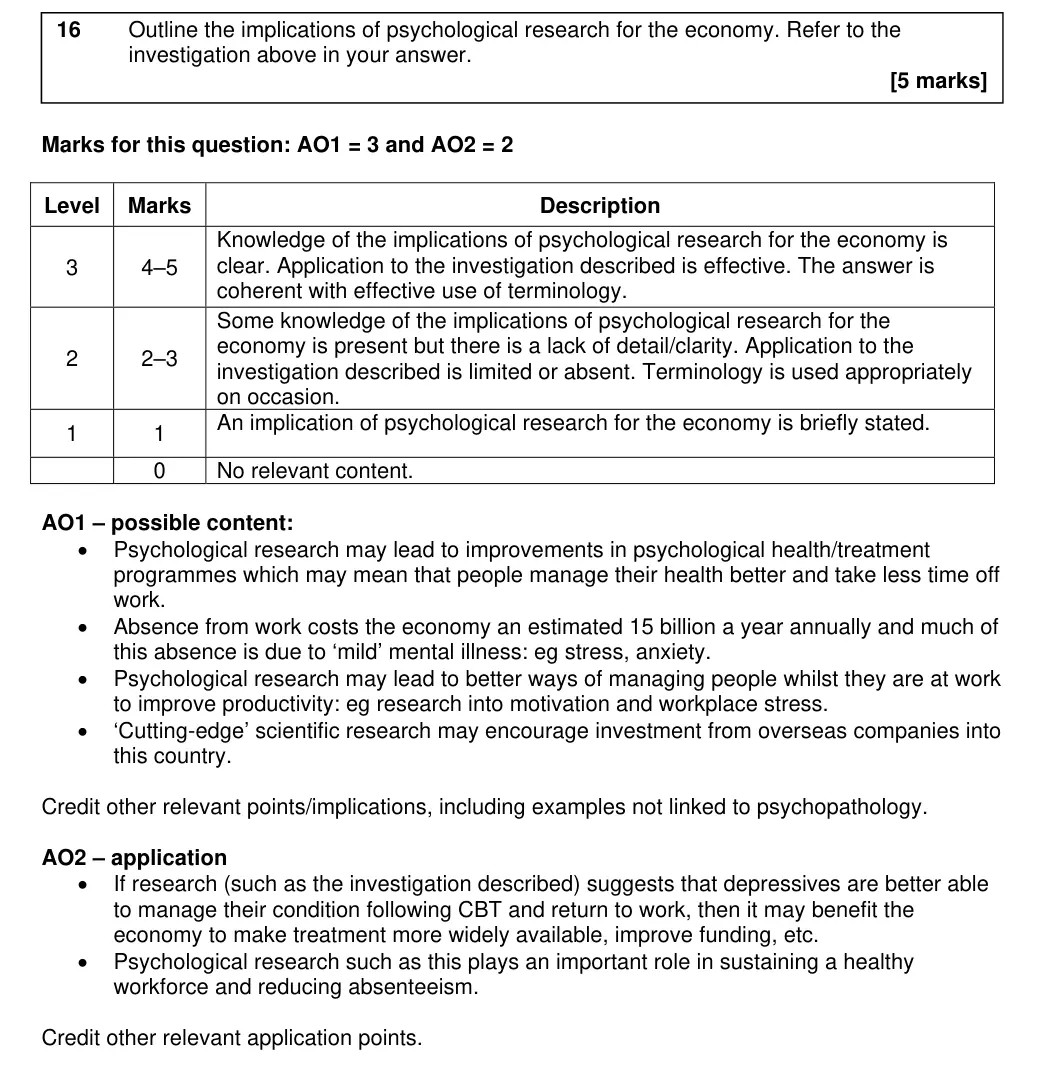
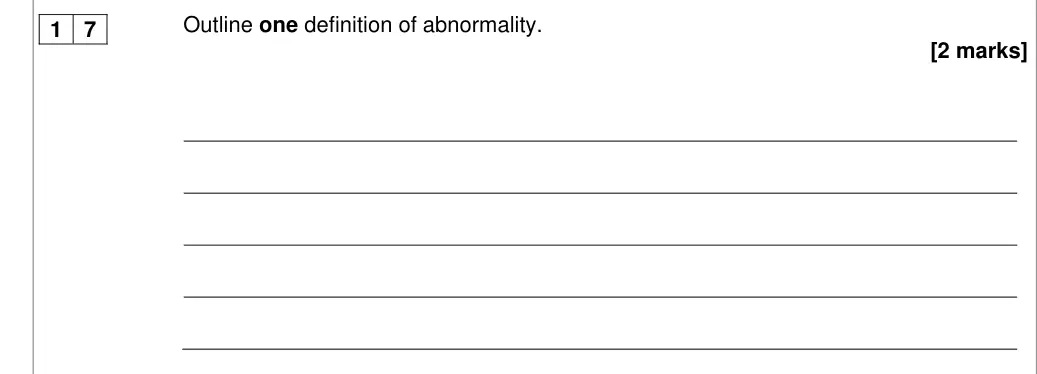
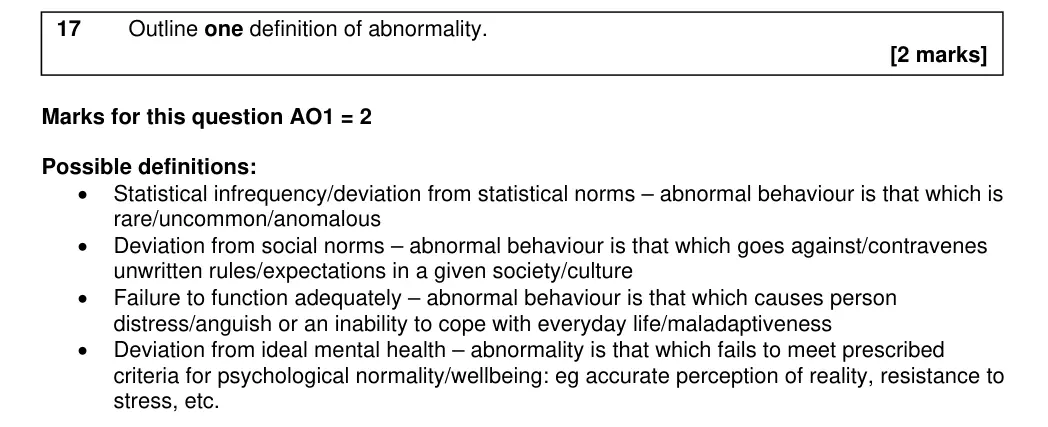
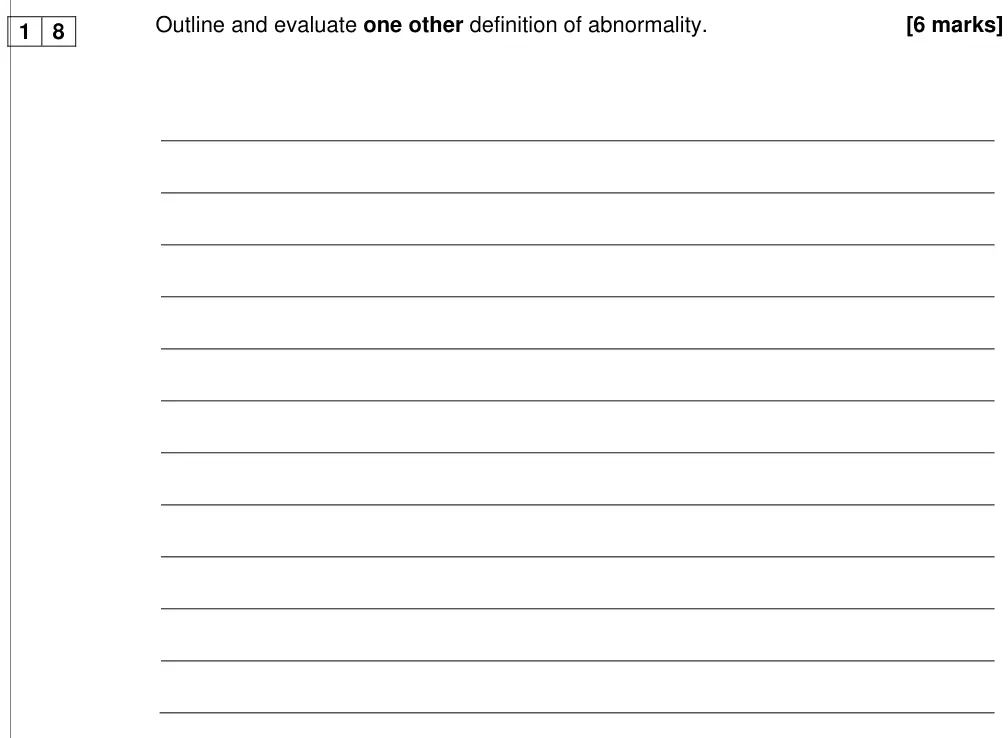
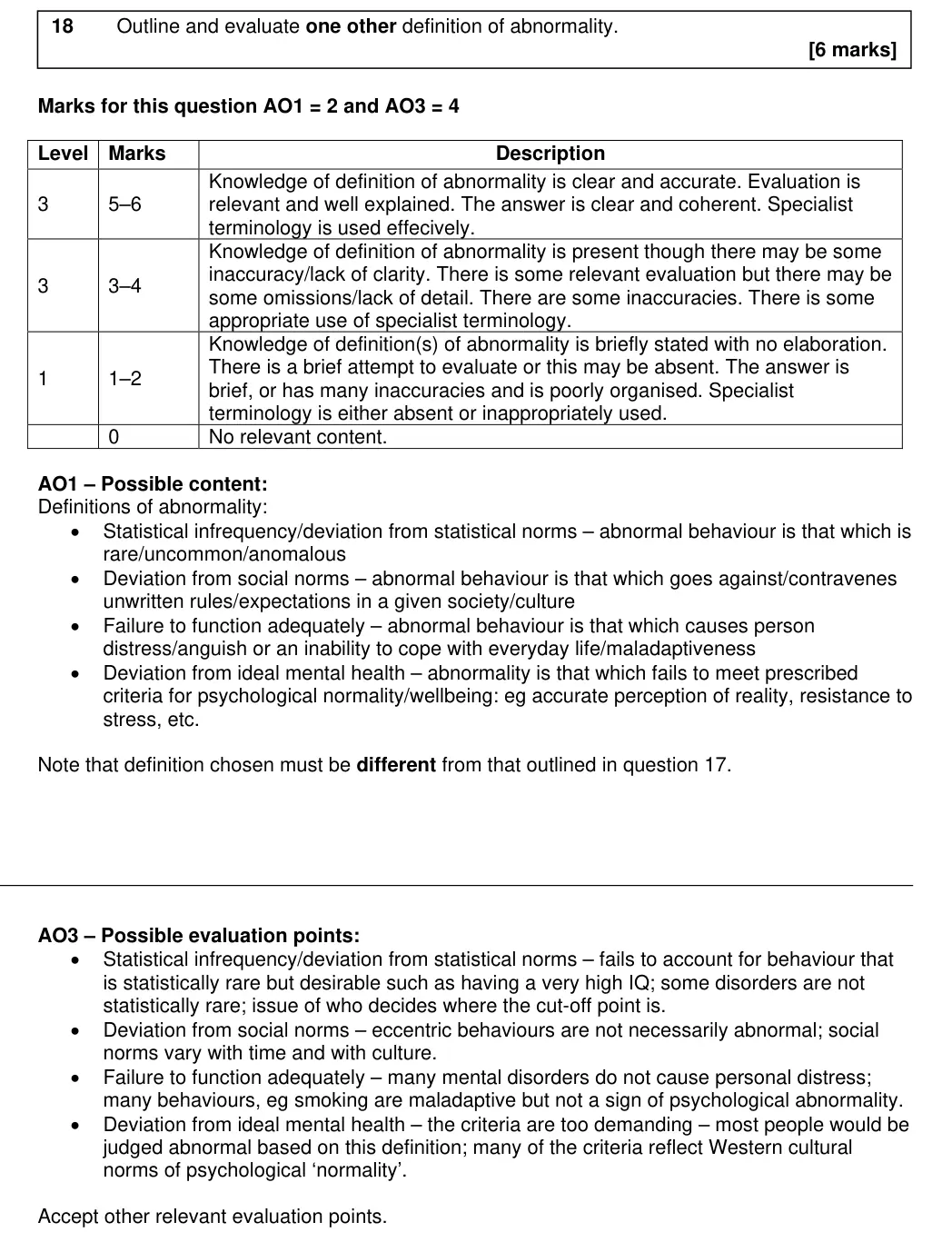
Mark scheme, including level descriptors and indicative content Notes from the mark scheme and report Off-spec: research into caregiver-infant interaction, removed in v1.4 credit natural settings for validity, multiple observers to counter bias, short observation periods, extra ethical care must link to caregiver-infant research Mark scheme, including level descriptors and indicative content Notes from the mark scheme and report must refer to Romanian orphan studies (now the English and Romanian Adoptees project) effects e.g. disinhibited attachment, quasi-autism, low IQ recovery with adequate substitute care, age of adoption, non-random allocation in ERA Mark scheme, including level descriptors and indicative content Notes from the mark scheme and report 2 marks for factors (nominal data, test of difference, related/repeated measures design) + 2 for application to the absence-record study Mark scheme, including level descriptors and indicative content Notes from the mark scheme and report s = 5 12 +, 5 -, 3 zeros disregarded s is the less frequent sign Mark scheme, including level descriptors and indicative content Notes from the mark scheme and report not significant + explanation: N = 17, critical value 4, s = 5 exceeds it Mark scheme, including level descriptors and indicative content Notes from the mark scheme and report must refer to the investigation (1 mark max otherwise): first-hand insight into treatment, absences may not validly measure depression, data tailored to aims Mark scheme, including level descriptors and indicative content Notes from the mark scheme and report implications e.g. reduced absenteeism, productivity, investment application to CBT and work absences one implication briefly stated = 1 Mark scheme, including level descriptors and indicative content Notes from the mark scheme and report statistical infrequency, deviation from social/cultural norms, failure to function adequately, or deviation from ideal mental health Mark scheme, including level descriptors and indicative content Notes from the mark scheme and report must be a different definition from 17 evaluation e.g. desirable rare behaviours, cultural/temporal variation of norms, too demanding criteria Work with an AQA psychology tutor Want a paper marked and gone through with you? Message us.
Prefer email? Send an enquiry