Specimen set 1: Paper 1 96 marks · 23 question parts · Paper, mark scheme and report on AQA's site
This paper was set on the previous specification. 2 parts are on content removed in the 2025 specification and are marked "Old spec only".
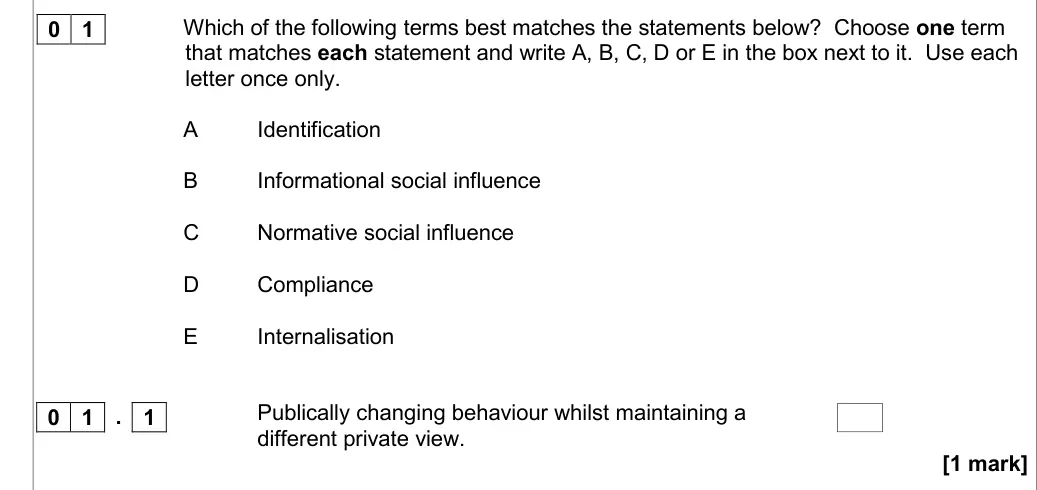
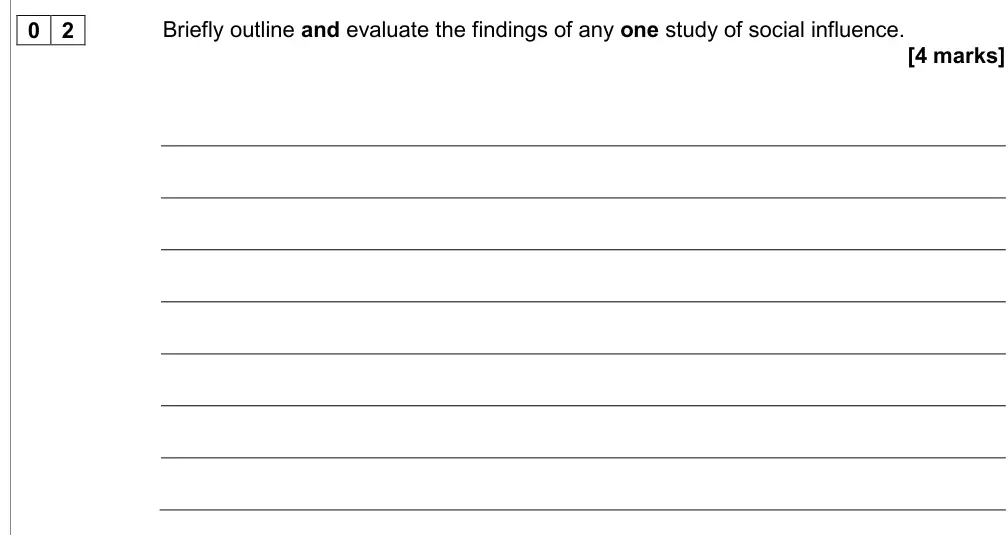
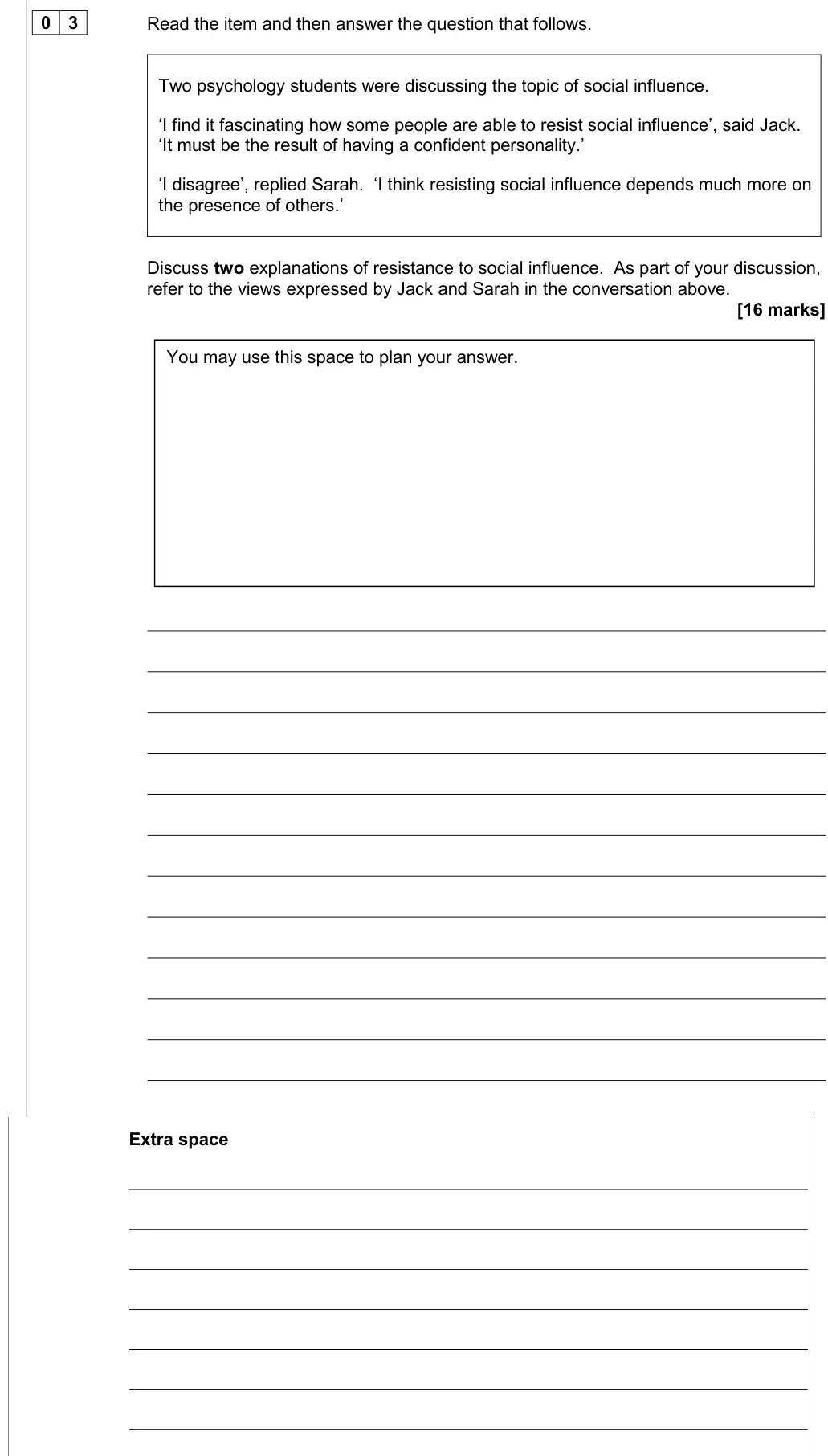
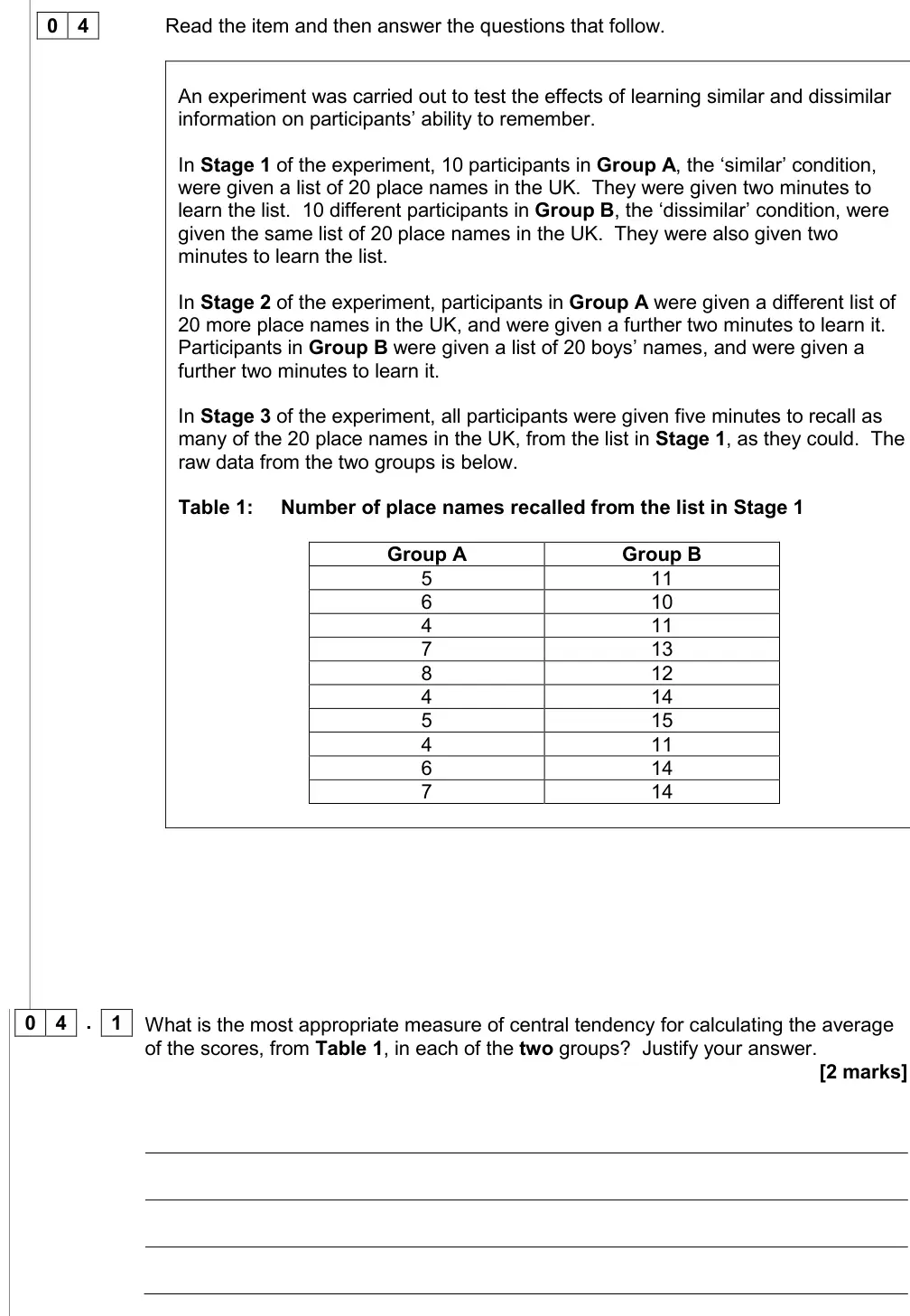
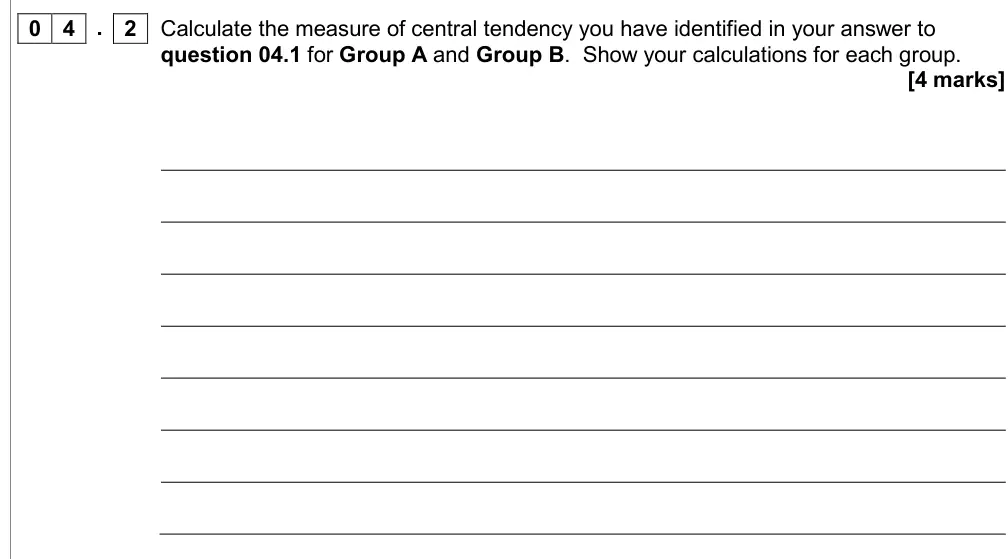
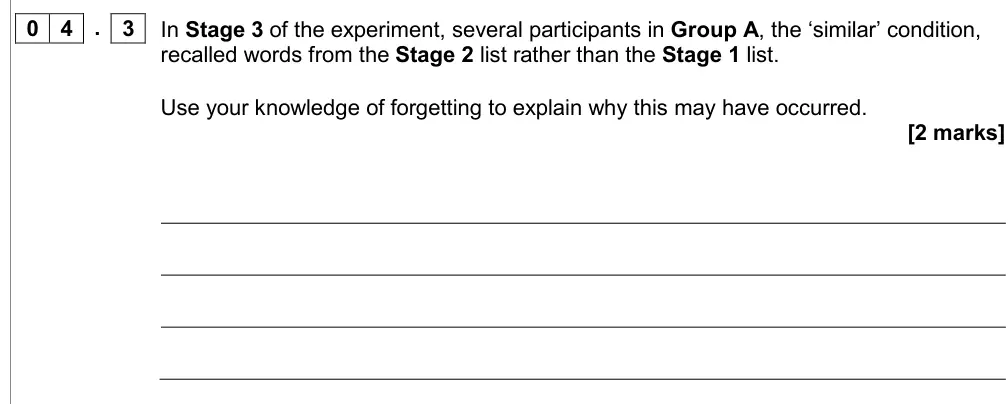
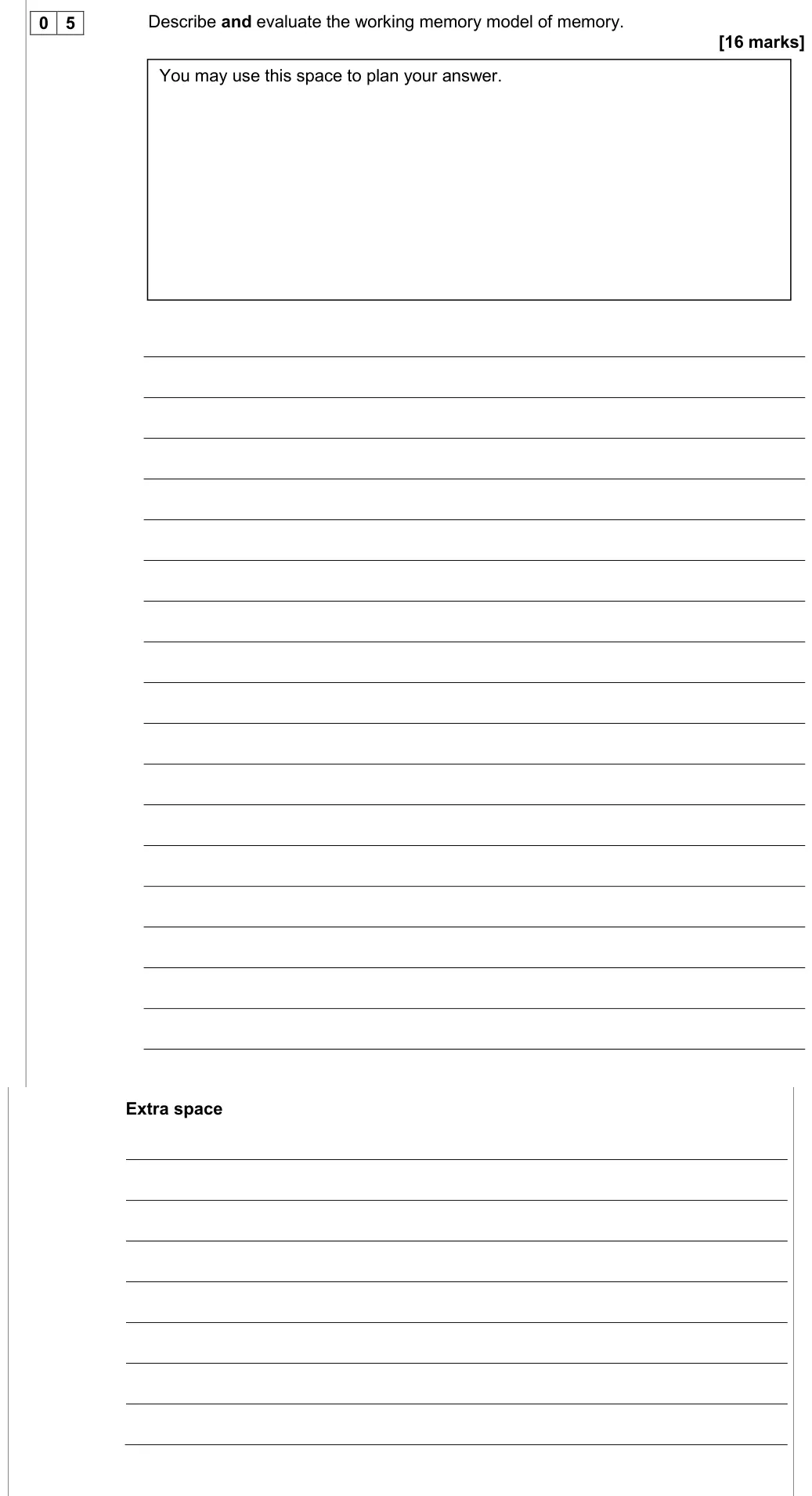
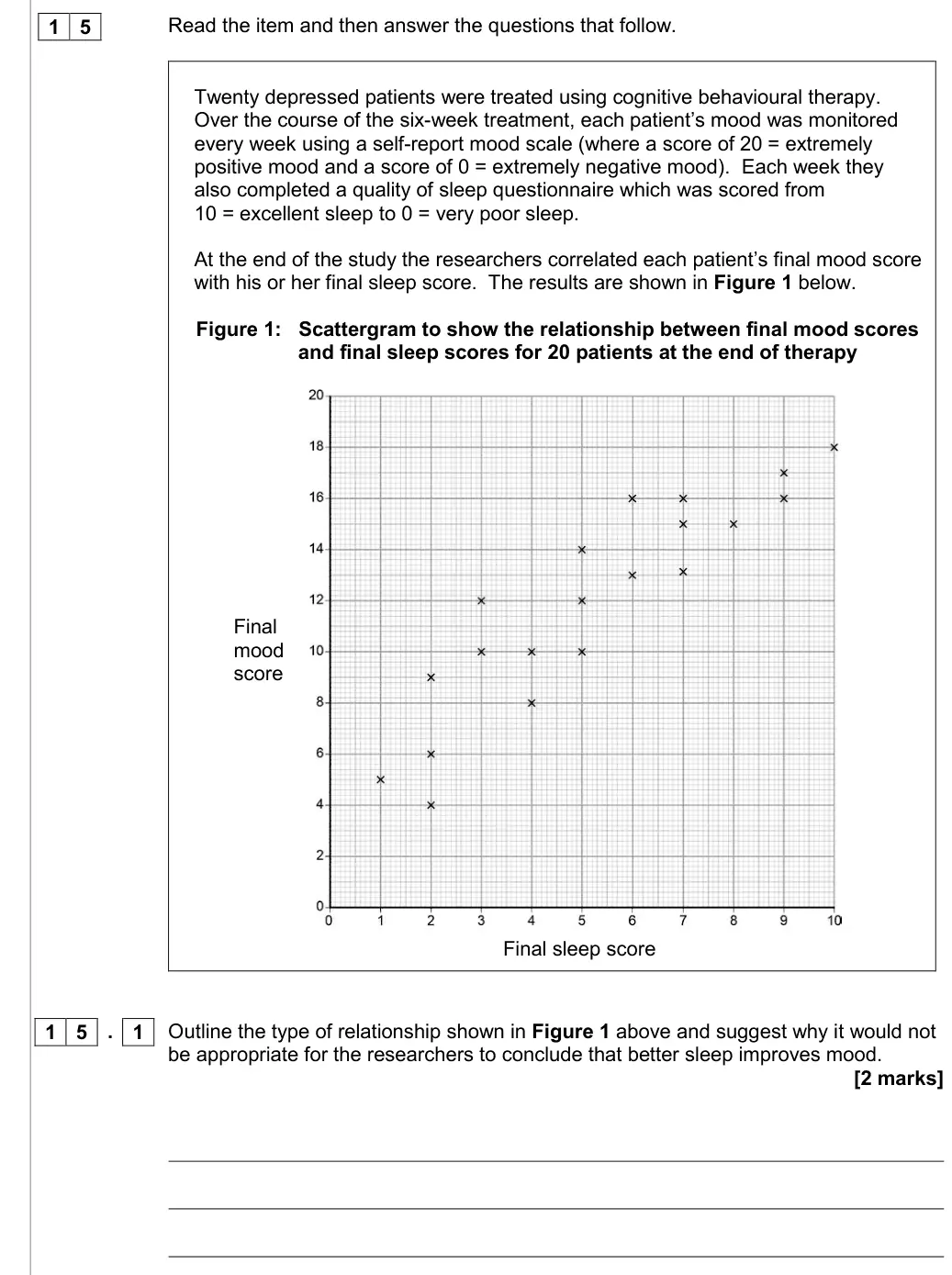
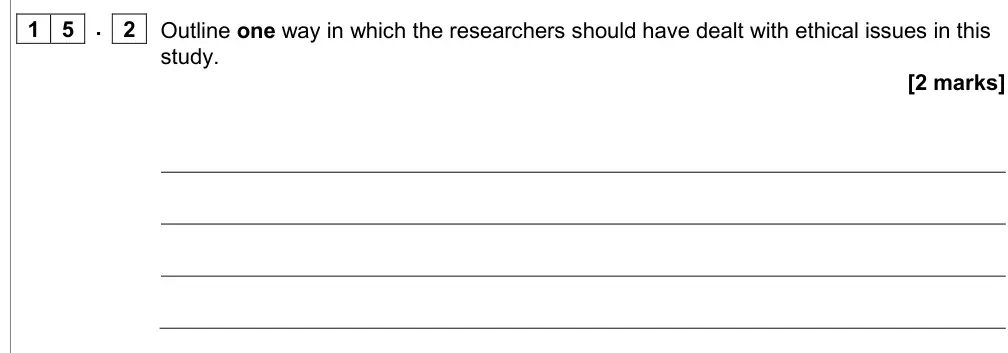
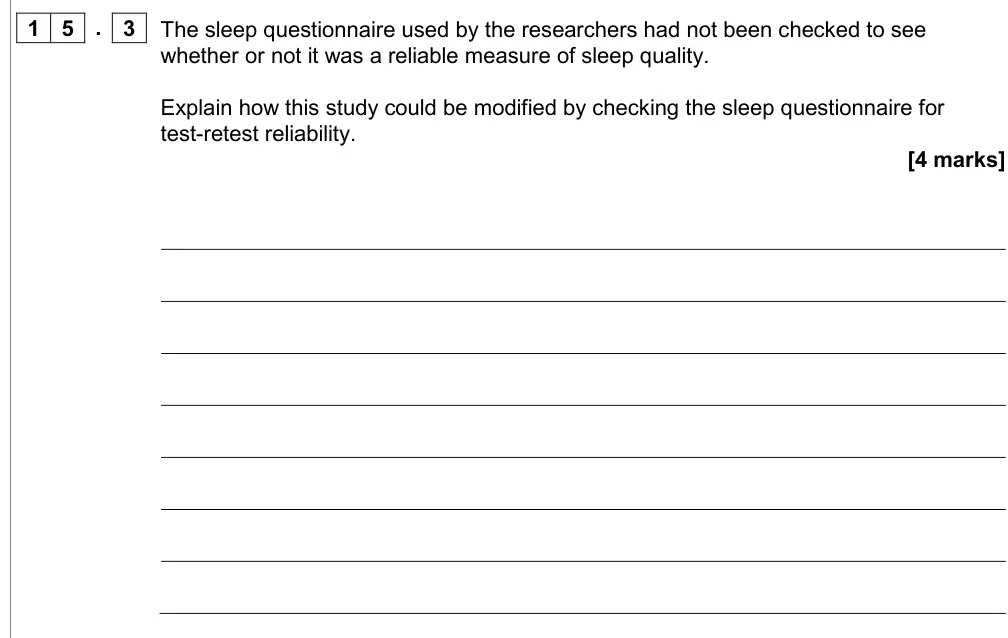
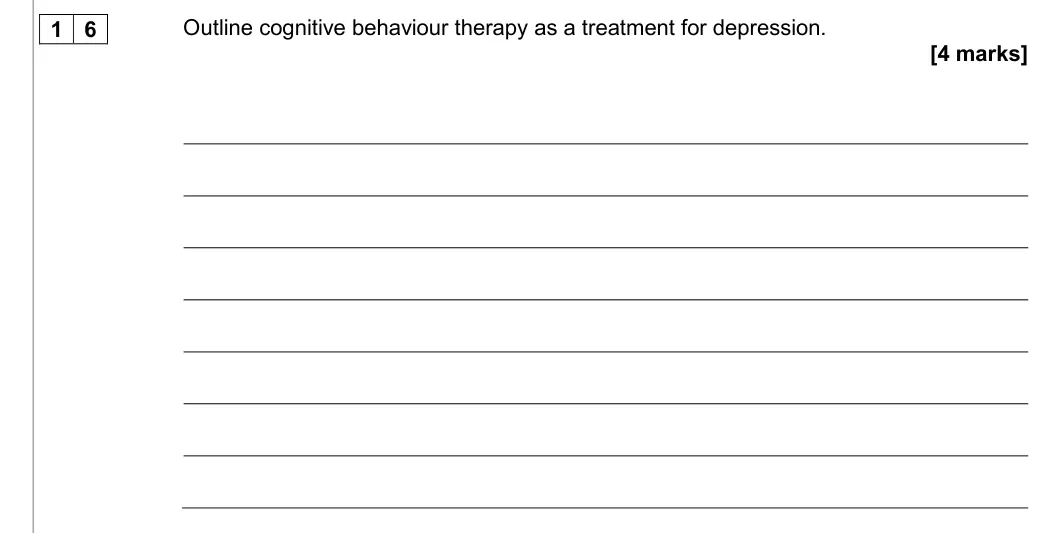
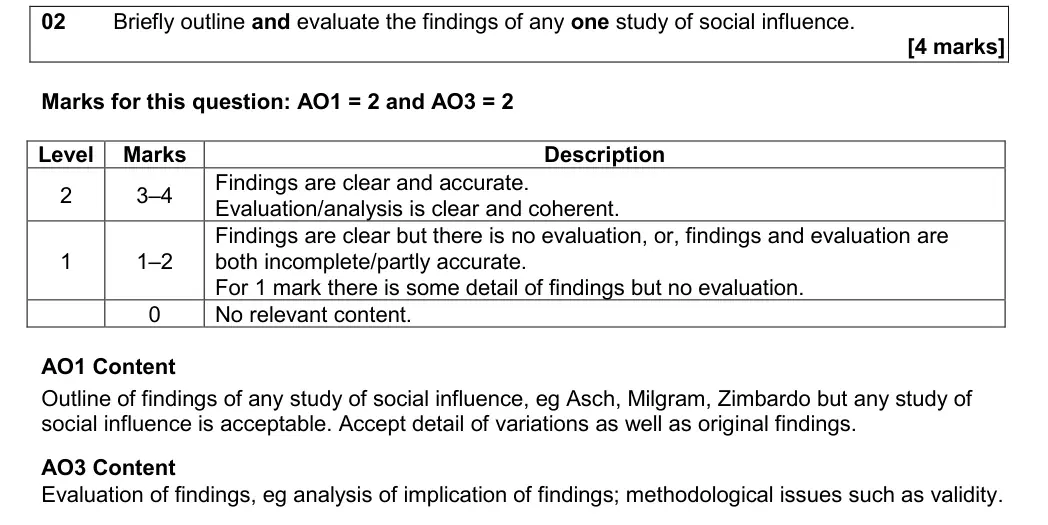
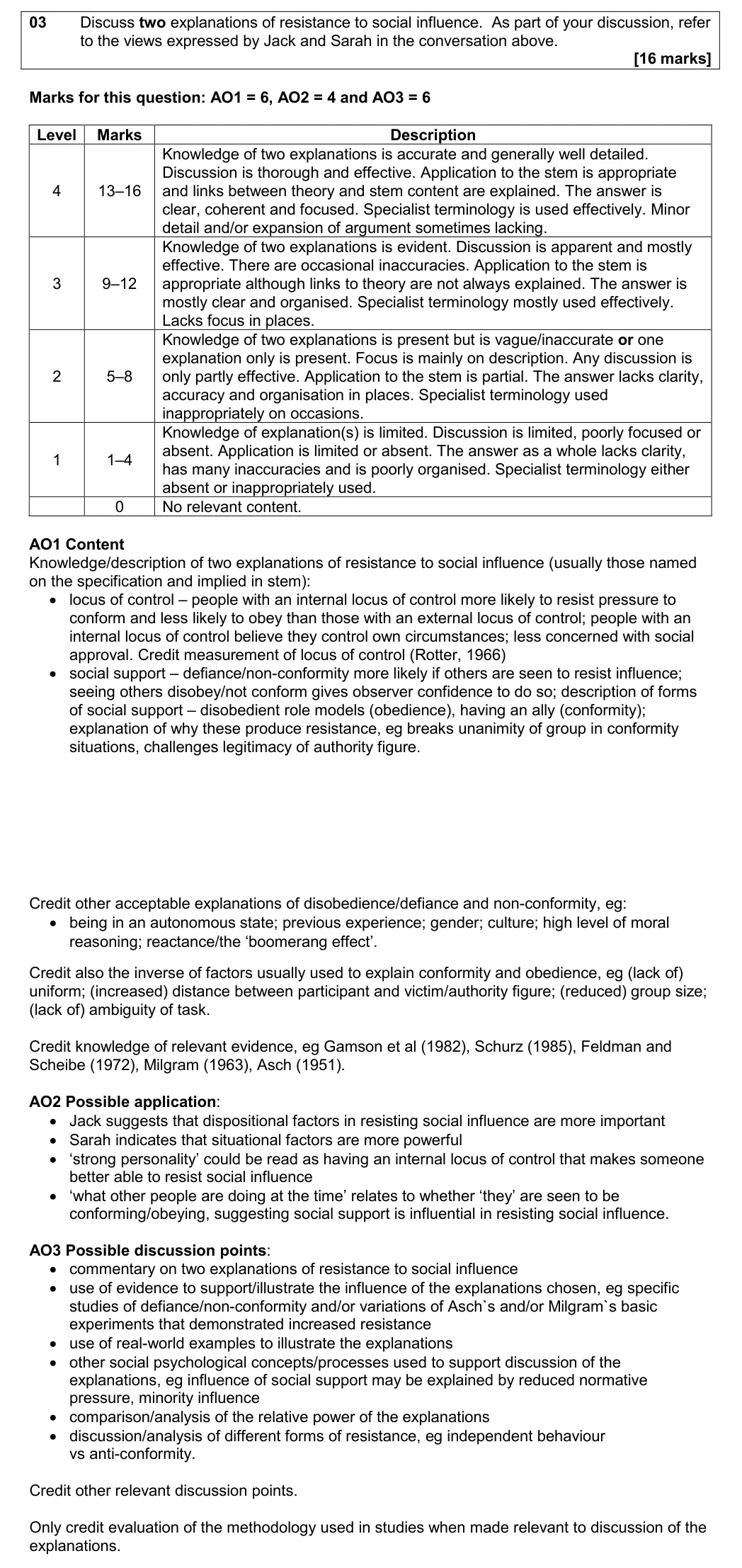
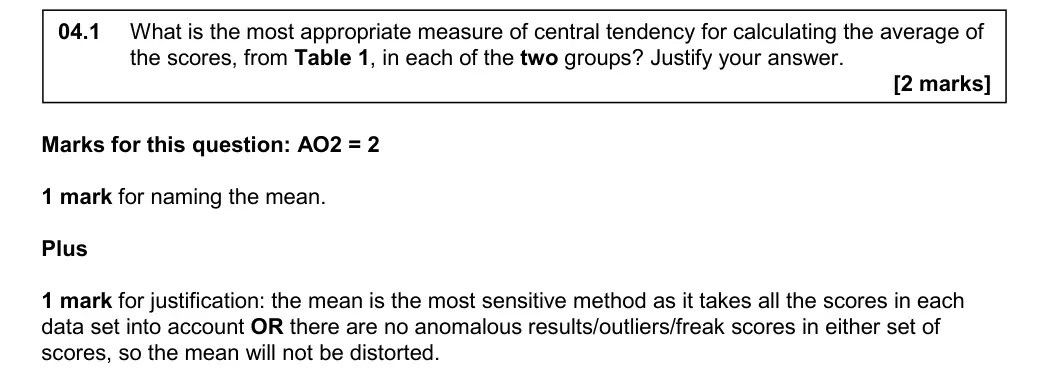
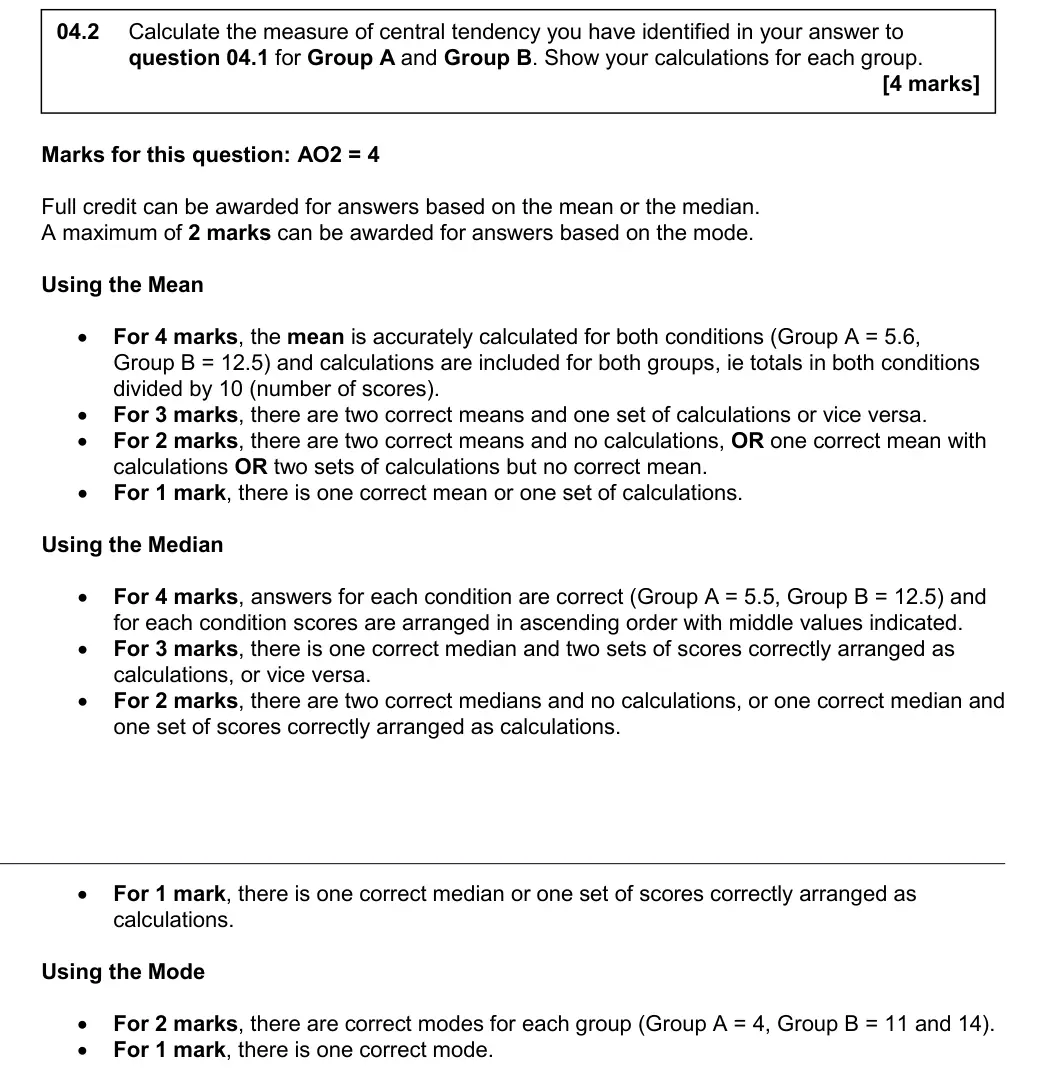
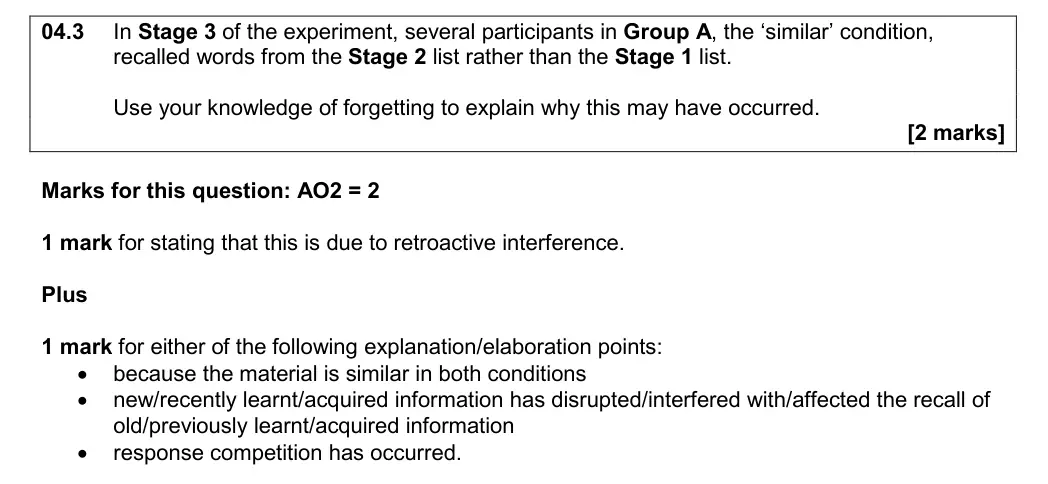
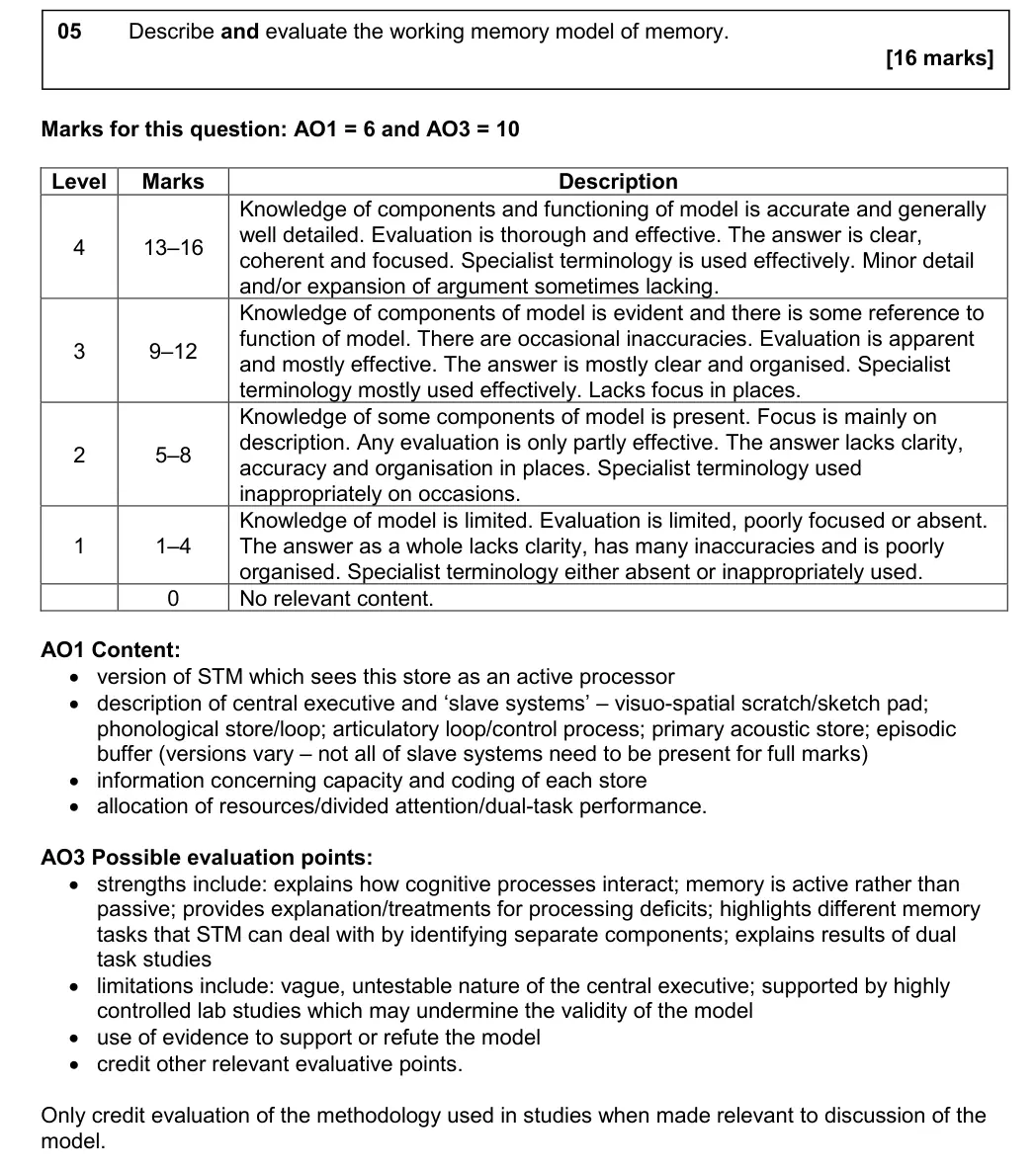
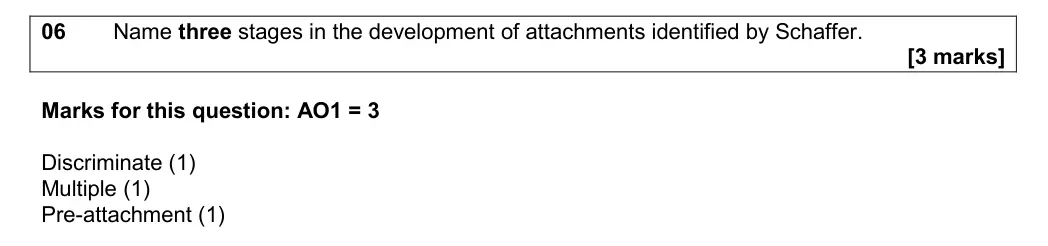
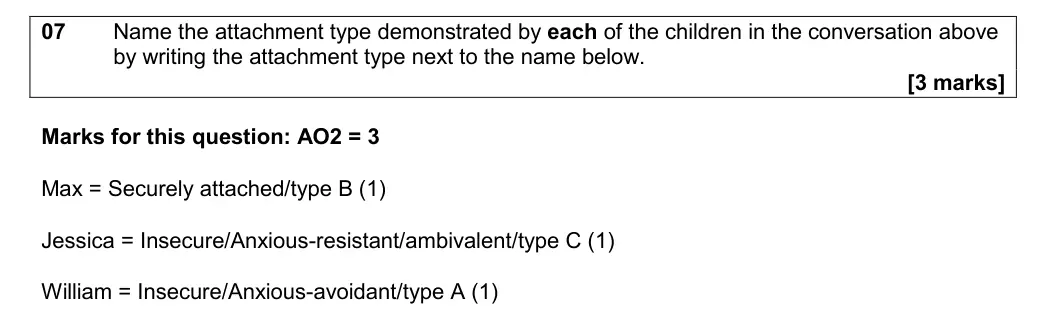
Question by question Q Topic Marks AO Type 1.1 Social influence 1 Multiple choice 1.2 Social influence 1 Multiple choice 1.3 Social influence 1 Multiple choice 1.4 Social influence Old spec 1 Multiple choice 2 Social influence 4 AO1=2,AO3=2 Evaluate (short) 3 Social influence 16 AO1=6,AO2=4,AO3=6 Extended writing 4.1 Research methods: data handling and analysis 2 AO2=2 Research methods 4.2 Research methods: data handling and analysis 4 AO2=4 Calculation 4.3 Memory 2 AO2=2 Application 5 Memory 16 AO1=6,AO3=10 Extended writing 6 Old spec 3 AO1=3 Short answer 7 Attachment 3 AO2=3 Application 8 Attachment 4 AO3=4 Evaluate (short) 9 Research methods: scientific processes 2 AO1=2 Research methods 10 Research methods: methods and techniques , Research methods: scientific processes 4 AO3=4 Research methods 11 Attachment 8 AO1=4,AO3=4 Extended writing 12 Clinical psychology and mental health (psychopathology) 2 AO1=2 Multiple choice 13 Clinical psychology and mental health (psychopathology) 6 AO1=3,AO2=3 Application 14 Clinical psychology and mental health (psychopathology) 4 AO2=4 Application 15.1 Research methods: methods and techniques , Research methods: data handling and analysis 2 AO3=2 Research methods 15.2 Research methods: scientific processes 2 AO3=2 Research methods 15.3 Research methods: scientific processes , Research methods: data handling and analysis , Research methods: inferential testing 4 AO3=4 Research methods 16 Clinical psychology and mental health (psychopathology) 4 AO1=4 Outline
The questions Show old-spec parts
Mark scheme, including level descriptors and indicative content Notes from the mark scheme and report answer D (compliance) each letter used once option A identification removed in v1.4 Mark scheme, including level descriptors and indicative content Notes from the mark scheme and report answer C (normative social influence) option A identification removed in v1.4 Mark scheme, including level descriptors and indicative content Notes from the mark scheme and report answer B (informational social influence) option A identification removed in v1.4 Not on the 2025 specification: answer A, identification as a type of conformity, removed in v1.4
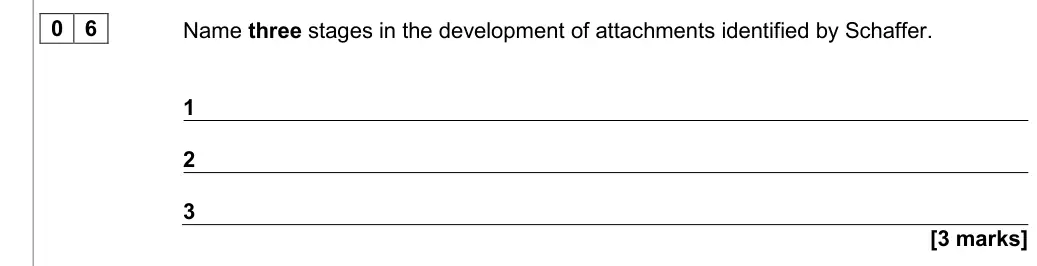
Mark scheme, including level descriptors and indicative content Notes from the mark scheme and report Off-spec: answer A, identification as a type of conformity, removed in v1.4 Mark scheme, including level descriptors and indicative content Notes from the mark scheme and report findings (not procedure) of any one social influence study, e.g. Asch or Milgram, variations accepted findings without evaluation = max 2 MS also credits Zimbardo, removed in v1.4 Mark scheme, including level descriptors and indicative content Notes from the mark scheme and report two explanations, usually locus of control (Jack: dispositional) and social support (Sarah: situational) one explanation only = max Level 2 other explanations credited (autonomous state, inverse of Milgram/Asch variables) methodology only credited if linked to the explanations Mark scheme, including level descriptors and indicative content Notes from the mark scheme and report mean + justification (uses all scores/no outliers to distort it) Mark scheme, including level descriptors and indicative content Notes from the mark scheme and report mean A = 5.6, B = 12.5 with calculations median (5.5, 12.5) also full credit mode max 2 (A = 4, B = 11 and 14) Mark scheme, including level descriptors and indicative content Notes from the mark scheme and report retroactive interference + elaboration (similar material, new information disrupting recall of old, response competition) Mark scheme, including level descriptors and indicative content Notes from the mark scheme and report central executive, slave systems (not all needed), capacity and coding of each, dual-task performance methodology only credited if related to the model Specimen set 1 · Paper 1 · Q6 3 marks AO1=3 Short answer Old spec only
Not on the 2025 specification: Schaffer's stages of attachment removed in v1.4
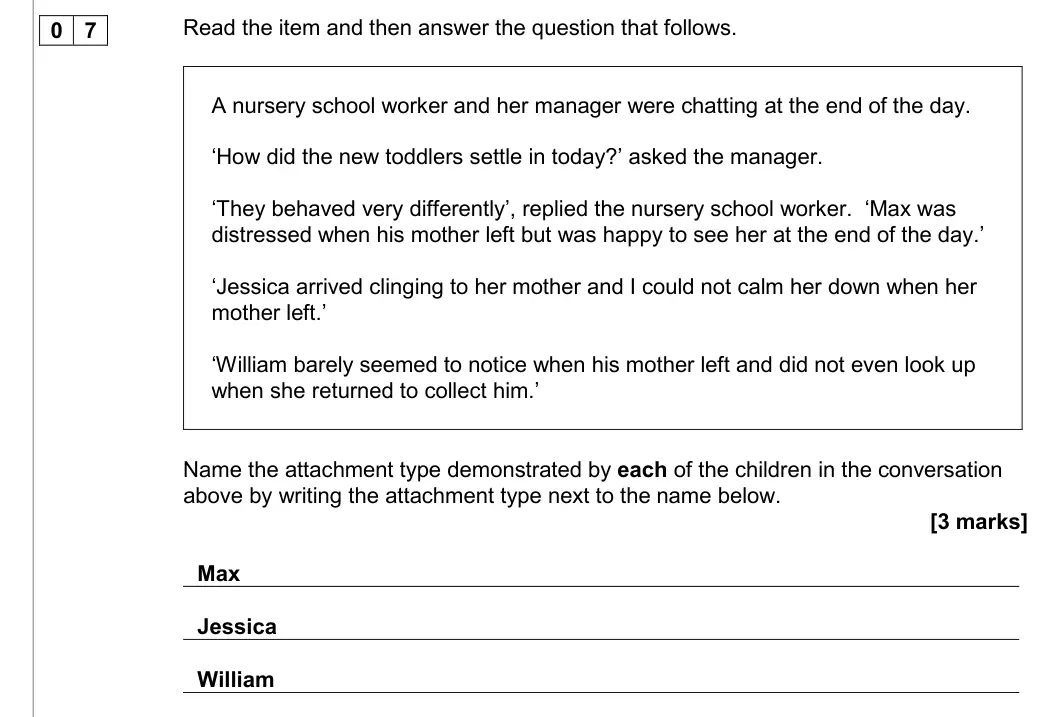
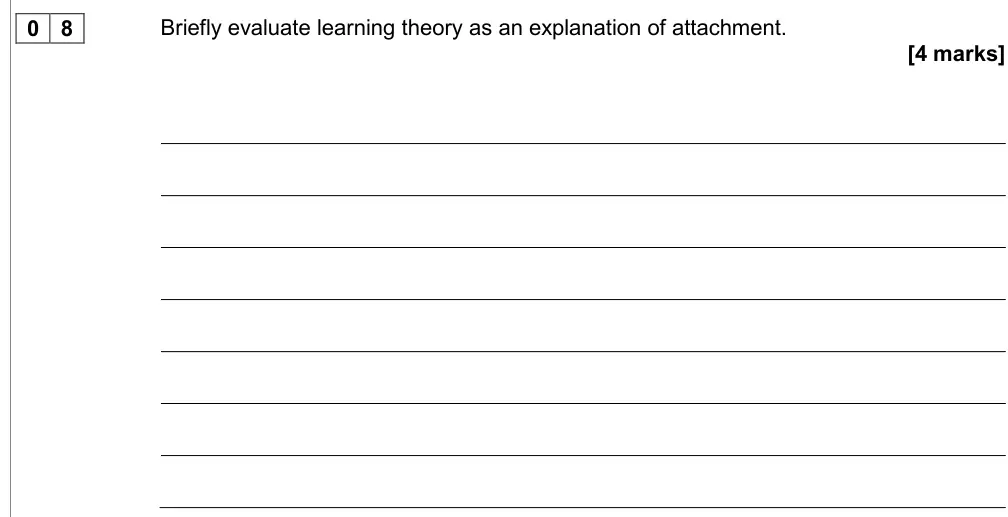
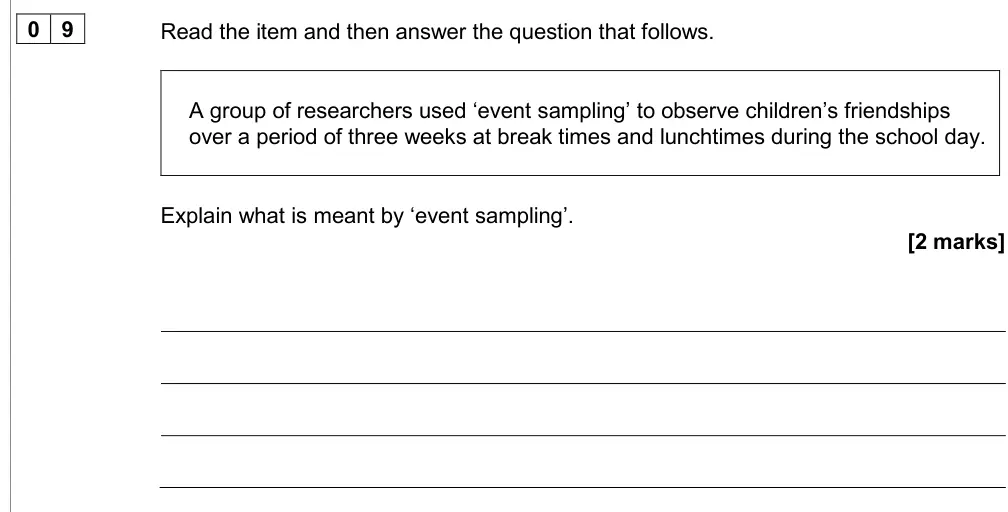
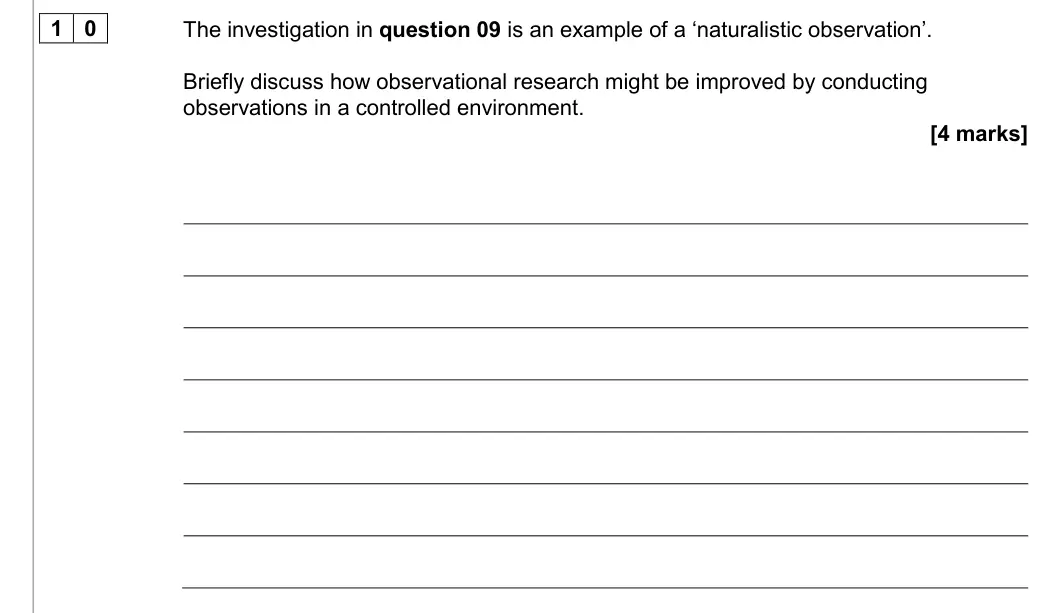
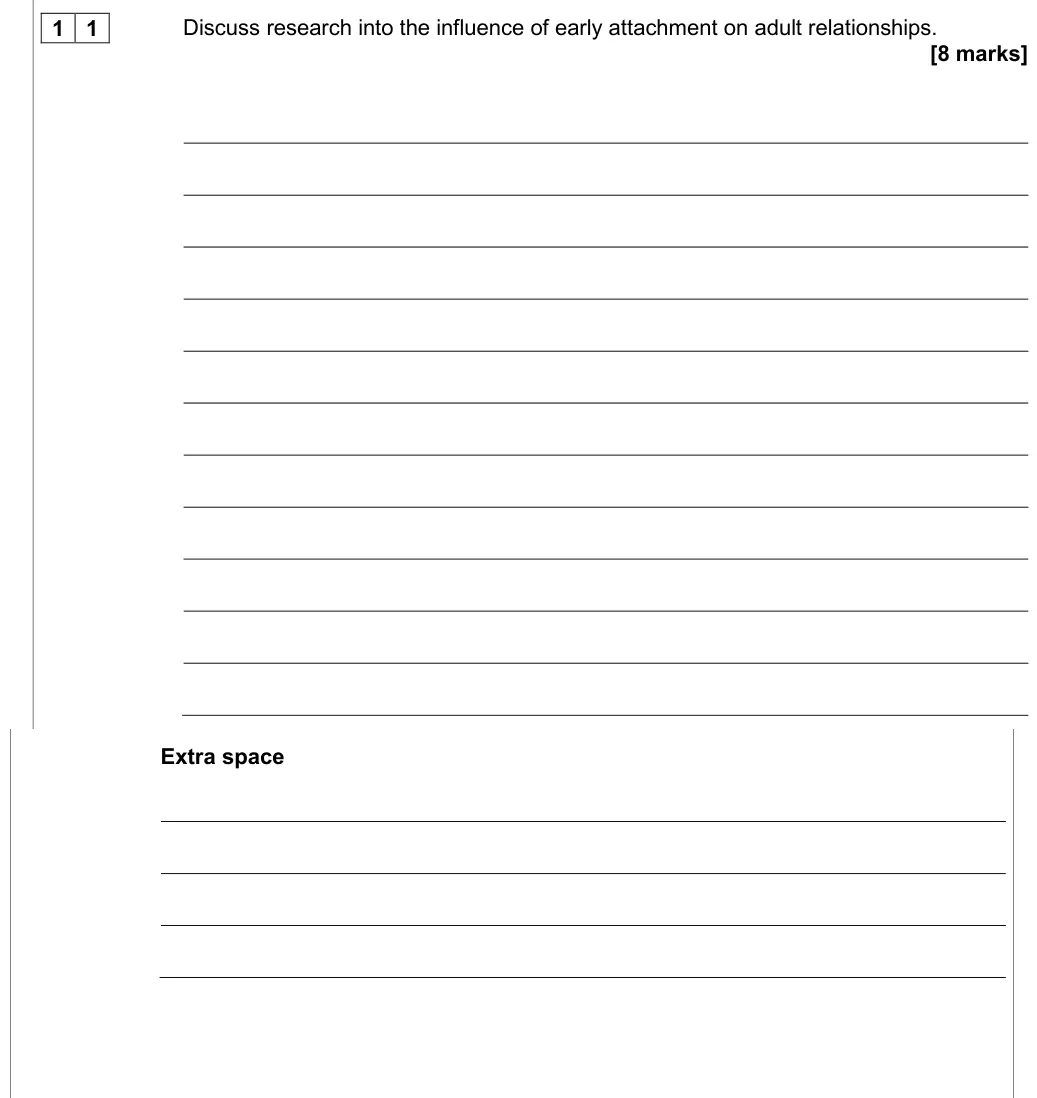
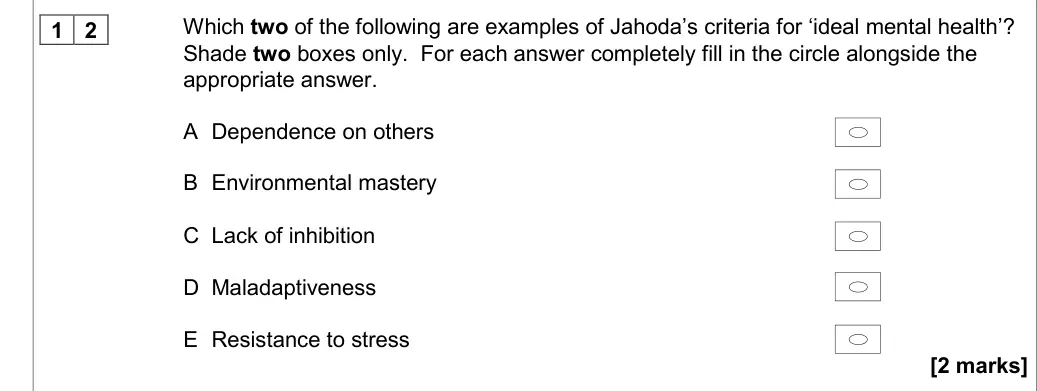
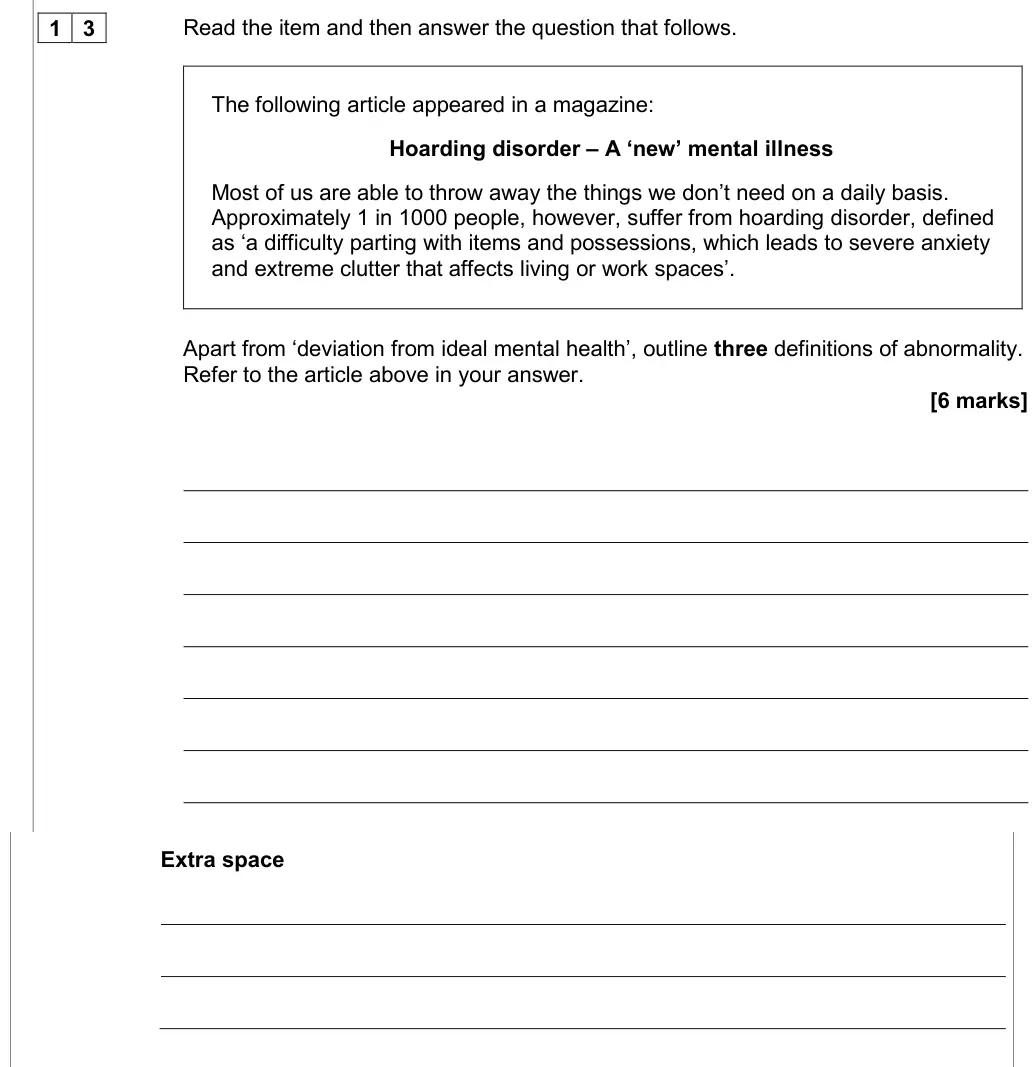
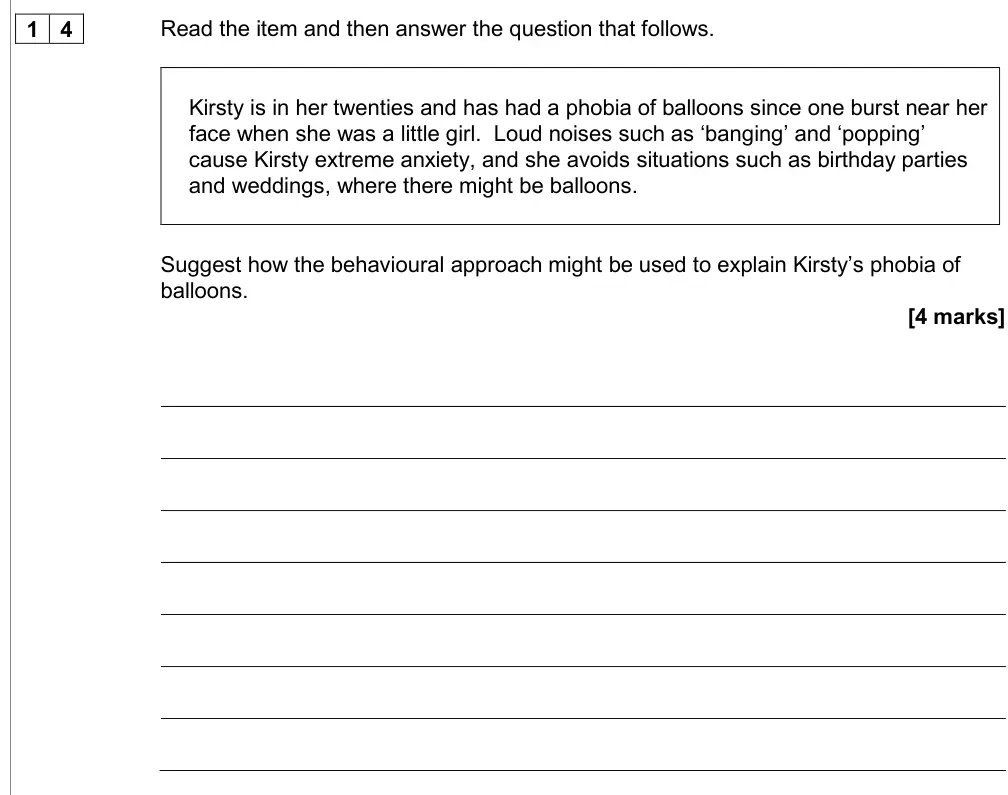
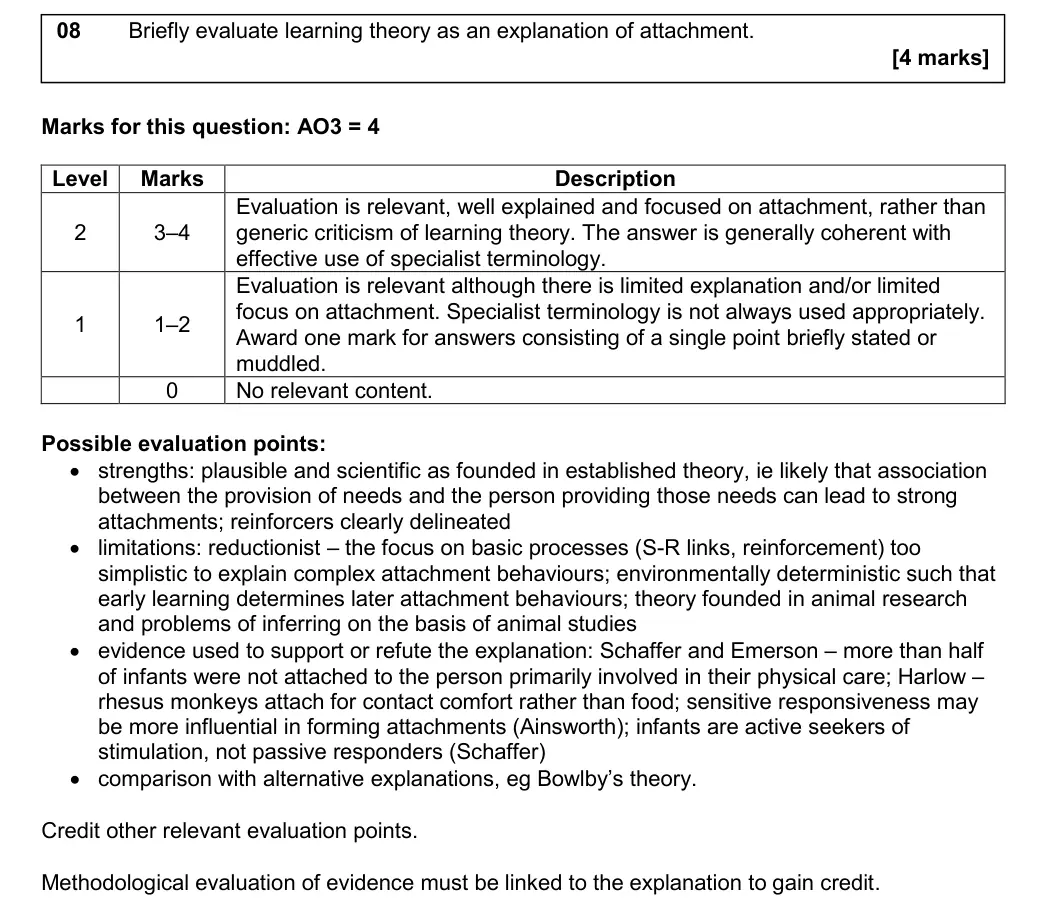
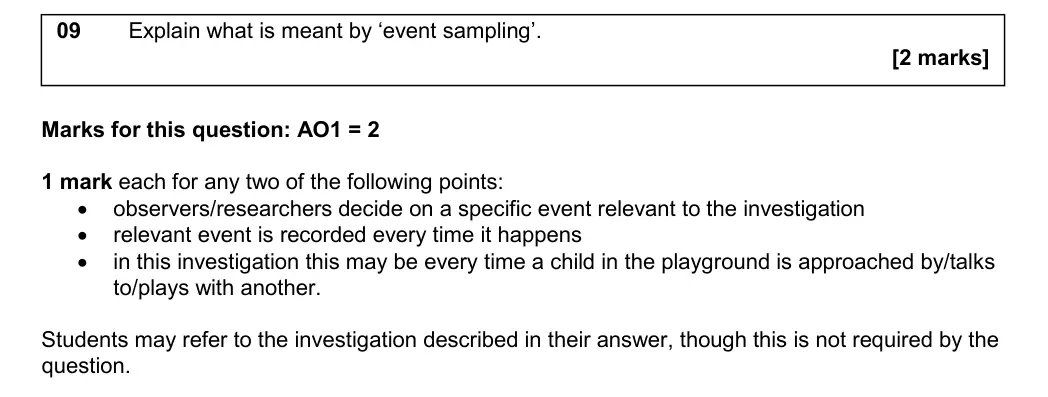
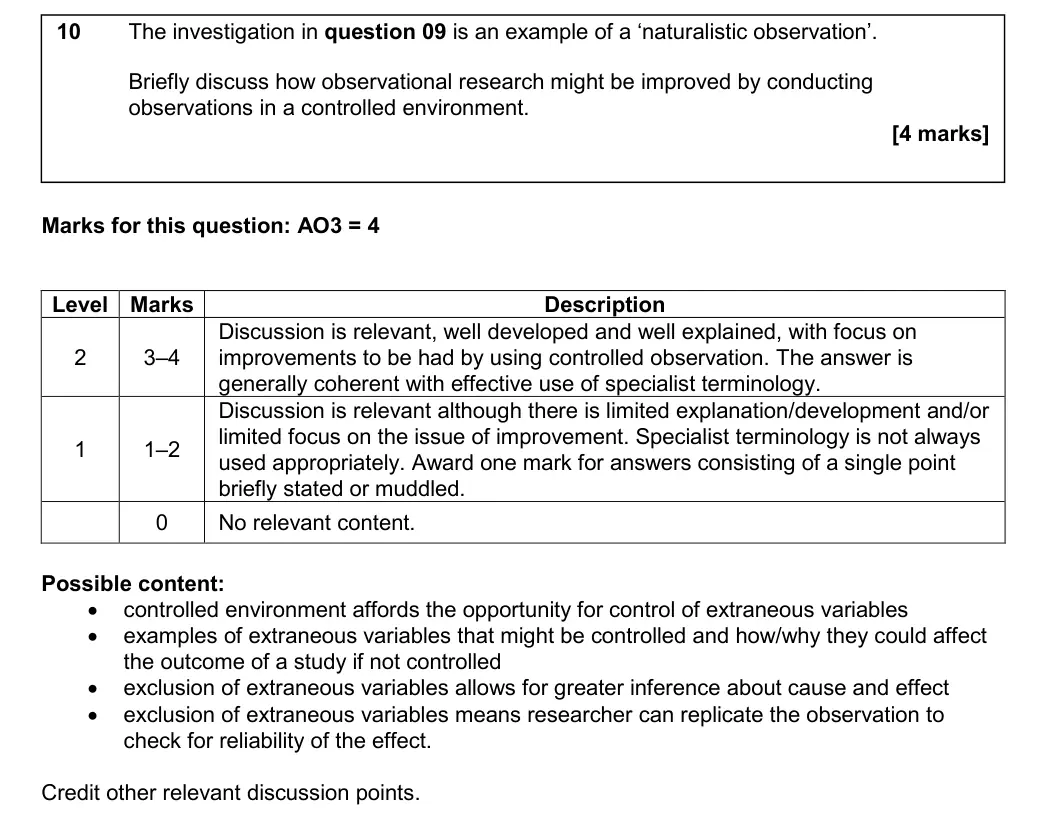
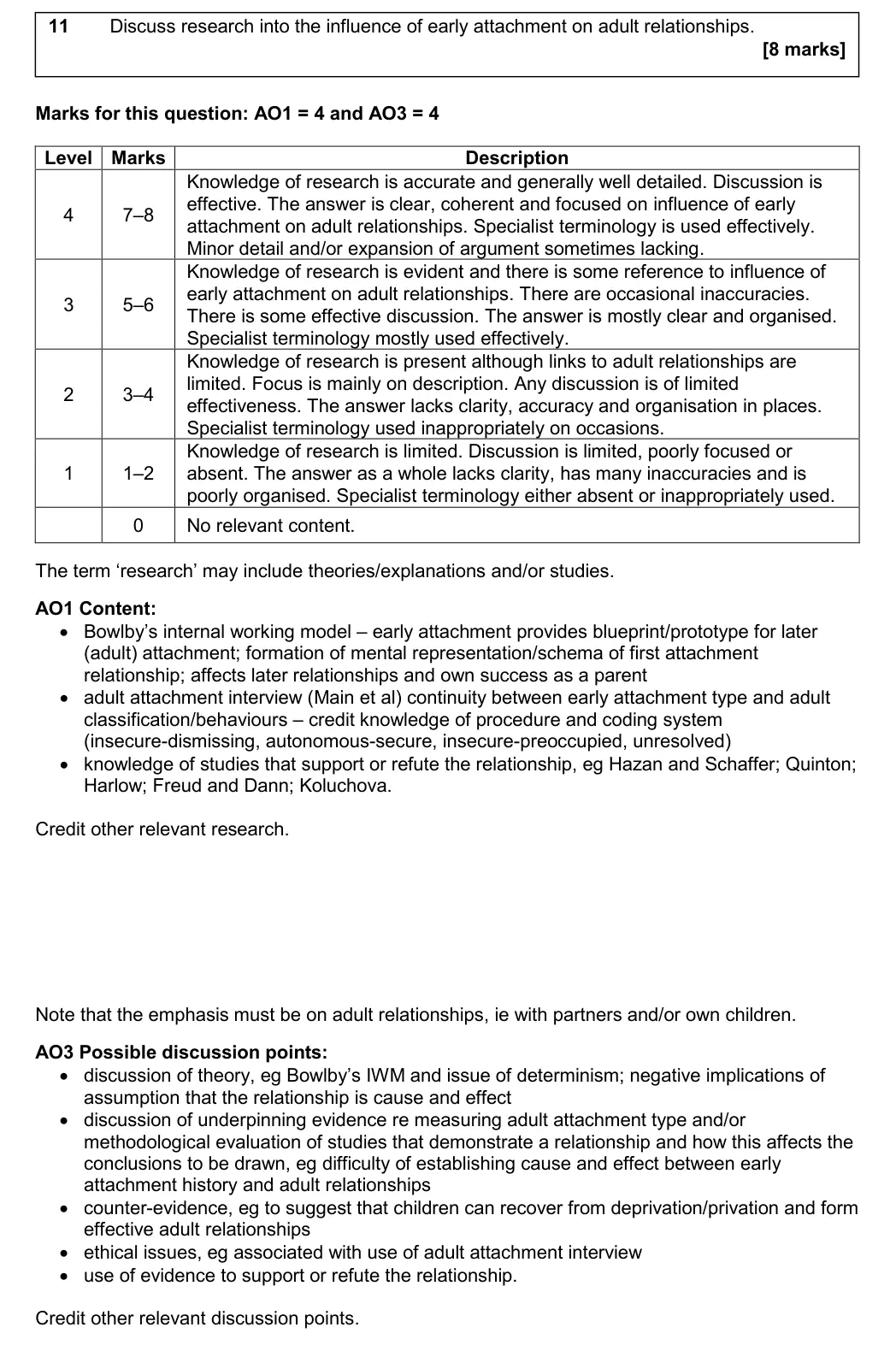
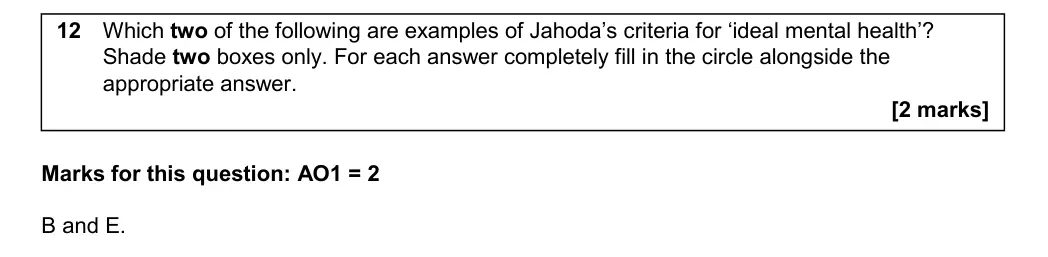
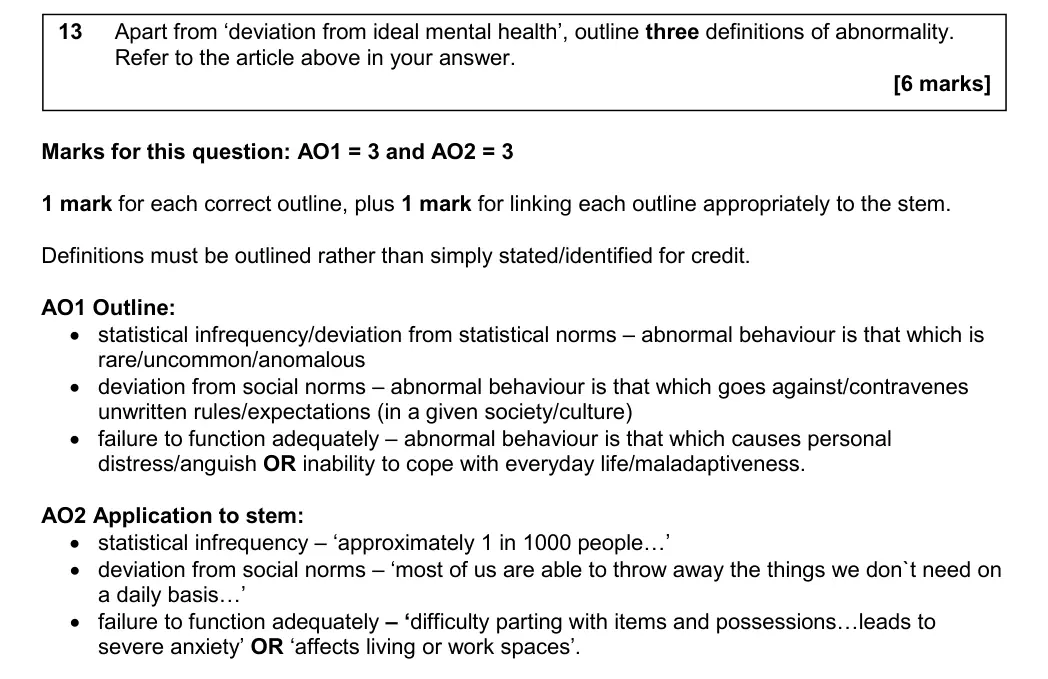
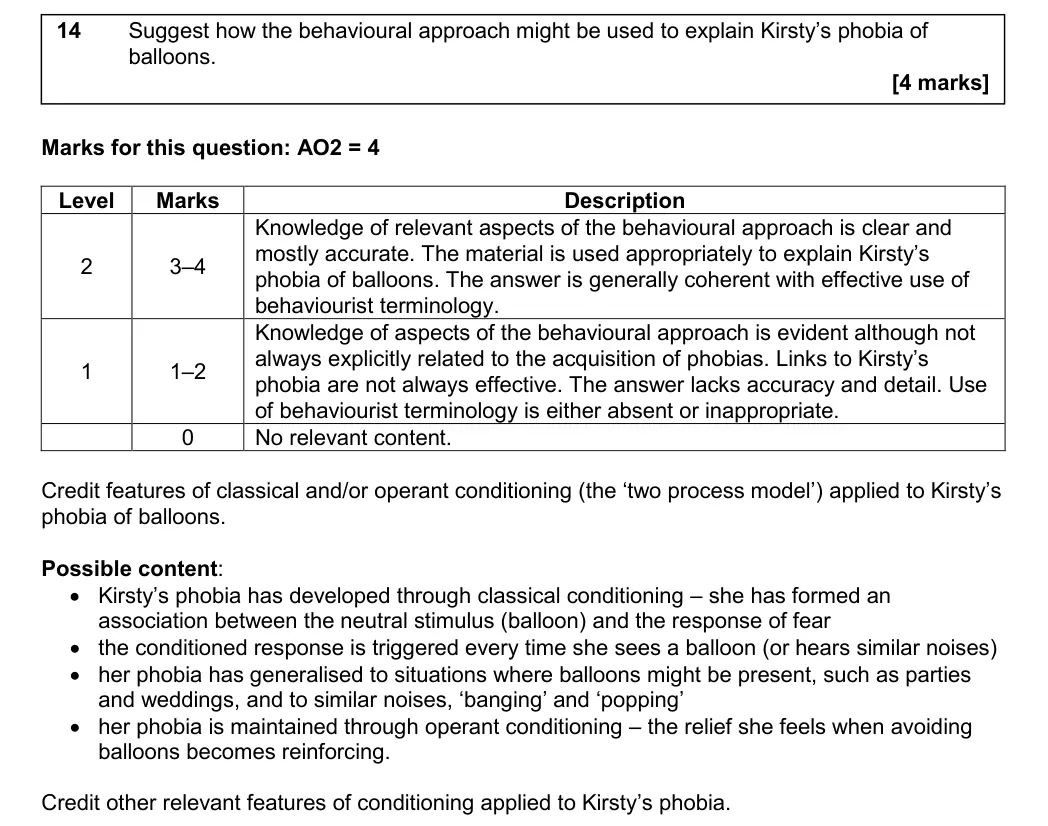
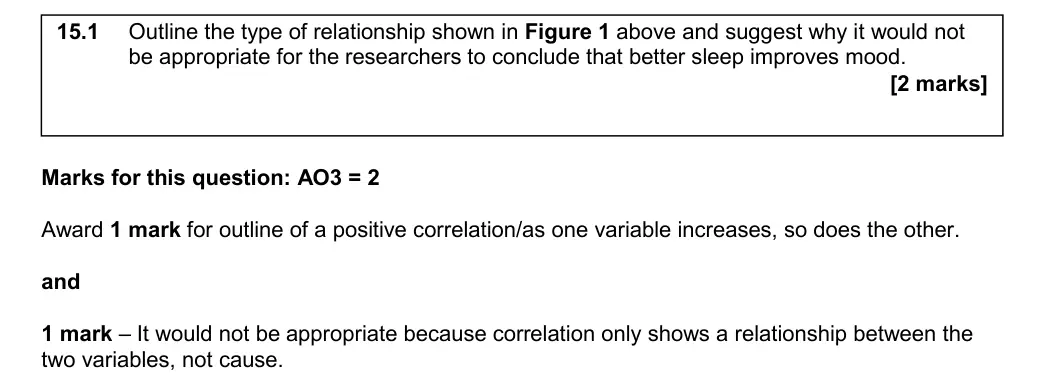
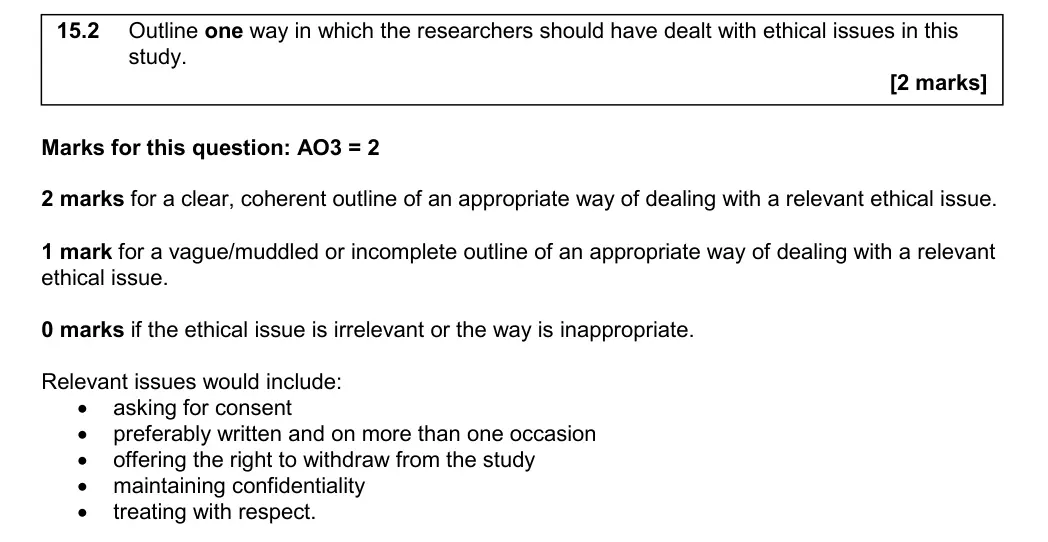
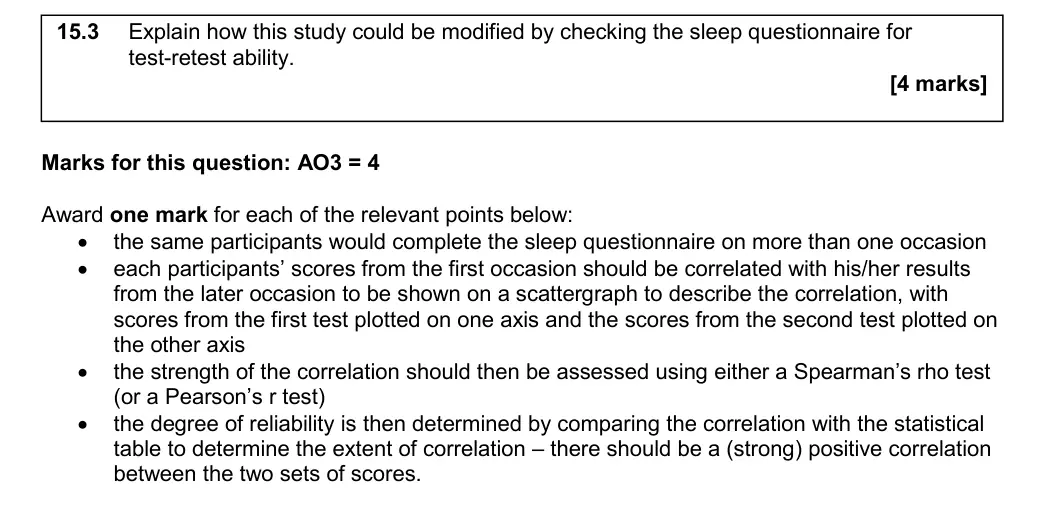
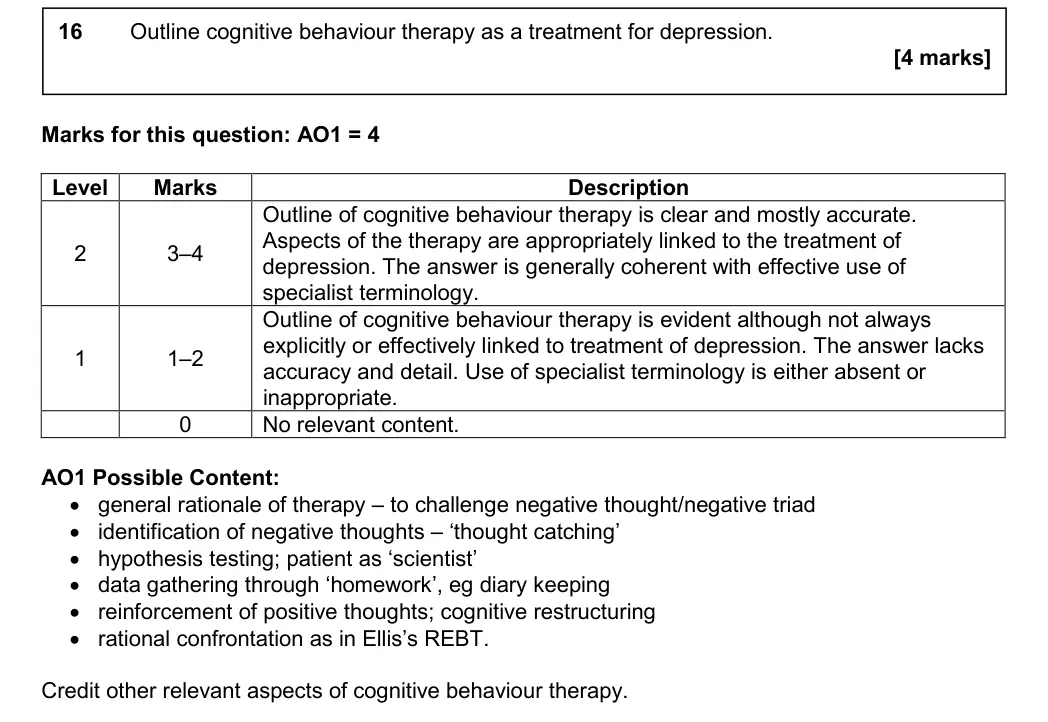
Mark scheme, including level descriptors and indicative content Notes from the mark scheme and report Off-spec: Schaffer's stages of attachment removed in v1.4 asocial/pre-attachment, indiscriminate, discriminate/specific, multiple Mark scheme, including level descriptors and indicative content Notes from the mark scheme and report Max = secure (type B), Jessica = insecure-resistant (type C), William = insecure-avoidant (type A) Mark scheme, including level descriptors and indicative content Notes from the mark scheme and report must focus on attachment, not generic criticism of learning theory Harlow contact comfort, sensitive responsiveness, comparison with Bowlby methodology must be linked to the explanation MS also credits Schaffer and Emerson's multiple-attachment findings, removed in v1.4 Mark scheme, including level descriptors and indicative content Notes from the mark scheme and report decide specific event, record every time it occurs reference to the study not required Mark scheme, including level descriptors and indicative content Notes from the mark scheme and report control of extraneous variables (with examples), cause-and-effect inference, replicability/reliability must focus on improvement Mark scheme, including level descriptors and indicative content Notes from the mark scheme and report emphasis must be on ADULT relationships (partners, own children) internal working model, Adult Attachment Interview, Hazan and Shaver determinism, cause-and-effect problems, recovery from privation Mark scheme, including level descriptors and indicative content Notes from the mark scheme and report answers B (environmental mastery) and E (resistance to stress) Mark scheme, including level descriptors and indicative content Notes from the mark scheme and report 1 mark outline + 1 mark link to article for each of statistical infrequency (1 in 1000), deviation from social/cultural norms (most throw things away), failure to function adequately (severe anxiety, affects living spaces) stating names only not credited Mark scheme, including level descriptors and indicative content Notes from the mark scheme and report classical conditioning (balloon associated with fear, generalisation to bangs/popping and parties) and/or operant maintenance (relief from avoidance reinforcing) applied to Kirsty Mark scheme, including level descriptors and indicative content Notes from the mark scheme and report positive correlation + correlation shows relationship not cause Mark scheme, including level descriptors and indicative content Notes from the mark scheme and report appropriate way of dealing with a relevant issue (consent, right to withdraw, confidentiality) for depressed patients irrelevant issue = 0 Mark scheme, including level descriptors and indicative content Notes from the mark scheme and report same participants complete questionnaire twice correlate scores (scattergram) Spearman's rho/Pearson's r compare with critical value, strong positive correlation needed Mark scheme, including level descriptors and indicative content Notes from the mark scheme and report must be linked to depression: challenging negative triad, thought-catching, patient as scientist, homework, REBT Work with an AQA psychology tutor Want a paper marked and gone through with you? Message us.
Prefer email? Send an enquiry