November 2021: Paper 1

96 marks · 18 question parts · Paper, mark scheme and report on AQA's site

This paper was set on the previous specification. 2 parts are on content removed in the 2025 specification and are marked "Old spec only".

Question by question

QTopicMarksAOType
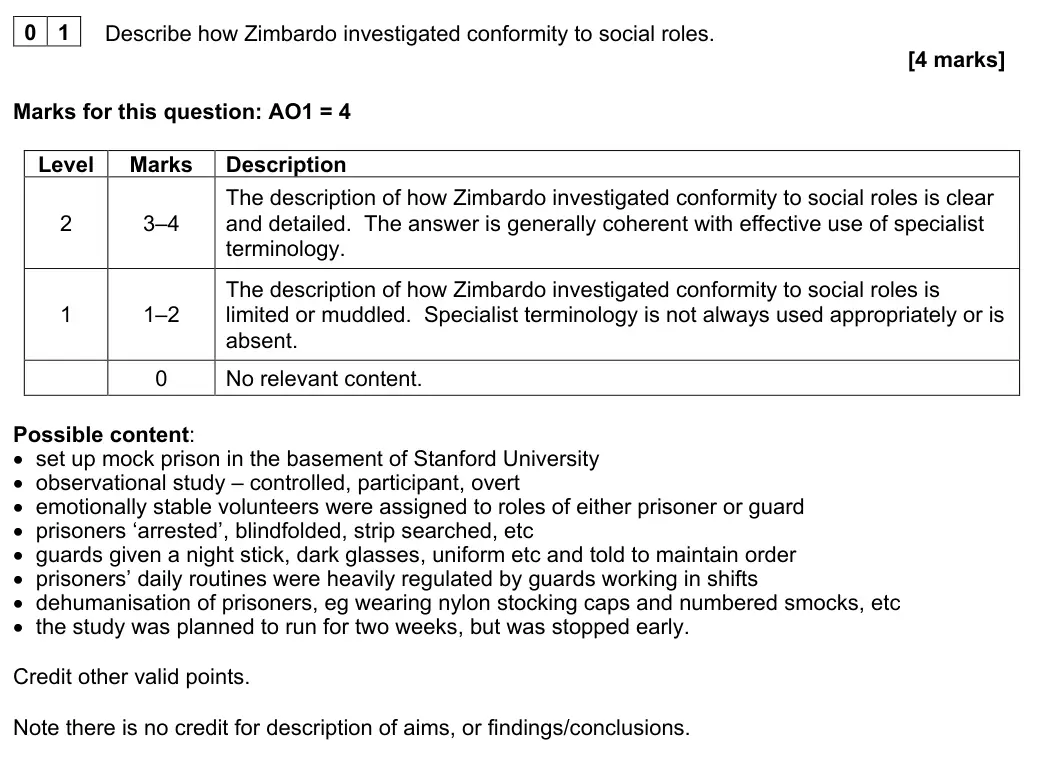
1 Social influence, Research methods: methods and techniquesOld spec 4AO1=4Outline
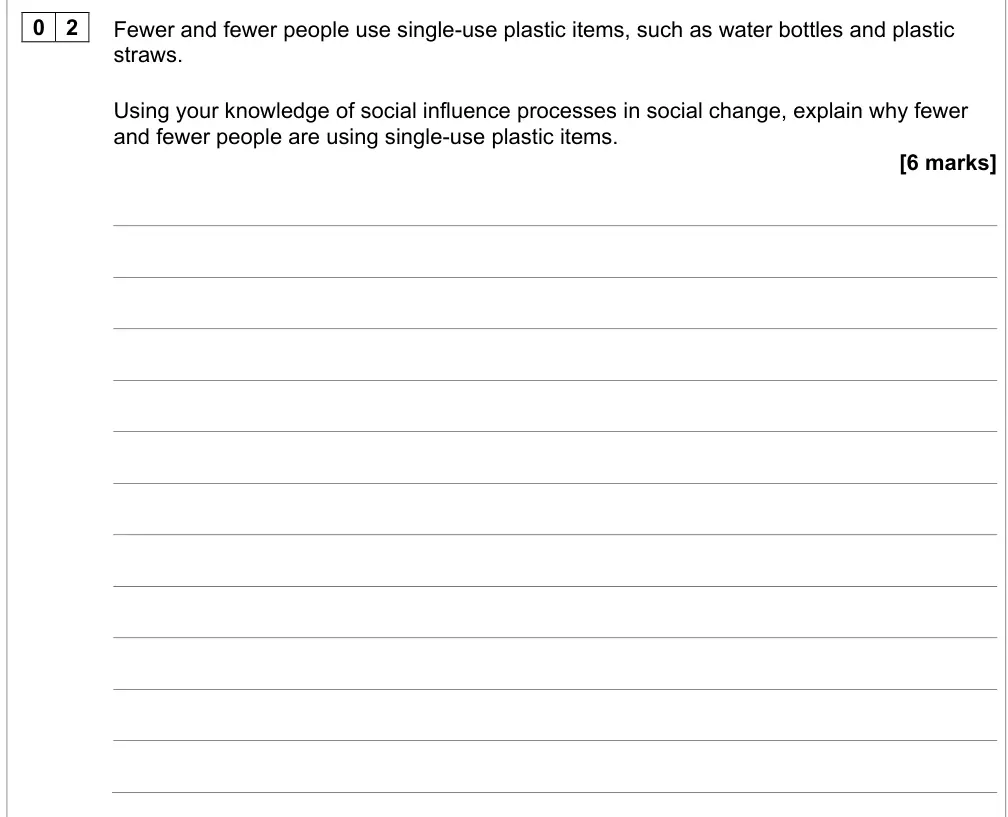
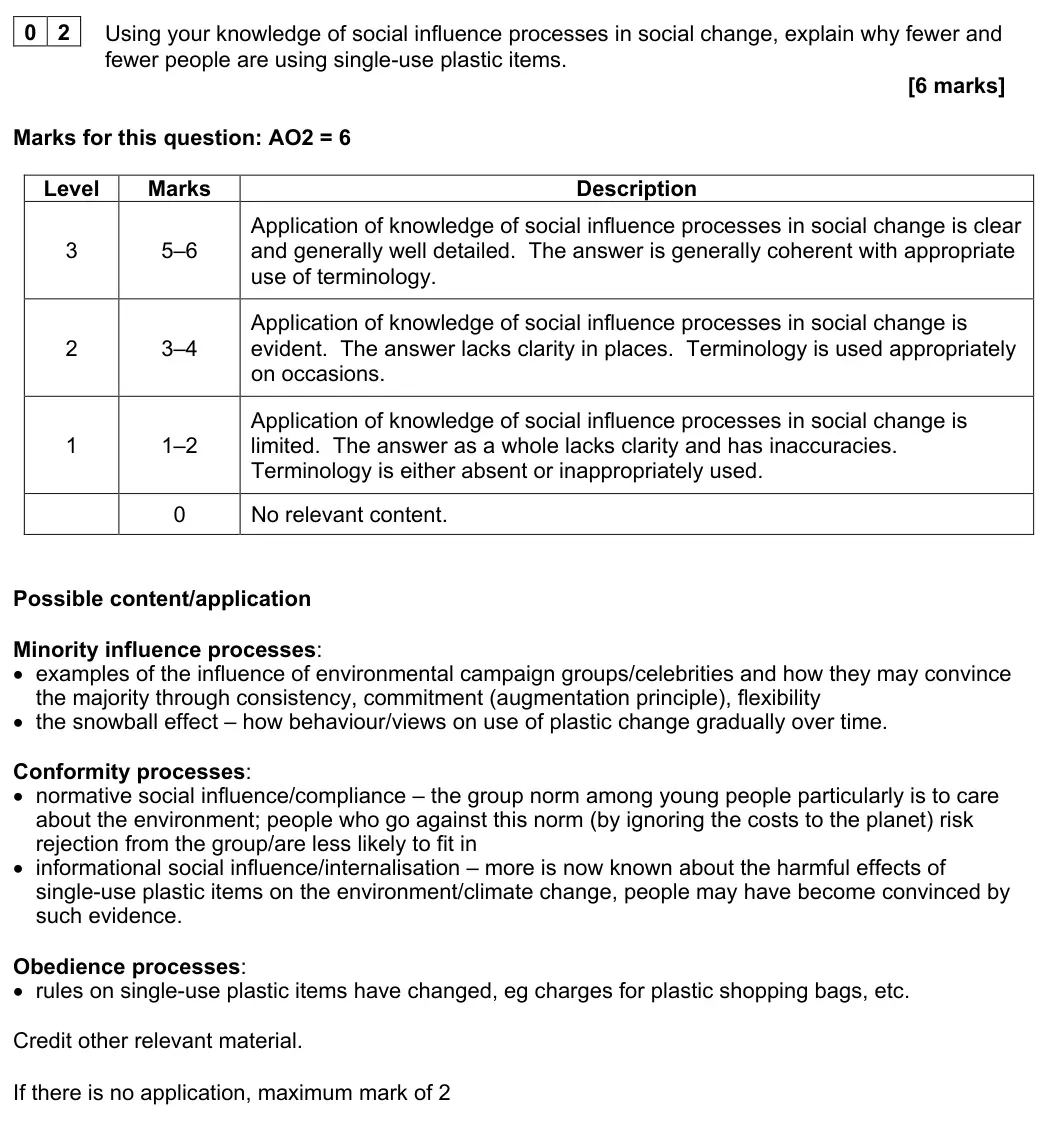
2 Social influenceOld spec 6AO2=6Application
3 Research methods: data handling and analysis 2AO2=1,AO3=1Research methods
4 Research methods: scientific processes 4AO3=4Research methods
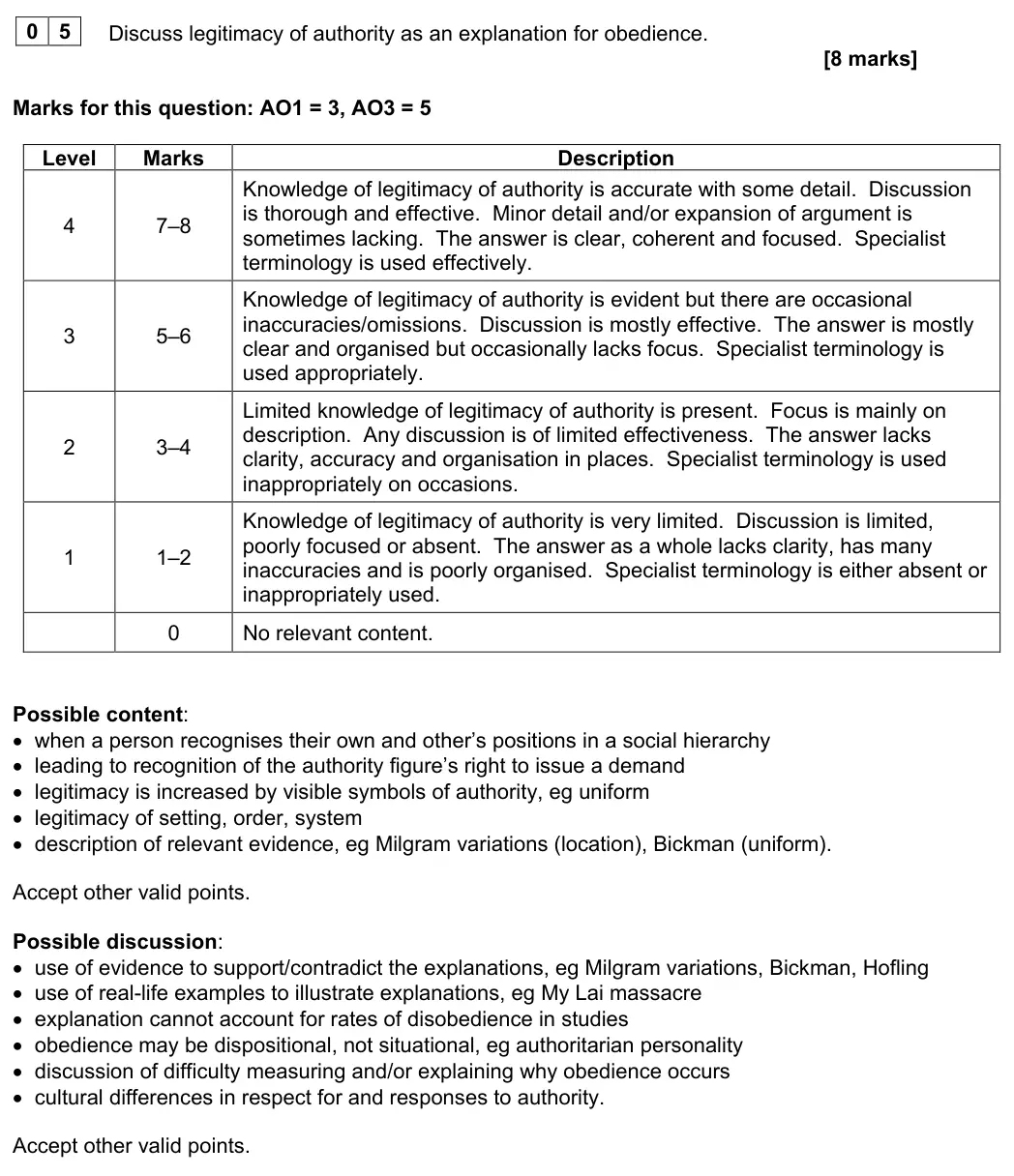
5 Social influence 8AO1=3,AO3=5Extended writing
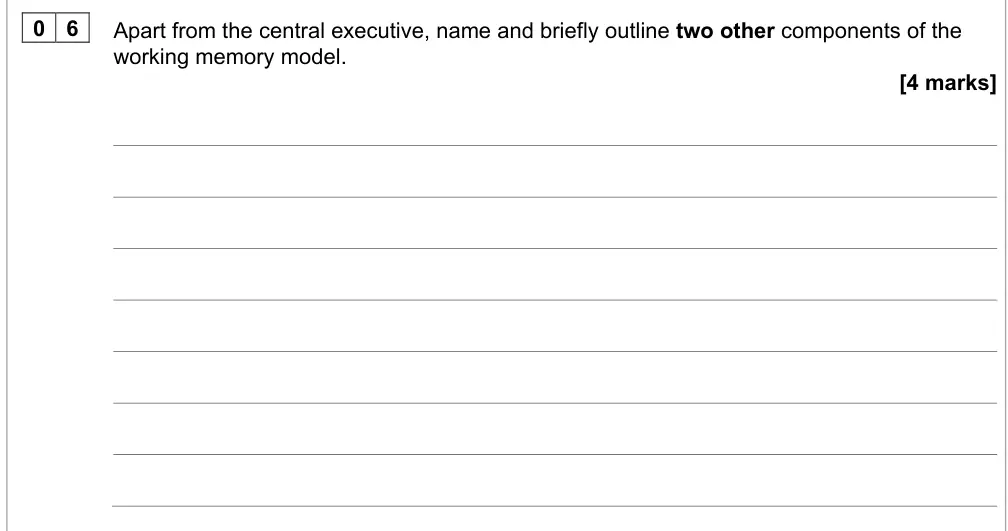
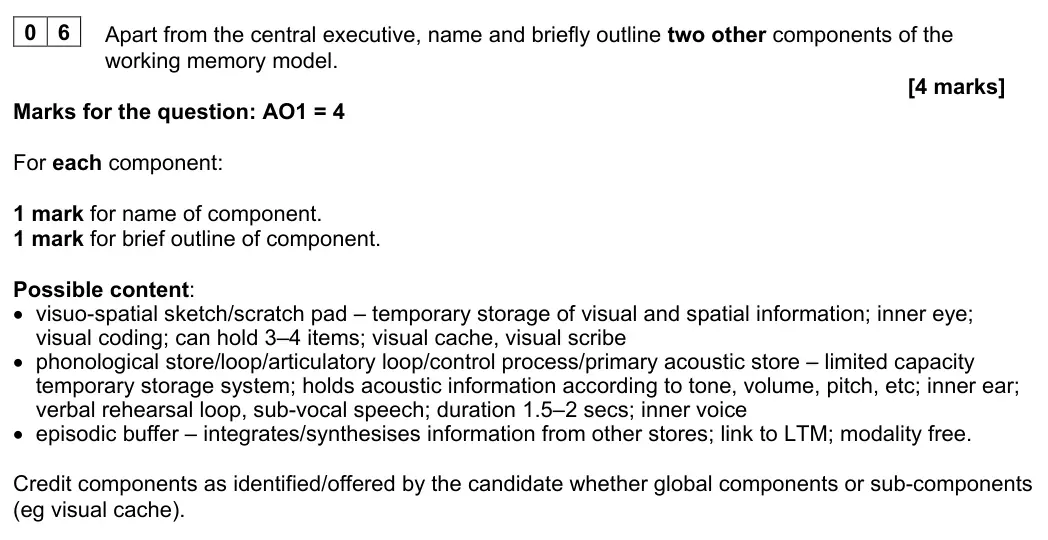
6 Memory 4AO1=4Outline
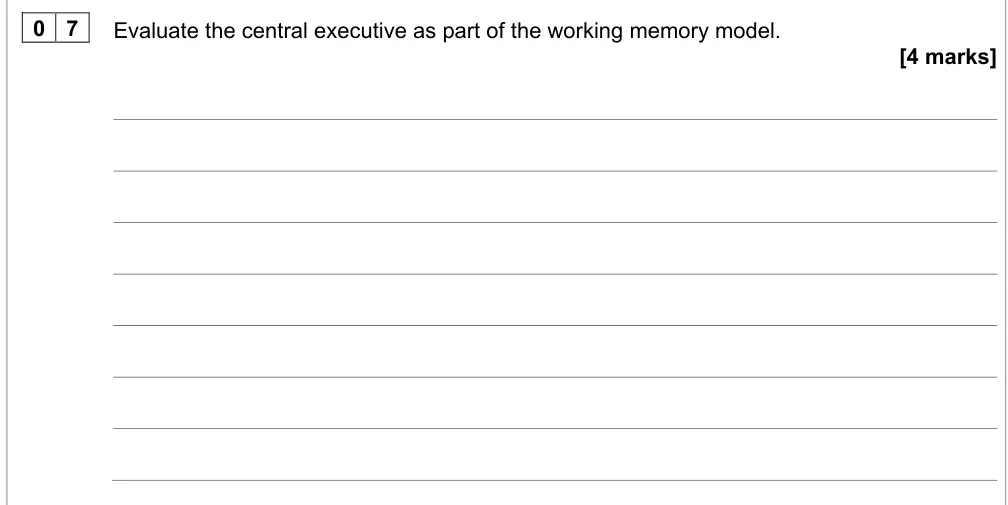
7 Memory 4AO3=4Evaluate (short)
8 Memory 16AO1=6,AO2=4,AO3=6Extended writing
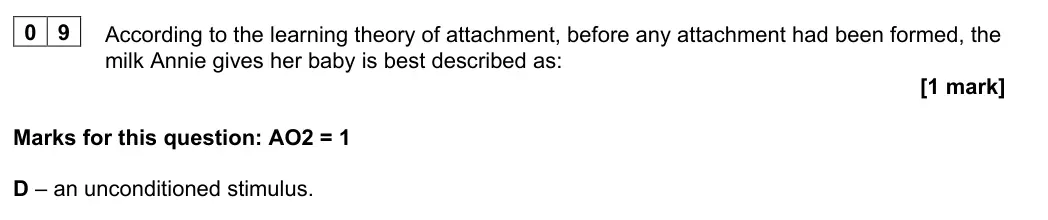
9 Attachment 1AO2=1Multiple choice
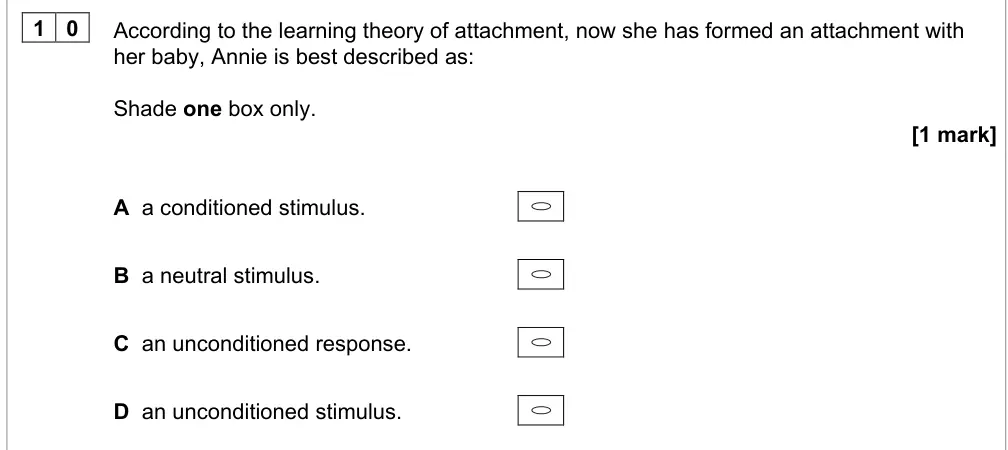
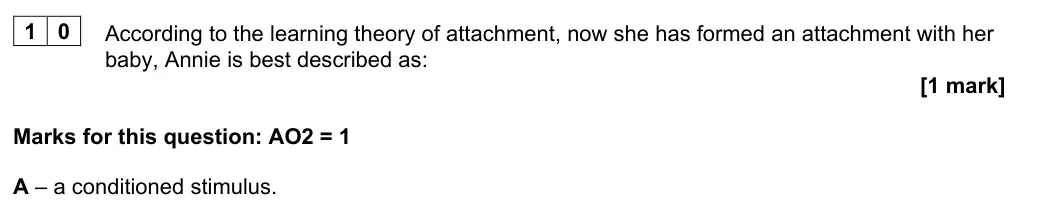
10 Attachment 1AO2=1Multiple choice
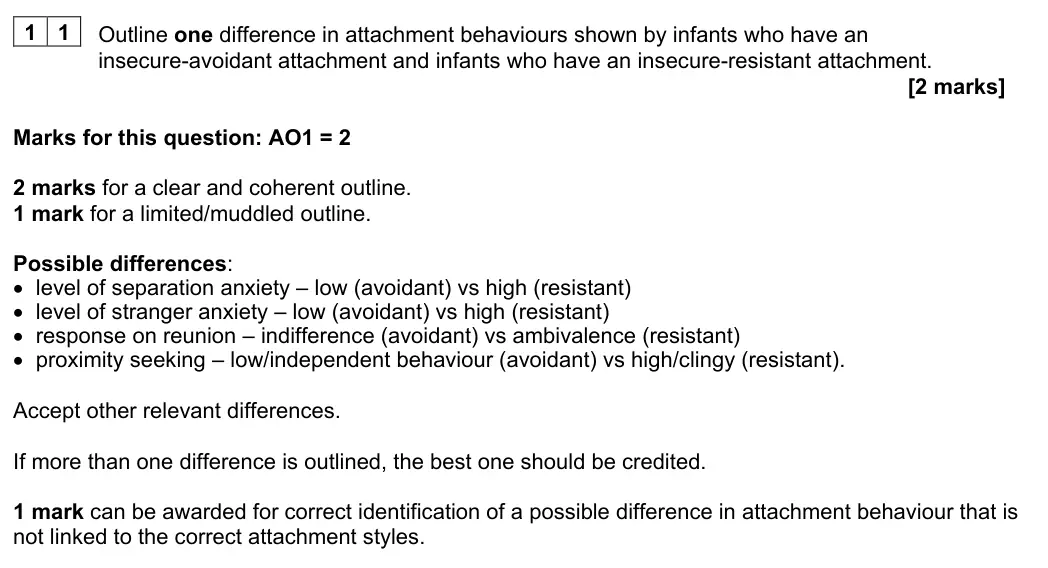
11 Attachment 2AO1=2Outline
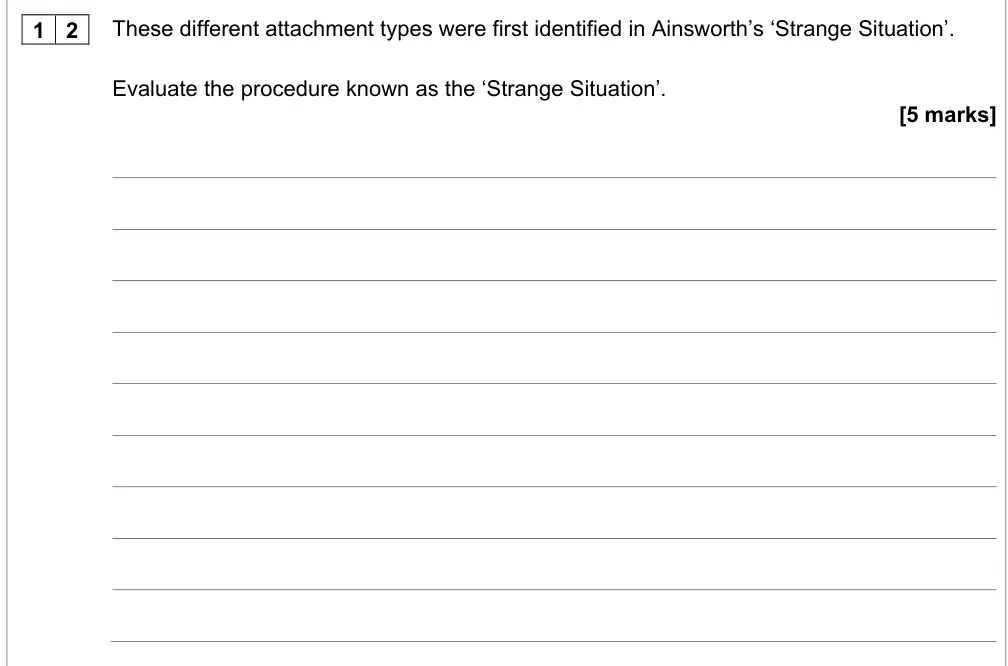
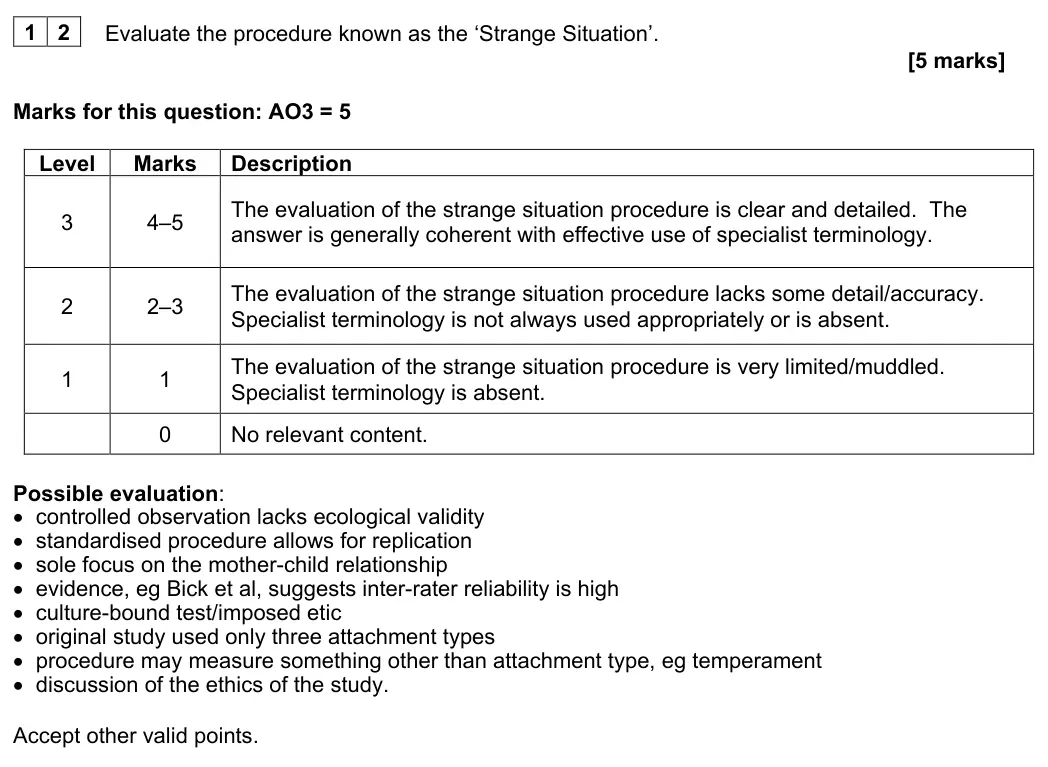
12 Attachment 5AO3=5Evaluate (short)
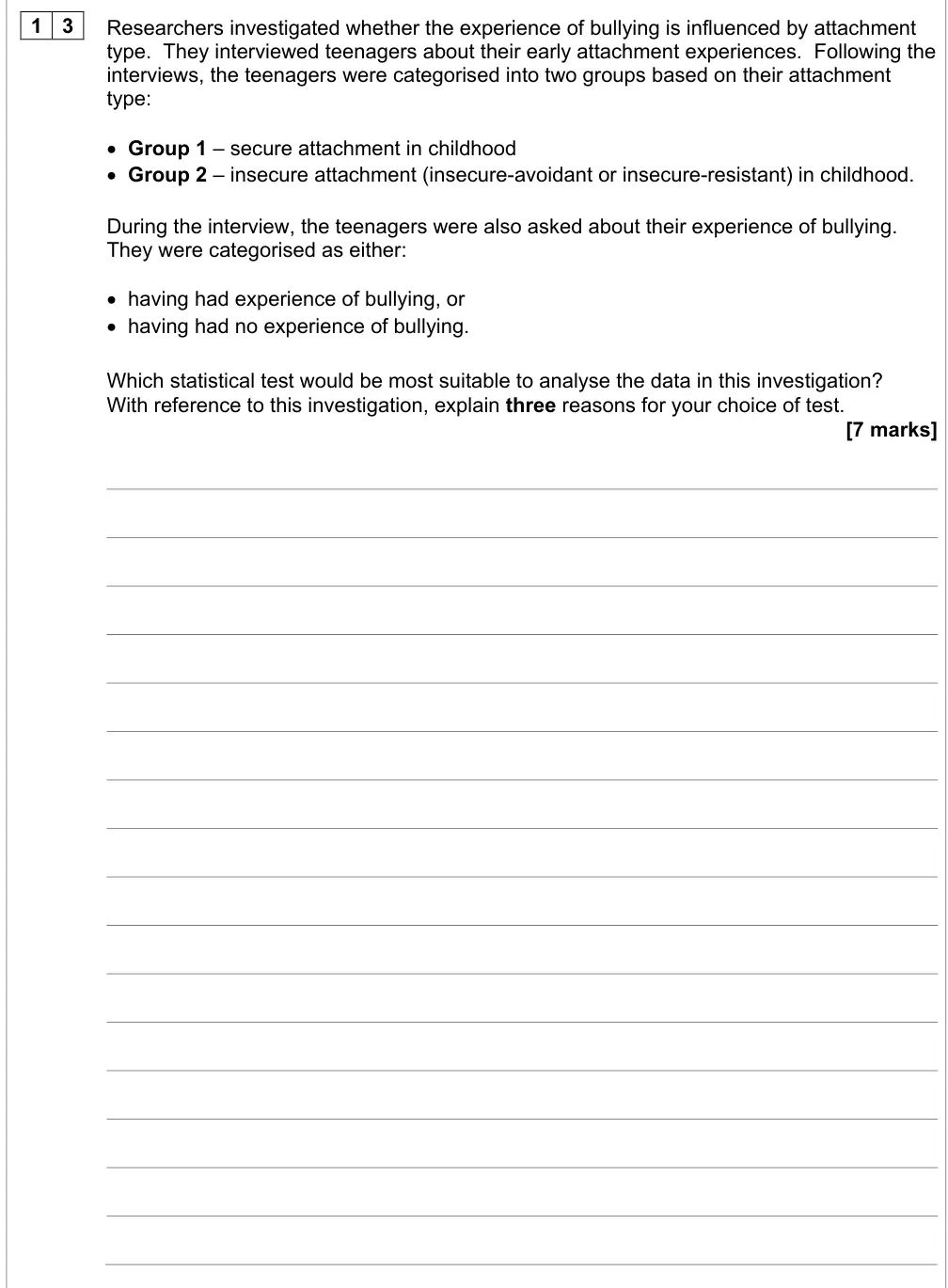
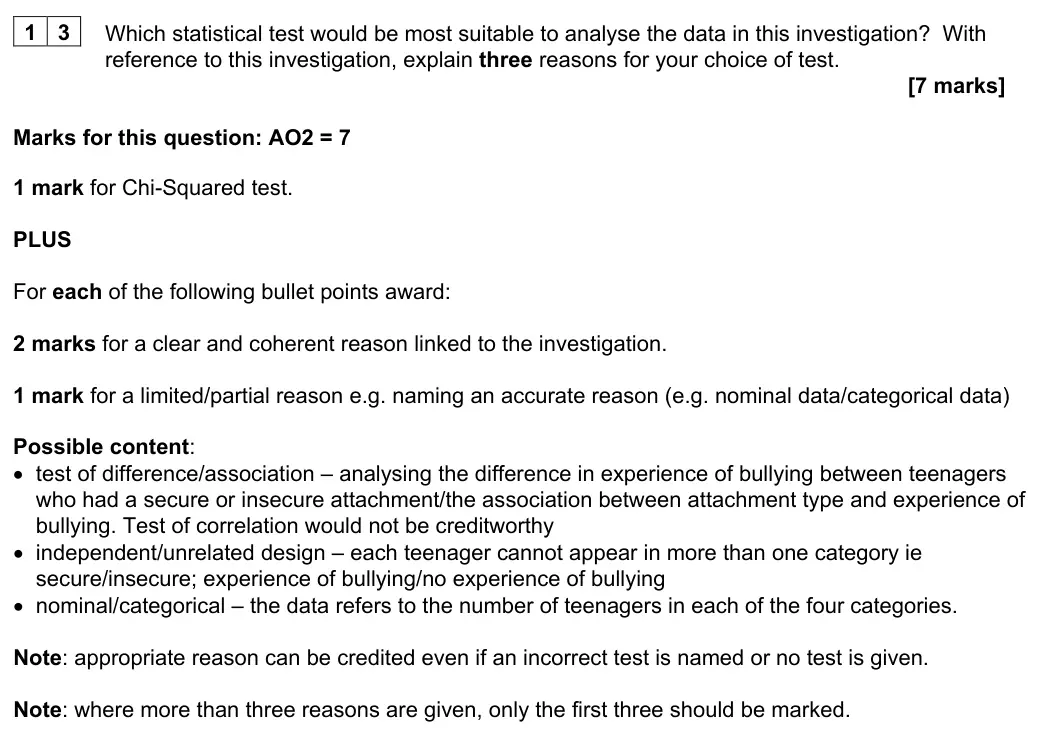
13 Research methods: inferential testing, Research methods: data handling and analysis, Research methods: scientific processes 7AO2=7Research methods
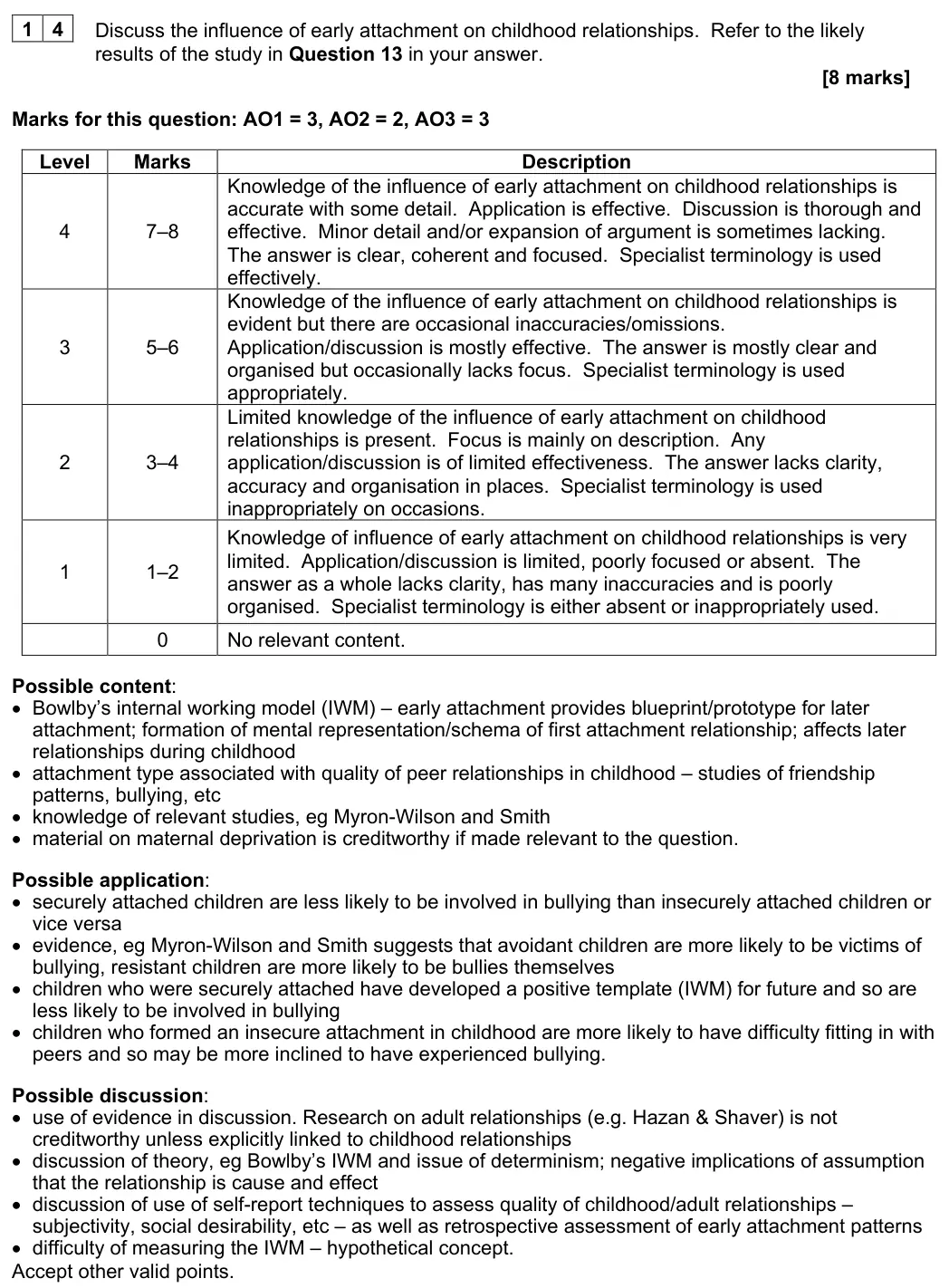
14 Attachment 8AO1=3,AO2=2,AO3=3Extended writing
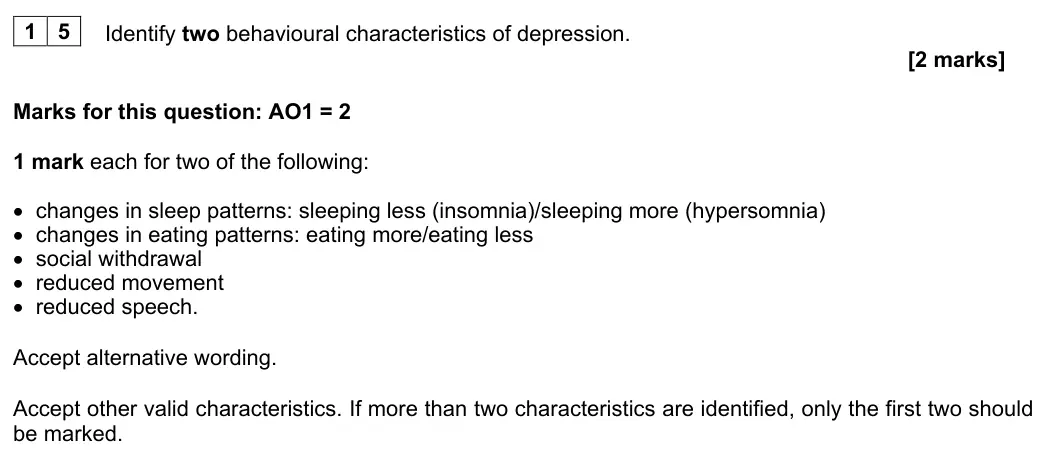
15 Clinical psychology and mental health (psychopathology) 2AO1=2Short answer
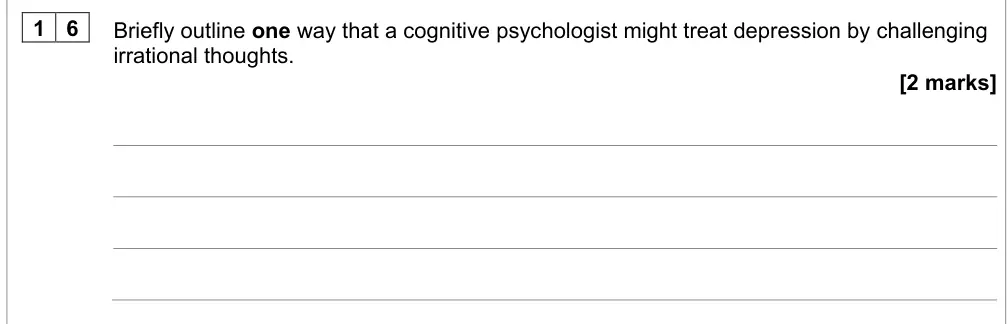
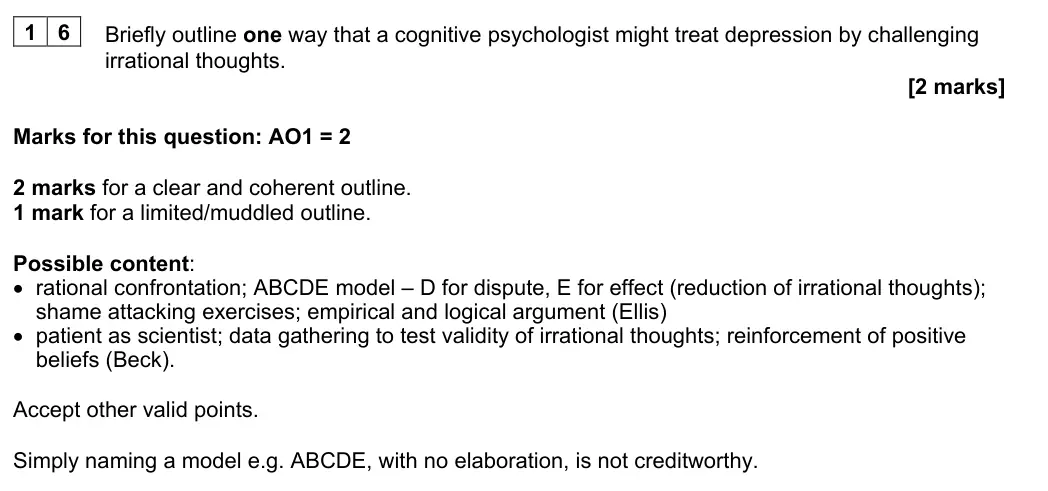
16 Clinical psychology and mental health (psychopathology) 2AO1=2Outline
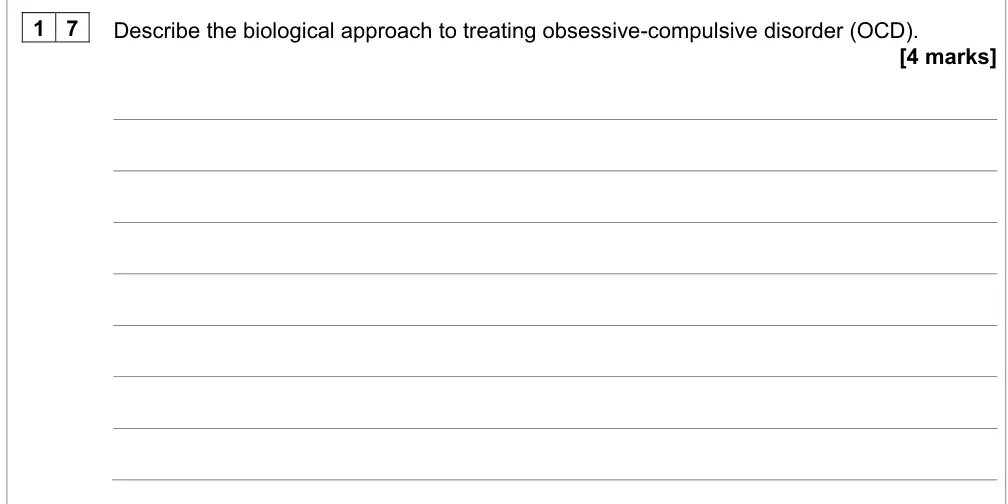
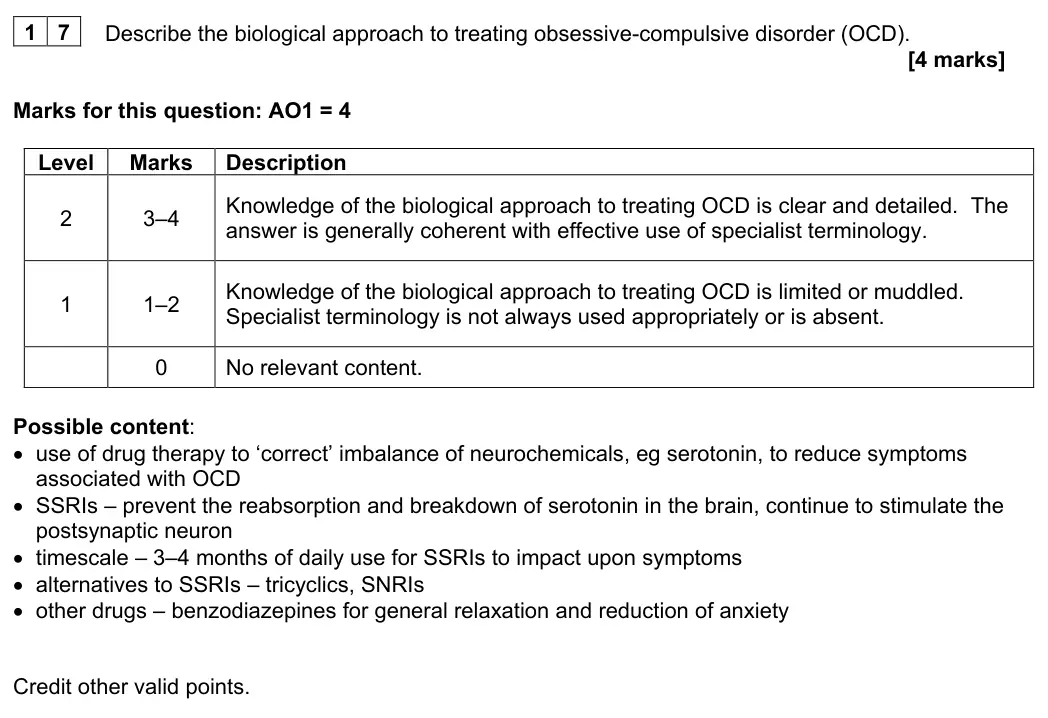
17 Clinical psychology and mental health (psychopathology) 4AO1=4Outline
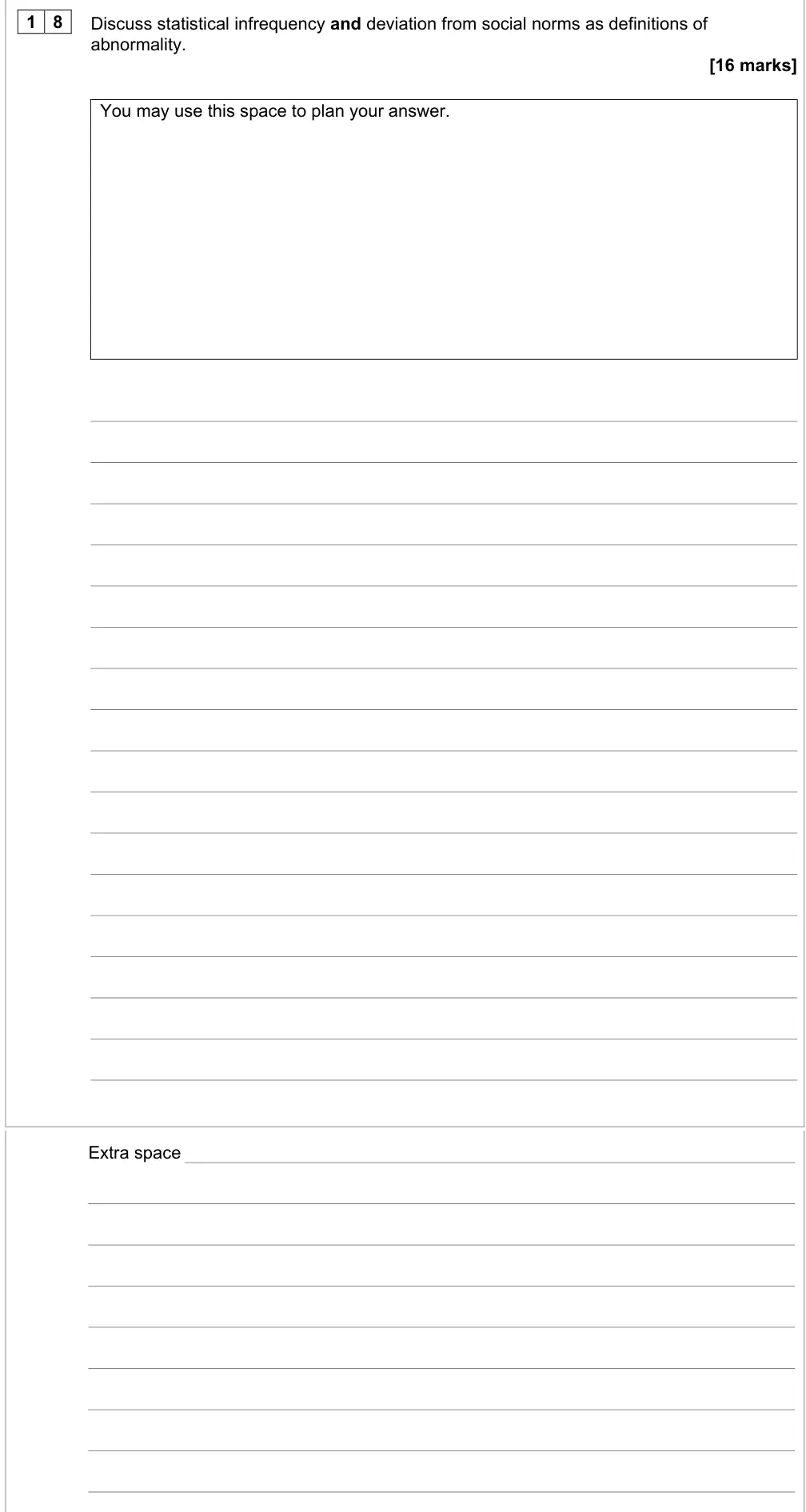
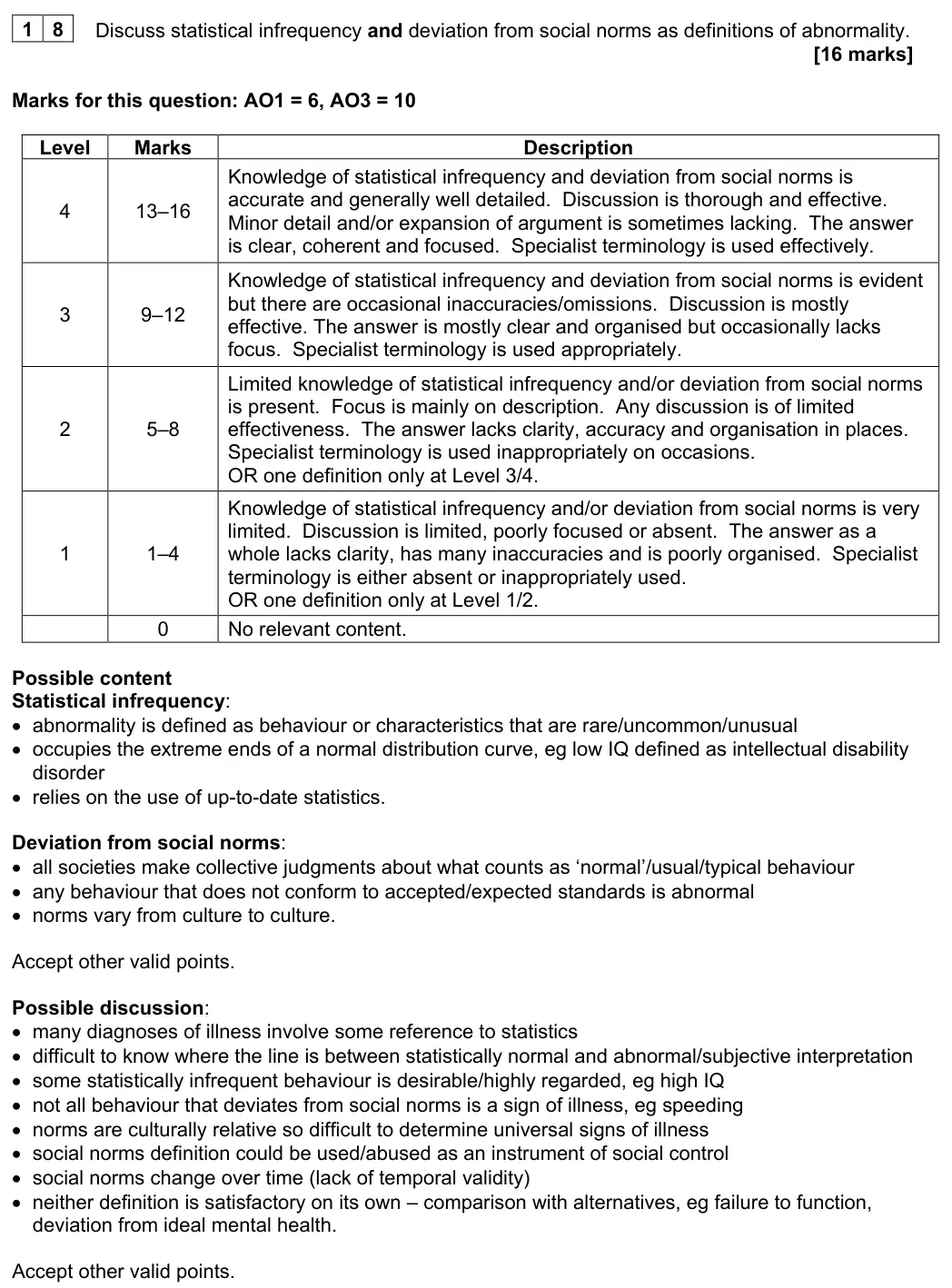
18 Clinical psychology and mental health (psychopathology) 16AO1=6,AO3=10Extended writing

The questions

123456789101112131415161718

November 2021 · Paper 1 · Q3 2 marks AO2=1, AO3=1 Research methods data handling
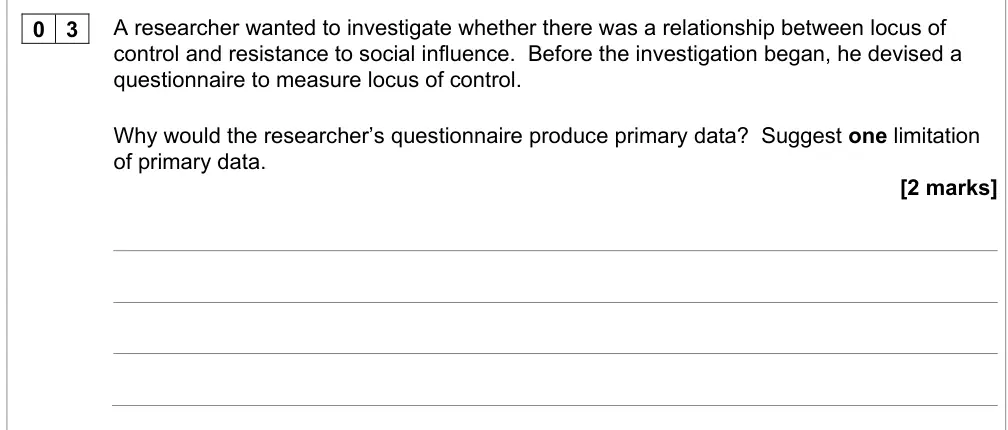
0 3
A researcher wanted to investigate whether there was a relationship between locus of
control and resistance to social influence.  Before the investigation began, he devised a
questionnaire to measure locus of control.
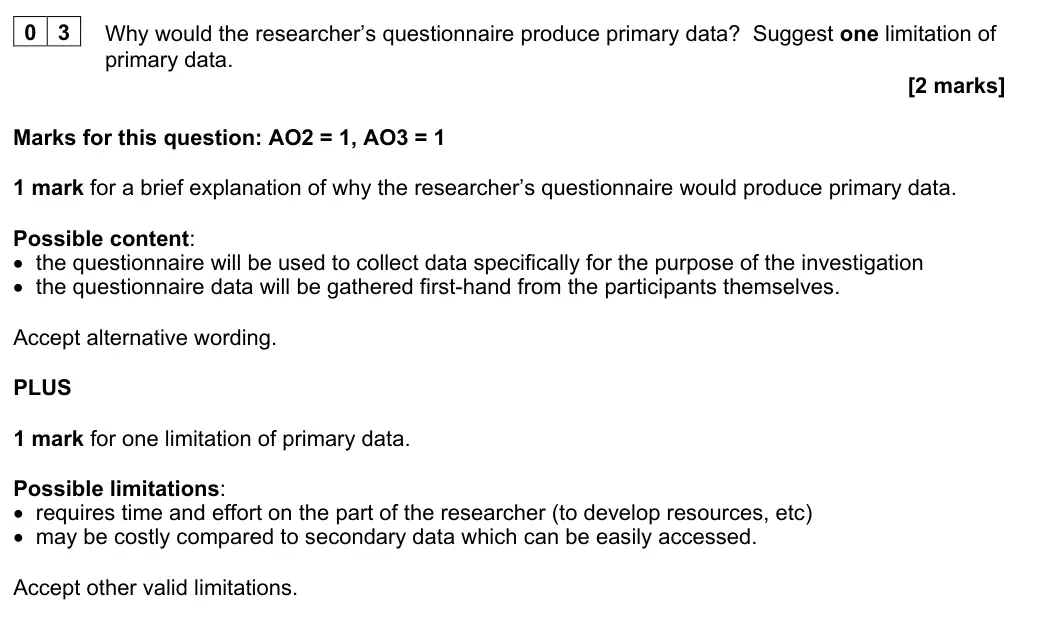
Why would the researcher’s questionnaire produce primary data?  Suggest one limitation
of primary data.
[2 marks]
November 2021 · Paper 1 · Q4 4 marks AO3=4 Research methods scientific processes
0 4
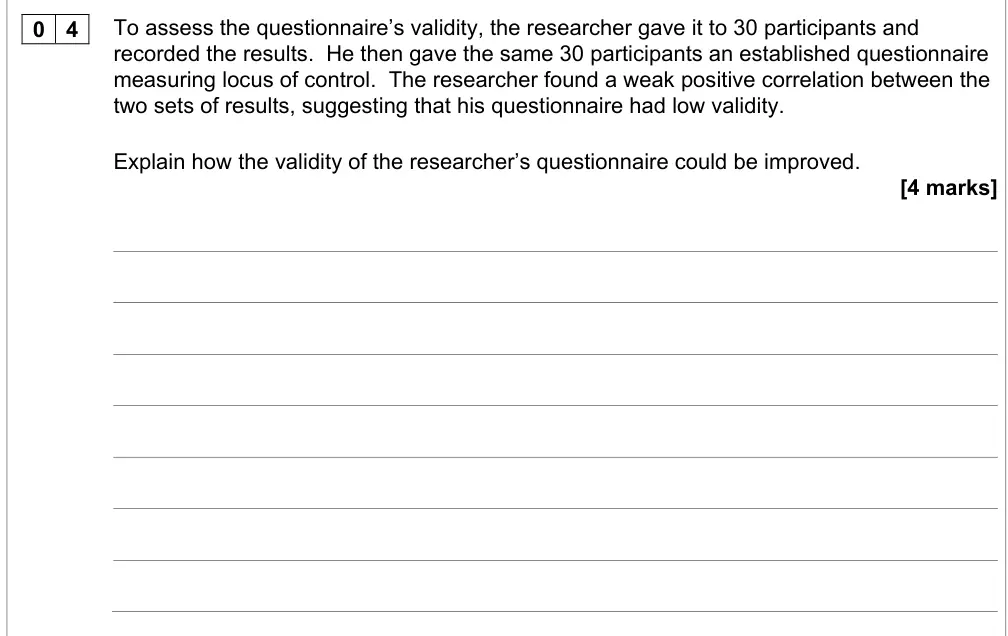
To assess the questionnaire’s validity, the researcher gave it to 30 participants and
recorded the results.  He then gave the same 30 participants an established questionnaire
measuring locus of control.  The researcher found a weak positive correlation between the
two sets of results, suggesting that his questionnaire had low validity.
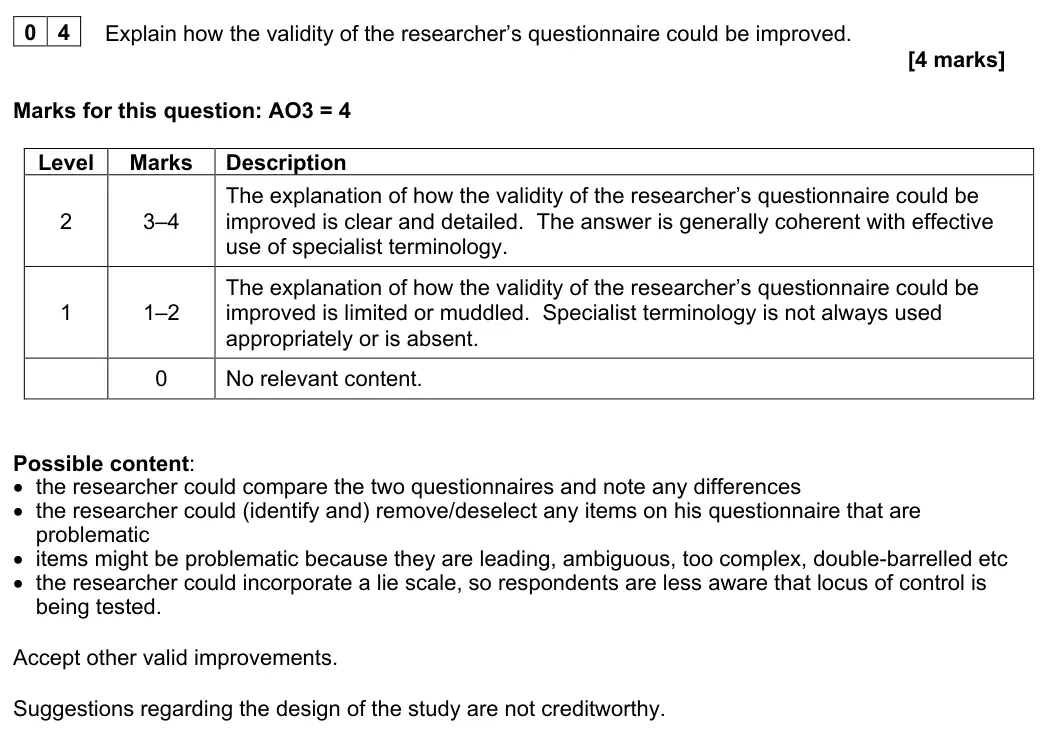
Explain how the validity of the researcher’s questionnaire could be improved.
[4 marks]
November 2021 · Paper 1 · Q5 8 marks AO1=3, AO3=5 Extended writing social influence
0 5
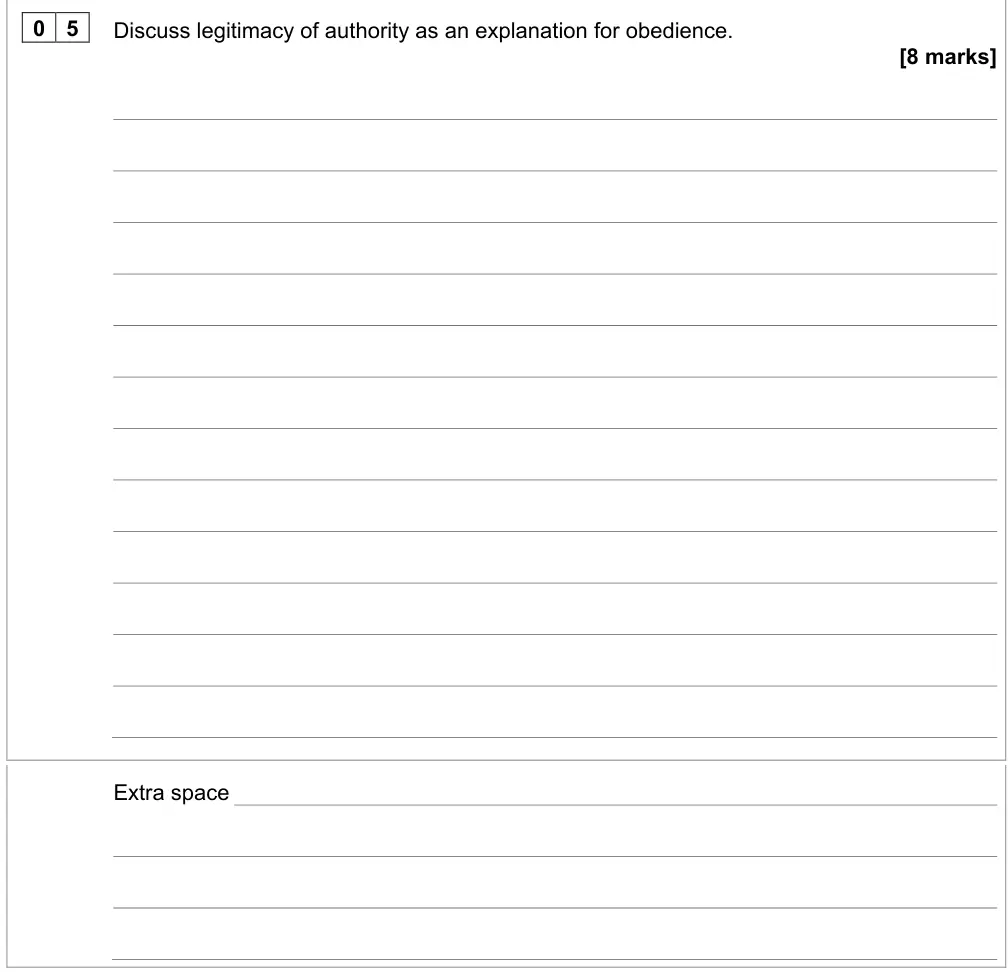
Discuss legitimacy of authority as an explanation for obedience.
[8 marks]
Extra space
November 2021 · Paper 1 · Q6 4 marks AO1=4 Outline memory
0 6
Apart from the central executive, name and briefly outline two other components of the
working memory model.
[4 marks]
November 2021 · Paper 1 · Q7 4 marks AO3=4 Evaluate (short) memory
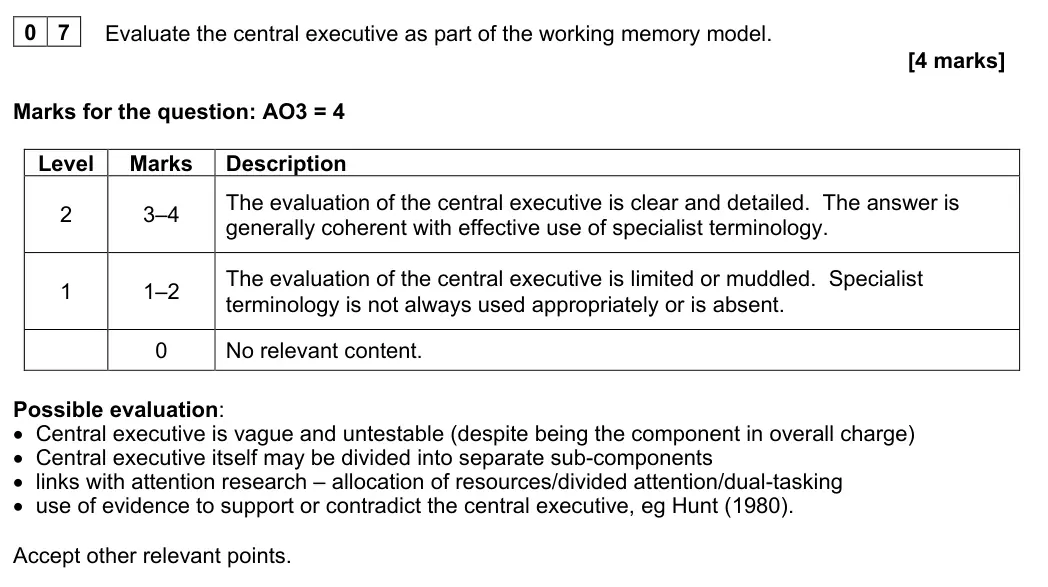
0 7
Evaluate the central executive as part of the working memory model.
[4 marks]
November 2021 · Paper 1 · Q8 16 marks AO1=6, AO2=4, AO3=6 16-mark essay memory
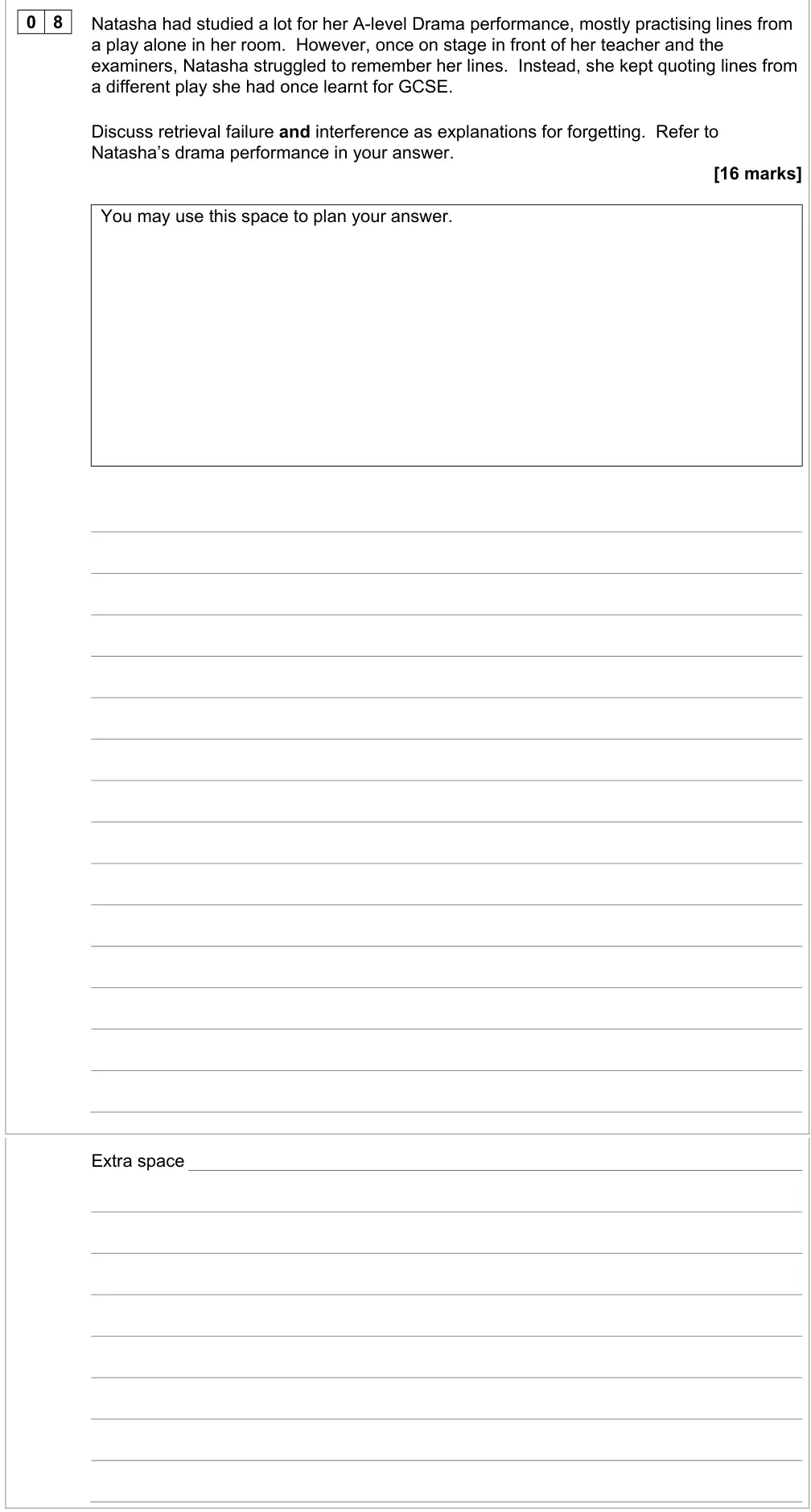
0 8
Natasha had studied a lot for her A-level Drama performance, mostly practising lines from
a play alone in her room.  However, once on stage in front of her teacher and the
examiners, Natasha struggled to remember her lines.  Instead, she kept quoting lines from
a different play she had once learnt for GCSE.
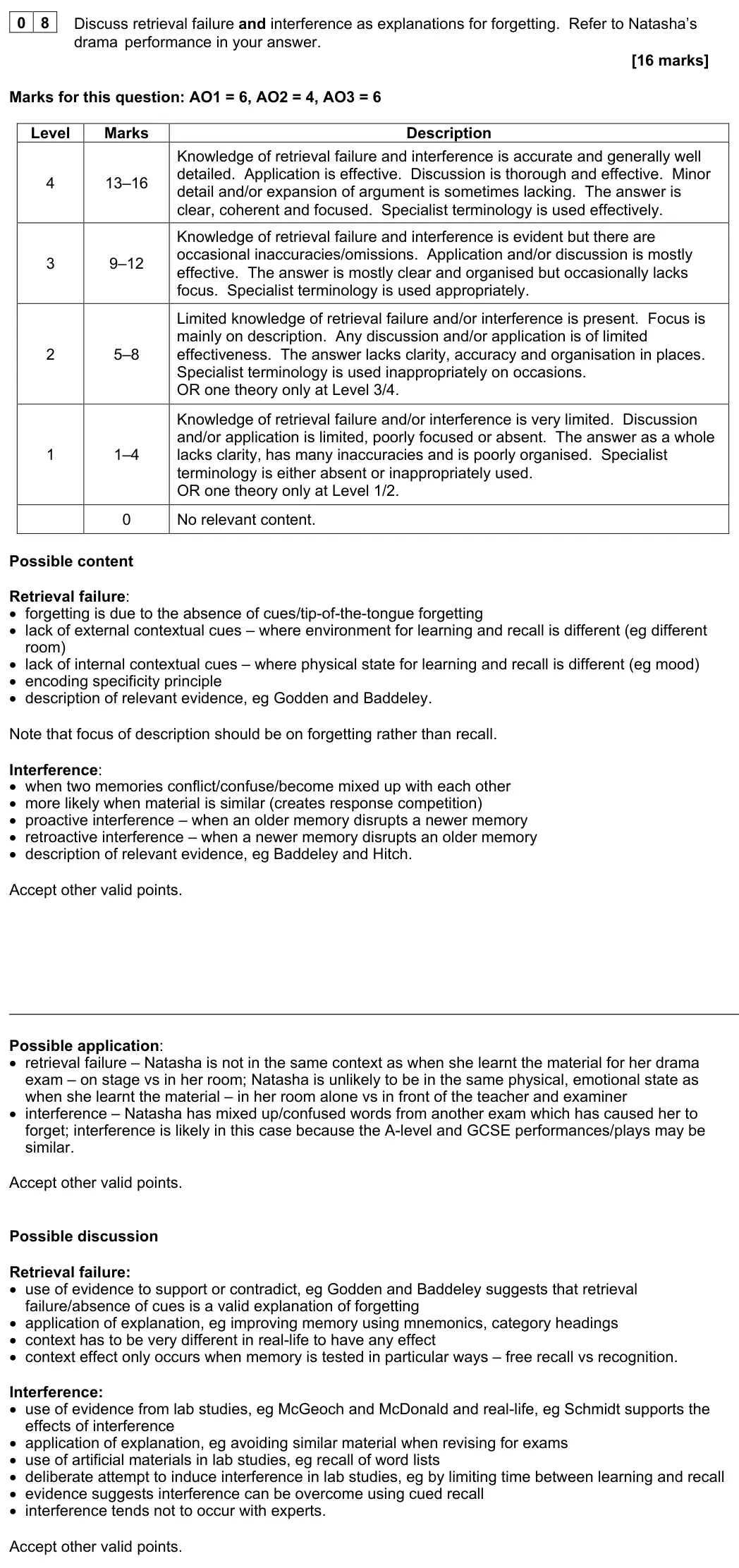
Discuss retrieval failure and interference as explanations for forgetting.  Refer to
Natasha’s drama performance in your answer.
[16 marks]
You may use this space to plan your answer.
Extra space
November 2021 · Paper 1 · Q9 1 mark AO2=1 Multiple choice attachment
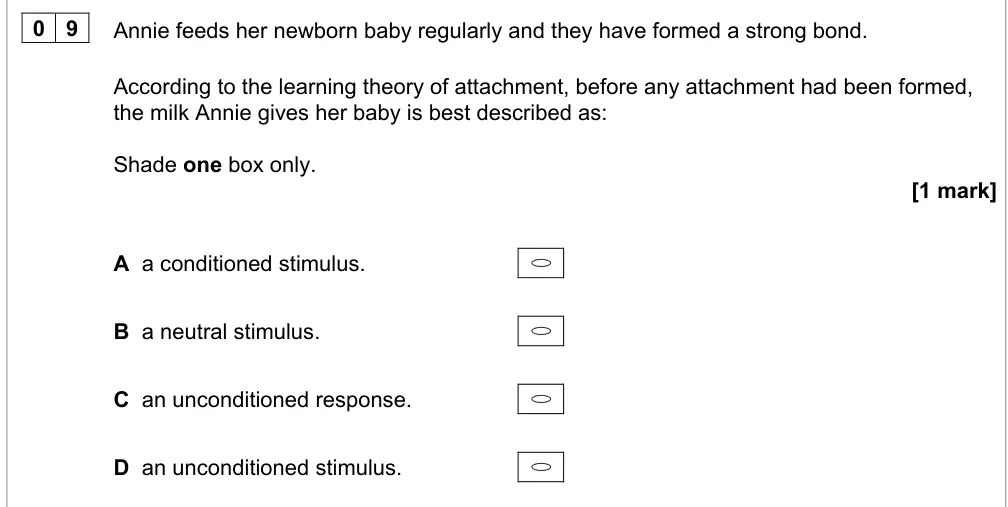
0 9
Annie feeds her newborn baby regularly and they have formed a strong bond.
According to the learning theory of attachment, before any attachment had been formed,
the milk Annie gives her baby is best described as:
[1 mark]
A a conditioned stimulus.
B a neutral stimulus.
C an unconditioned response.
D an unconditioned stimulus.
November 2021 · Paper 1 · Q10 1 mark AO2=1 Multiple choice attachment
1 0
According to the learning theory of attachment, now she has formed an attachment with
her baby, Annie is best described as:
[1 mark]
A a conditioned stimulus.
B a neutral stimulus.
C an unconditioned response.
D an unconditioned stimulus.
November 2021 · Paper 1 · Q11 2 marks AO1=2 Outline attachment
1 1
Outline one difference in attachment behaviours shown by infants who have an
insecure-avoidant attachment and infants who have an insecure-resistant attachment.
[2 marks]
November 2021 · Paper 1 · Q12 5 marks AO3=5 Evaluate (short) attachment
1 2
These different attachment types were first identified in Ainsworth’s ‘Strange Situation’.
Evaluate the procedure known as the ‘Strange Situation’.
[5 marks]
November 2021 · Paper 1 · Q13 7 marks AO2=7 Research methods inferential testingdata handlingscientific processes
1 3
Researchers investigated whether the experience of bullying is influenced by attachment
type.  They interviewed teenagers about their early attachment experiences.  Following the
interviews, the teenagers were categorised into two groups based on their attachment
type:
• Group 1 – secure attachment in childhood
• Group 2 – insecure attachment (insecure-avoidant or insecure-resistant) in childhood.
During the interview, the teenagers were also asked about their experience of bullying.
They were categorised as either:
• having had experience of bullying, or
• having had no experience of bullying.
Which statistical test would be most suitable to analyse the data in this investigation?
With reference to this investigation, explain three reasons for your choice of test.
[7 marks]
November 2021 · Paper 1 · Q14 8 marks AO1=3, AO2=2, AO3=3 Extended writing attachment
1 4
Discuss the influence of early attachment on childhood relationships.  Refer to the likely
results of the study in Question 13 in your answer.
[8 marks]
Extra space
November 2021 · Paper 1 · Q15 2 marks AO1=2 Short answer clinical psychology
1 5
Identify two behavioural characteristics of depression.
[2 marks]
November 2021 · Paper 1 · Q16 2 marks AO1=2 Outline clinical psychology
1 6
Briefly outline one way that a cognitive psychologist might treat depression by challenging
irrational thoughts.
[2 marks]
November 2021 · Paper 1 · Q17 4 marks AO1=4 Outline clinical psychology
1 7
Describe the biological approach to treating obsessive-compulsive disorder (OCD).
[4 marks]
November 2021 · Paper 1 · Q18 16 marks AO1=6, AO3=10 16-mark essay clinical psychology
1 8
Discuss statistical infrequency and deviation from social norms as definitions of
abnormality.
[16 marks]
You may use this space to plan your answer.
Extra space

Work with an AQA psychology tutor

Want a paper marked and gone through with you? Message us.

Prefer email? Send an enquiry

If you are under 18, please include a parent's contact details. Enquiries go to enquiries@alevelpsychologytutor.com and are deleted once handled. All tutoring is online.