Examiner's comment
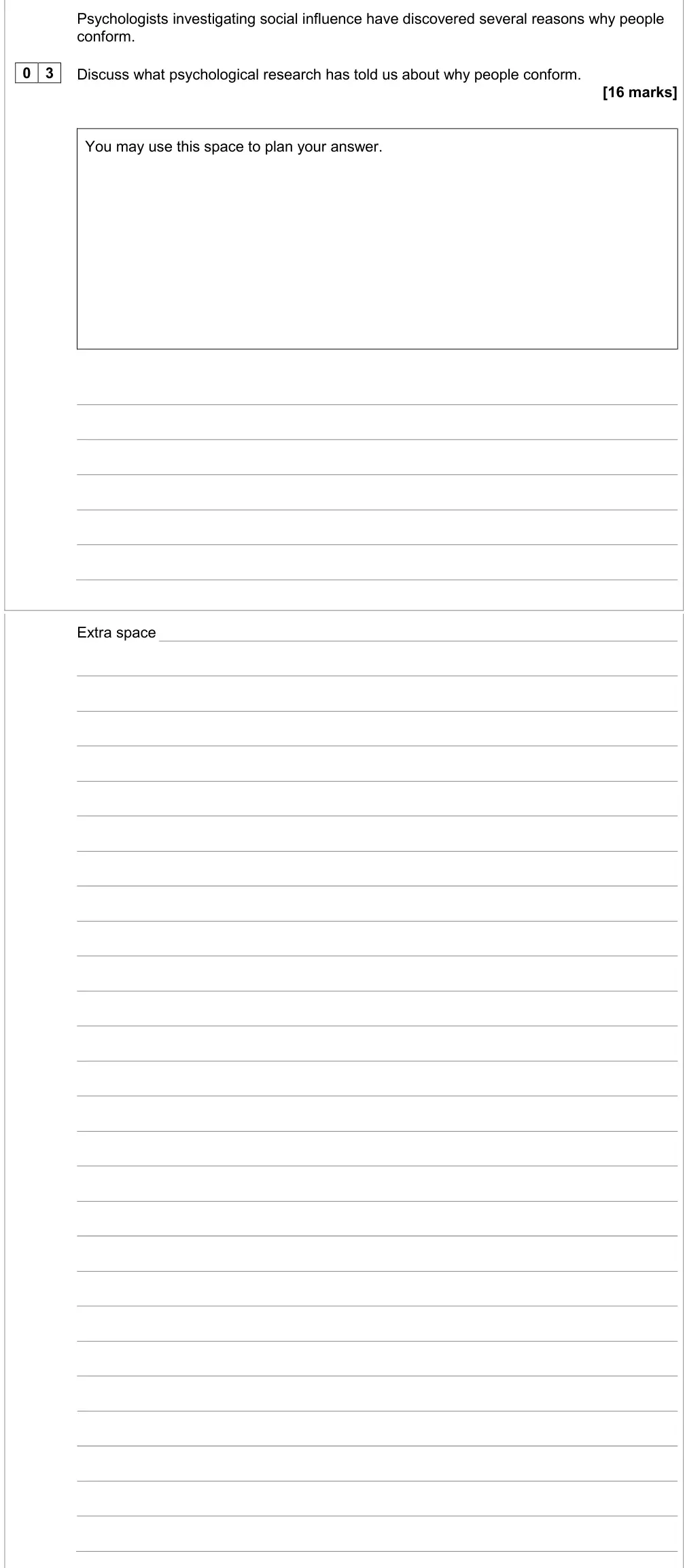
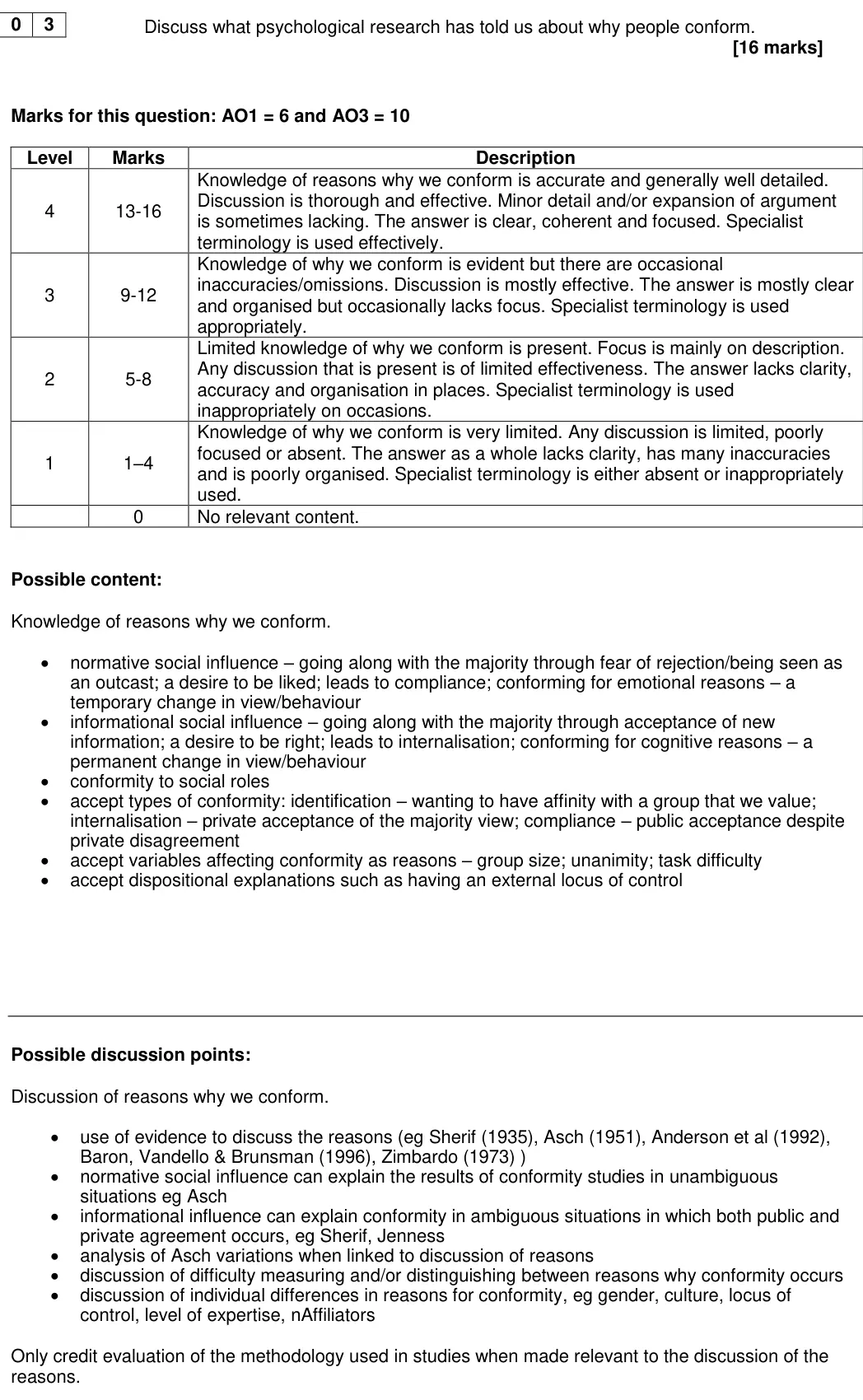
Question 03 was on ‘why people conform’ i.e. explanations for conformity, and this needed to be the focus of the answer; studies were central to good answers, but needed to be linked to explanations to receive credit. Lists of probably rote-learnt evaluations of studies, without reference to explanations, receive little credit – how can ethical issues be made relevant to explanations? An example from this year’s paper was Question 03 on ‘why people conform’. Asch’s studies are central to this area, and some students were able to discuss the results in terms of normative and information social influence, demonstrating good understanding of reasons why people conform. Variations of Asch and later studies, leading to conclusions on gender, individual and cultural differences in reasons for conformity, could be integrated into the discussion. Too often, however, comments on e.g. gender or cultural bias in Asch’s work, were too brief and list-like to be fully creditworthy. The key phrase in the question was ‘why people conform’, meaning that the focus needed to be on explanations for conformity. Some students produced excellent essays, outlining key elements of explanations for conformity and then using research findings (Asch, Sherif, Jenness etc) to evaluate explanations e.g. the roles of normative and informational social influence in explaining Asch’s findings. However for many students the key term ‘conformity’ simply triggered Asch’s studies. They described his procedures and findings but did not link them clearly to explanations for conformity; instead they focused on methodological and ethical evaluations of Asch and other conformity research (e.g. Zimbardo) that were rarely made relevant to explanations (how could ethical issues be relevant to explanations ?). Better answers used a range of studies linked to explanations, and also considered relevant aspects such as gender, culture, and individual differences such as locus of control. Some students confused conformity with obedience and received little or no credit.