Examiner's comment
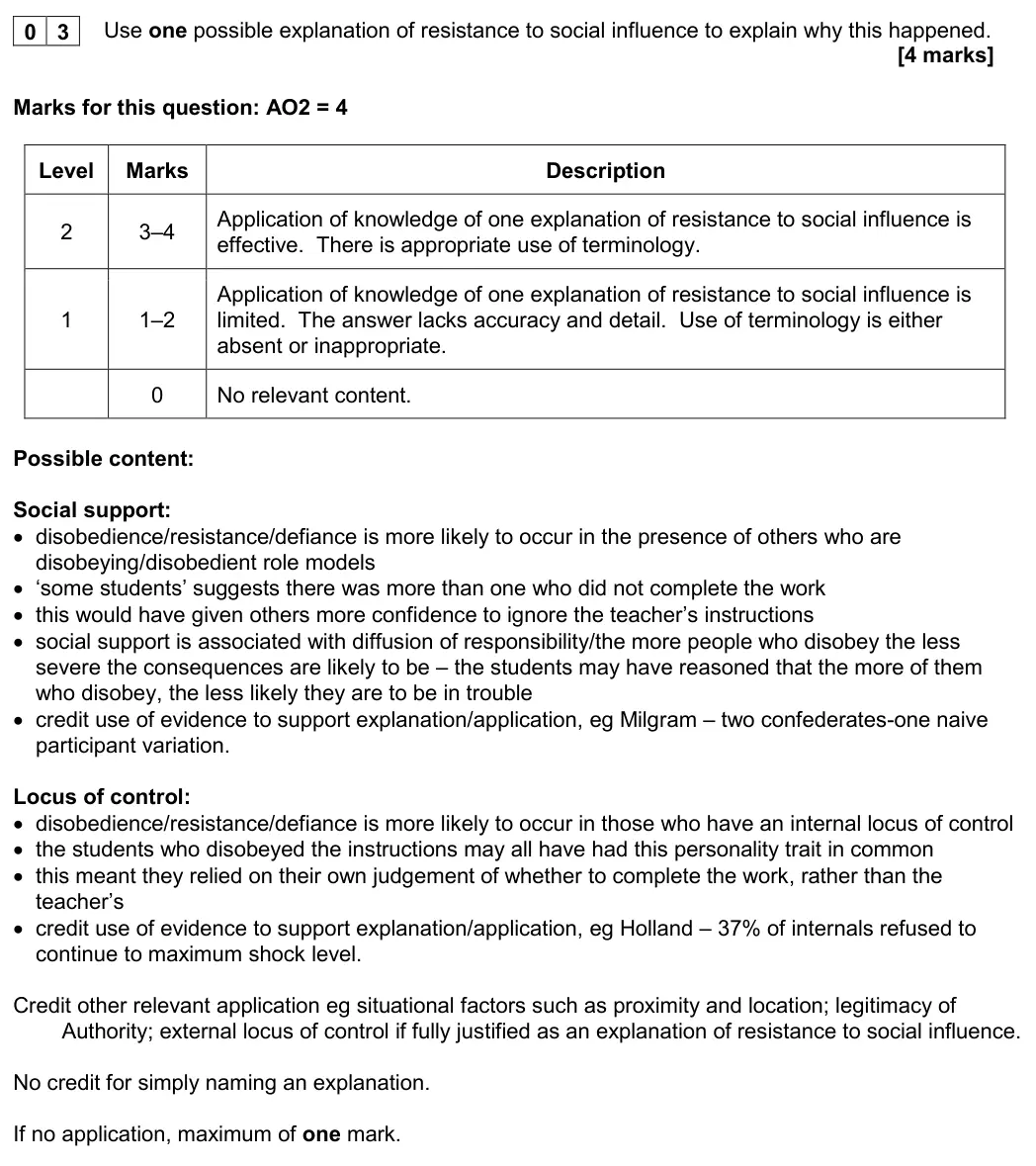
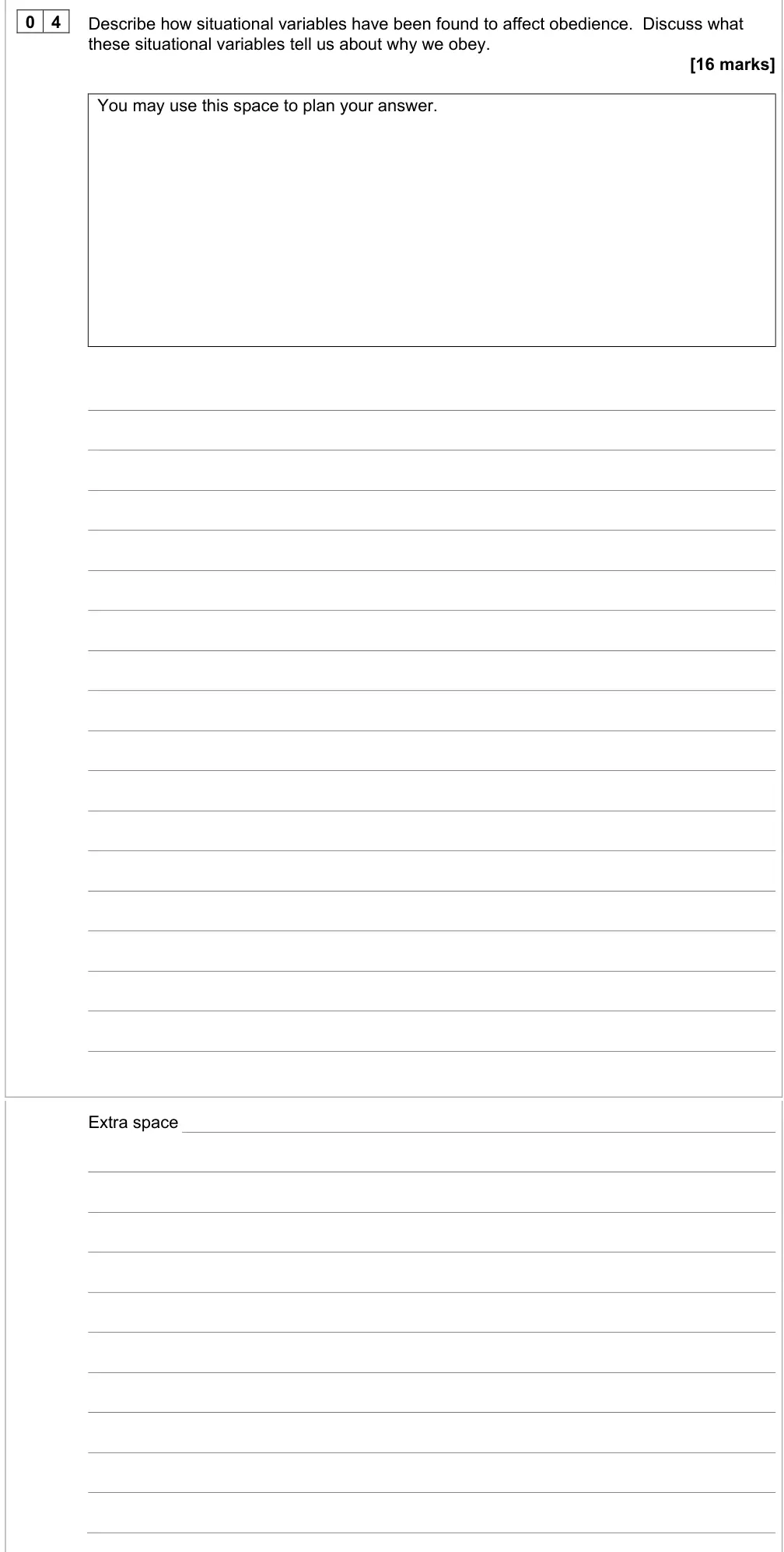
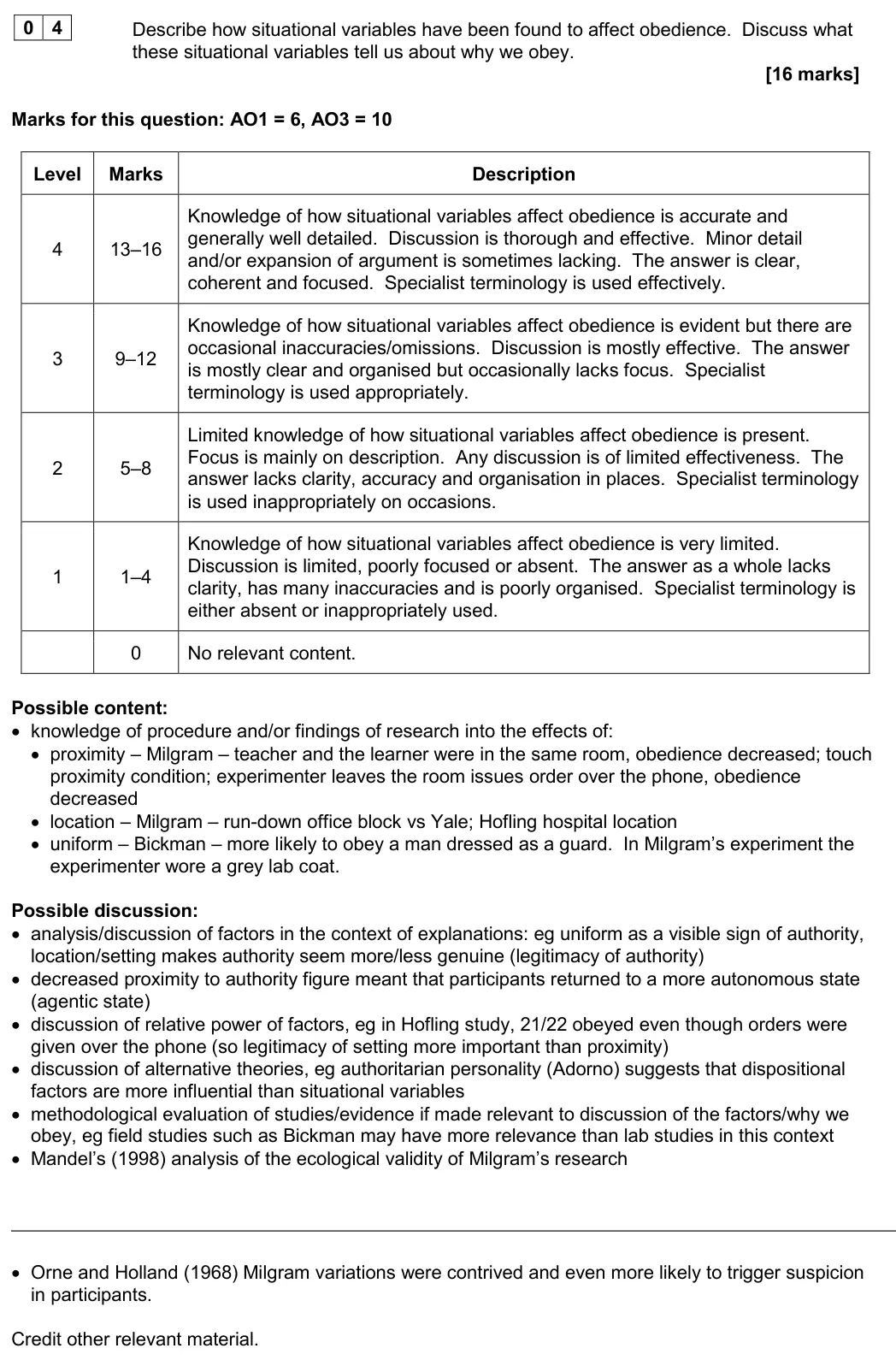
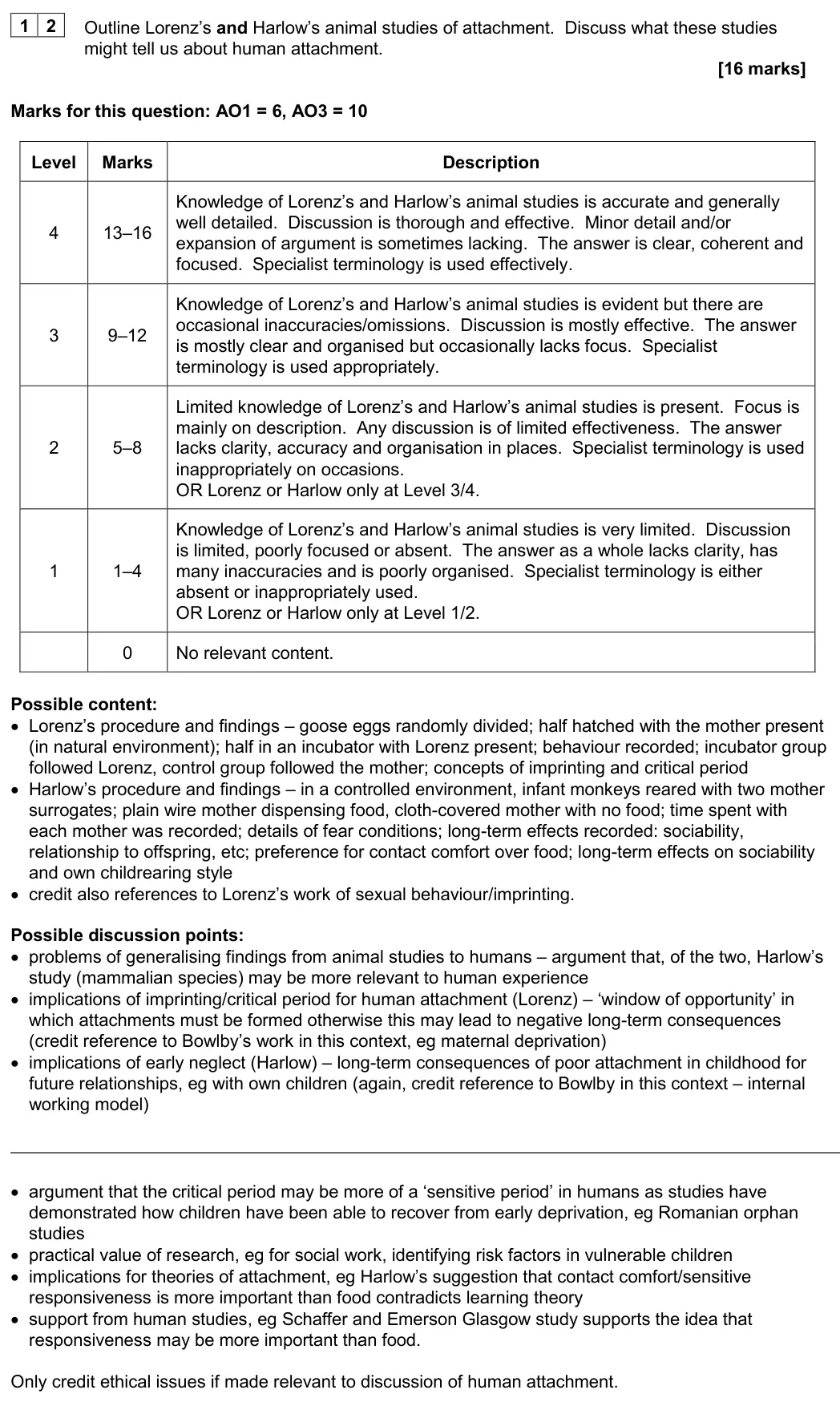
Perhaps the main message from students’ performances was seen in the three 16-mark essays. In Question 04, for AO3 credit students were required to discuss what situational variables tell us about ‘why we obey’. Virtually all responses could describe the relevant research, in varying degrees of detail, but the AO3 requirement was a clear discriminator. Many students produced evaluation of the original studies (Milgram, Lorenz, Harlow), without linking that explicitly to the AO3 requirements in the questions. Virtually all answers focused on Milgram’s studies, with some impressive descriptions of his work on situational variables and obedience. Occasionally these descriptions were over-detailed. Better answers used specialist terminology in their description/discussion, such as legitimacy of authority, and autonomous and agentic states. Bickman’s study was often used effectively to support Milgram’s findings, and at the top end students discussed the value of the field study as making findings more generalisable. Discussion should have focused on what research into situational variables has told us about why we obey, but many answers diverted into evaluating the work of Milgram. This was creditable where there were links to the question, but detailed accounts of, for example, ethical issues, rarely earned marks. Replications of Milgram’s original study were sometimes used effectively, and there were some good discussions of cultural aspects of obedience. Also popular were real life examples, though accurate analysis was sometimes lacking. At the top end, students discussed the fact that other factors must be involved as obedience in Milgram’s studies on situational variables was rarely zero or 100%. This was followed by a consideration of dispositional variables, such as Authoritarian personality and locus of control. However, many responses failed to provide any general discussion of what situational variables tell us about why we obey.