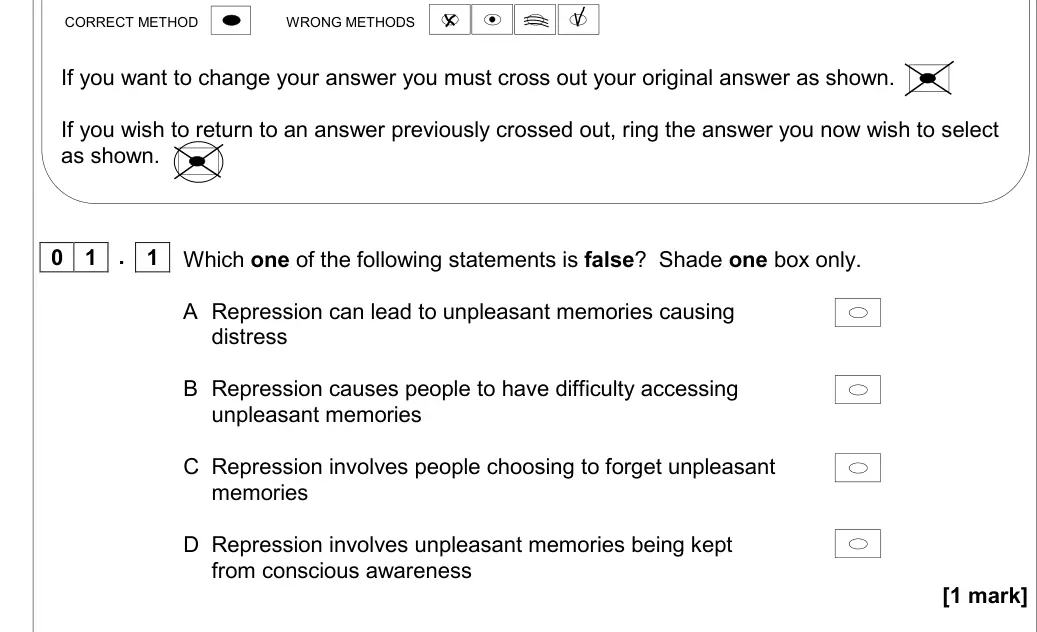
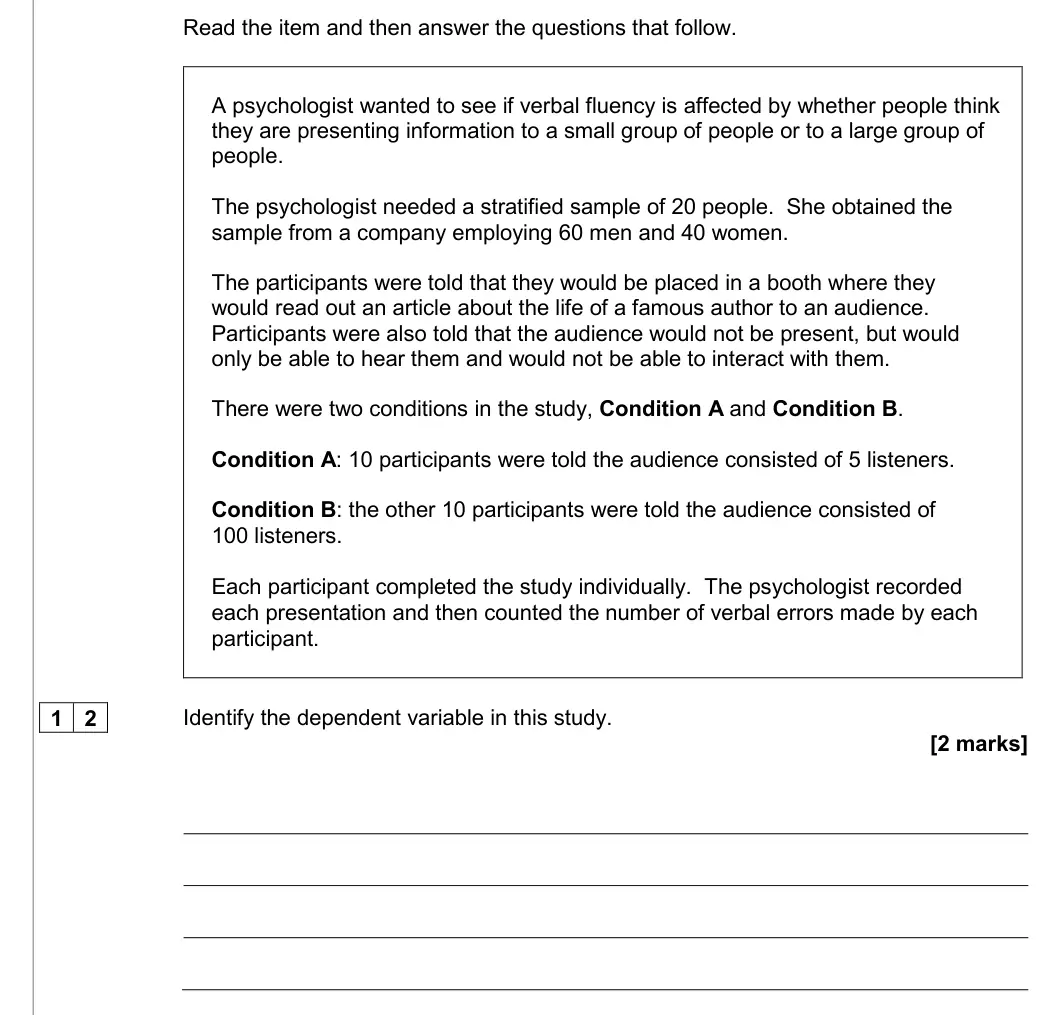
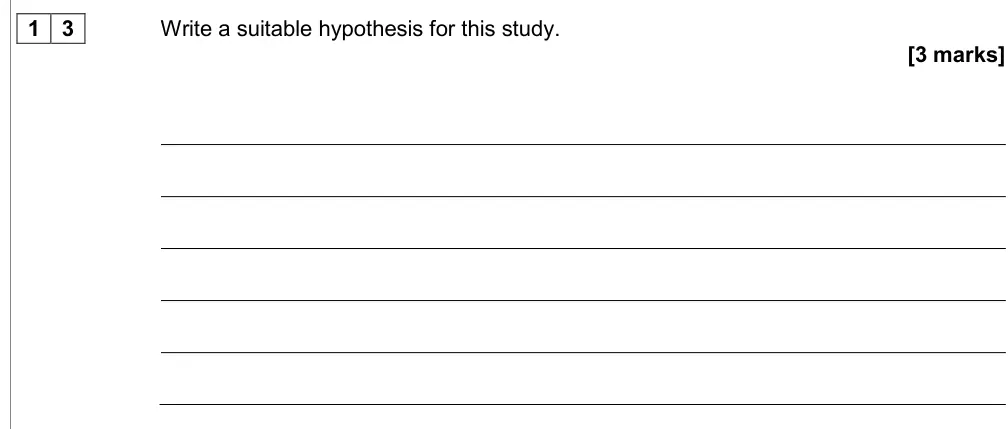
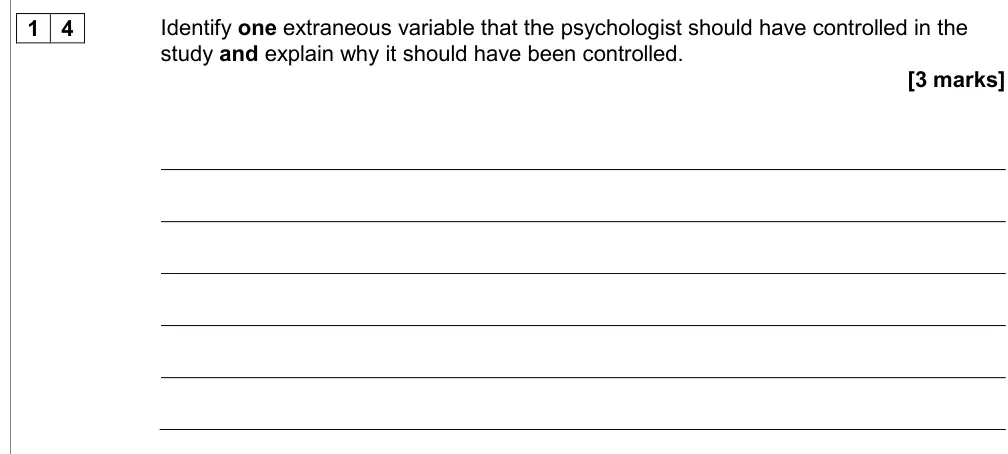
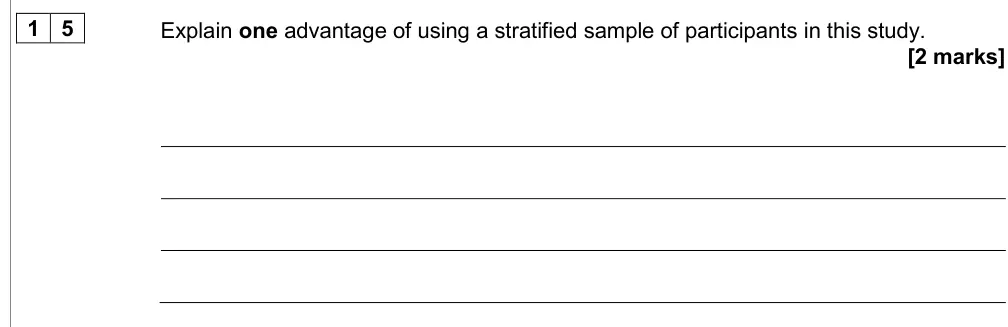
Specimen set 1 · Paper 2 · Q1.11 markAO1=1Multiple choiceapproaches
Answer
C
Mark scheme, including level descriptors and indicative content
Notes from the mark scheme and report
false statement is C (repression is unconscious, not chosen)
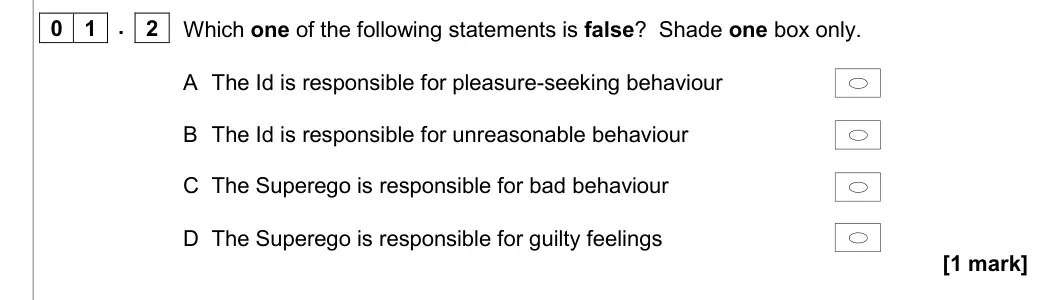
Specimen set 1 · Paper 2 · Q1.21 markAO1=1Multiple choiceapproaches
Answer
C
Mark scheme, including level descriptors and indicative content
Notes from the mark scheme and report
false statement is C (the Superego is not responsible for bad behaviour)
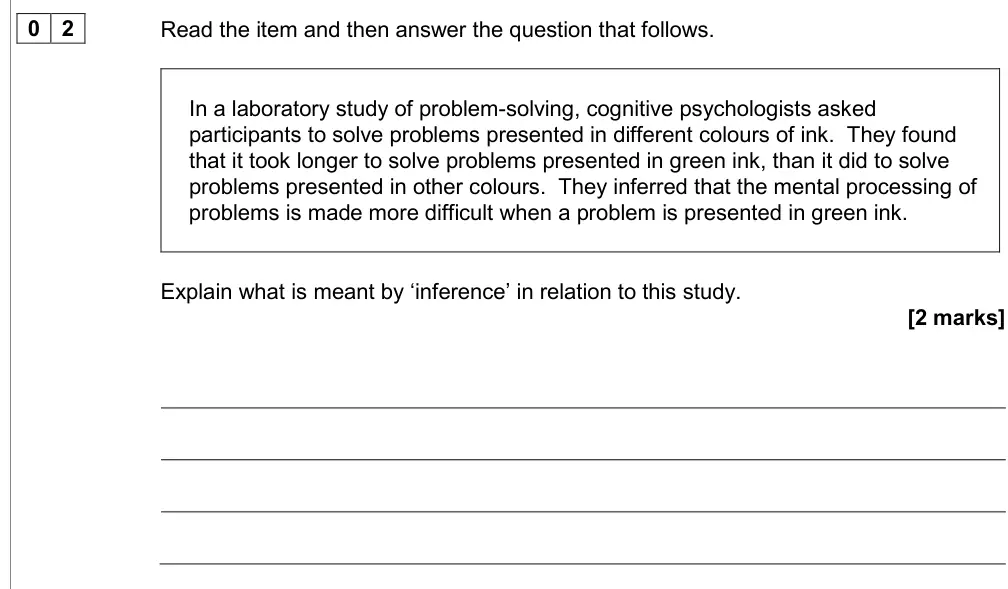
Specimen set 1 · Paper 2 · Q22 marksAO2=2Applicationapproaches
Mark scheme, including level descriptors and indicative content
Notes from the mark scheme and report
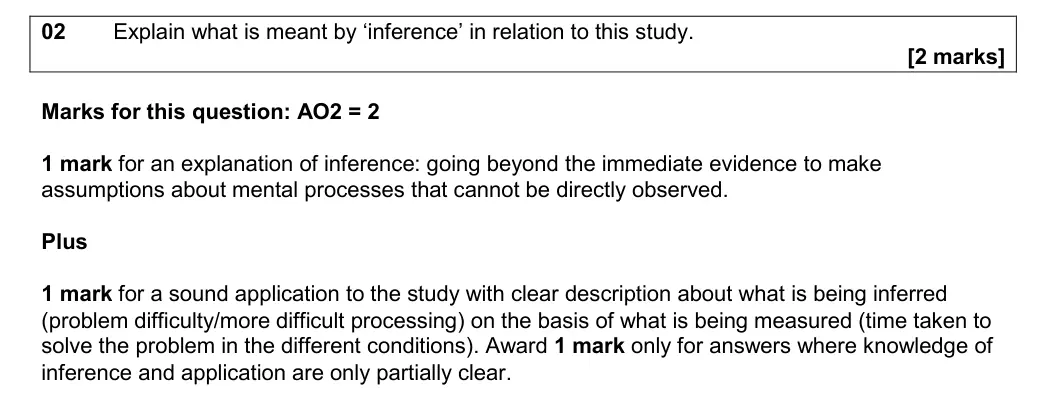
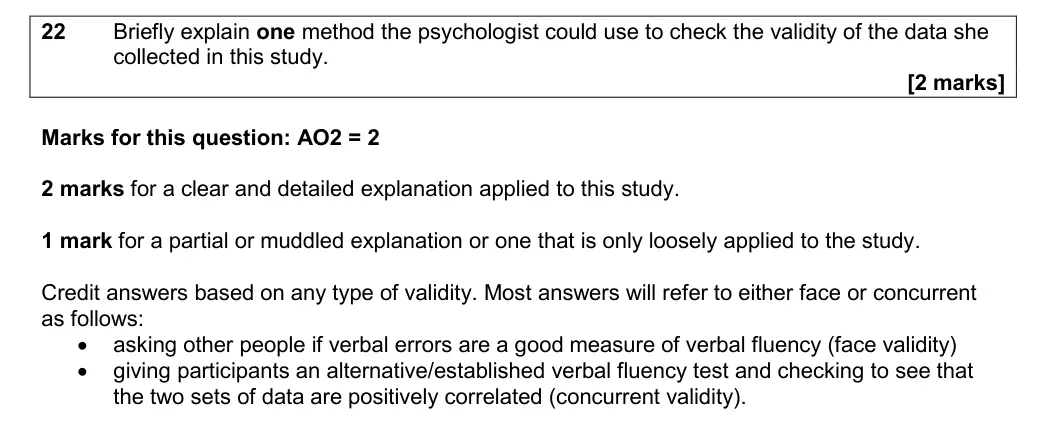
1 mark inference = going beyond evidence to assume unobservable mental processes + 1 mark application (inferring processing difficulty from time taken)
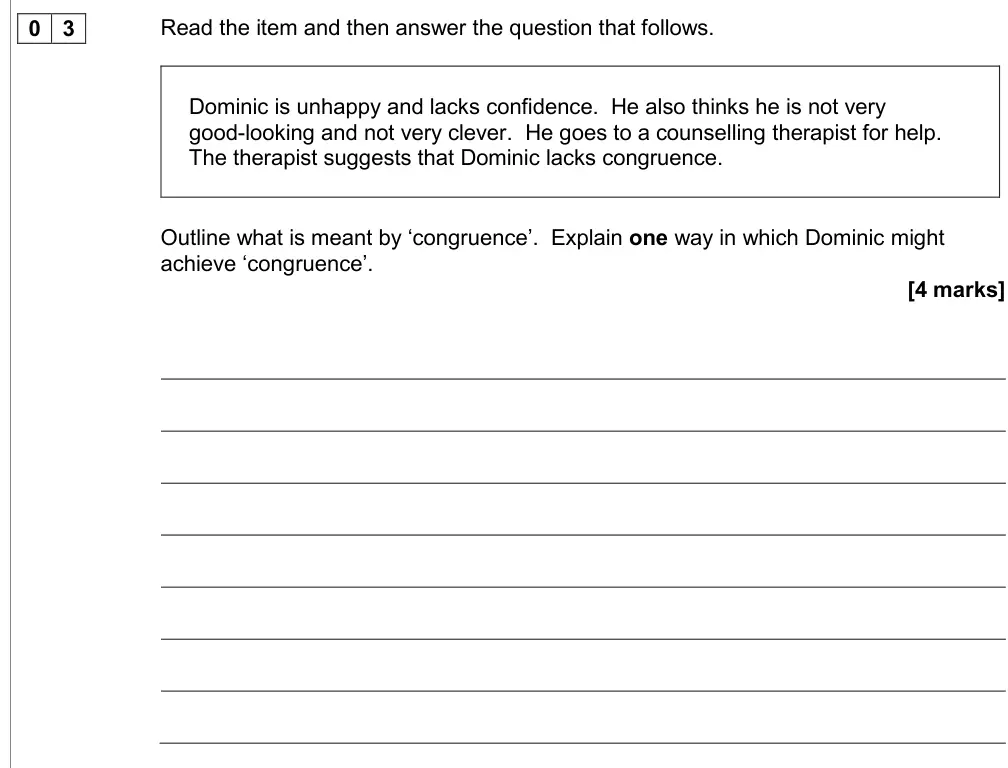
Specimen set 1 · Paper 2 · Q34 marksAO1=2, AO2=2Applicationapproaches
Mark scheme, including level descriptors and indicative content
Notes from the mark scheme and report
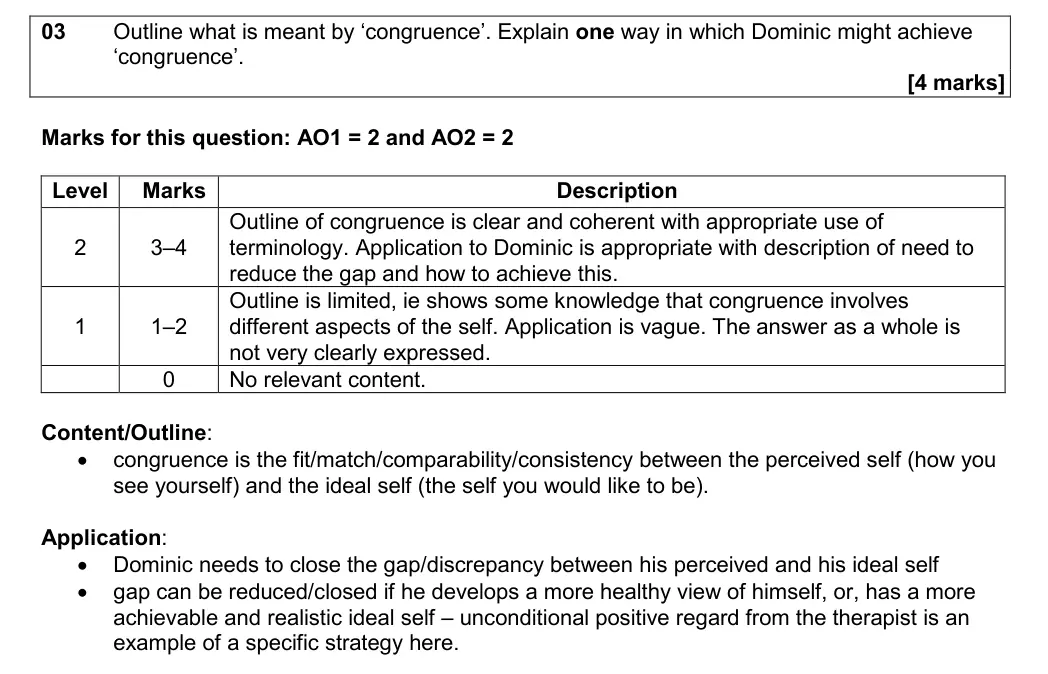
congruence = match between perceived self and ideal self
application: close the gap with healthier self-view or more realistic ideal self
unconditional positive regard credited (influence on counselling Psychology removed in v1.4 but congruence is current)
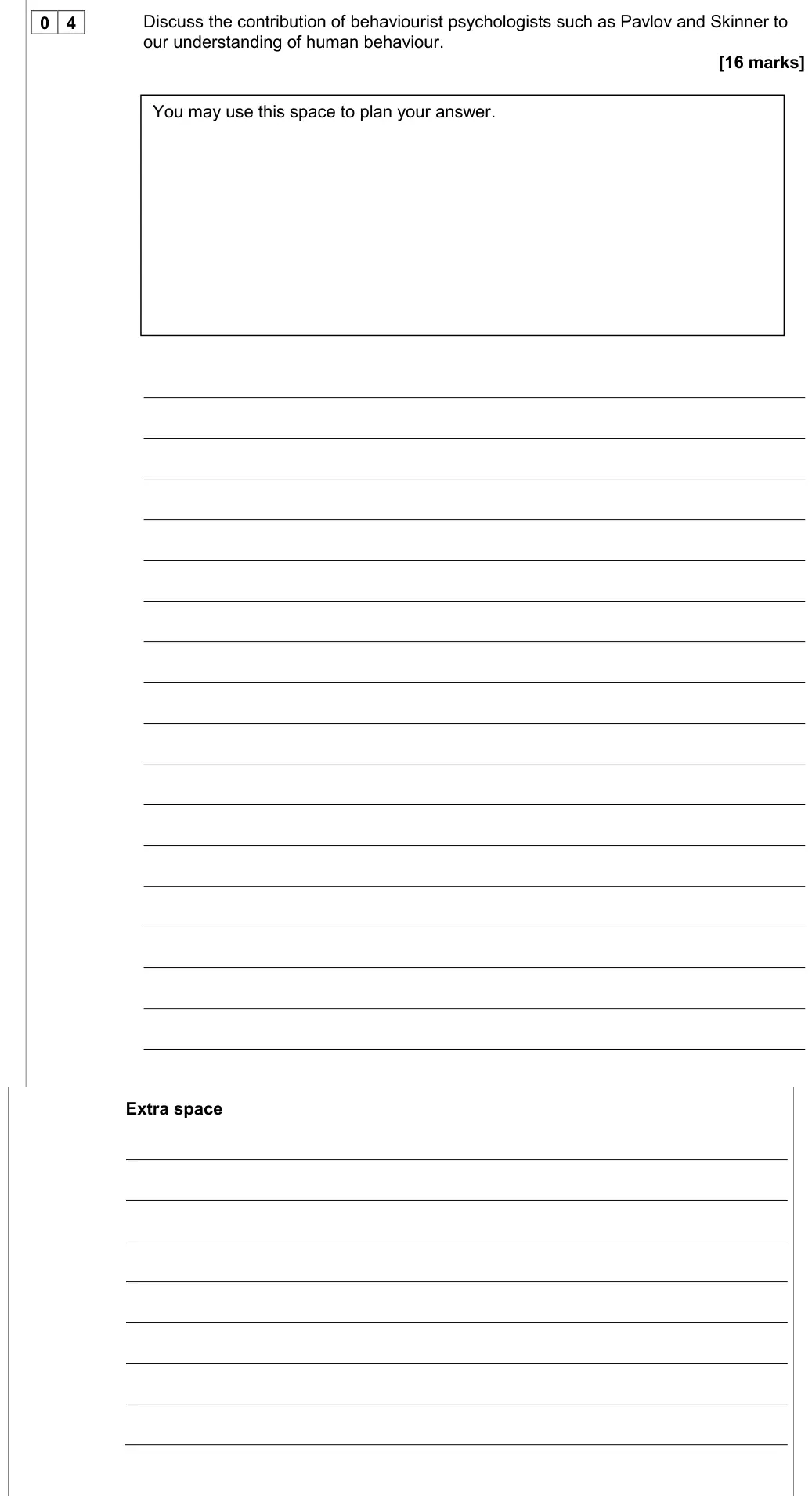
Specimen set 1 · Paper 2 · Q416 marksAO1=6, AO3=1016-mark essayapproaches
Mark scheme, including level descriptors and indicative content
Notes from the mark scheme and report
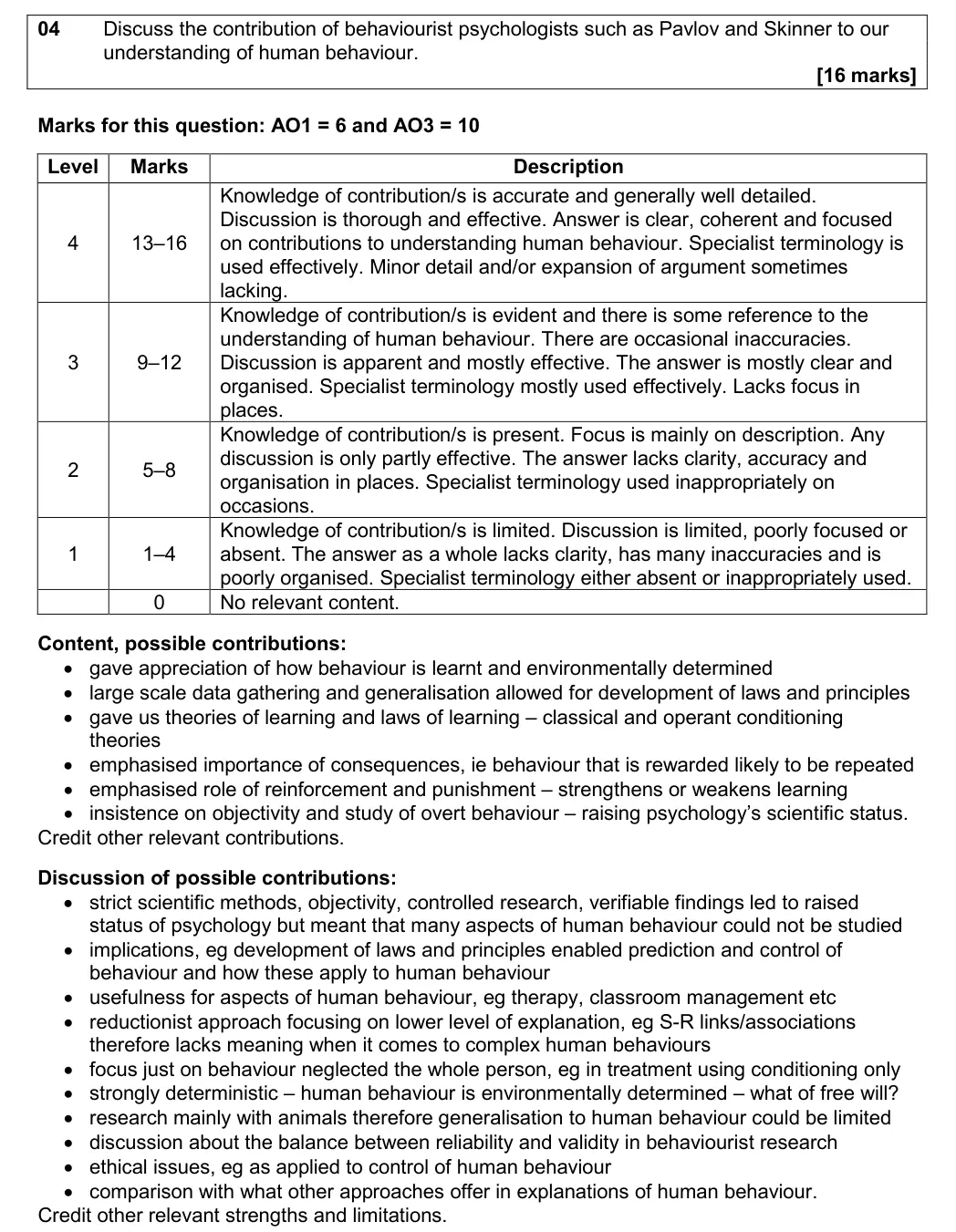
focus must be contributions to understanding human behaviour
laws of learning, reinforcement, scientific objectivity
reductionism, determinism, animal research, ethics, comparison with other approaches
Specimen set 1 · Paper 2 · Q5.11 markMultiple choicebiopsychology
Answer
A
Mark scheme, including level descriptors and indicative content
Notes from the mark scheme and report
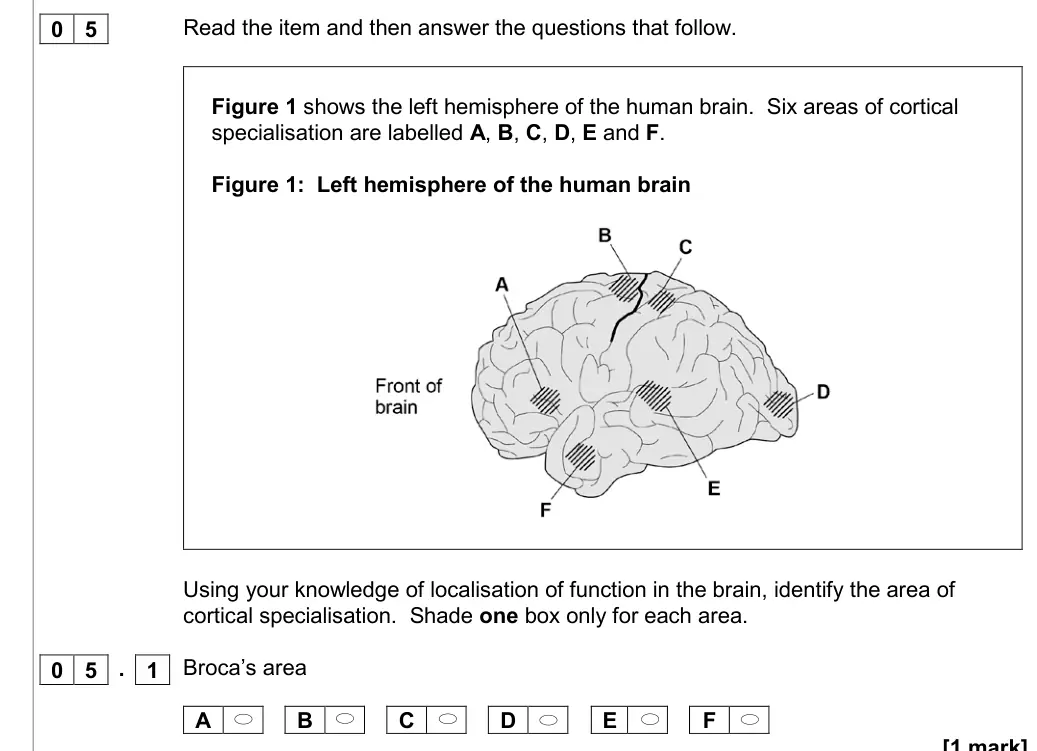
answer A (Broca's area) on the labelled left-hemisphere diagram
Specimen set 1 · Paper 2 · Q5.21 markMultiple choicebiopsychology
Answer
C
Mark scheme, including level descriptors and indicative content
Notes from the mark scheme and report
answer C (somatosensory cortex)
Specimen set 1 · Paper 2 · Q5.31 markMultiple choicebiopsychology
Answer
D
Mark scheme, including level descriptors and indicative content
Notes from the mark scheme and report
answer D (visual cortex)
Specimen set 1 · Paper 2 · Q5.41 markMultiple choicebiopsychology
Answer
E
Mark scheme, including level descriptors and indicative content
Notes from the mark scheme and report
answer E (Wernicke's area)
Specimen set 1 · Paper 2 · Q5.51 markMultiple choicebiopsychology
Answer
B
Mark scheme, including level descriptors and indicative content
Notes from the mark scheme and report
answer B (motor cortex)
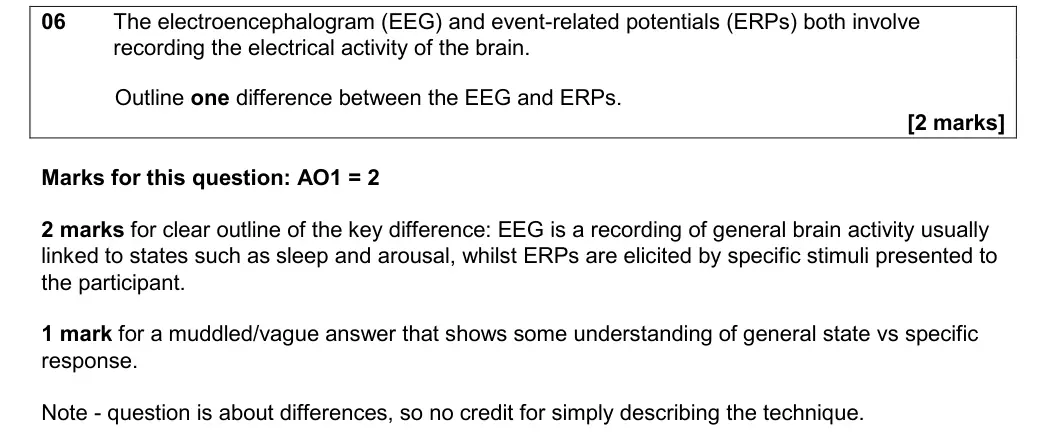
Specimen set 1 · Paper 2 · Q62 marksAO1=2Outlinebiopsychology
Mark scheme, including level descriptors and indicative content
Notes from the mark scheme and report
key difference: EEG = general brain activity/states (sleep, arousal), ERPs = responses elicited by specific stimuli
no credit for describing a technique without a difference
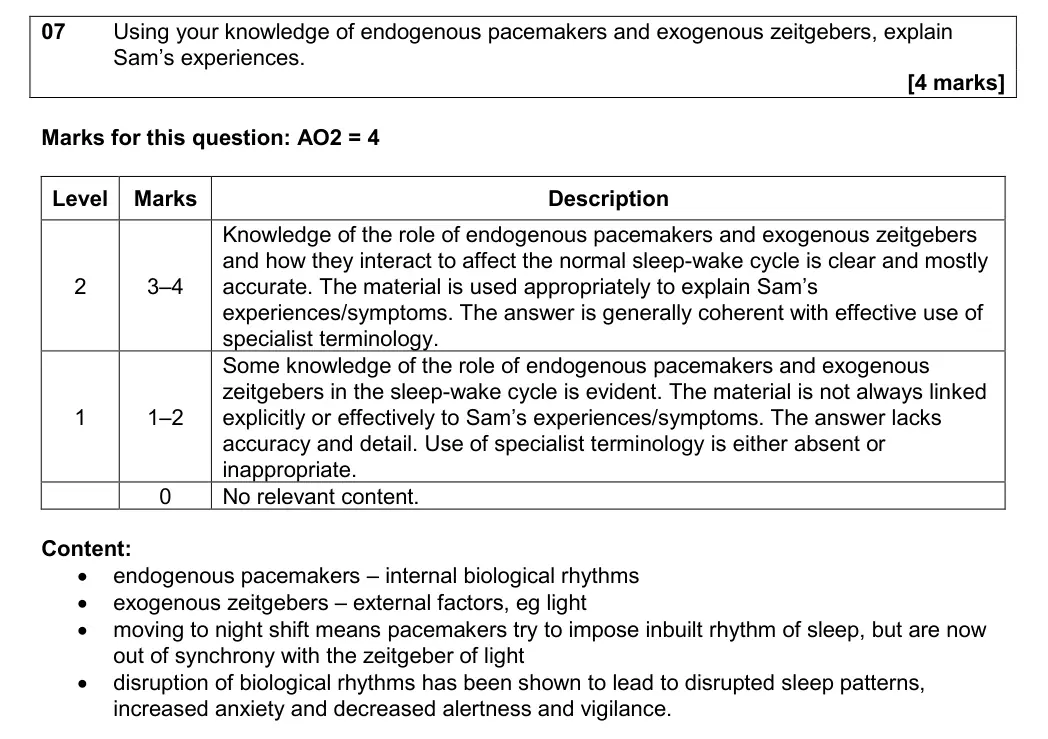
Specimen set 1 · Paper 2 · Q74 marksAO2=4ApplicationOld spec only
Not on the 2025 specification: endogenous pacemakers and exogenous zeitgebers/sleep-wake cycle, biological rhythms removed in v1.4
Mark scheme, including level descriptors and indicative content
Notes from the mark scheme and report
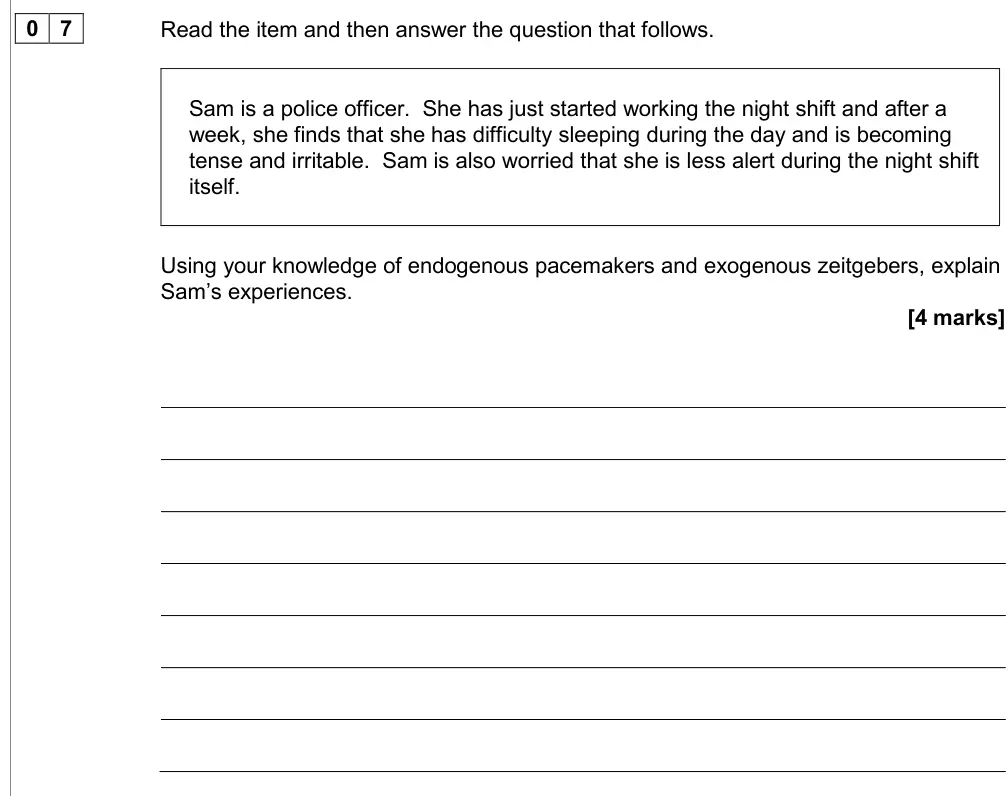
Off-spec: endogenous pacemakers and exogenous zeitgebers/sleep-wake cycle, biological rhythms removed in v1.4
night shift desynchronises internal rhythm from light zeitgeber
must link to Sam's experiences
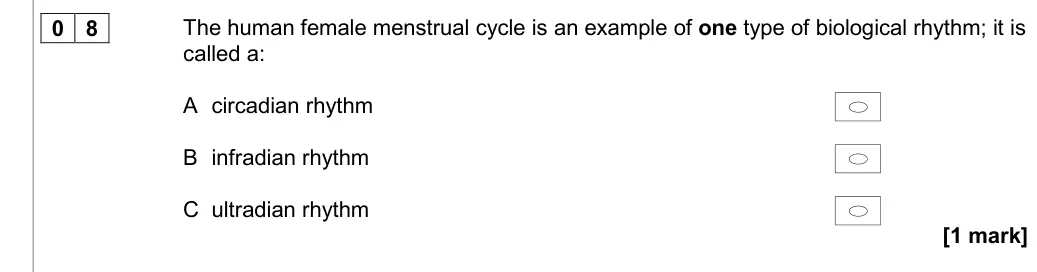
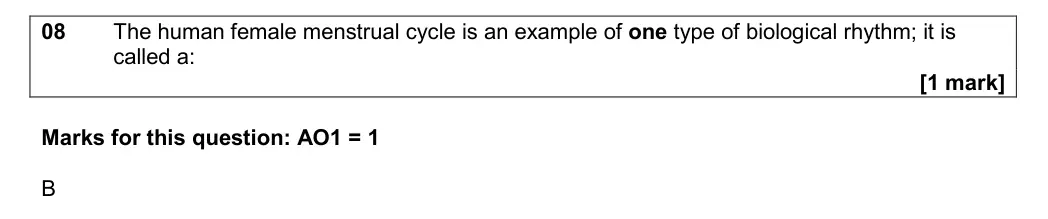
Specimen set 1 · Paper 2 · Q81 markAO1=1Multiple choiceOld spec only
Not on the 2025 specification: types of biological rhythm: circadian, infradian, ultradian, removed in v1.4
Answer
B
Mark scheme, including level descriptors and indicative content
Notes from the mark scheme and report
Off-spec: types of biological rhythm: circadian, infradian, ultradian, removed in v1.4
answer B infradian
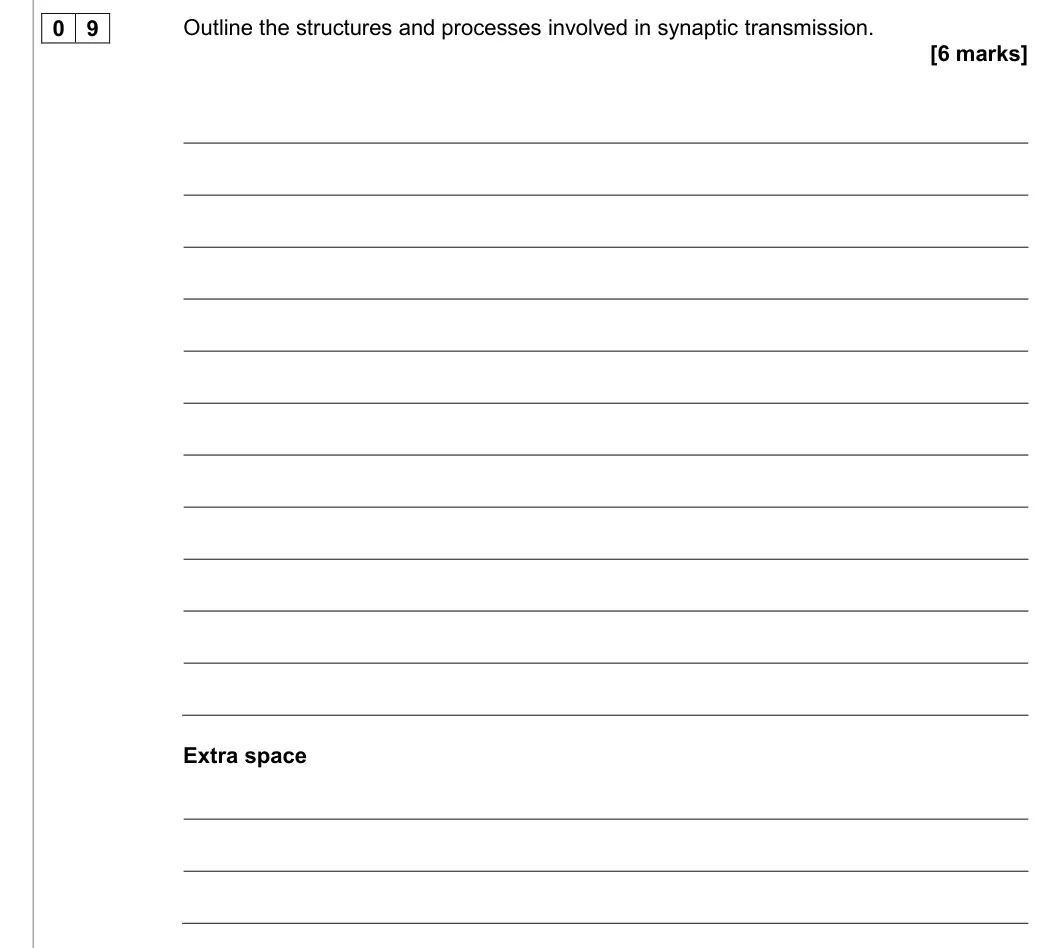
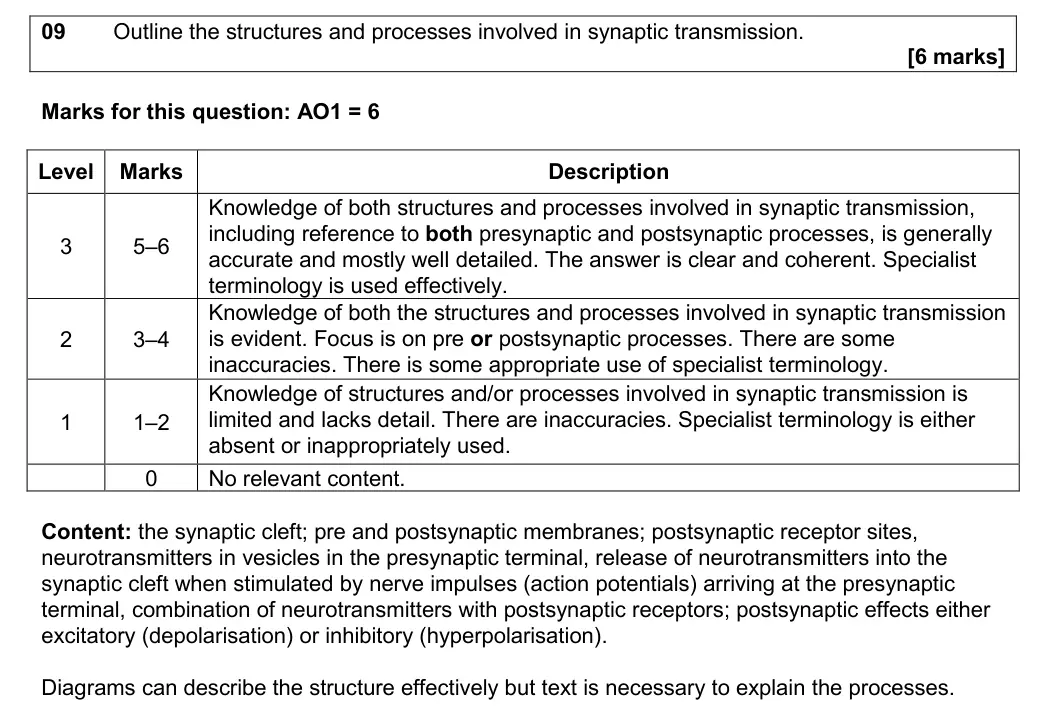
Specimen set 1 · Paper 2 · Q96 marksAO1=6Outlinebiopsychology
Mark scheme, including level descriptors and indicative content
Notes from the mark scheme and report
Level 3 needs both pre- and postsynaptic processes
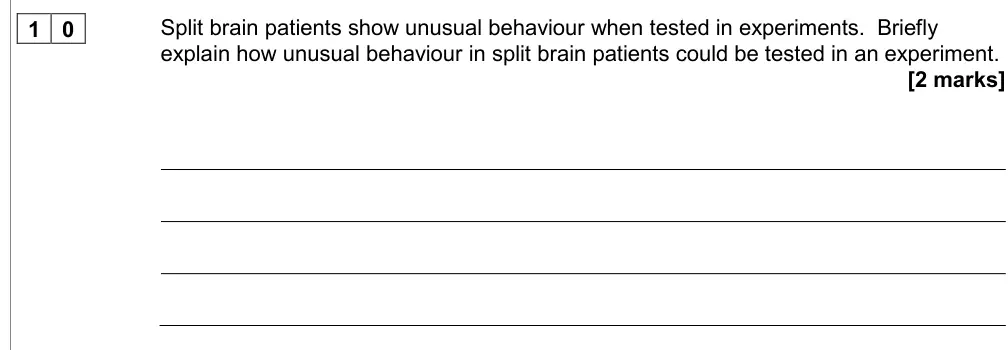
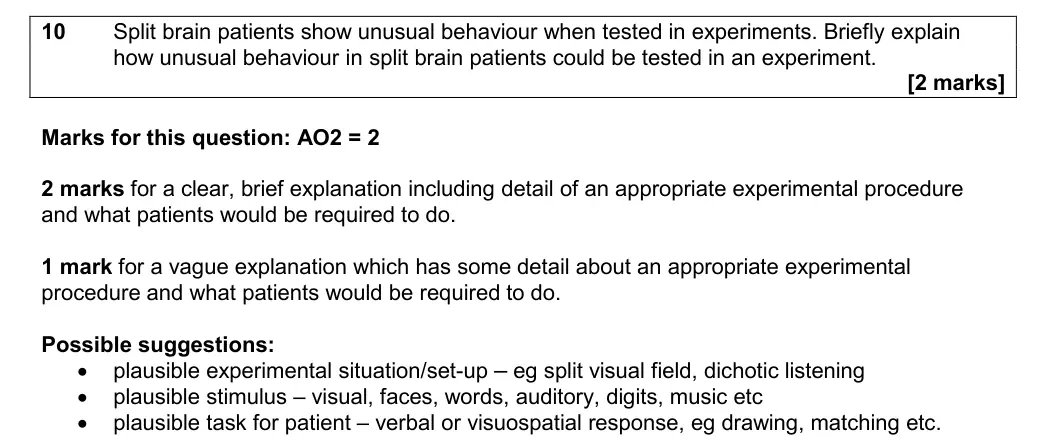
Specimen set 1 · Paper 2 · Q102 marksAO2=2Explainbiopsychology
Mark scheme, including level descriptors and indicative content
Notes from the mark scheme and report
plausible set-up (split visual field, dichotic listening), stimulus and patient task (verbal or visuospatial response)
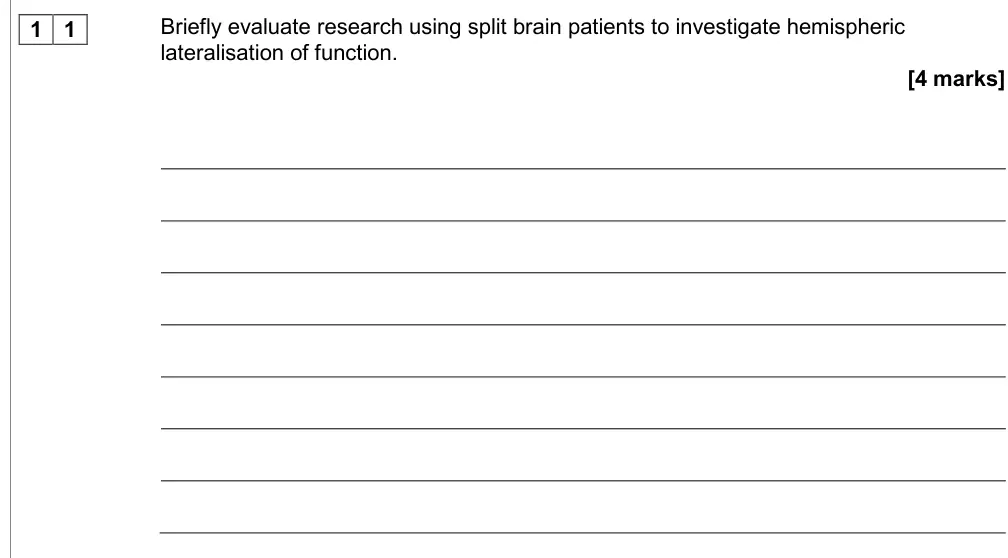
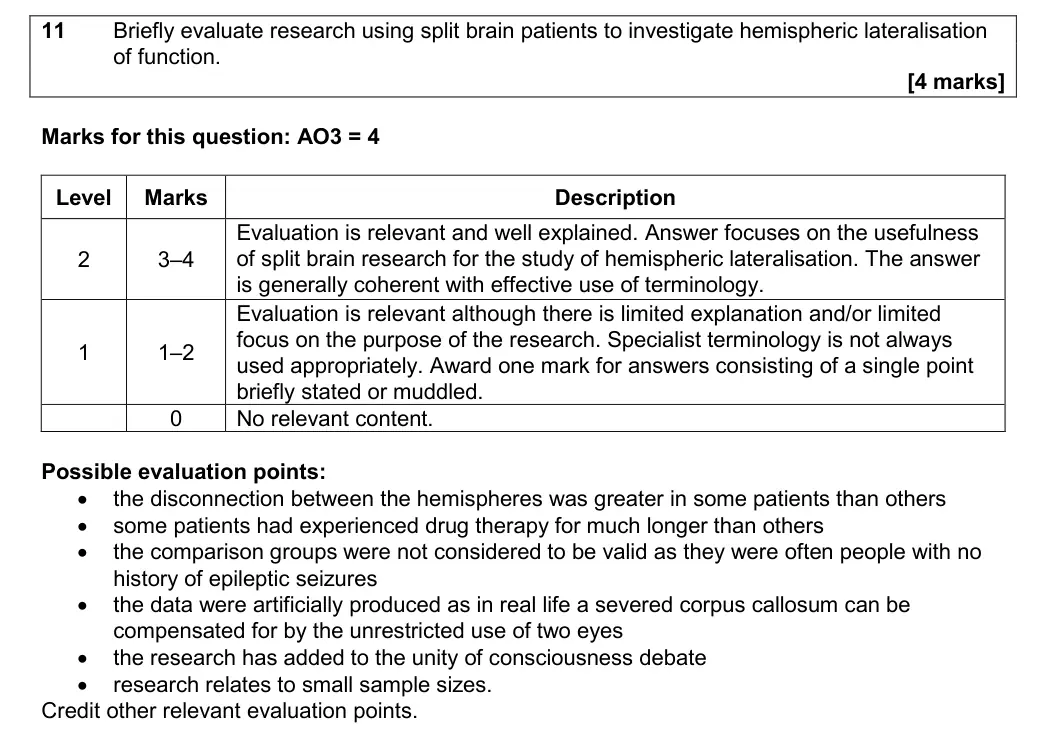
Specimen set 1 · Paper 2 · Q114 marksAO3=4Evaluate (short)biopsychology
Mark scheme, including level descriptors and indicative content
Notes from the mark scheme and report
focus on usefulness for studying hemispheric lateralisation: variable disconnection, drug history, comparison groups, artificial conditions, small samples
Mark scheme, including level descriptors and indicative content
Notes from the mark scheme and report
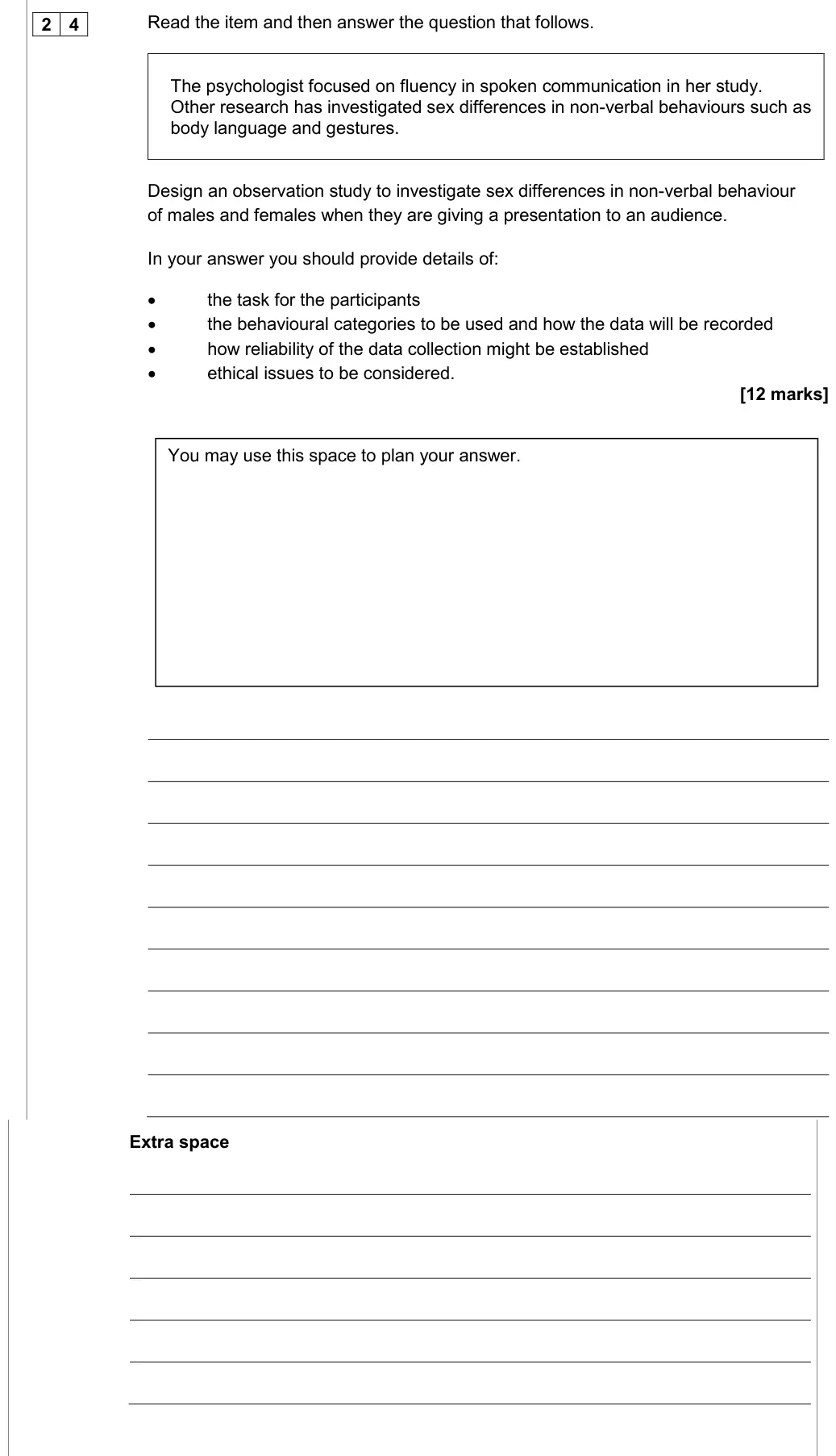
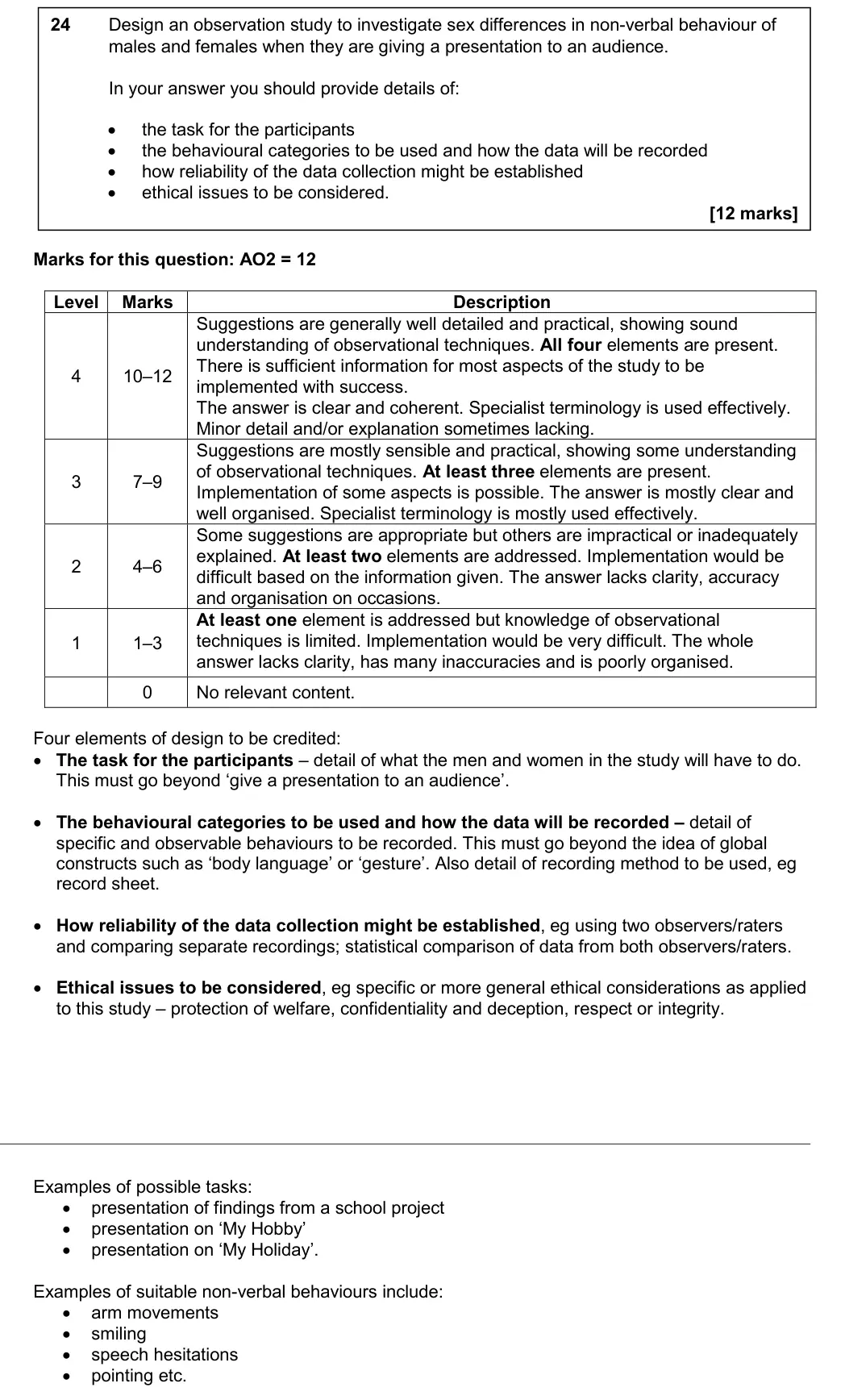
all four elements needed for Level 4 (at least three for Level 3): task beyond 'give a presentation', specific observable behavioural categories + recording method, inter-observer reliability, ethical issues applied to the study
global constructs like 'body language' not enough
Work with an AQA psychology tutor
Want a paper marked and gone through with you? Message us.