Examiner's comment
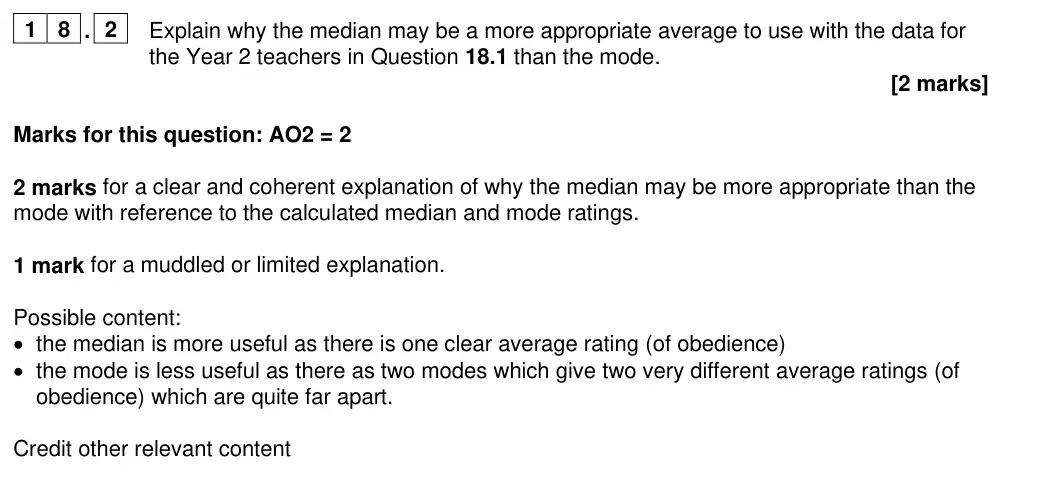
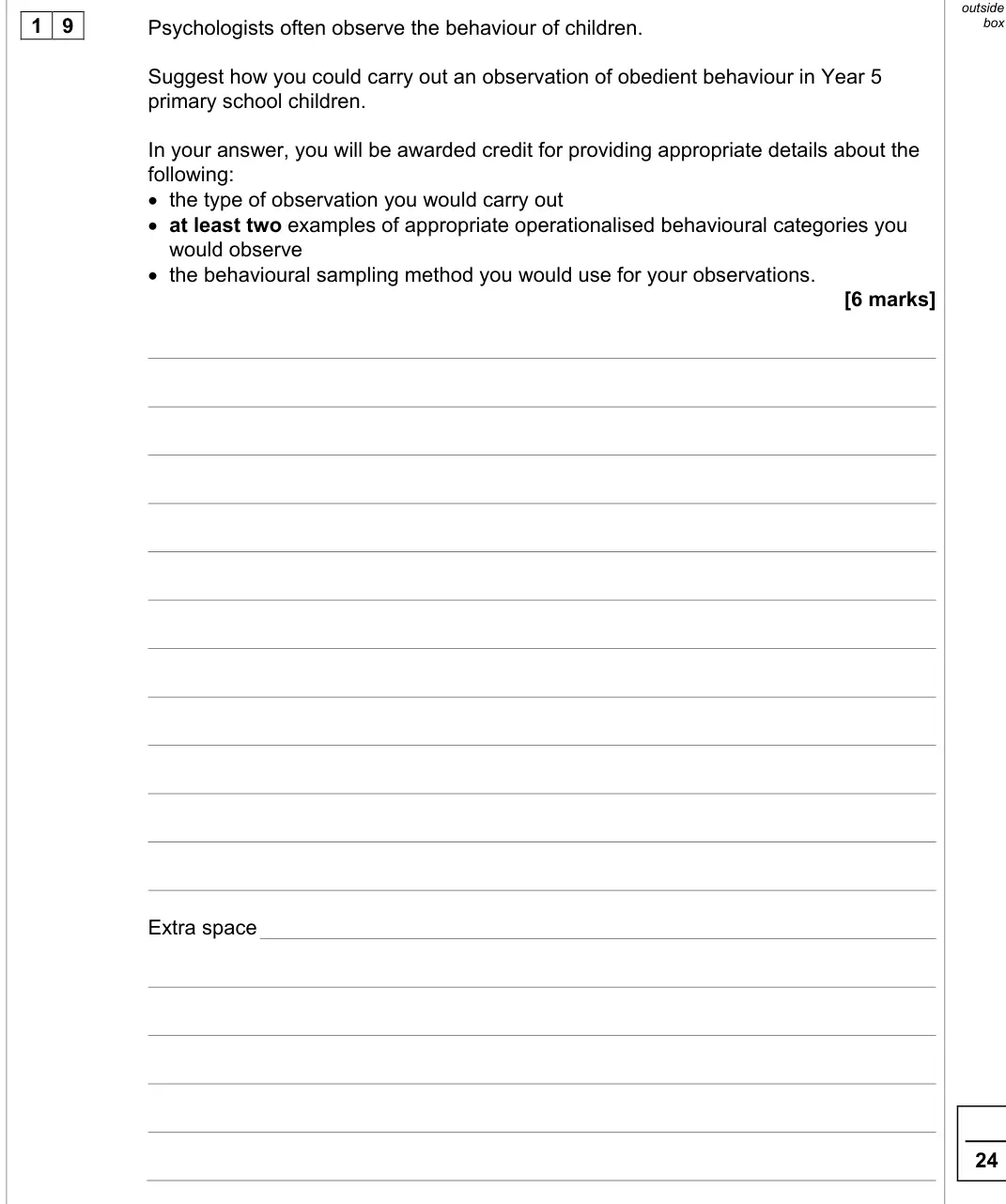
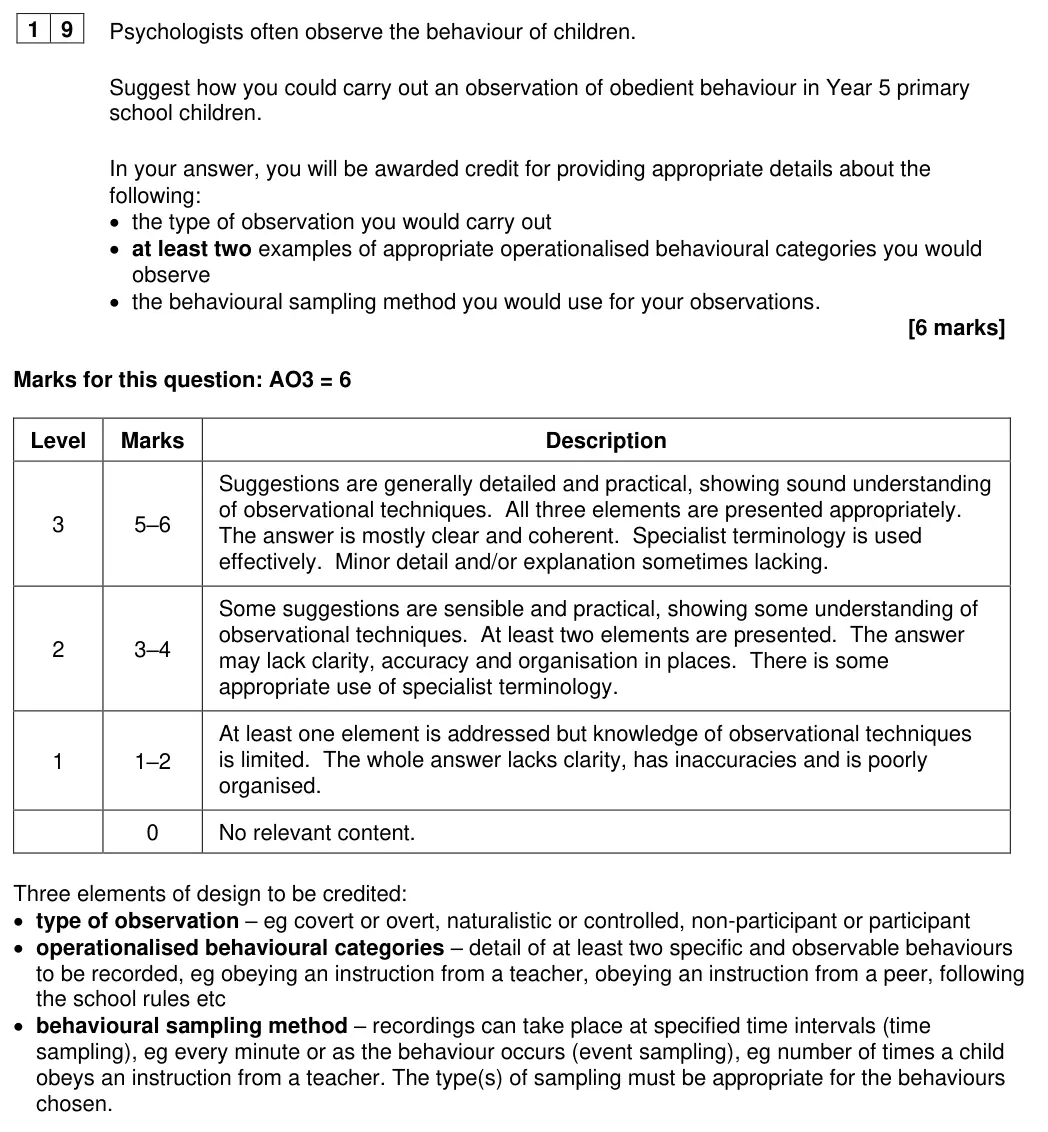
Although varied, there were some impressive responses in Q19 where many students were able to suggest how they would carry out an observation, demonstrating their ability to design practical procedures. Q19 was a challenging question as it was the first time this style of question has been asked on an AS examination. Although similar in style to the format of some previous A Level questions, it is important to note that the demands of this question are focused on the students’ suggestions of how the psychologist could carry out the observation and not justification. Despite this being a novel style of question for AS examinations, encouragingly many students were able to provide some relevant suggestions . It is clear that students are gaining important practical experience of how to design and/or carry out psychological research and so understand concepts fully and can apply them in an examination setting. Students’ performance varied greatly on this question but encouragingly, most students were able to gain at least some marks and nearly two thirds of the responses were awarded 3 marks or more. It is important that students address the demands of this question and address all three bullet points. Additionally, students need to provide some details of how they would carry out the type of observation they have identified (the first bullet point) and how they would use the type of behavioural sampling method they have identified (the third bullet point). Students should avoid wasting time on justification of their suggestions as this is not what the question demands. Unfortunately, too many students simply named a type of interview and/or behavioural sampling method and failed to outline how they would use them but instead included irrelevant justification of why they had chosen them. For the second bullet point it is important that the examples of behavioural categories to be observed are operationalised (as the question asks), to actually measure obedient (or disobedient) behaviour and align with the behavioural sampling method chosen. There was also some significant misunderstanding of behavioural sampling methods; many students wrote about the participant sampling method and thus did not get any credit for this bullet point. Exemplification of a successful response Despite some irrelevant justification of the type of observation towards the beginning, this response contains all of the elements needed for a level 3 response. The student has identified a type of observation (lines 2 and 3) and given some detail of how this would be carried out (lines 9 and 10). They have then given some examples of operationalised behaviour categories. Although the first and second categories suggested are implicit measurements of obedience, the third suggestion is explicitly measuring (dis)obedience. The student then goes on to identify an appropriate behavioural sampling method which would work with their suggested behavioural categories and also gives some detail as to how they would use this to record observations. Exemplification of a less successful response A fairly typical example of a response where the student has at least attempted to engage with each of the bullet points. The final point is confused and is about the sampling of the participants, not the behavioural categories which is not required and so cannot gain credit. However, there is some very implicit knowledge of event sampling, even though it is not named, in the attempt at behaviour categories (‘the amount of times all children…’). The student has attempted to give two examples of behavioural categories at the start and although these are about obedience, these are not operationalised as it is unclear how ‘listening’ and ‘not listening’ could be observed. In the middle paragraph, the student has identified a type of observation but has not explained how this (covert) observation could be carried out.