Examiner's comment
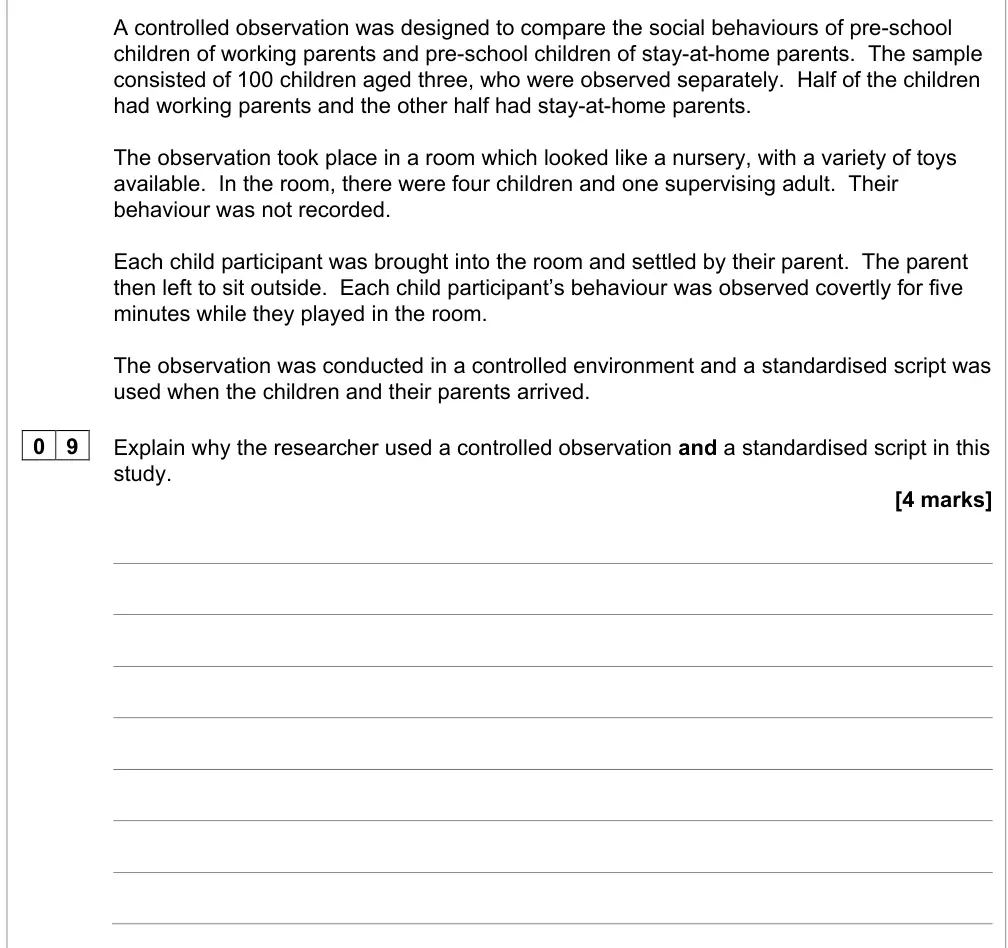
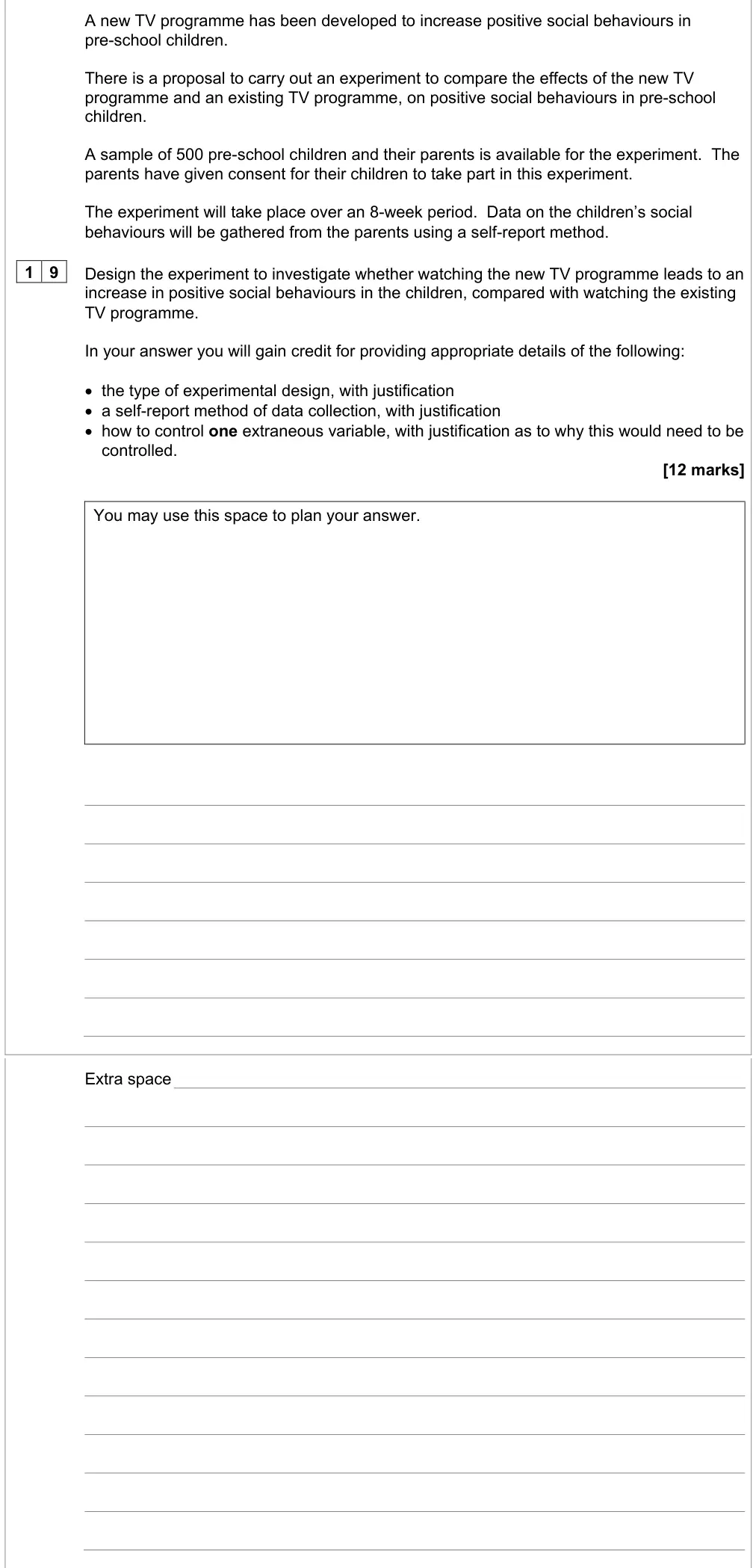
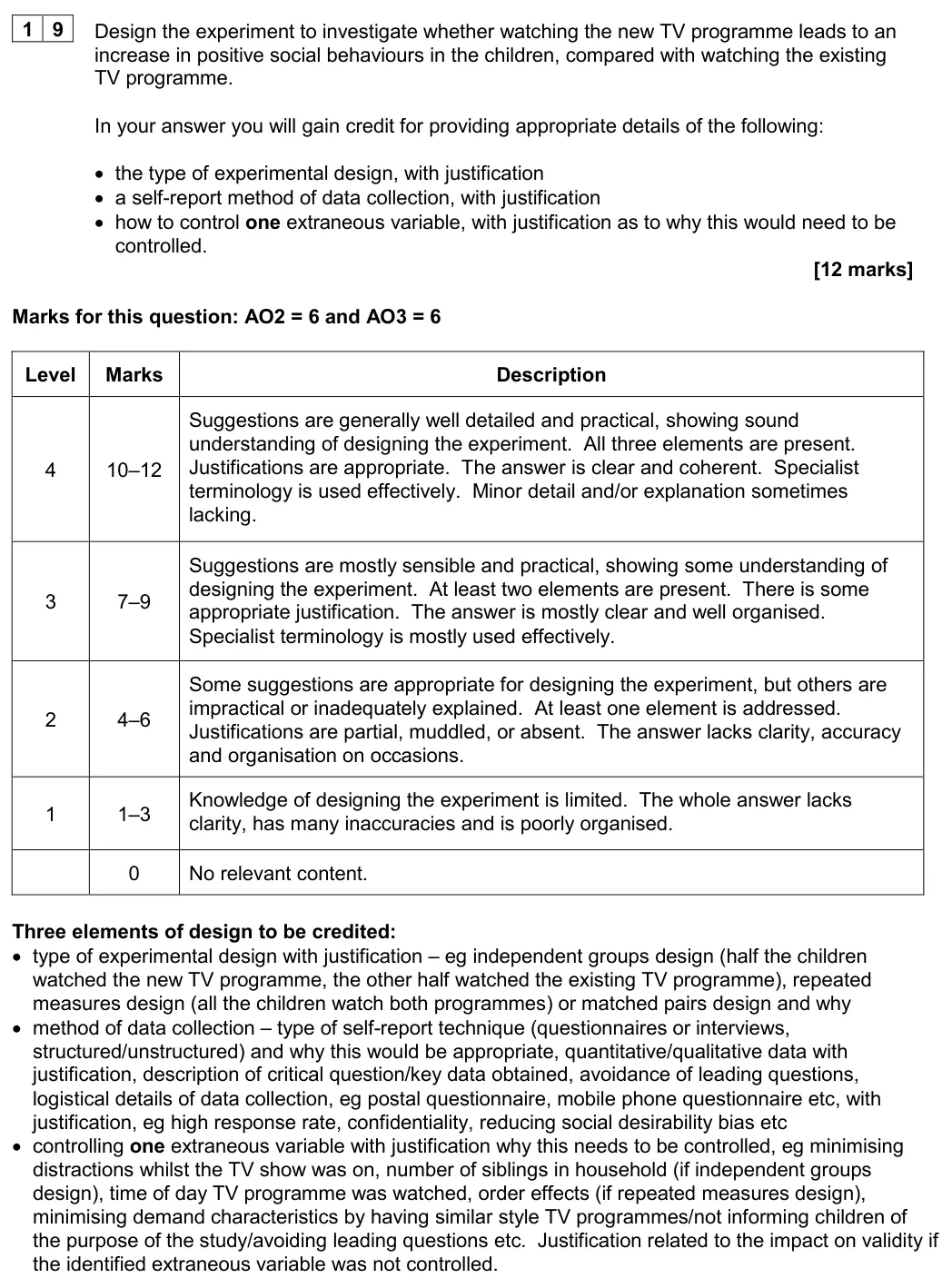
This question yielded a real spread of marks across the cohort. Students appeared more aware that only material relating to the bullet points would be creditworthy, as answers were more focused this year. Unfortunately, as in previous series, many responses were not practical or not sufficiently explained, eg simply naming the type of design or self-report method of data collection. The requirement for justification differentiated well, with only the best responses giving effective justification in context. Justification was often either missing or generic in nature, with comments such as ‘removes individual differences’ given. Overall, students engaged best with the content on the self-report method of data collection whilst they seemed more challenged to offer a control for an extraneous variable. An extraneous variable was often identified without considering whether it could be appropriately controlled. Consequently, there were lots of impractical suggestions regarding sleep, social interaction or screen time for young children. Many confused experimental design with types of experimental method and some missed the information in the stem about data being collected from the parents using a self-report method. For this type of question, teachers should encourage students to consider why certain experimental designs/methods of data collection are better than others for a given research question and also why certain controls of extraneous variables are needed. Teachers are advised to try to incorporate planning and implementing practical investigations in class where possible. This is to enable students to gain practical experience and deeper understanding of designing experiments, which will help them when answering these types of questions in an examination. However, this may have been more challenging for the cohort this year, given the more limited contact teaching time.