Examiner's comment
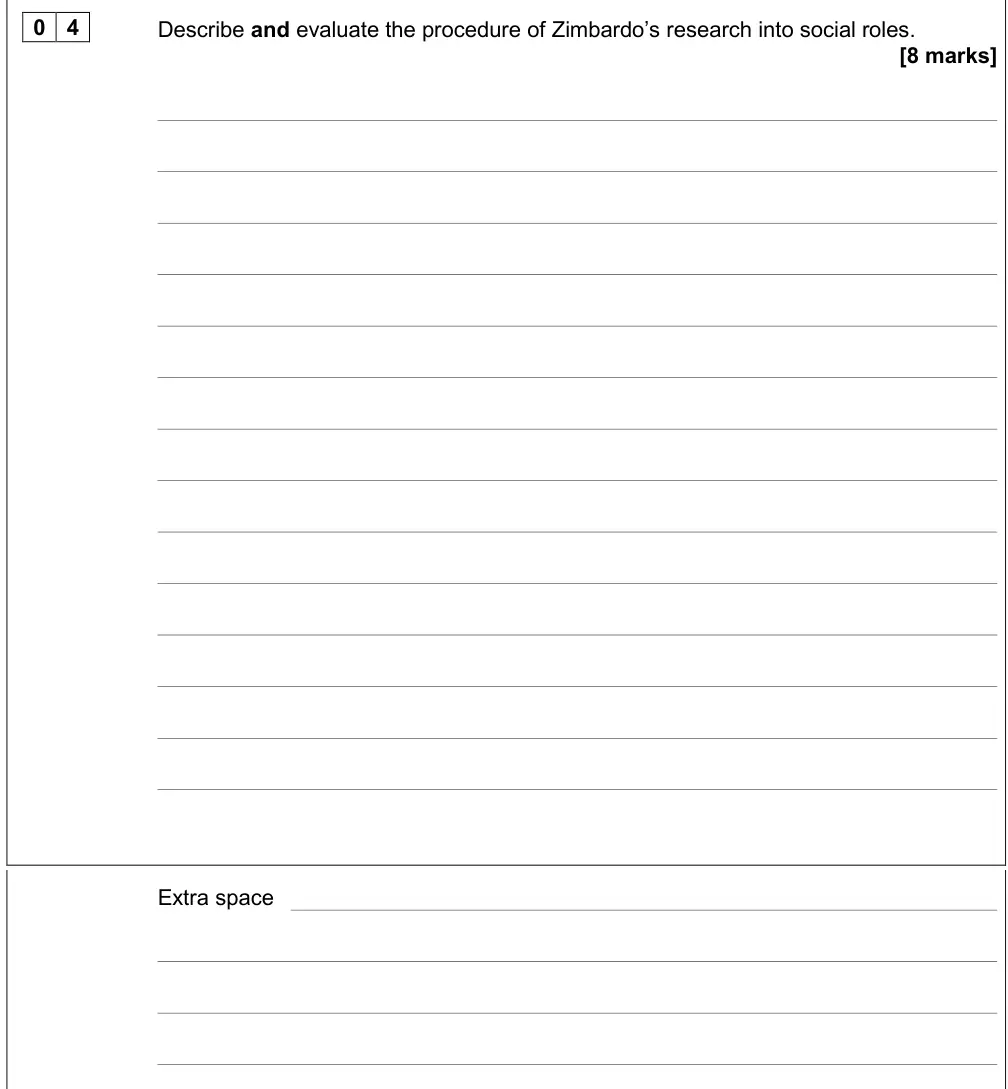
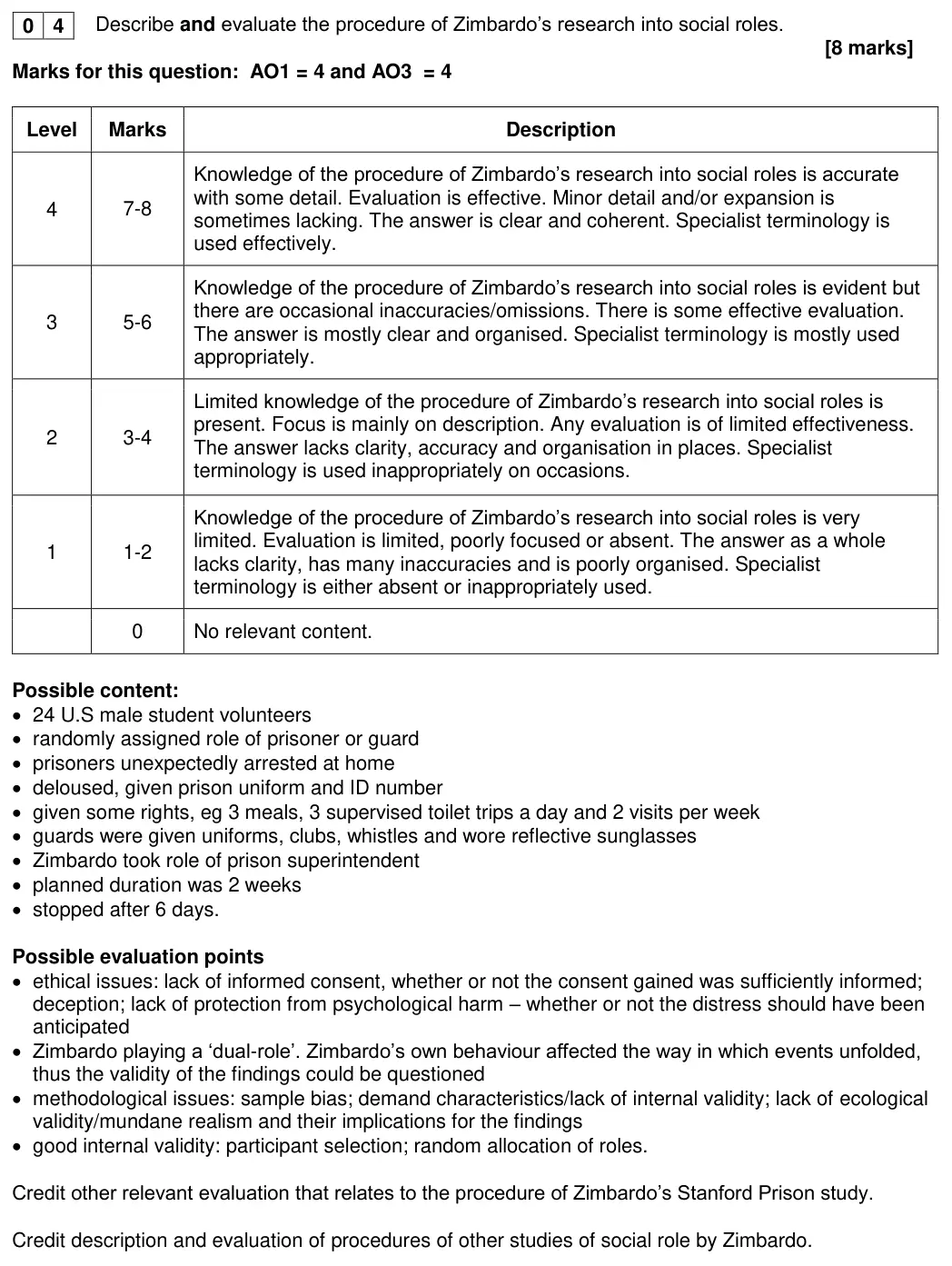
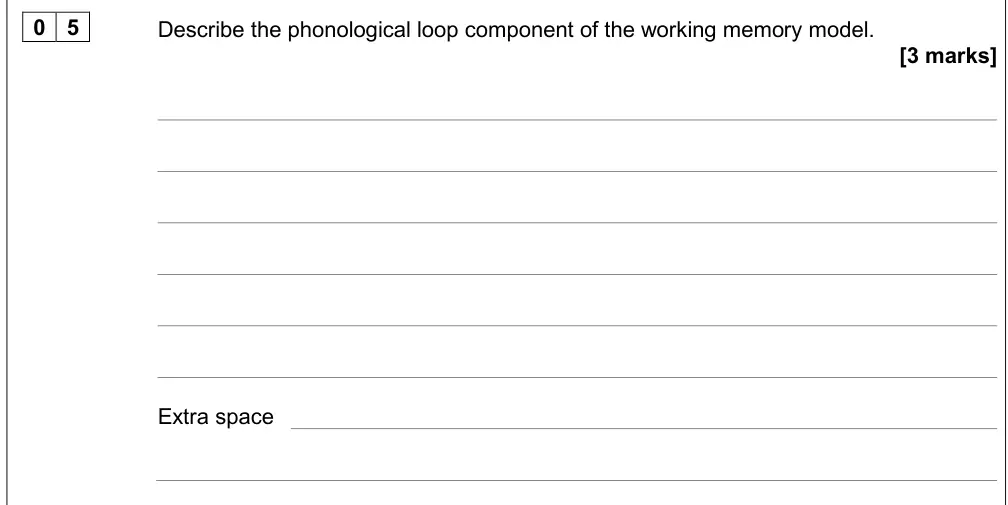
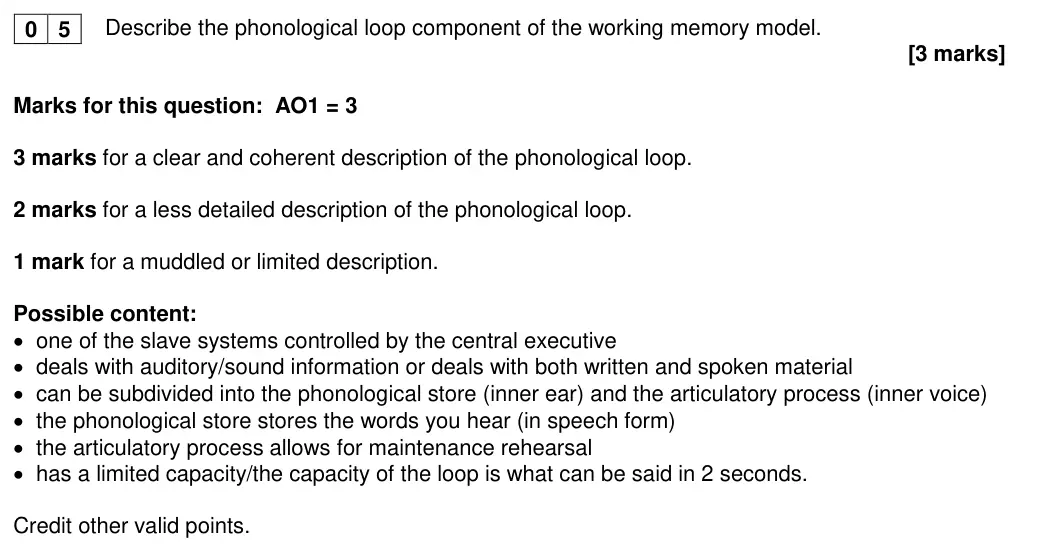
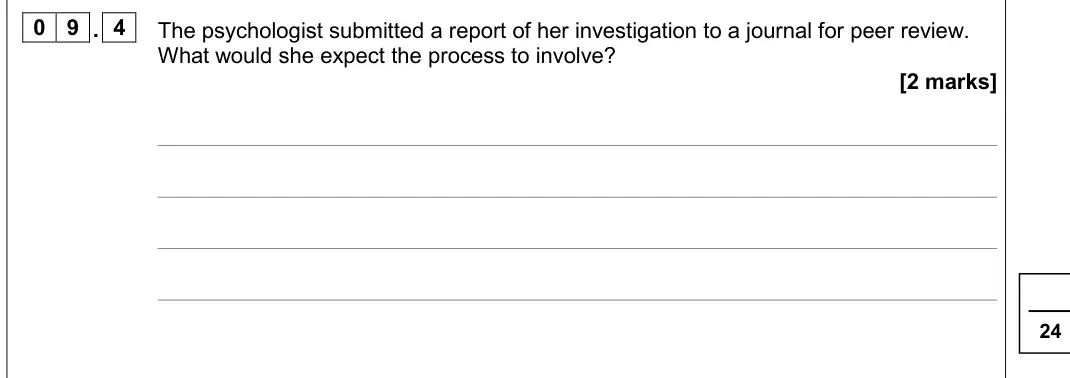
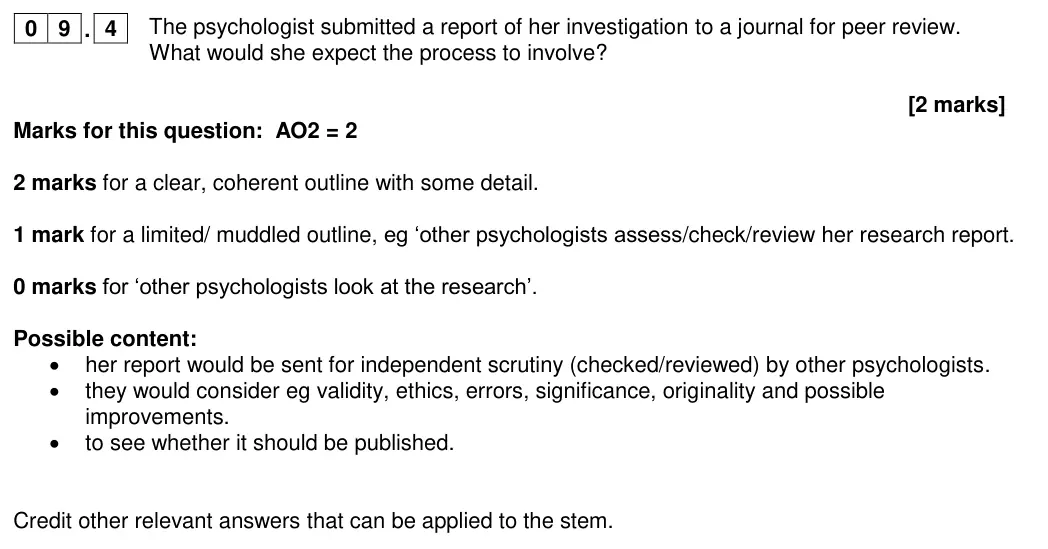
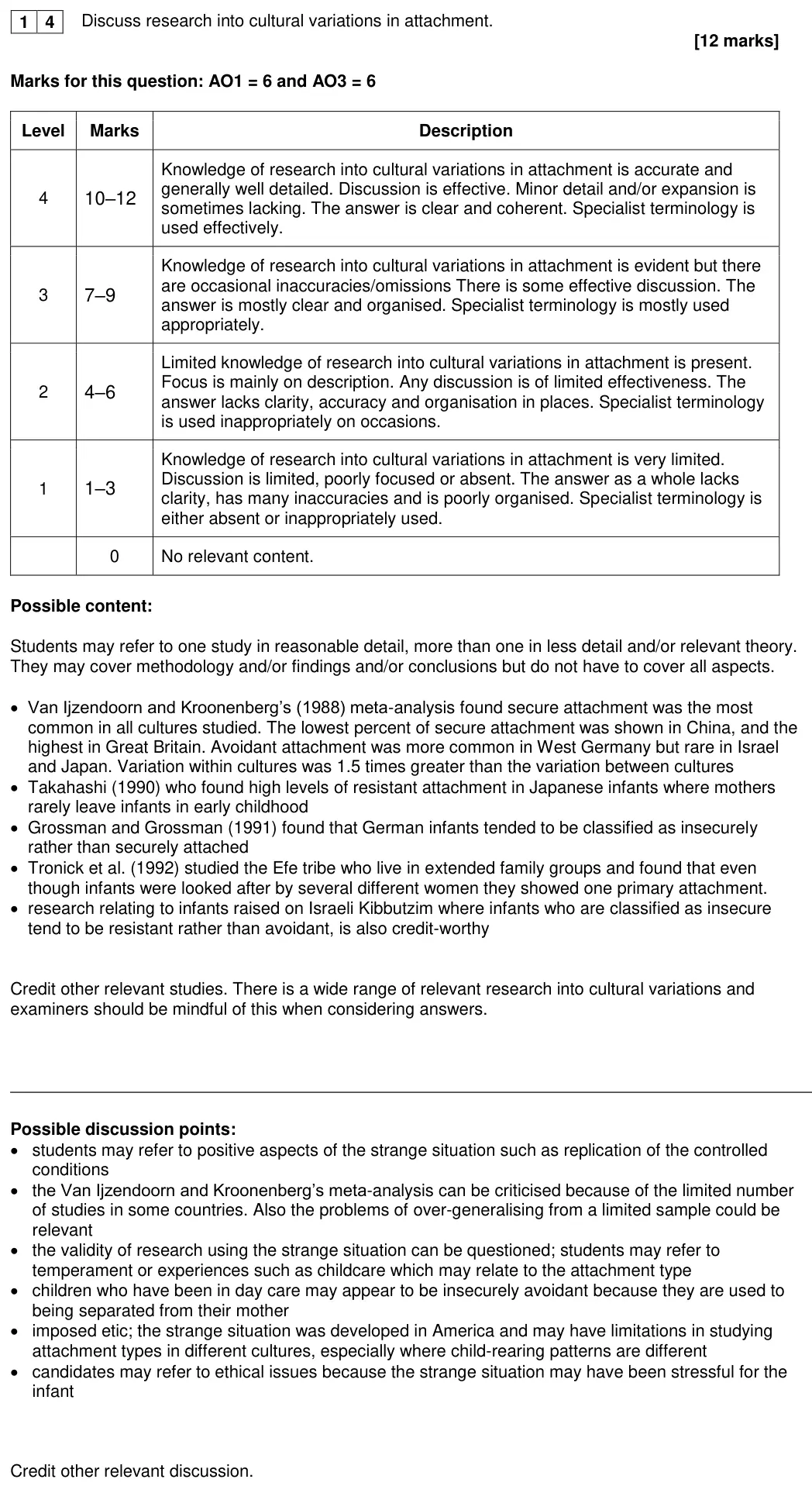
The questions that seemed to differentiate well were 05, 07, 08, 09.4 and 14. Students need to take care with the balance of AO1 and AO3, particularly with the extended writing in questions such as 04 and 14. There should be an equal amount of each skill, however many students were producing much more AO3 than AO1 and consequently not gaining all the marks available for the latter. This was a challenging question, which showed good discrimination. The meta-analysis by Van Ijzendoorn and Kroonenberg was the most common study used, with some students showing excellent, accurate and detailed knowledge of their results. At the other end were those students with very muddled knowledge of the findings. If students are to use such findings effectively, they do need to be clear which country had greater percentages of different types of attachment. Other studies were also used effectively either as knowledge or as discussion. These included research by Takahashi; Simonella; Grossman and Grossman among others. While knowledge was often very well detailed, the discussion was not as effective. For example, while many students knew that West Germany had the highest levels of avoidant attachment, few could explain why this appeared to be the case. The same was true for the high levels of resistant attachment in Japan. Students seemed unaware that it was the quality of the measuring tool that was important in the labelling of attachment type. Better discussion focused on the issue of an imposed etic; the limited number of studies in some countries; the validity of using the strange situation. Lengthy descriptions of the strange situation itself were of little relevance and did not add much to the answer. Ainsworth’s research was not looking at cultural variations, but was the tool used in the meta-analysis.