June 2017: Paper 2

96 marks · 21 question parts · AQA no longer hosts this series; the copies here come from third-party archives

This paper was set on the previous specification. All of its content is still on the 2025 specification.

Question by question

QTopicMarksAOType
1 Approaches in psychology 4AO2=4Application
2 Approaches in psychology 4AO1=4Outline
3 Approaches in psychology 16AO1=6,AO2=4,AO3=6Extended writing
4 Biopsychology 4AO1=4Explain
5 Biopsychology 4AO2=4Application
6 Biopsychology 4AO2=4Application
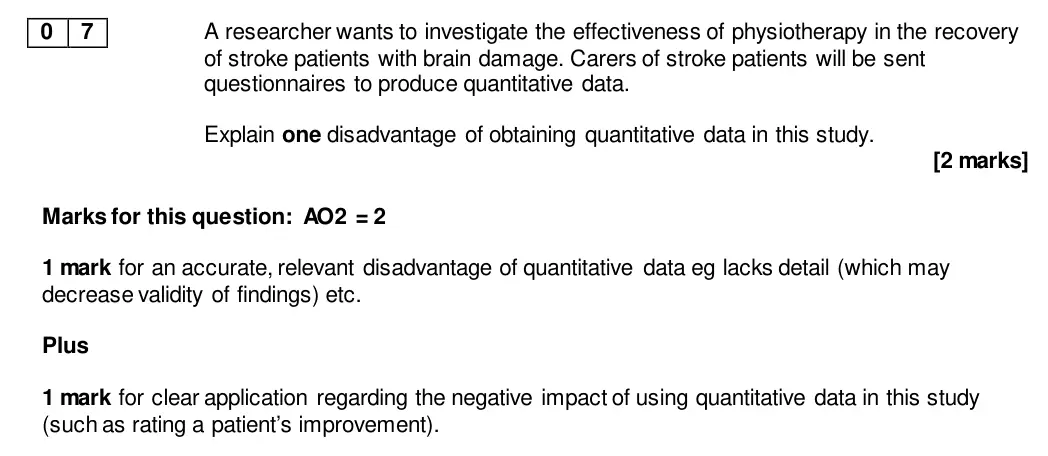
7 Research methods: data handling and analysis 2AO2=2Research methods
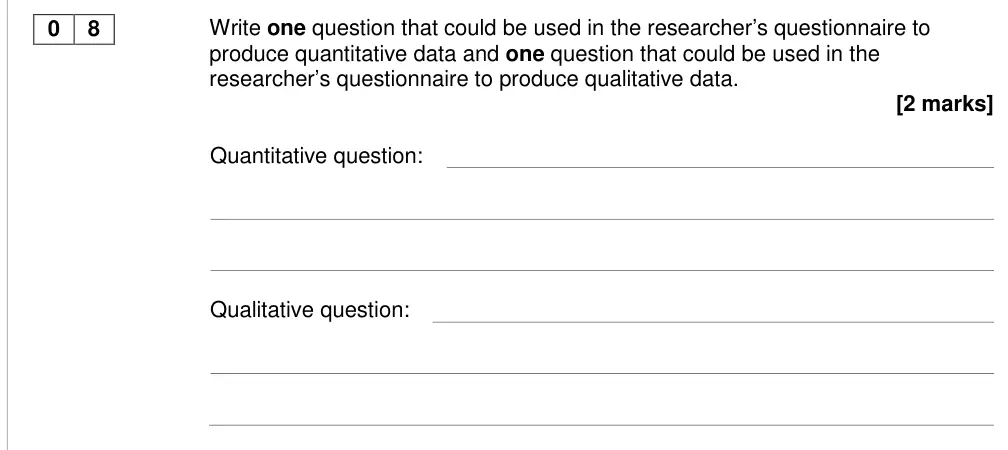
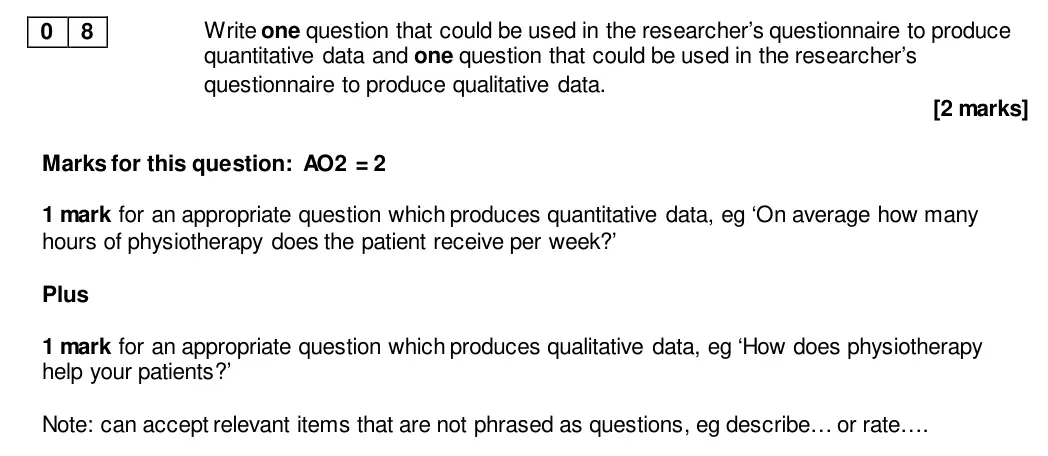
8 Research methods: scientific processes, Research methods: data handling and analysis 2AO2=2Research methods
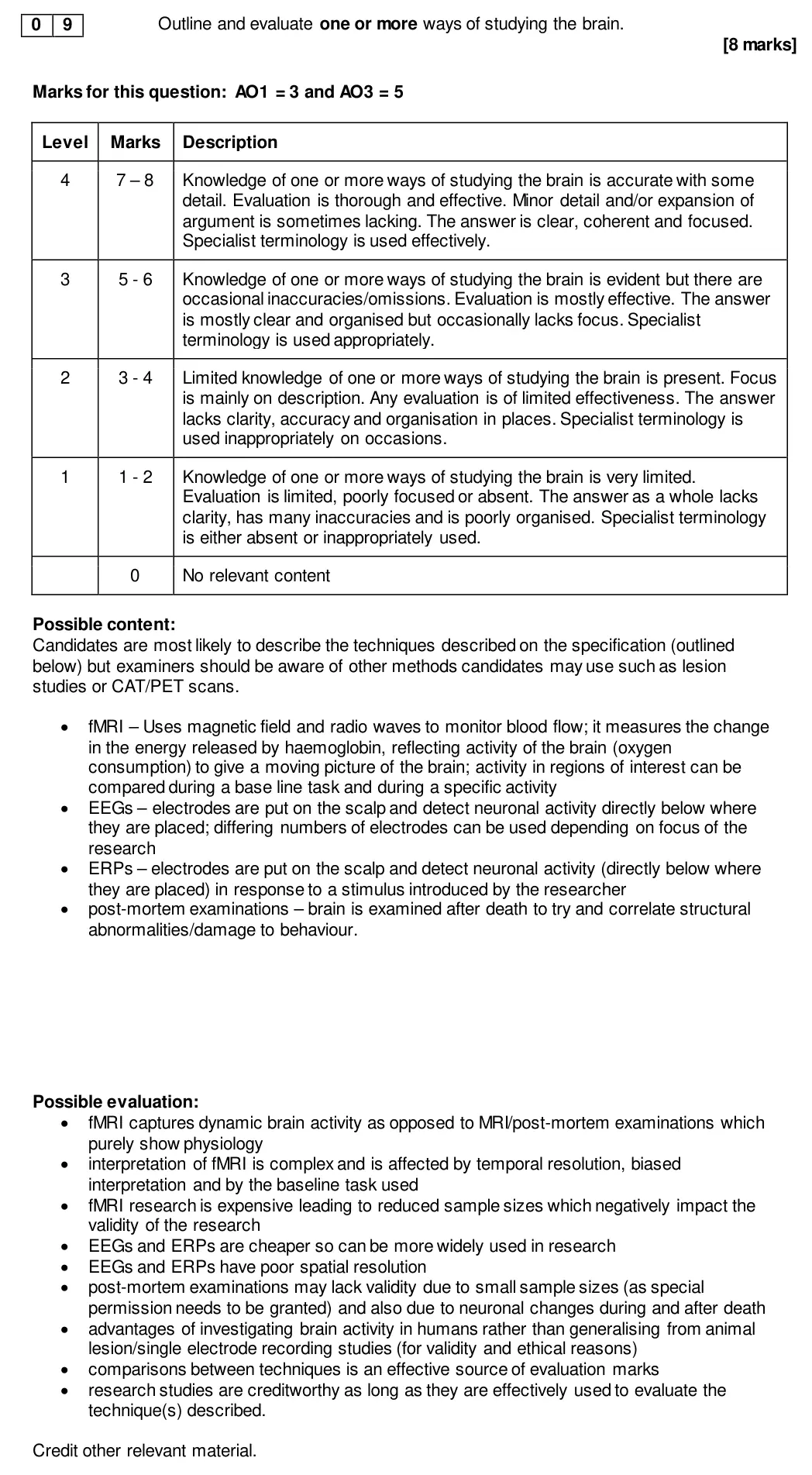
9 Biopsychology 8AO1=3,AO3=5Extended writing
10 Research methods: methods and techniques 1AO2=1Multiple choice
11 Research methods: scientific processes 2AO2=2Research methods
12 Research methods: data handling and analysis 2AO2=2Research methods
13 Research methods: data handling and analysis 3AO3=3Research methods
14 Research methods: data handling and analysis 4AO2=2,AO3=2Research methods
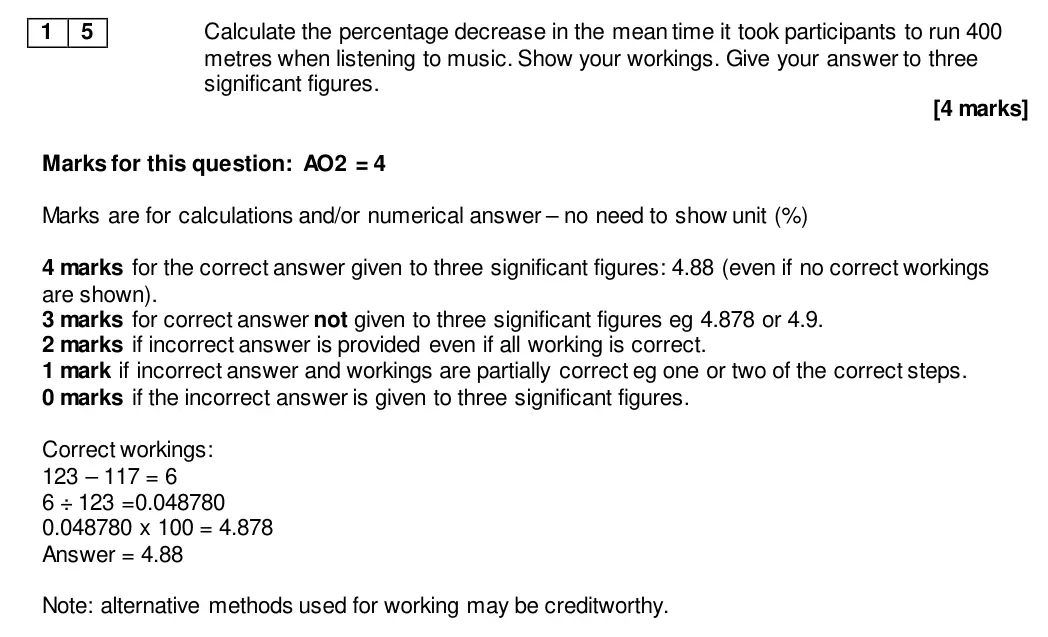
15 Research methods: data handling and analysis 4AO2=4Calculation
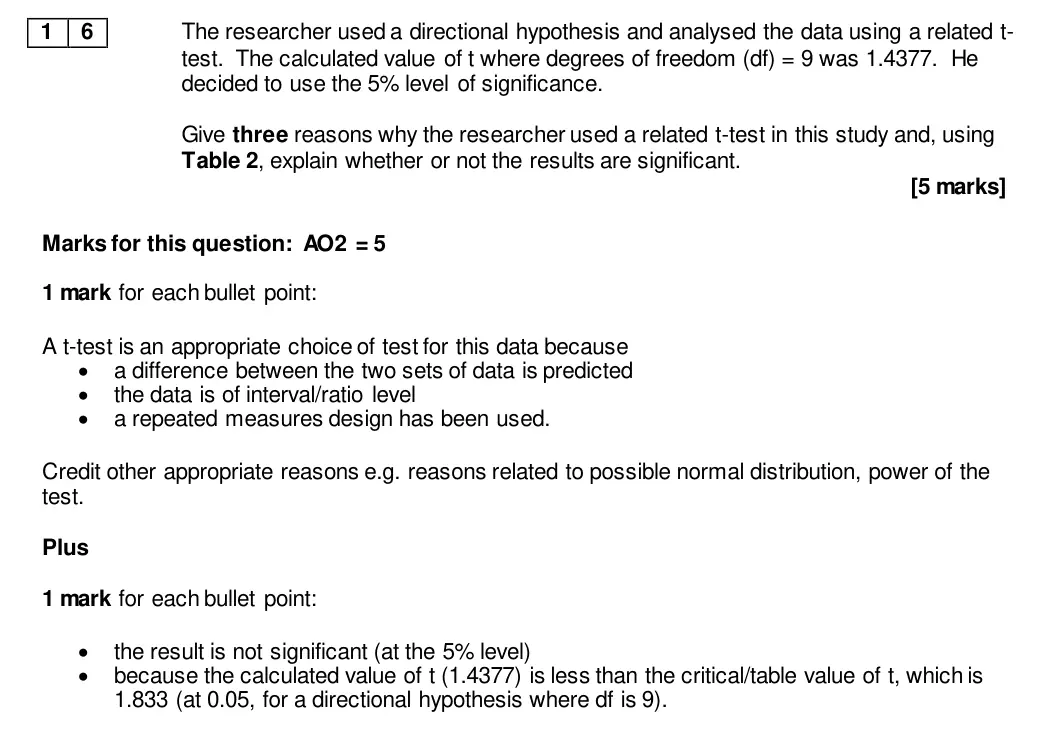
16 Research methods: inferential testing, Research methods: data handling and analysis, Research methods: scientific processes 5AO2=5Research methods
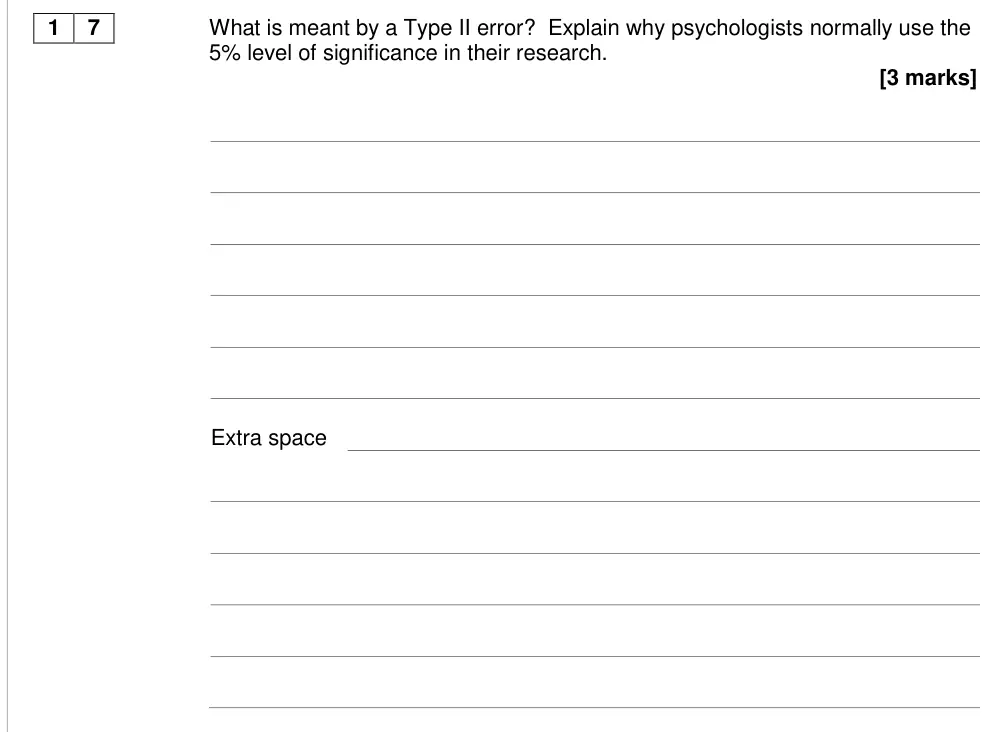
17 Research methods: inferential testing 3AO1=3Research methods
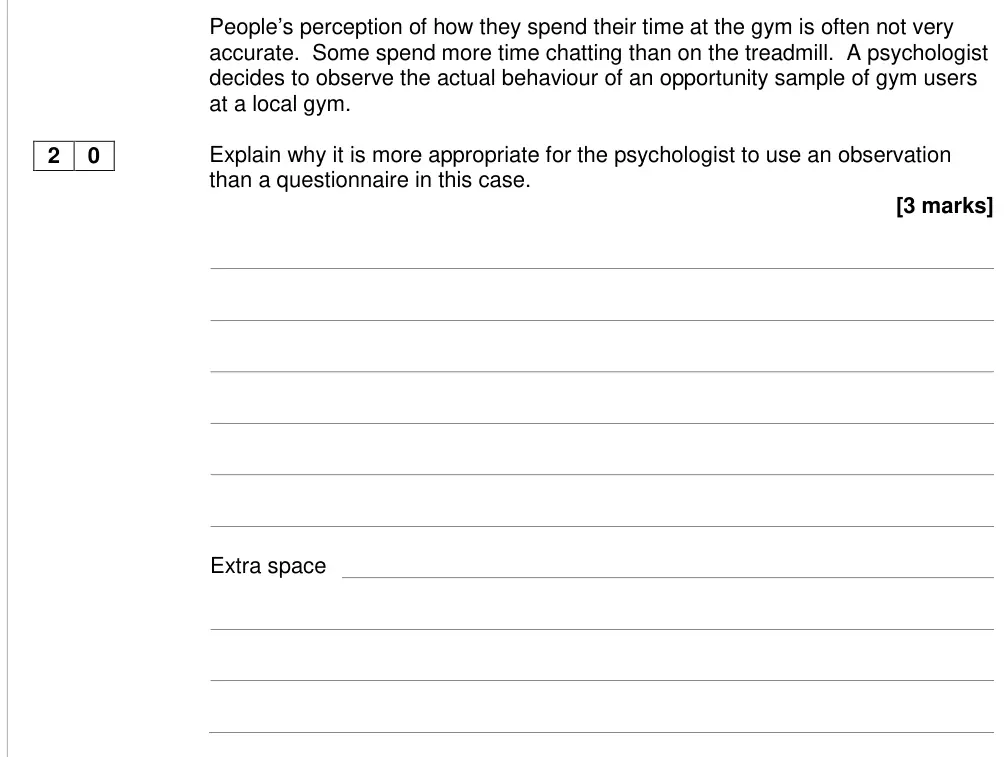
18 Research methods: scientific processes 3AO2=2,AO3=1Research methods
19 Research methods: scientific processes 6AO1=6Research methods
20 Research methods: methods and techniques, Research methods: scientific processes 3AO2=3Research methods
21 Research methods: methods and techniques, Research methods: scientific processes 12AO2=6,AO3=6Extended writing

The questions

123456789101112131415161718192021

June 2017 · Paper 2 · Q1 4 marks AO2=4 Application Hard approaches
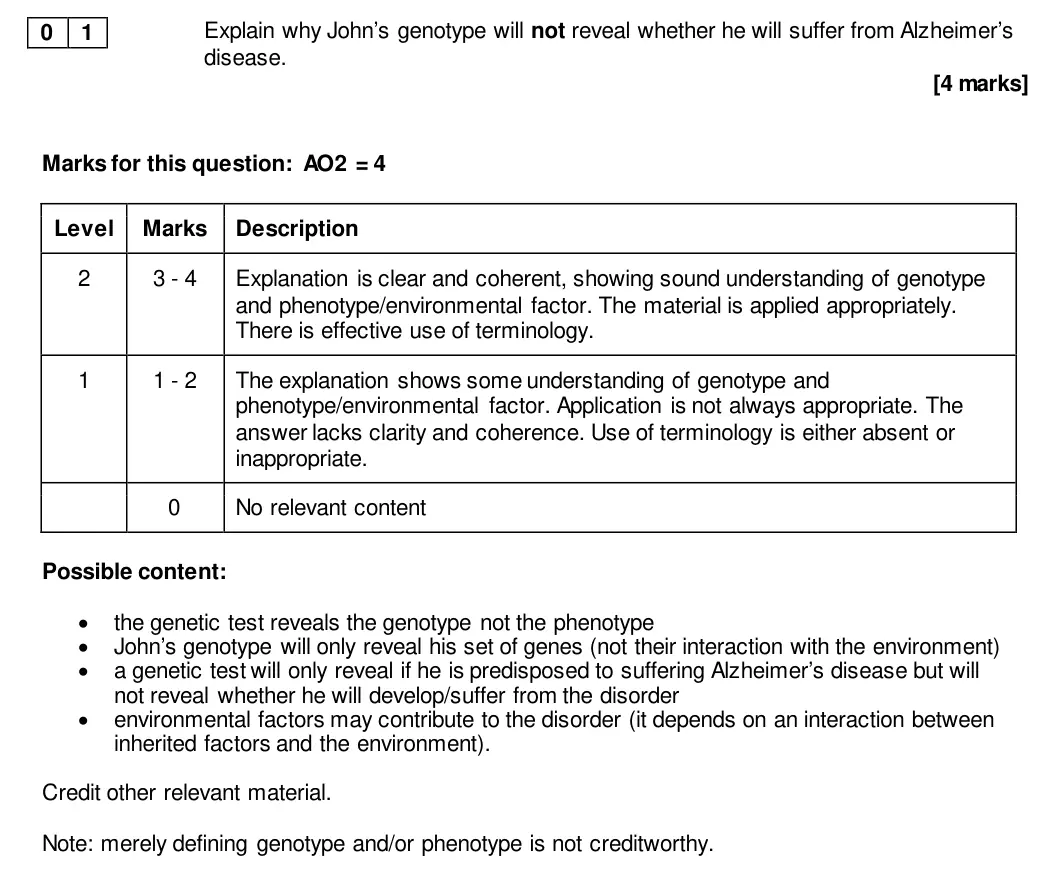
A recent study showed that Alzheimer’s disease may be partly inherited.
John’s father suffered from Alzheimer’s disease.  John is keen to get genetically
tested to see if he will develop Alzheimer’s disease.
0 1
Explain why John’s genotype will not reveal whether he will suffer from
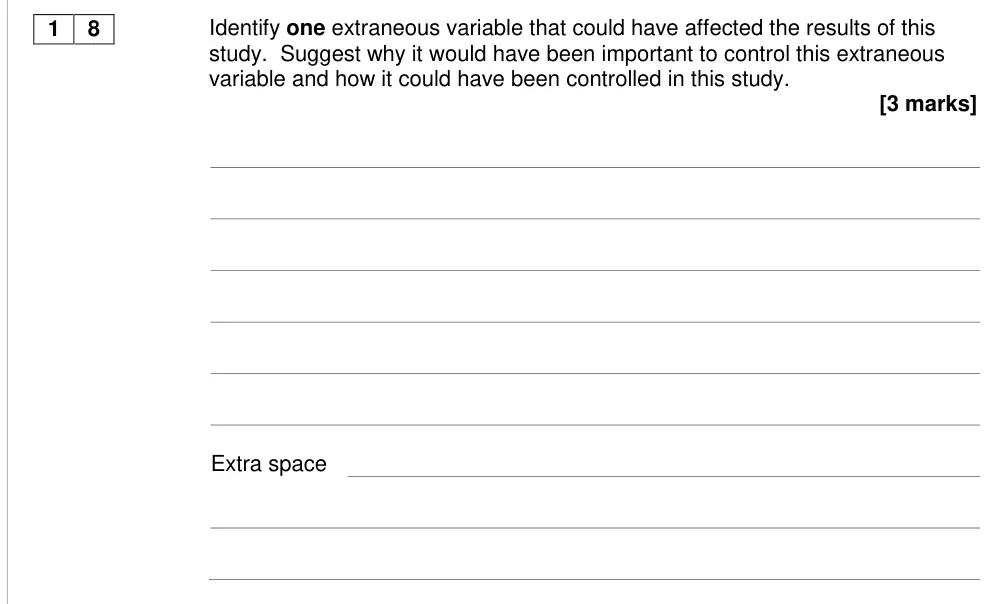
Alzheimer’s disease.
[4 marks]
Extra space
June 2017 · Paper 2 · Q2 4 marks AO1=4 Outline Easy approaches
0 2
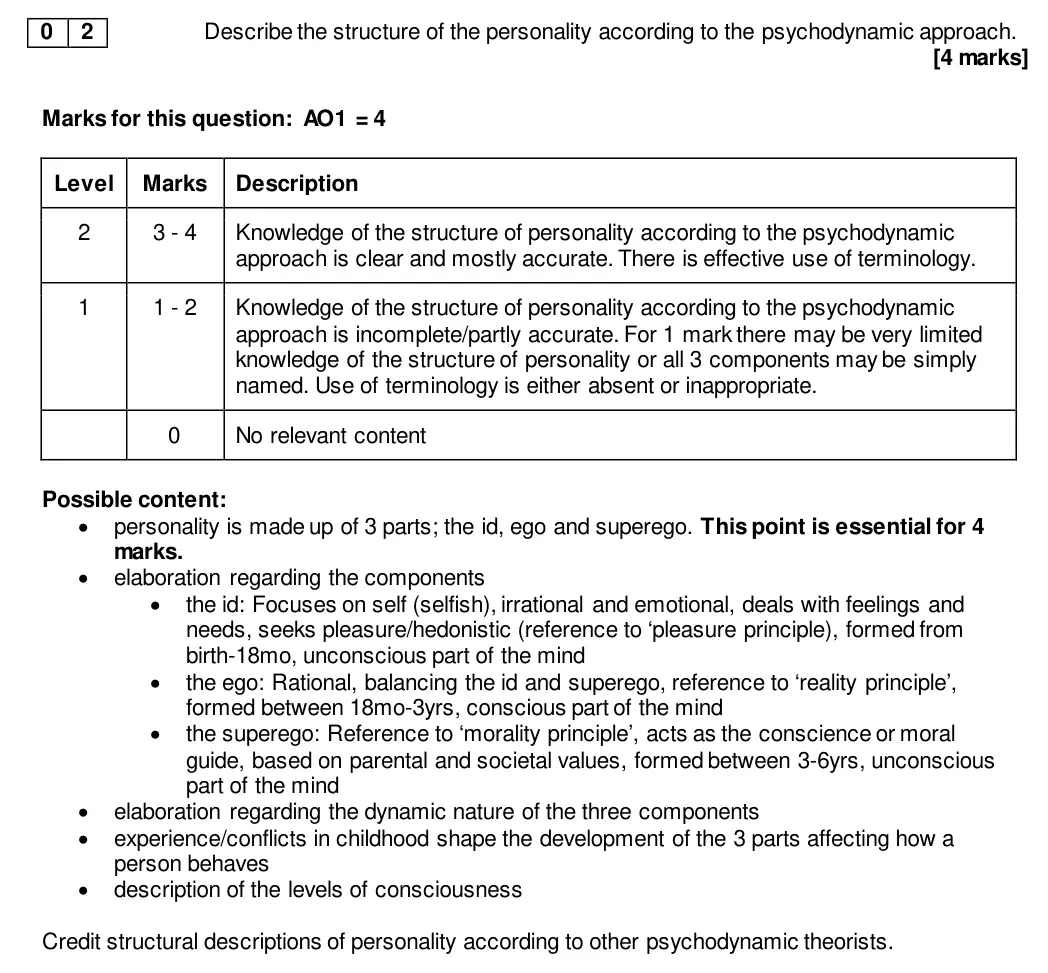
Describe the structure of the personality according to the psychodynamic
approach.
[4 marks]
Extra space
June 2017 · Paper 2 · Q3 16 marks AO1=6, AO2=4, AO3=6 16-mark essay approaches
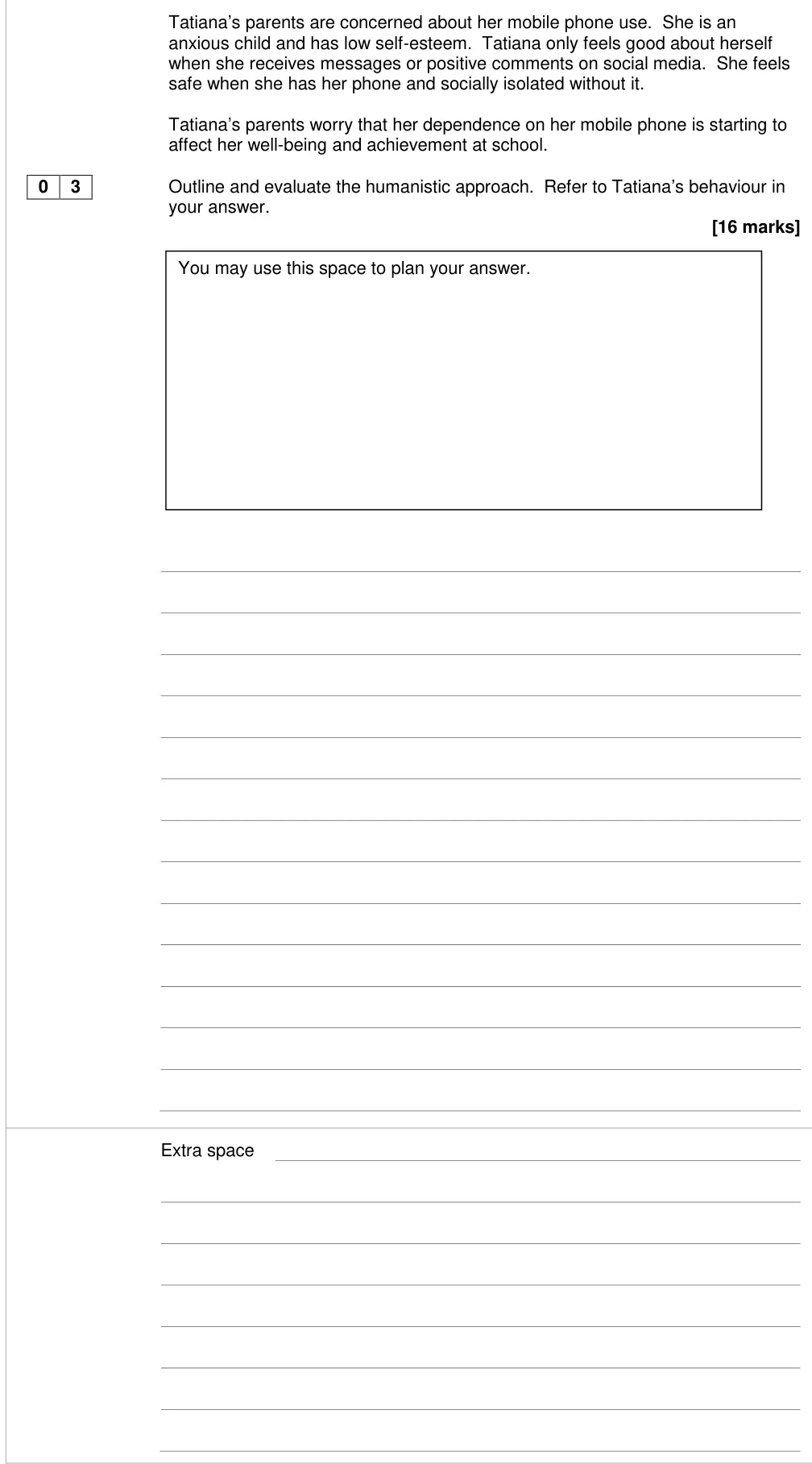
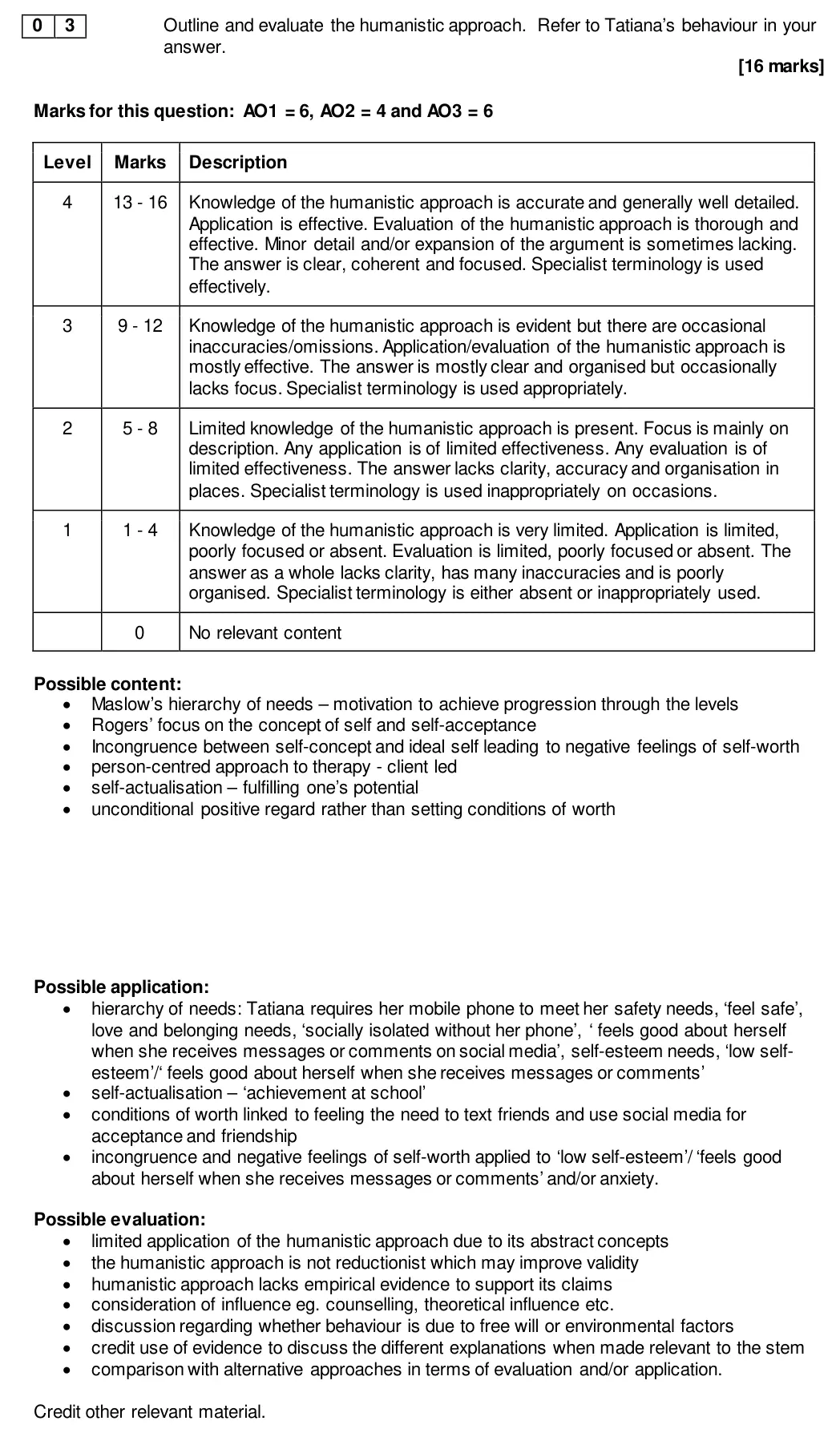
Tatiana’s parents are concerned about her mobile phone use.  She is an
anxious child and has low self-esteem.  Tatiana only feels good about herself
when she receives messages or positive comments on social media.  She feels
safe when she has her phone and socially isolated without it.
Tatiana’s parents worry that her dependence on her mobile phone is starting to
affect her well-being and achievement at school.
0 3
Outline and evaluate the humanistic approach.  Refer to Tatiana’s behaviour in
your answer.
[16 marks]
You may use this space to plan your answer.
Extra space
June 2017 · Paper 2 · Q4 4 marks AO1=4 Explain biopsychology
0 4
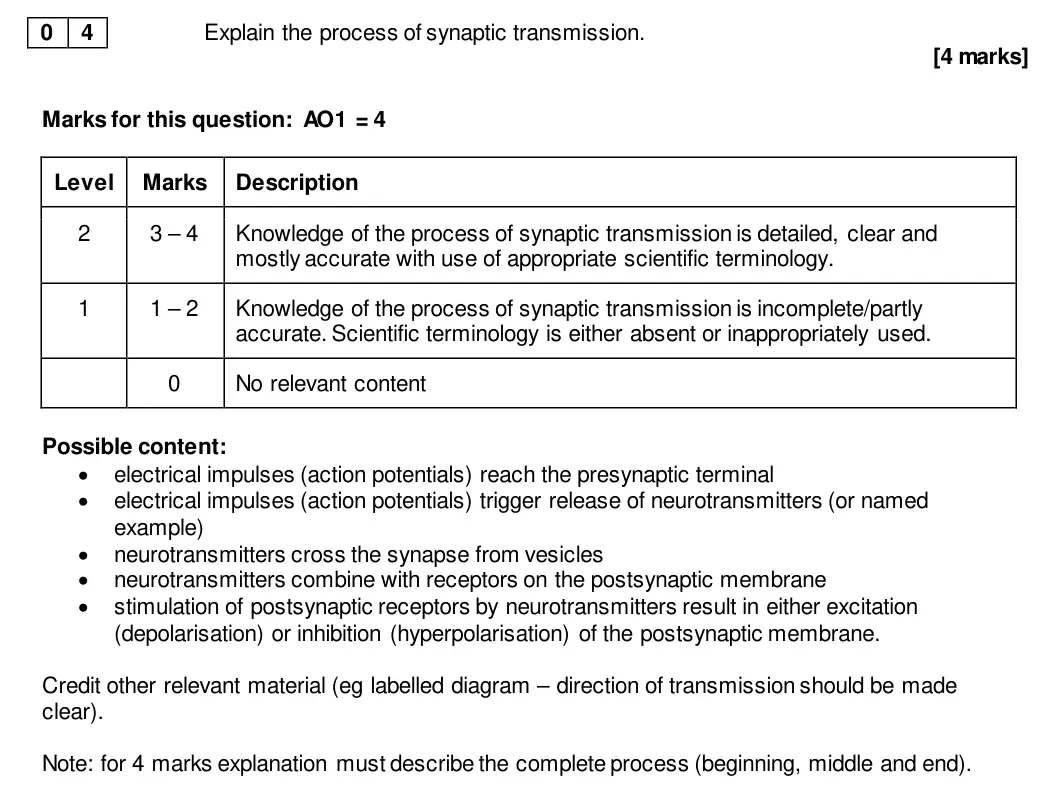
Explain the process of synaptic transmission.
[4 marks]
Extra space
June 2017 · Paper 2 · Q5 4 marks AO2=4 Application biopsychology
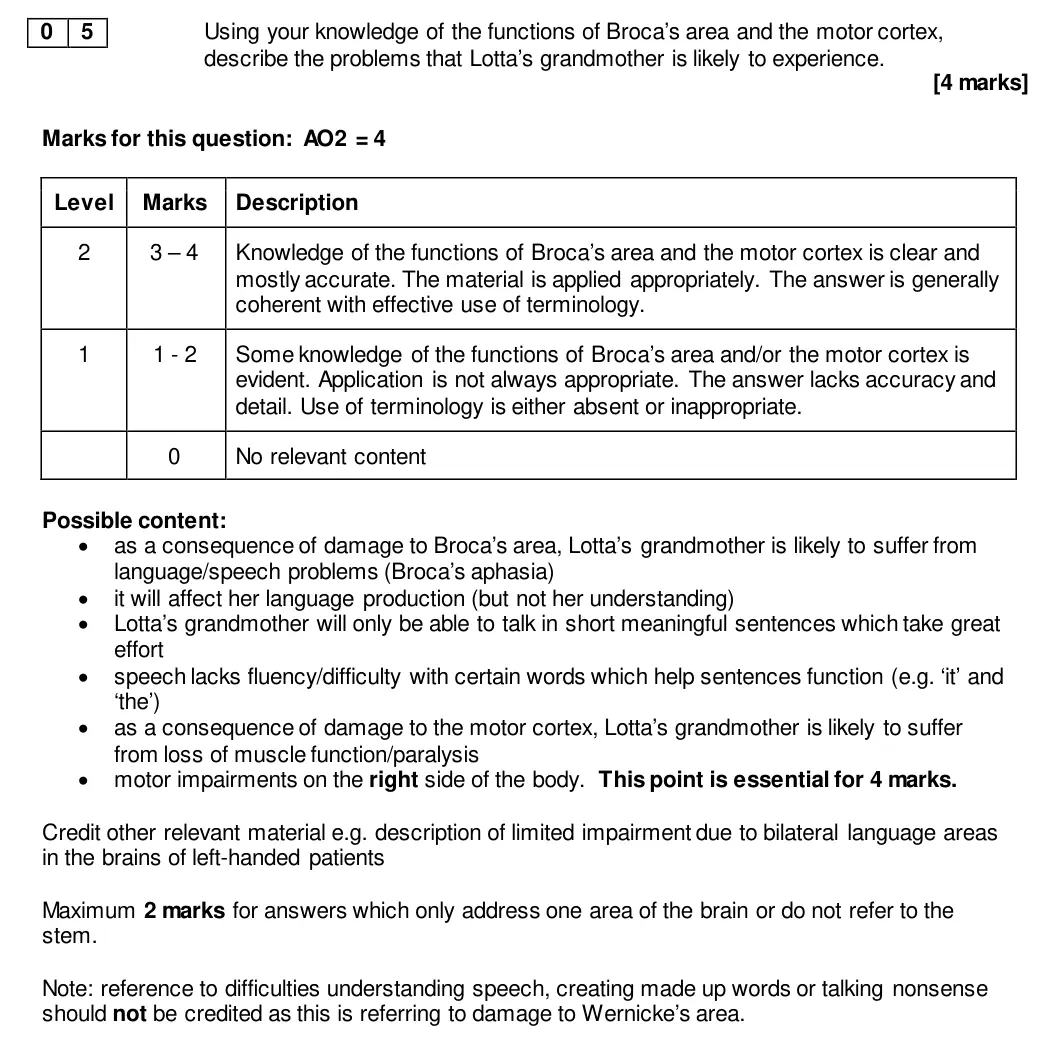
Lotta’s grandmother suffered a stroke to the left hemisphere, damaging Broca’s
area and the motor cortex.
0 5
Using your knowledge of the functions of Broca’s area and the motor cortex,
describe the problems that Lotta’s grandmother is likely to experience.
[4 marks]
Extra space
June 2017 · Paper 2 · Q6 4 marks AO2=4 Application biopsychology
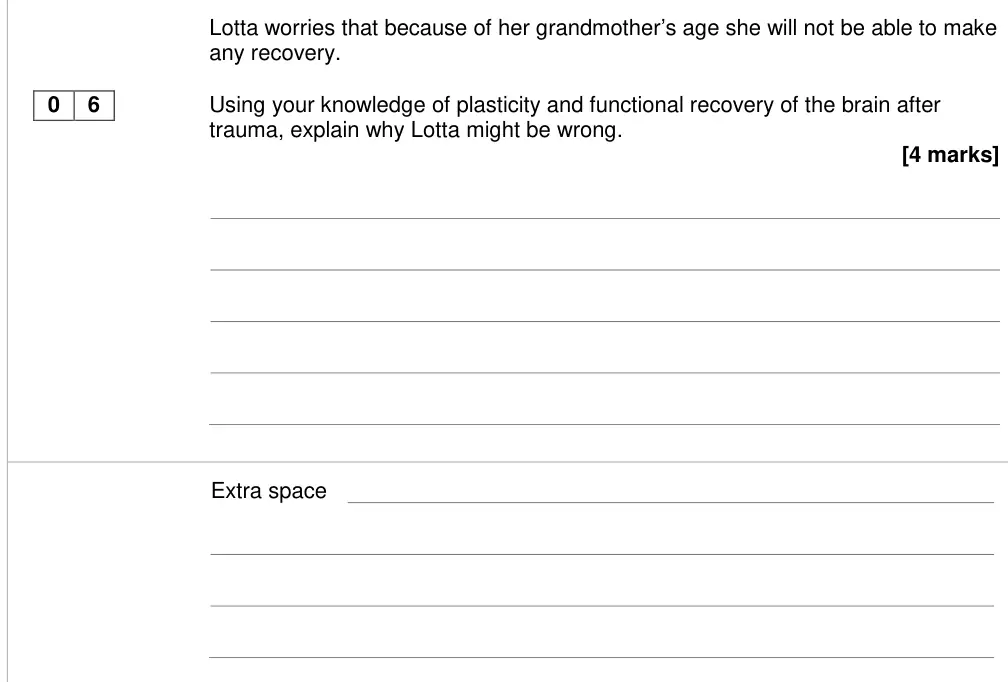
Lotta worries that because of her grandmother’s age she will not be able to make
any recovery.
0 6
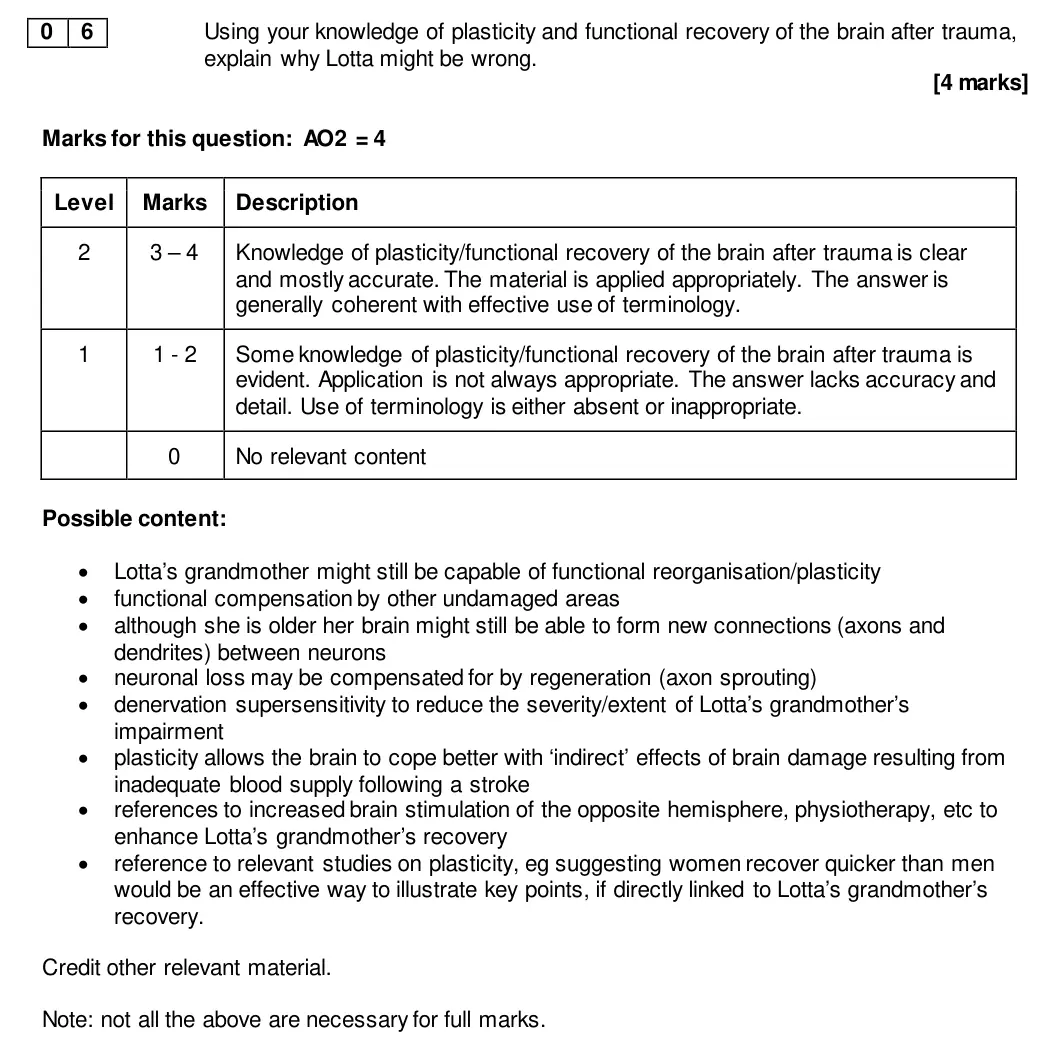
Using your knowledge of plasticity and functional recovery of the brain after
trauma, explain why Lotta might be wrong.
[4 marks]
Extra space
June 2017 · Paper 2 · Q7 2 marks AO2=2 Research methods data handling
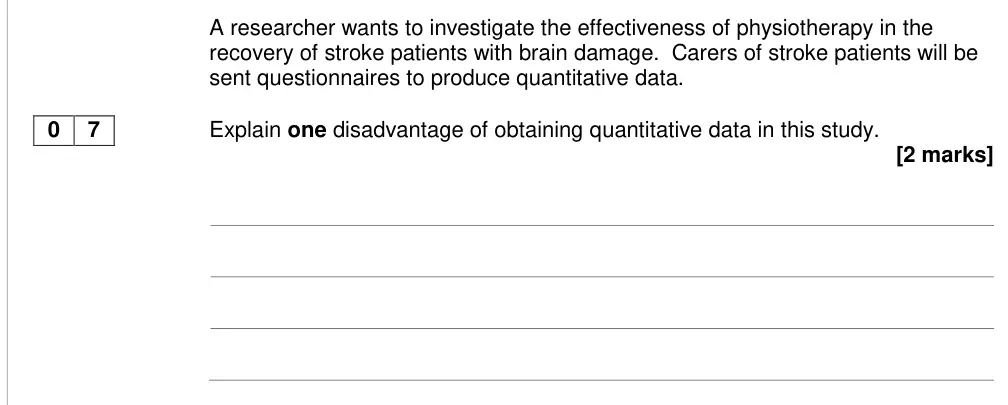
A researcher wants to investigate the effectiveness of physiotherapy in the
recovery of stroke patients with brain damage.  Carers of stroke patients will be
sent questionnaires to produce quantitative data.
0 7
Explain one disadvantage of obtaining quantitative data in this study.
[2 marks]
June 2017 · Paper 2 · Q8 2 marks AO2=2 Research methods scientific processesdata handling
0 8
Write one question that could be used in the researcher’s questionnaire to
produce quantitative data and one question that could be used in the
researcher’s questionnaire to produce qualitative data.
[2 marks]
Quantitative question:
Qualitative question:
June 2017 · Paper 2 · Q9 8 marks AO1=3, AO3=5 Extended writing biopsychology
0 9
Outline and evaluate one or more ways of studying the brain.
[8 marks]
Extra space
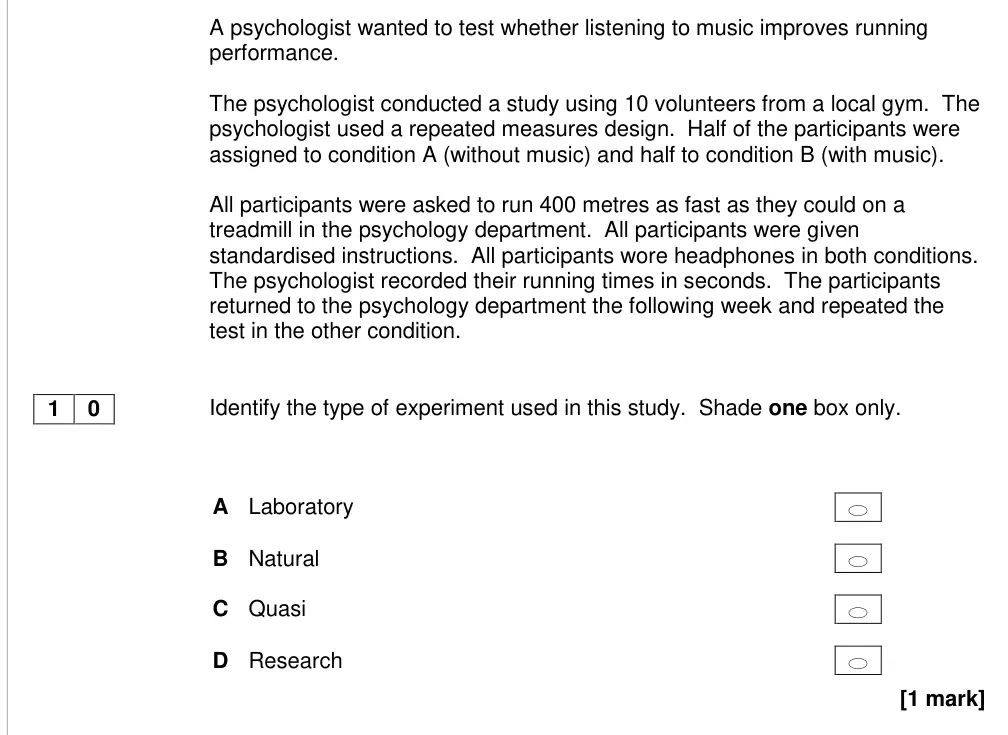
June 2017 · Paper 2 · Q10 1 mark AO2=1 Multiple choice Easy research methods
A psychologist wanted to test whether listening to music improves running
performance.
The psychologist conducted a study using 10 volunteers from a local gym.  The
psychologist used a repeated measures design.  Half of the participants were
assigned to condition A (without music) and half to condition B (with music).
All participants were asked to run 400 metres as fast as they could on a
treadmill in the psychology department.  All participants were given
standardised instructions.  All participants wore headphones in both conditions.
The psychologist recorded their running times in seconds.  The participants
returned to the psychology department the following week and repeated the
test in the other condition.
1 0
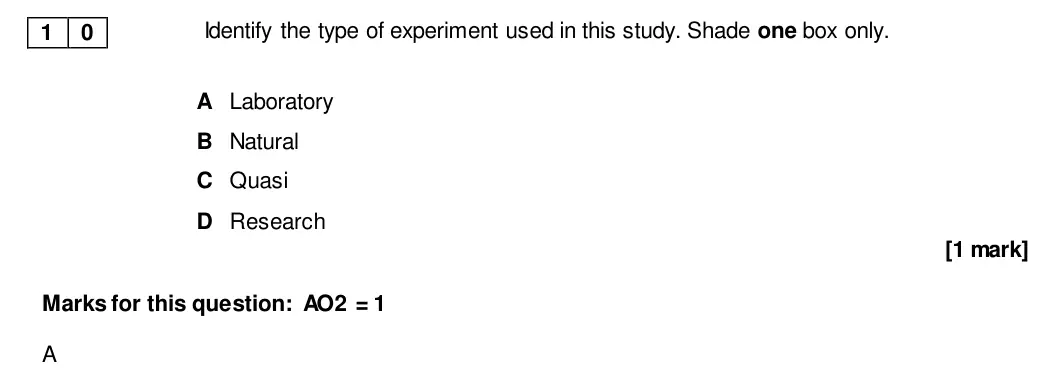
Identify the type of experiment used in this study.  Shade one box only.
A Laboratory
B Natural
C Quasi
D Research
[1 mark]
June 2017 · Paper 2 · Q11 2 marks AO2=2 Research methods scientific processes
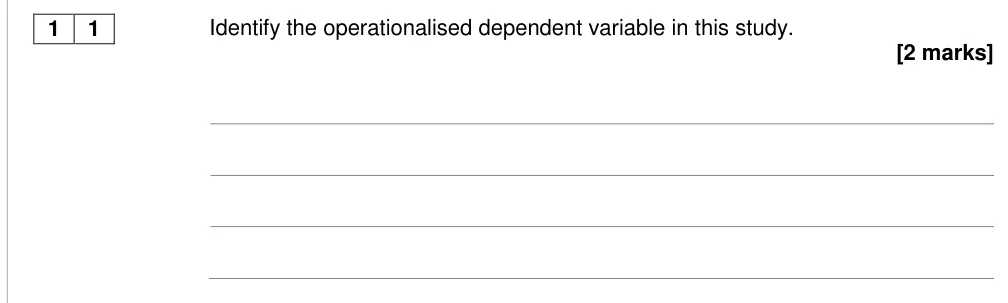
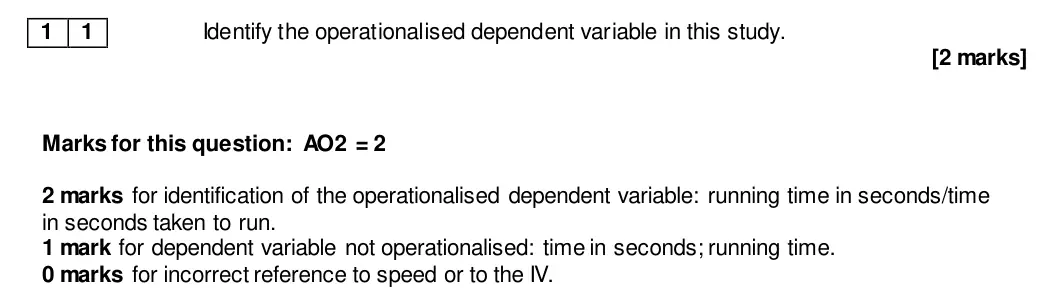
1 1
Identify the operationalised dependent variable in this study.
[2 marks]
June 2017 · Paper 2 · Q12 2 marks AO2=2 Research methods Hard data handling
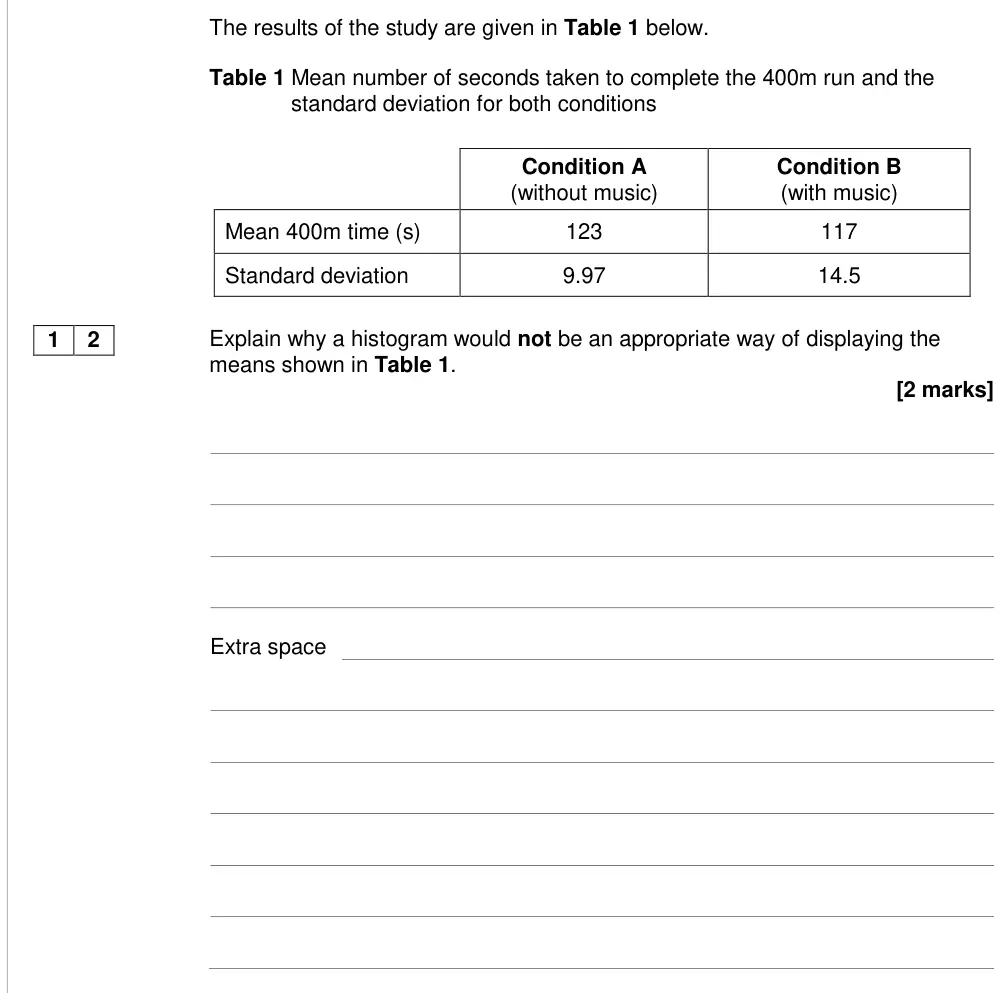
The results of the study are given in Table 1 below.
Table 1 Mean number of seconds taken to complete the 400m run and the
standard deviation for both conditions
Condition A
Condition B
(without music)
(with music)
Mean 400m time (s)
123
117
Standard deviation
9.97
14.5
1 2
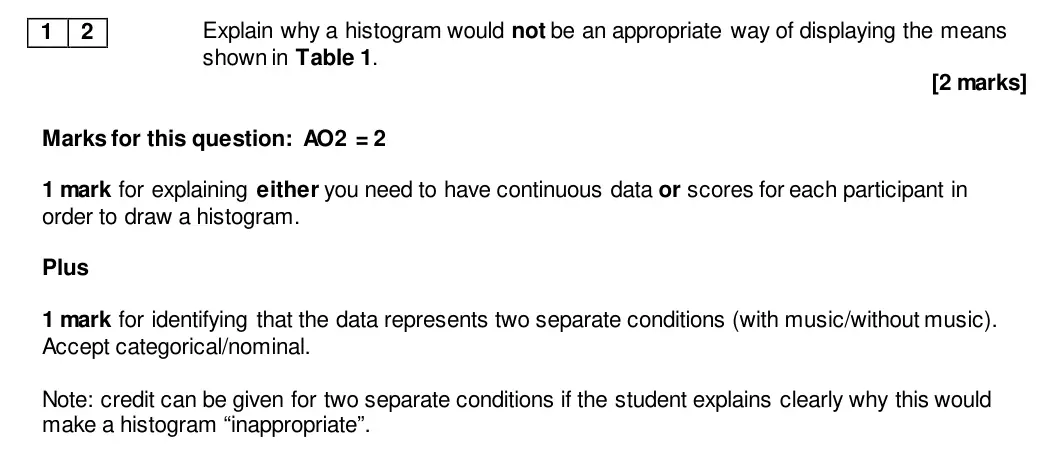
Explain why a histogram would not be an appropriate way of displaying the
means shown in Table 1.
[2 marks]
Extra space
June 2017 · Paper 2 · Q13 3 marks AO3=3 Research methods data handling
1 3
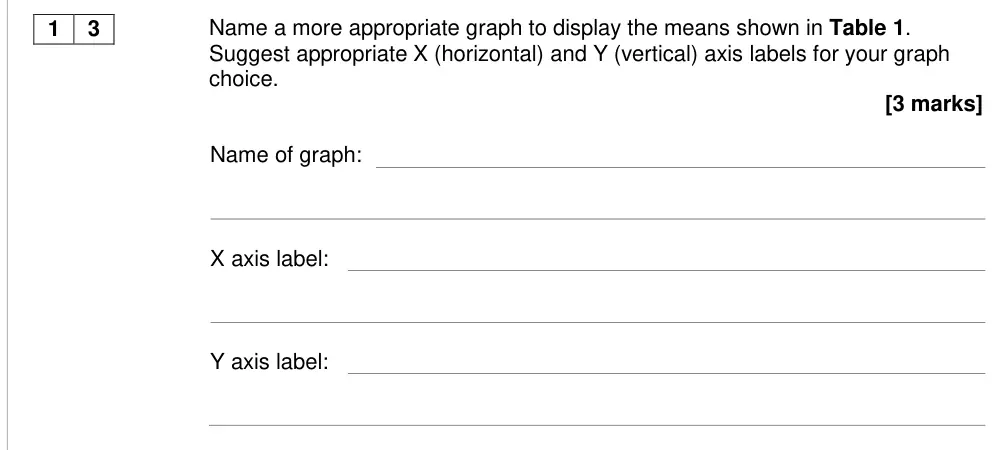
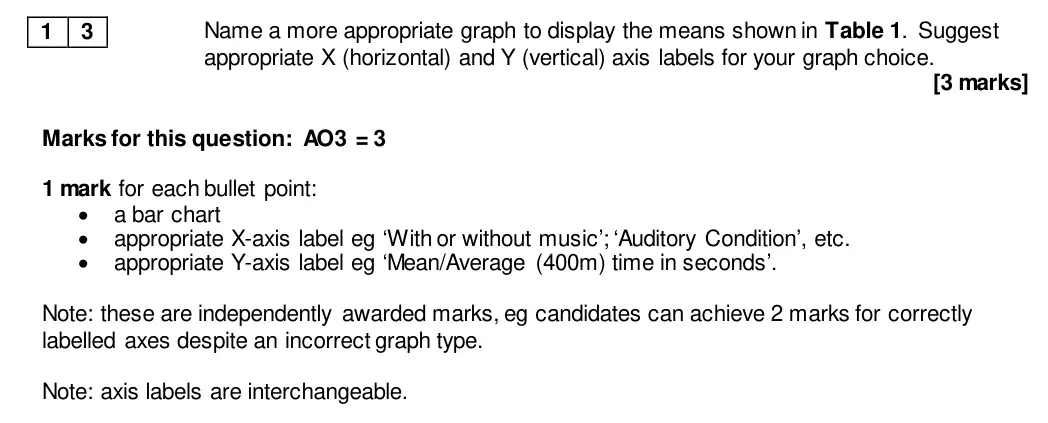
Name a more appropriate graph to display the means shown in Table 1.
Suggest appropriate X (horizontal) and Y (vertical) axis labels for your graph
choice.
[3 marks]
Name of graph:
X axis label:
Y axis label:
June 2017 · Paper 2 · Q14 4 marks AO2=2, AO3=2 Research methods data handling
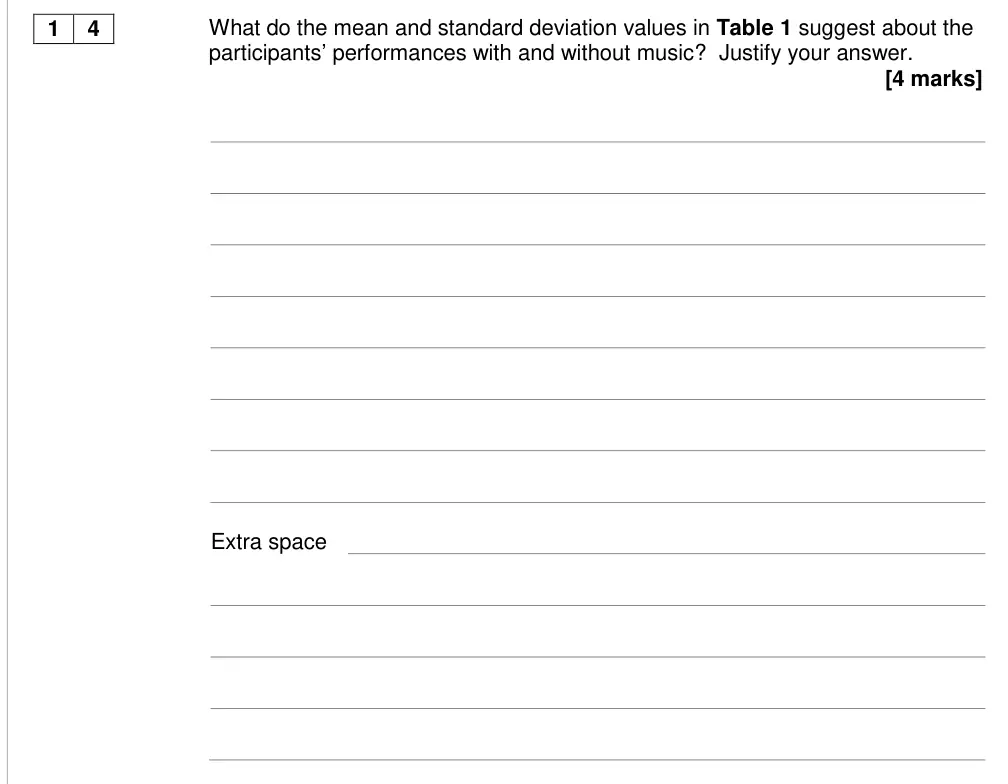
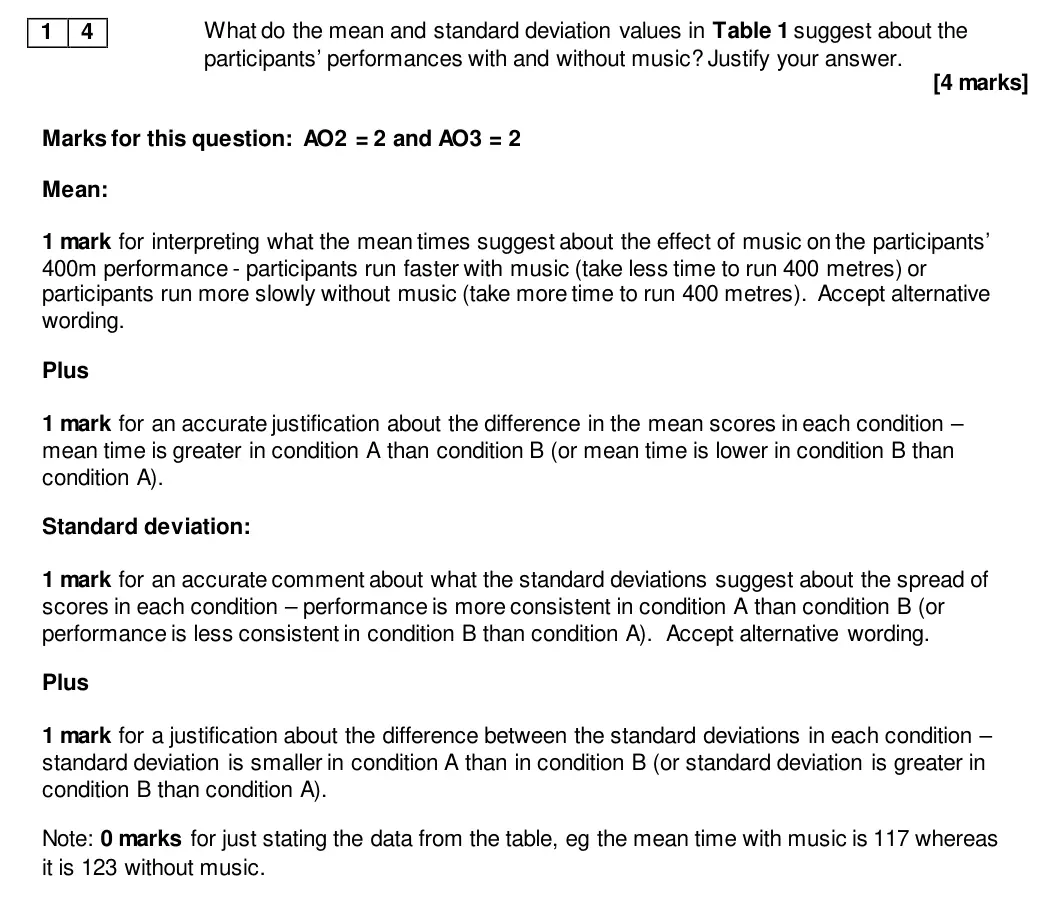
1 4
What do the mean and standard deviation values in Table 1 suggest about the
participants’ performances with and without music?  Justify your answer.
[4 marks]
Extra space
June 2017 · Paper 2 · Q15 4 marks AO2=4 Calculation data handling
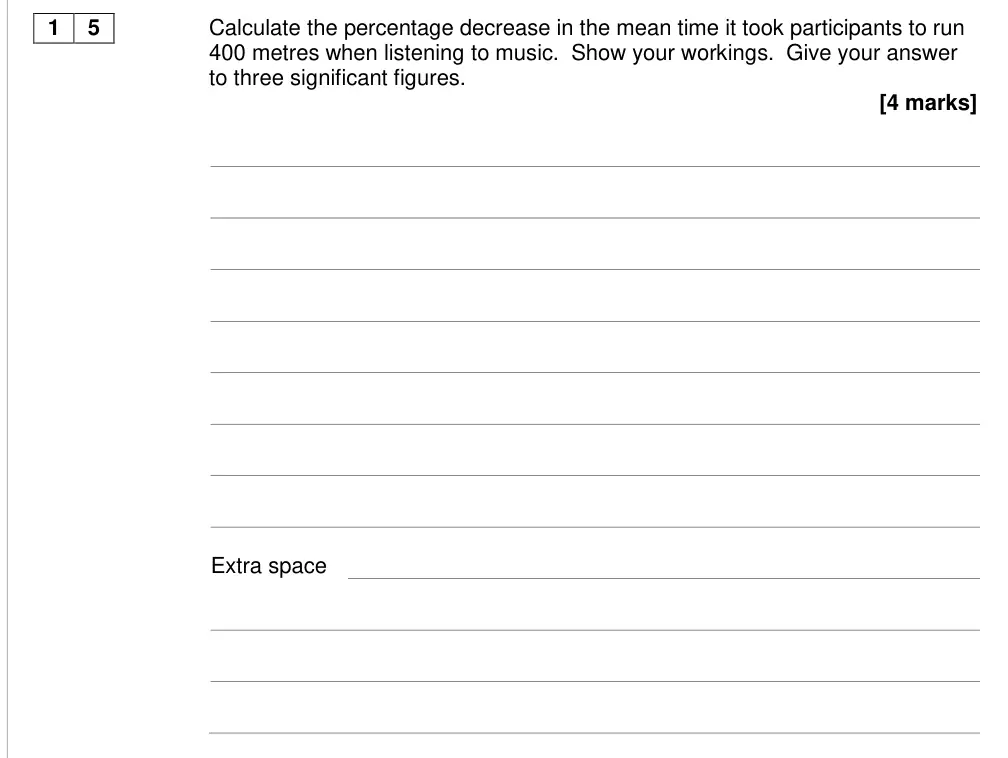
1 5
Calculate the percentage decrease in the mean time it took participants to run
400 metres when listening to music.  Show your workings.  Give your answer
to three significant figures.
[4 marks]
Extra space
June 2017 · Paper 2 · Q16 5 marks AO2=5 Research methods Easy inferential testingdata handlingscientific processes
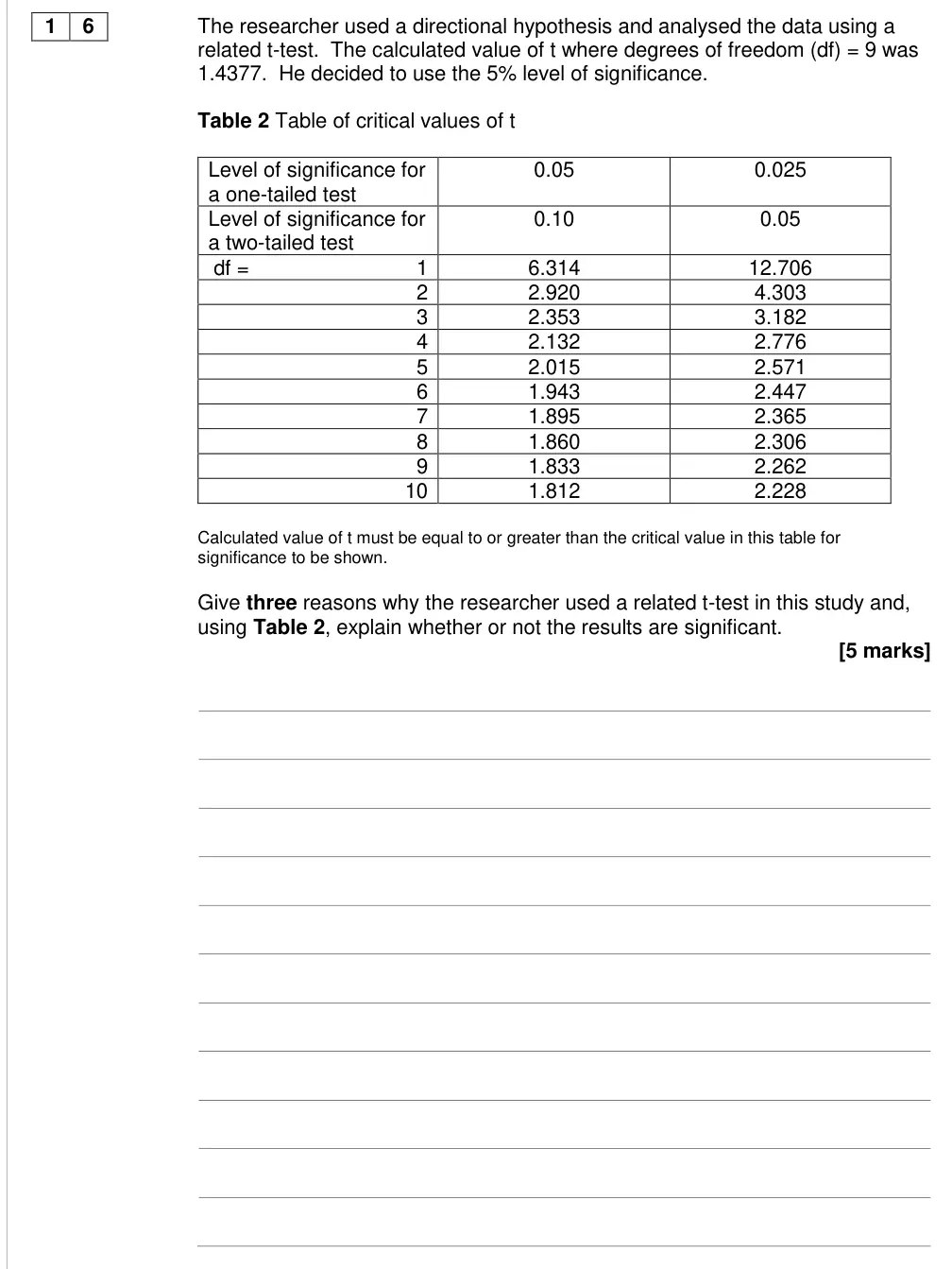
1 6
The researcher used a directional hypothesis and analysed the data using a
related t-test.  The calculated value of t where degrees of freedom (df) = 9 was
1.4377.  He decided to use the 5% level of significance.
Table 2 Table of critical values of t
Level of significance for
0.05
0.025
a one-tailed test
Level of significance for
0.10
0.05
a two-tailed test
df =                             1
6.314
12.706
2
2.920
4.303
3
2.353
3.182
4
2.132
2.776
5
2.015
2.571
6
1.943
2.447
7
1.895
2.365
8
1.860
2.306
9
1.833
2.262
10
1.812
2.228
Calculated value of t must be equal to or greater than the critical value in this table for
significance to be shown.
Give three reasons why the researcher used a related t-test in this study and,
using Table 2, explain whether or not the results are significant.
[5 marks]
June 2017 · Paper 2 · Q17 3 marks AO1=3 Research methods inferential testing
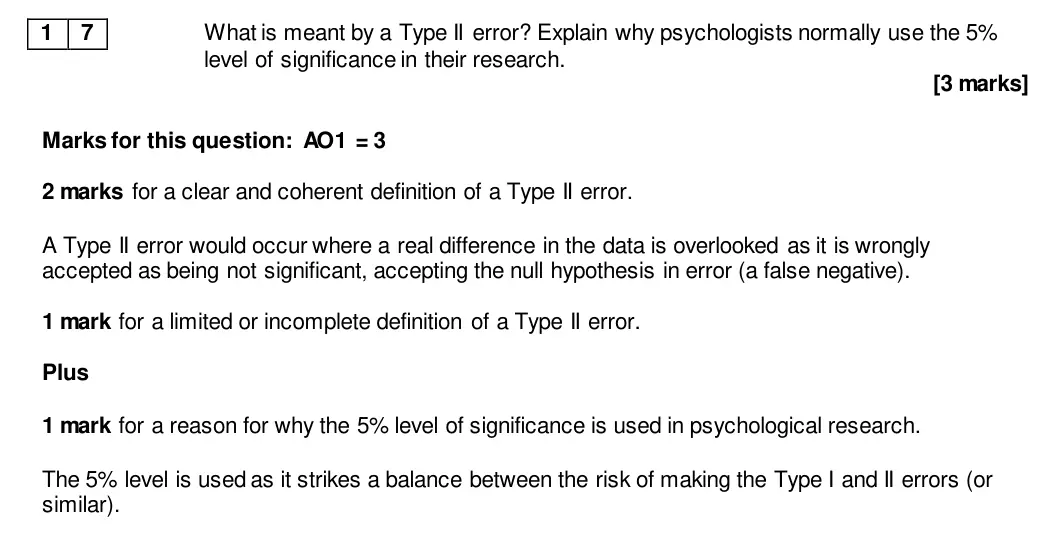
1 7
What is meant by a Type II error?  Explain why psychologists normally use the
5% level of significance in their research.
[3 marks]
Extra space
June 2017 · Paper 2 · Q18 3 marks AO2=2, AO3=1 Research methods Medium scientific processes
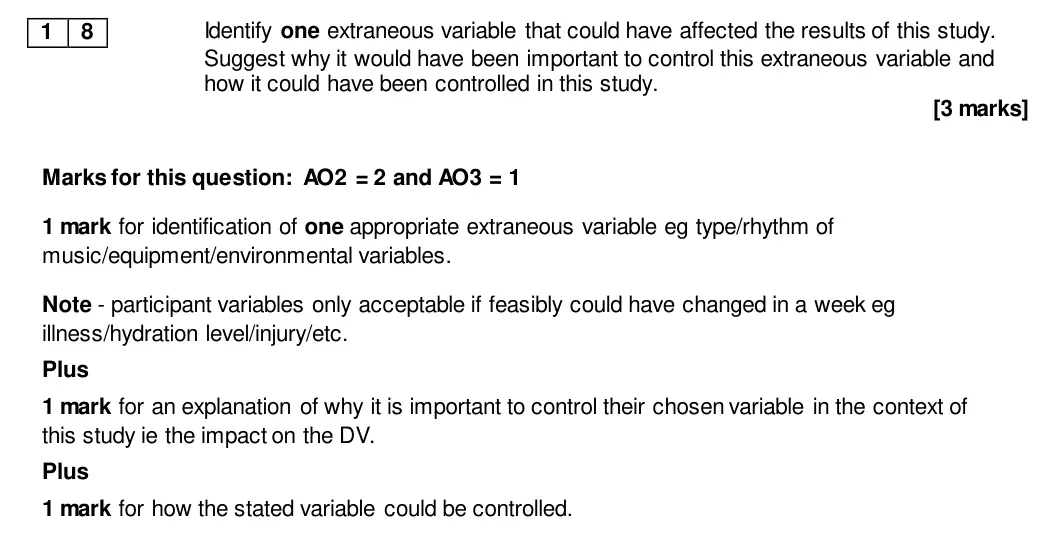
1 8
Identify one extraneous variable that could have affected the results of this
study.  Suggest why it would have been important to control this extraneous
variable and how it could have been controlled in this study.
[3 marks]
Extra space
June 2017 · Paper 2 · Q19 6 marks AO1=6 Research methods scientific processes
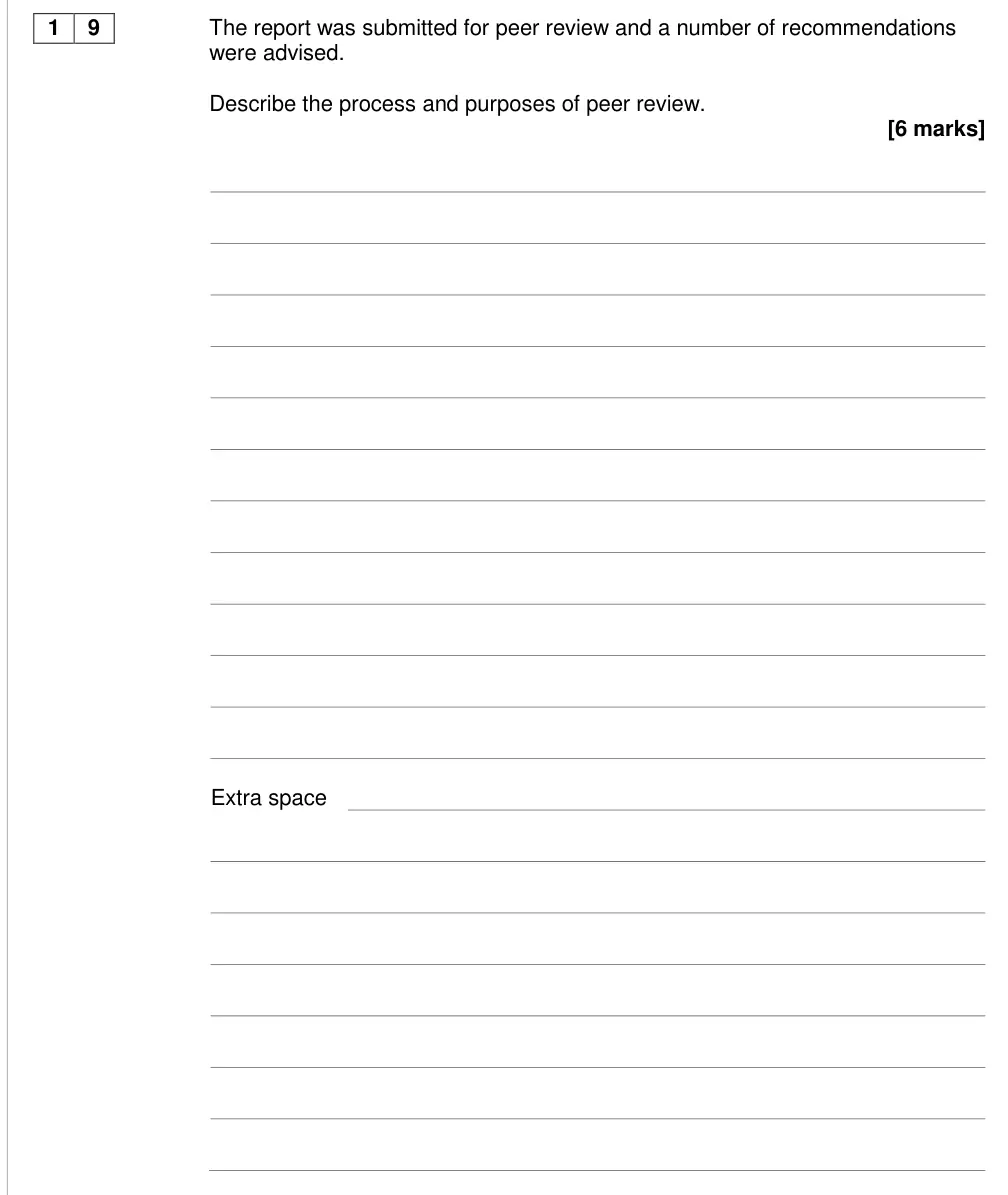
1 9
The report was submitted for peer review and a number of recommendations
were advised.
Describe the process and purposes of peer review.
[6 marks]
Extra space
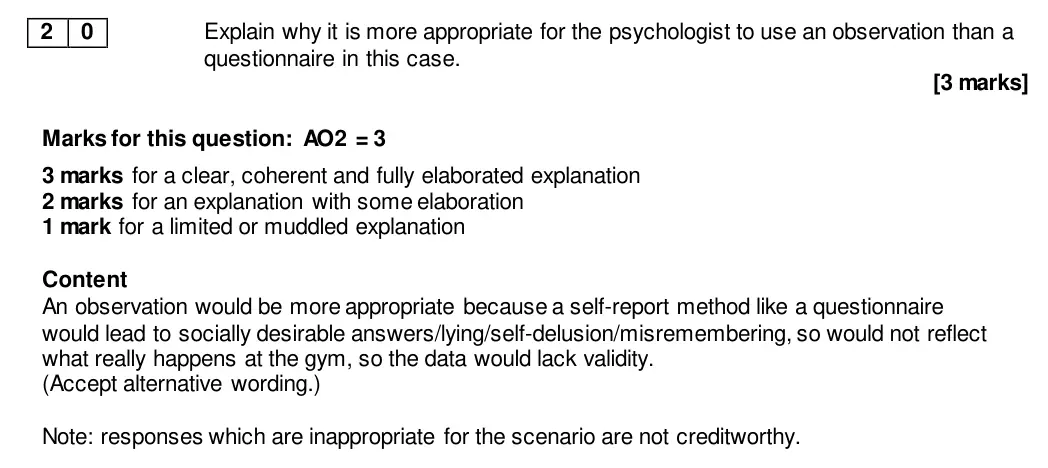
June 2017 · Paper 2 · Q20 3 marks AO2=3 Research methods Easy research methodsscientific processes
People’s perception of how they spend their time at the gym is often not very
accurate.  Some spend more time chatting than on the treadmill.  A psychologist
decides to observe the actual behaviour of an opportunity sample of gym users
at a local gym.
2 0
Explain why it is more appropriate for the psychologist to use an observation
than a questionnaire in this case.
[3 marks]
Extra space
June 2017 · Paper 2 · Q21 12 marks AO2=6, AO3=6 Extended writing research methodsscientific processes
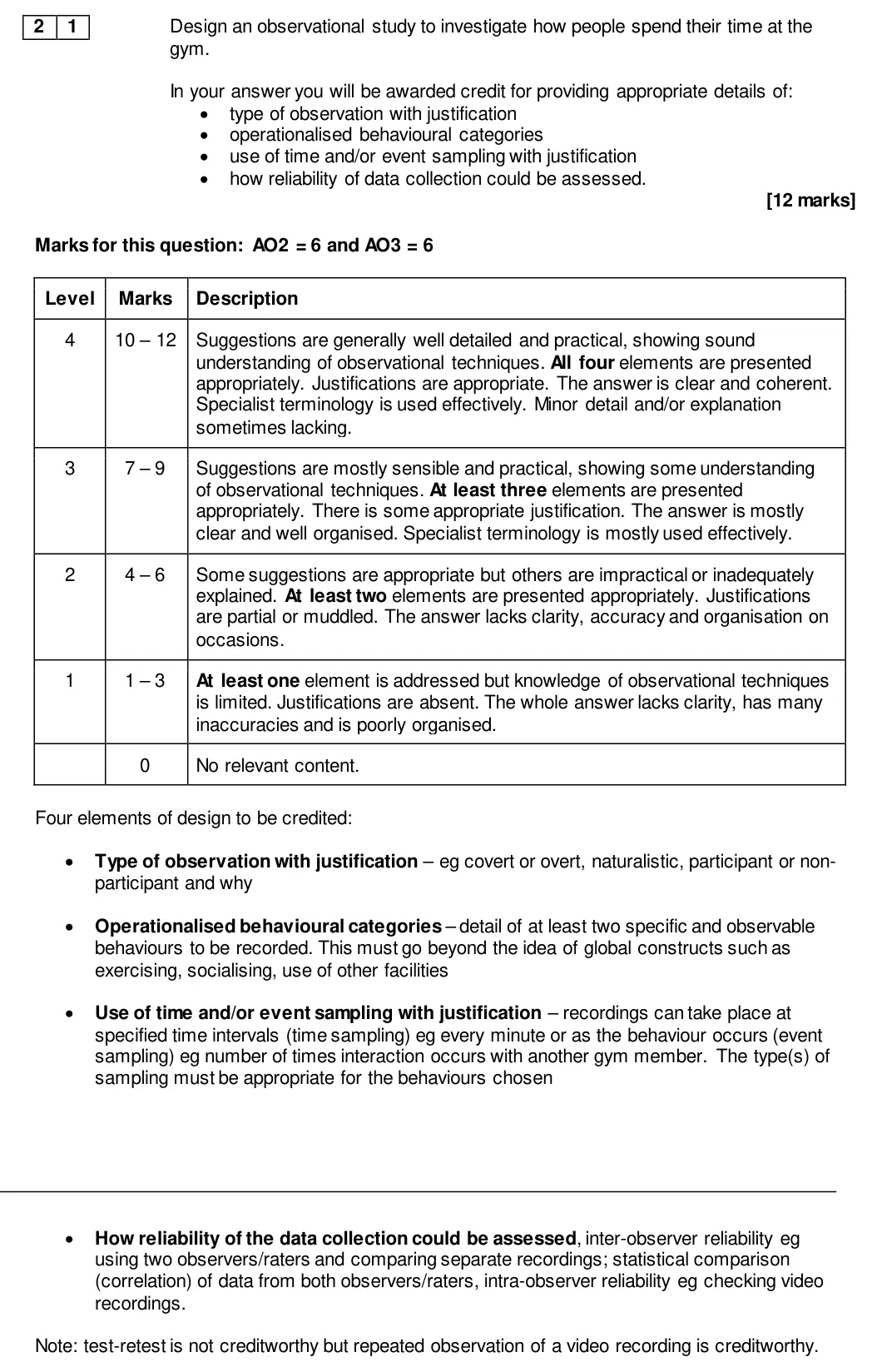
2 1
Design an observational study to investigate how people spend their time at the
gym.
In your answer you will be awarded credit for providing appropriate details of:
•
type of observation with justification
•
operationalised behavioural categories
•
use of time and/or event sampling with justification

•
how reliability of data collection could be assessed.
[12 marks]
You may use this space to plan your answer.
Extra space

Work with an AQA psychology tutor

Want a paper marked and gone through with you? Message us.

Prefer email? Send an enquiry

If you are under 18, please include a parent's contact details. Enquiries go to enquiries@alevelpsychologytutor.com and are deleted once handled. All tutoring is online.