June 2016: AS Paper 2

72 marks · 19 question parts · AQA no longer hosts this series; the copies here come from third-party archives

This paper was set on the previous specification. All of its content is still on the 2025 specification.

Question by question

QTopicMarksAOType
1 Biopsychology 2AO1=2Multiple choice
2 Biopsychology 4AO1=4Outline
3 Approaches in psychology 6AO2=6Application
4 Approaches in psychology 4AO2=4Application
5 Approaches in psychology 8AO1=4,AO3=4Extended writing
6 Clinical psychology and mental health (psychopathology) 3AO1=3Multiple choice
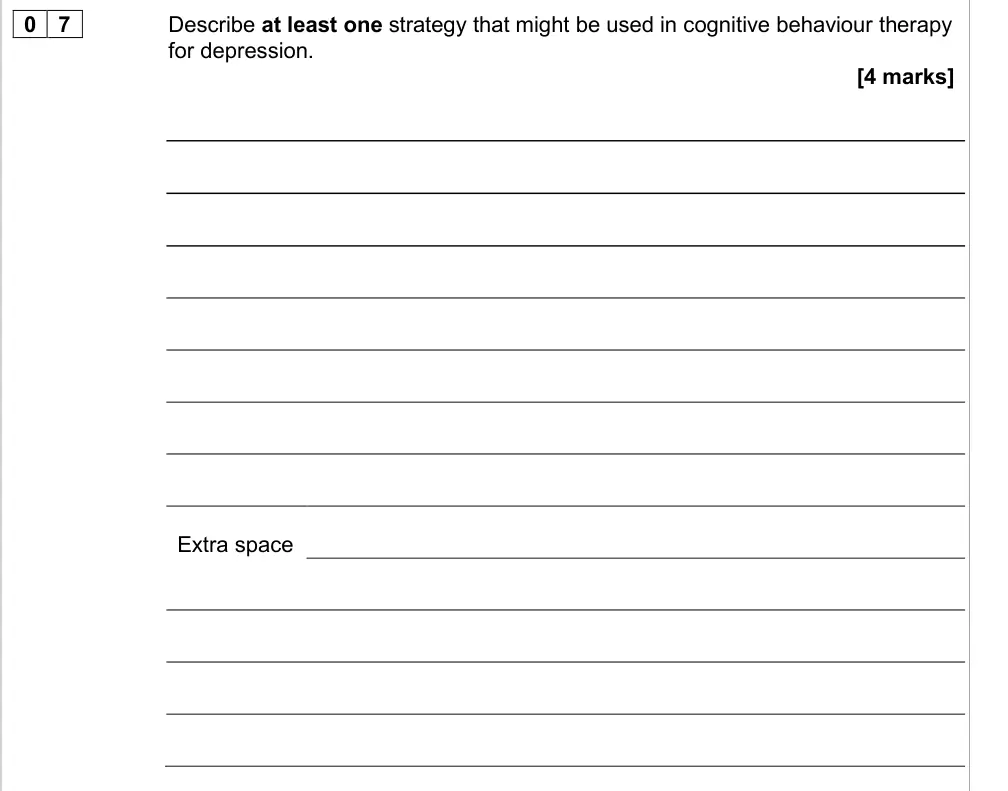
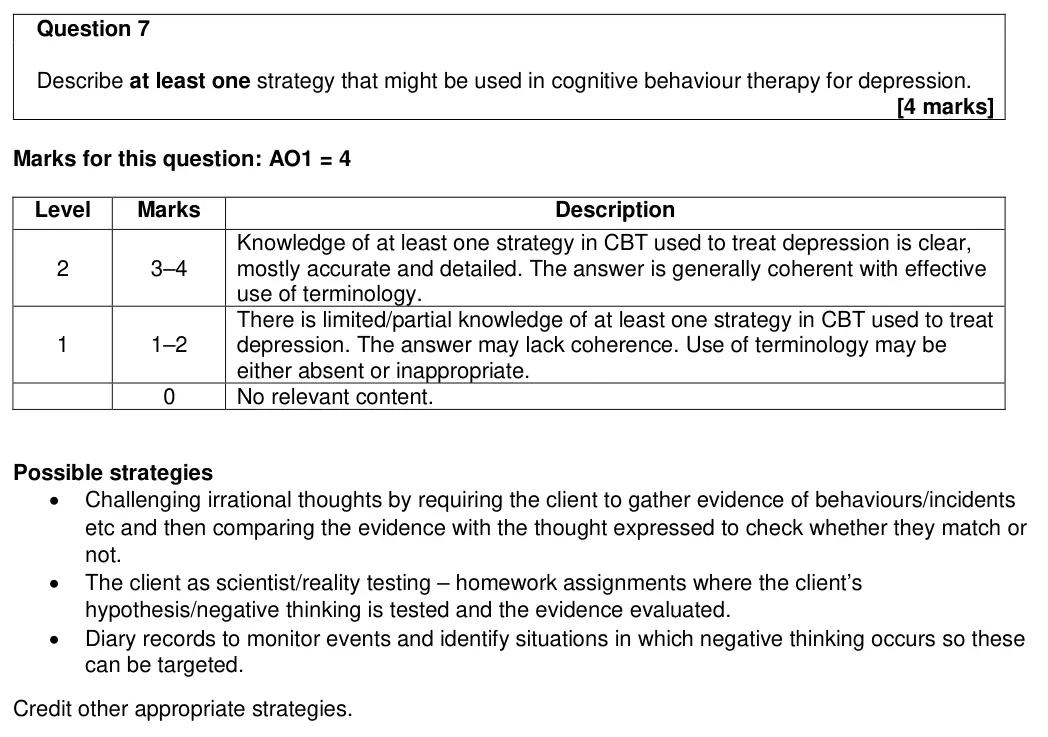
7 Clinical psychology and mental health (psychopathology) 4AO1=4Outline
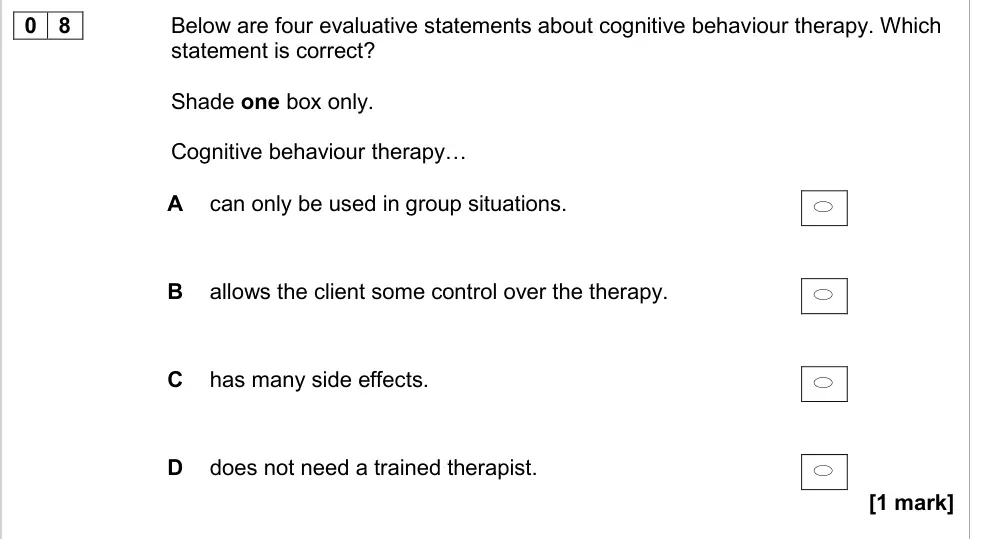
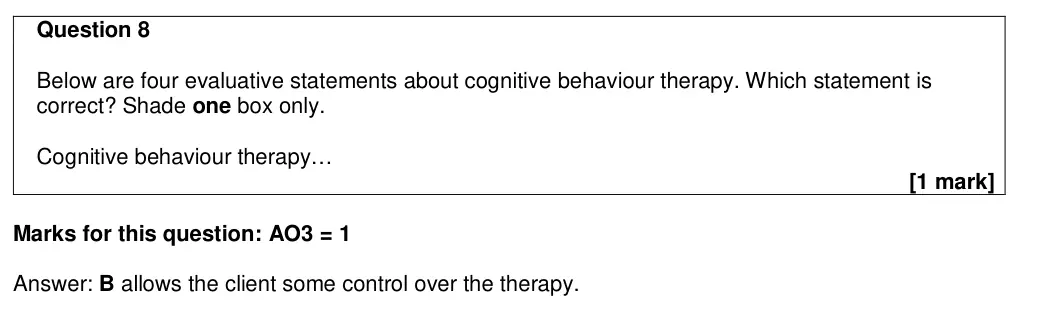
8 Clinical psychology and mental health (psychopathology) 1AO3=1Multiple choice
9 Clinical psychology and mental health (psychopathology) 4AO2=4Application
10 Clinical psychology and mental health (psychopathology) 12AO1=6,AO2=2,AO3=4Extended writing
11.1 Research methods: scientific processes 2AO2=2Research methods
11.2 Research methods: scientific processes 3AO2=3Research methods
11.3 Research methods: scientific processes 3AO2=3Research methods
11.4 Research methods: data handling and analysis 3AO3=3Research methods
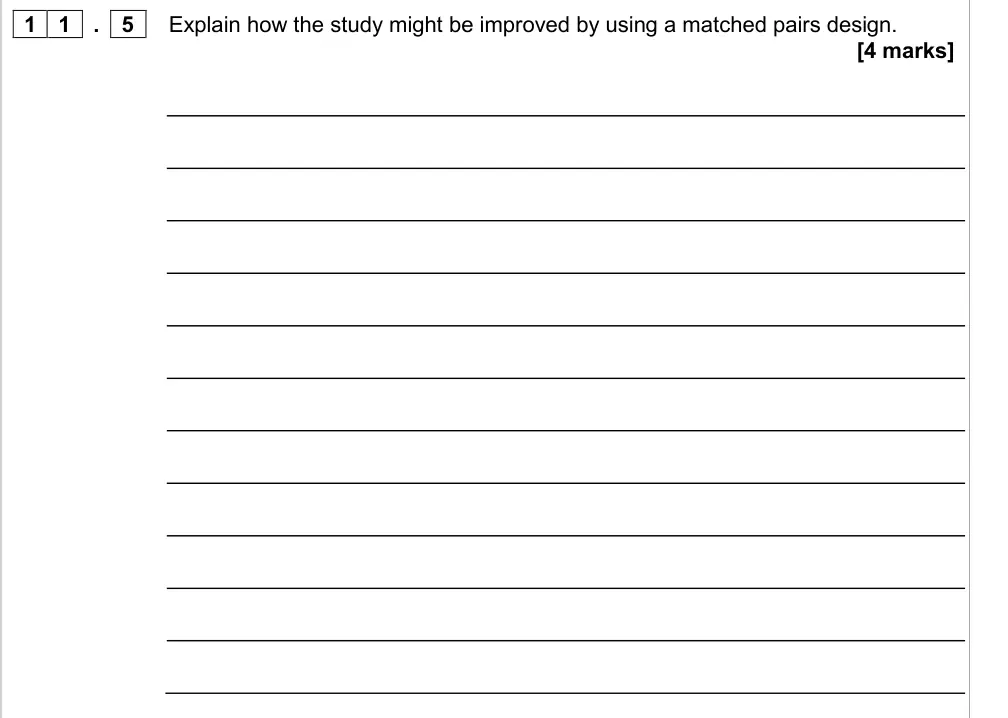
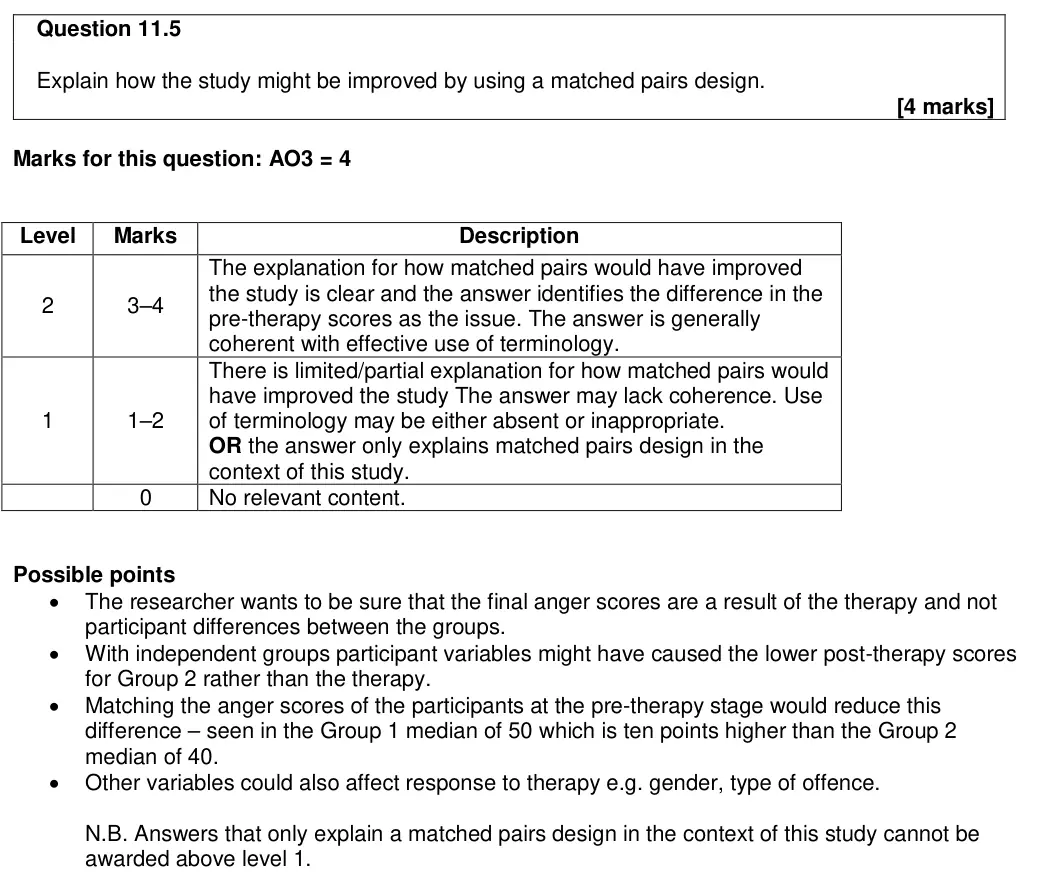
11.5 Research methods: scientific processes 4AO3=4Research methods
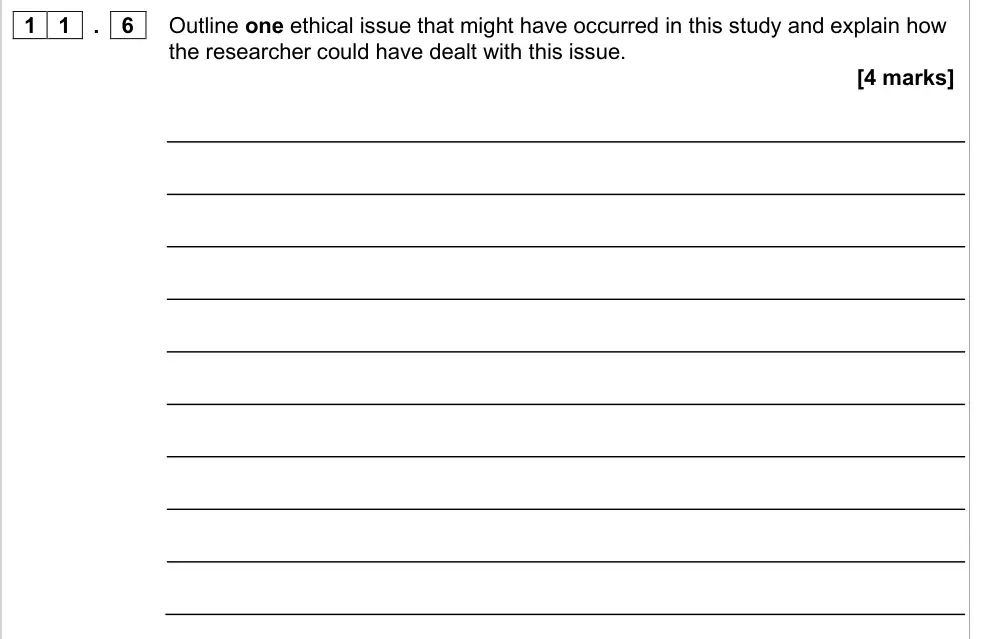
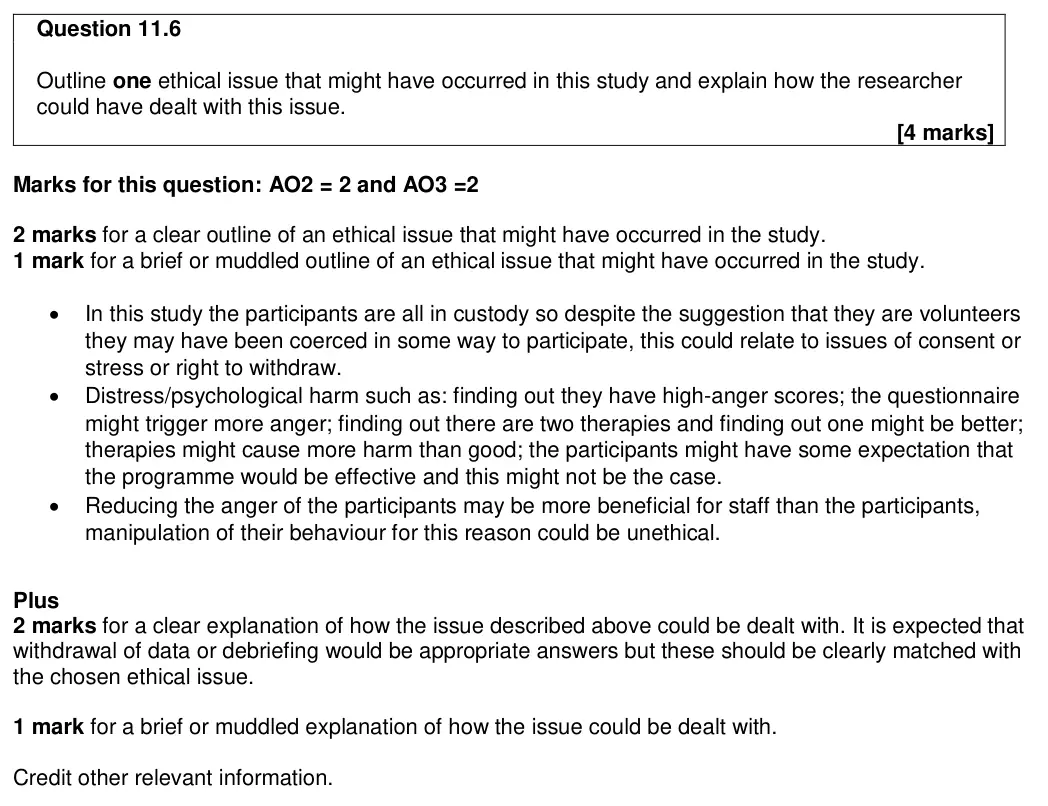
11.6 Research methods: scientific processes 4AO2=2,AO3=2Research methods
11.7 Research methods: data handling and analysis 1AO2=1Research methods
11.8 Research methods: scientific processes 2AO2=2Research methods
11.9 Research methods: methods and techniques 2AO3=2Research methods

The questions

1234567891011.111.211.311.411.511.611.711.811.9

June 2016 · AS Paper 2 · Q1 2 marks AO1=2 Multiple choice biopsychology
0 1
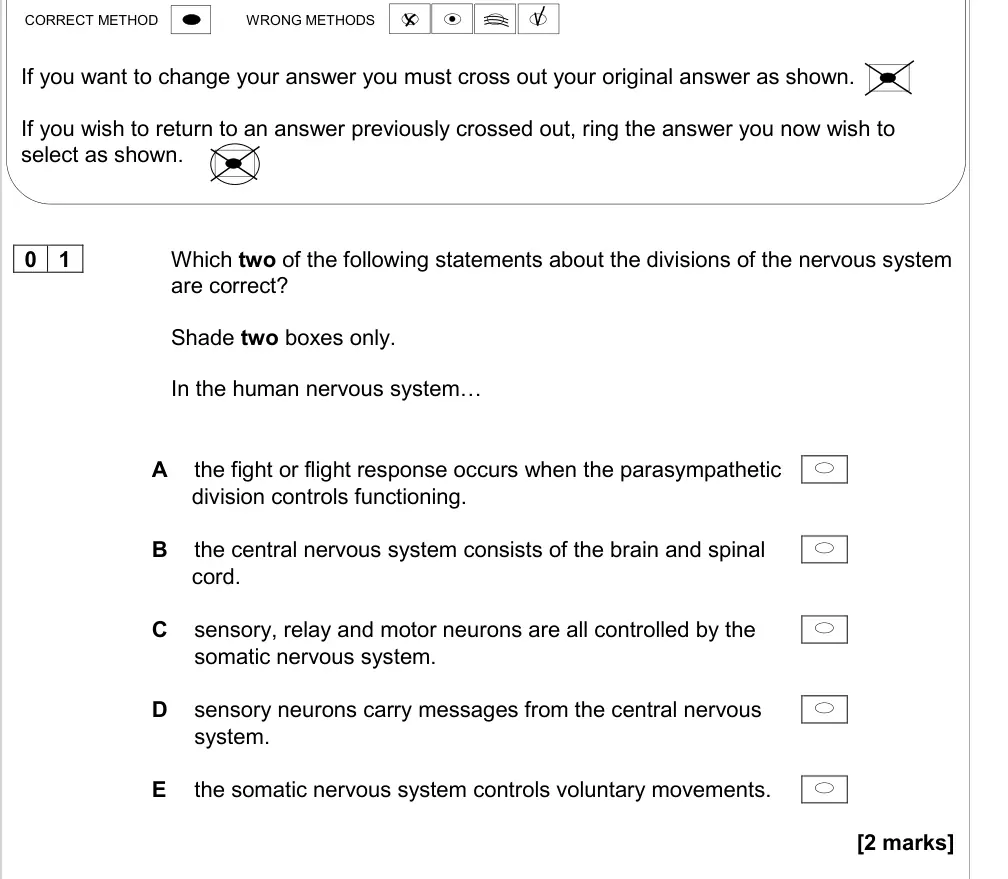
Which two of the following statements about the divisions of the nervous system
are correct?
In the human nervous system…
A
the fight or flight response occurs when the parasympathetic
division controls functioning.
B
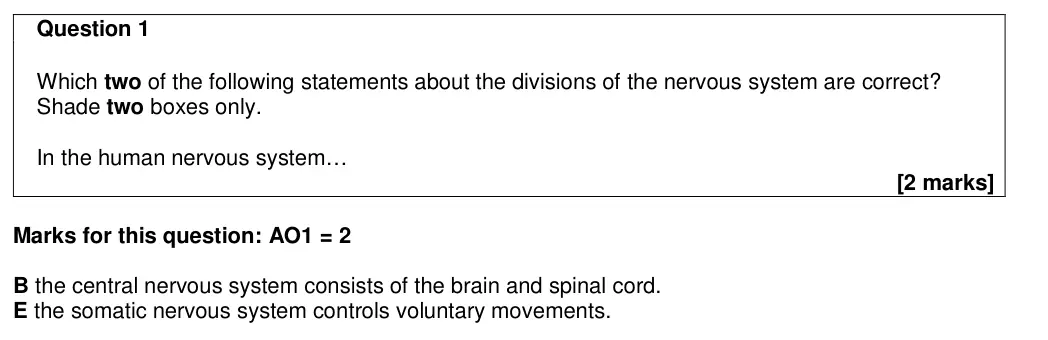
the central nervous system consists of the brain and spinal
cord.
C
sensory, relay and motor neurons are all controlled by the
somatic nervous system.
D
sensory neurons carry messages from the central nervous
system.
E
the somatic nervous system controls voluntary movements.
[2 marks]
June 2016 · AS Paper 2 · Q2 4 marks AO1=4 Outline biopsychology
0 2
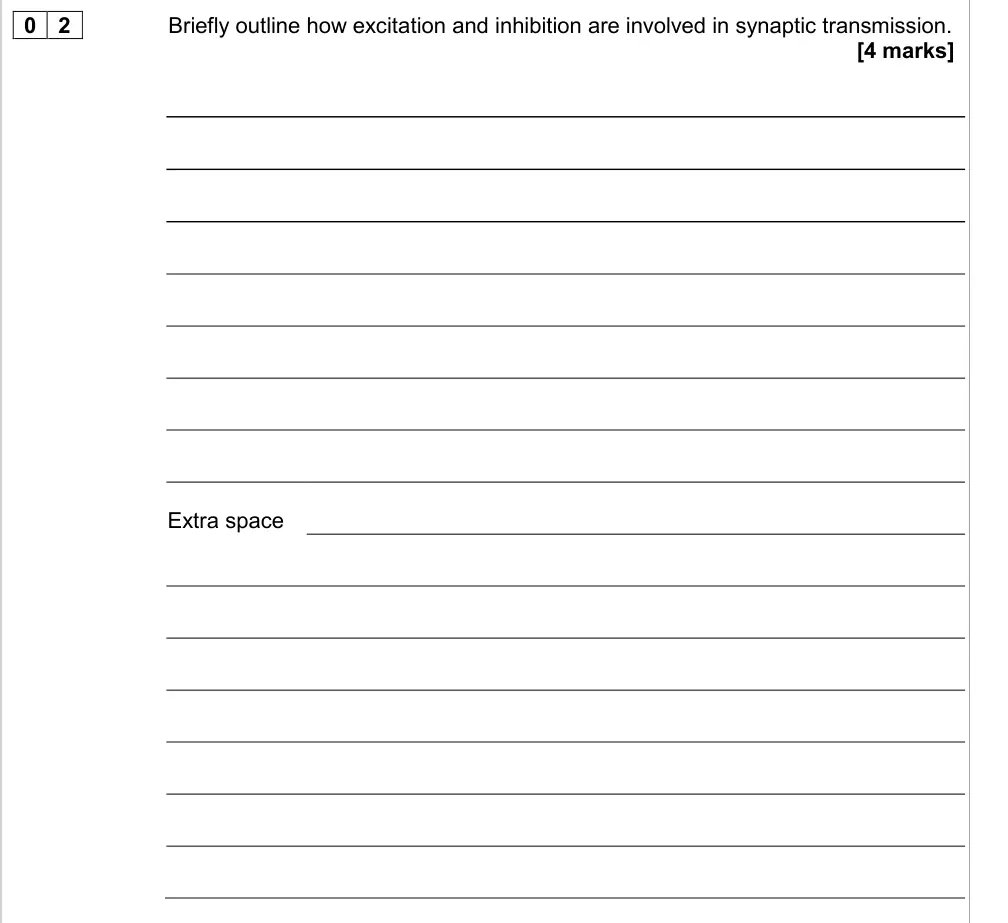
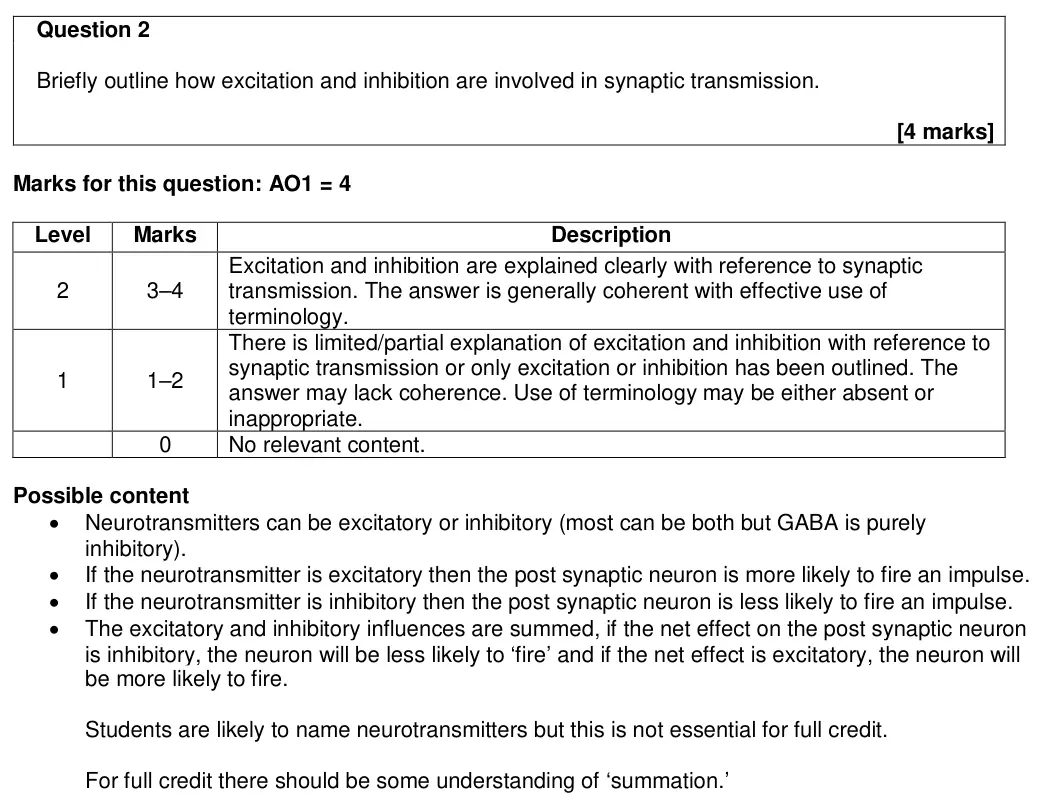
Briefly outline how excitation and inhibition are involved in synaptic transmission.
[4 marks]
Extra space
June 2016 · AS Paper 2 · Q3 6 marks AO2=6 Application approaches
0 3
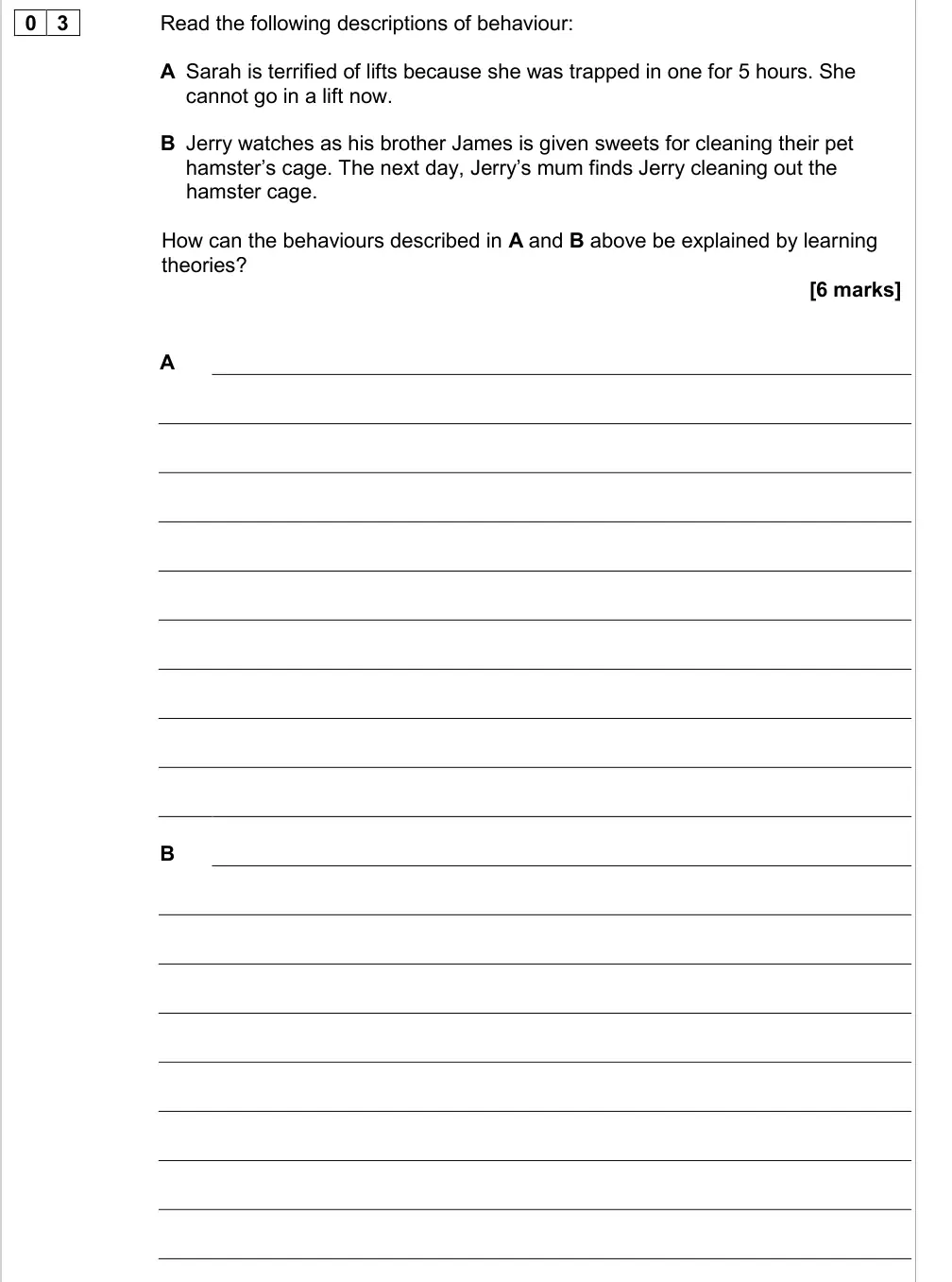
Read the following descriptions of behaviour:
A Sarah is terrified of lifts because she was trapped in one for 5 hours. She
cannot go in a lift now.
B Jerry watches as his brother James is given sweets for cleaning their pet
hamster’s cage. The next day, Jerry’s mum finds Jerry cleaning out the
hamster cage.
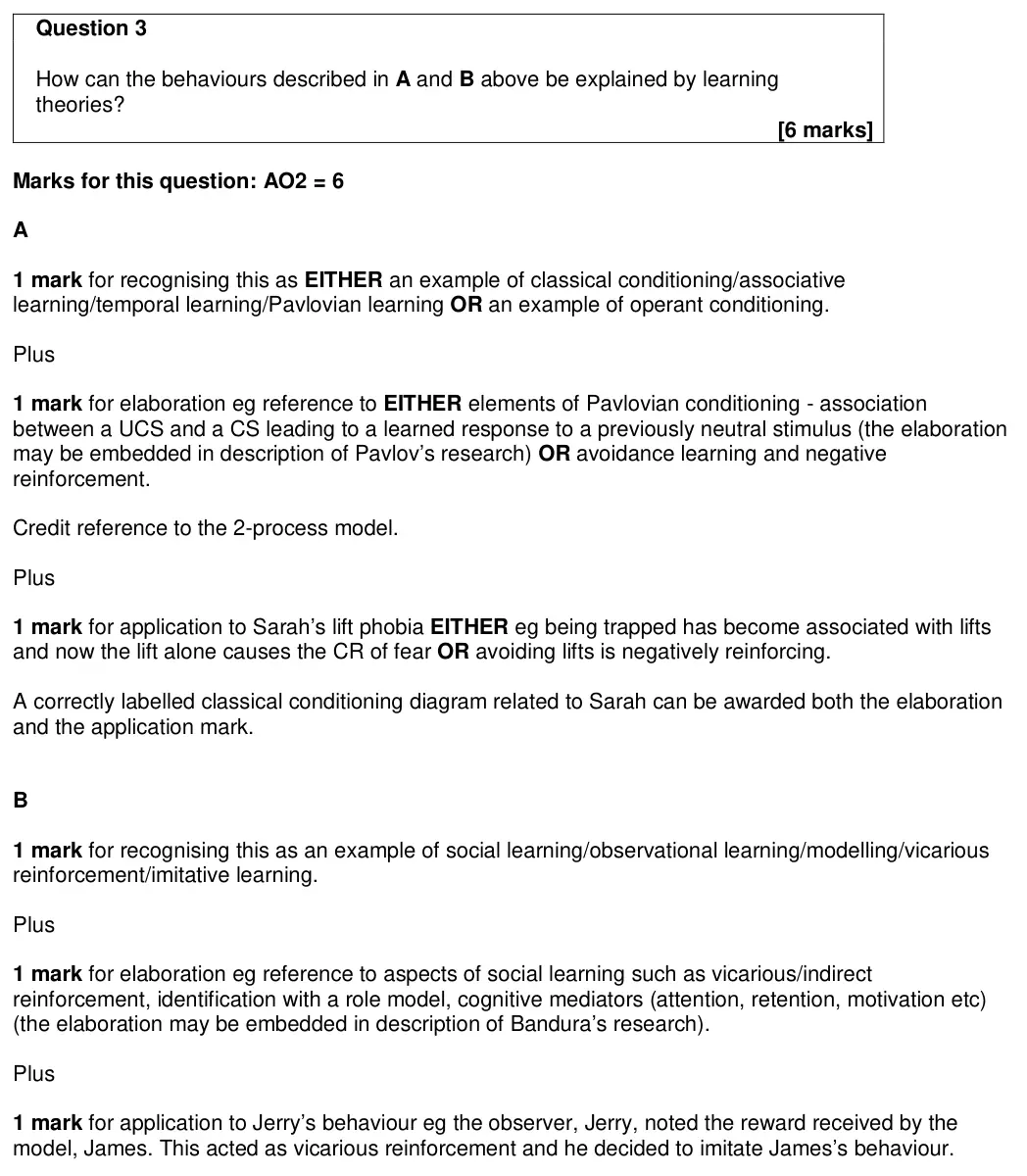
How can the behaviours described in A and B above be explained by learning
theories?
[6 marks]
A
B
June 2016 · AS Paper 2 · Q4 4 marks AO2=4 Application approaches
0 4
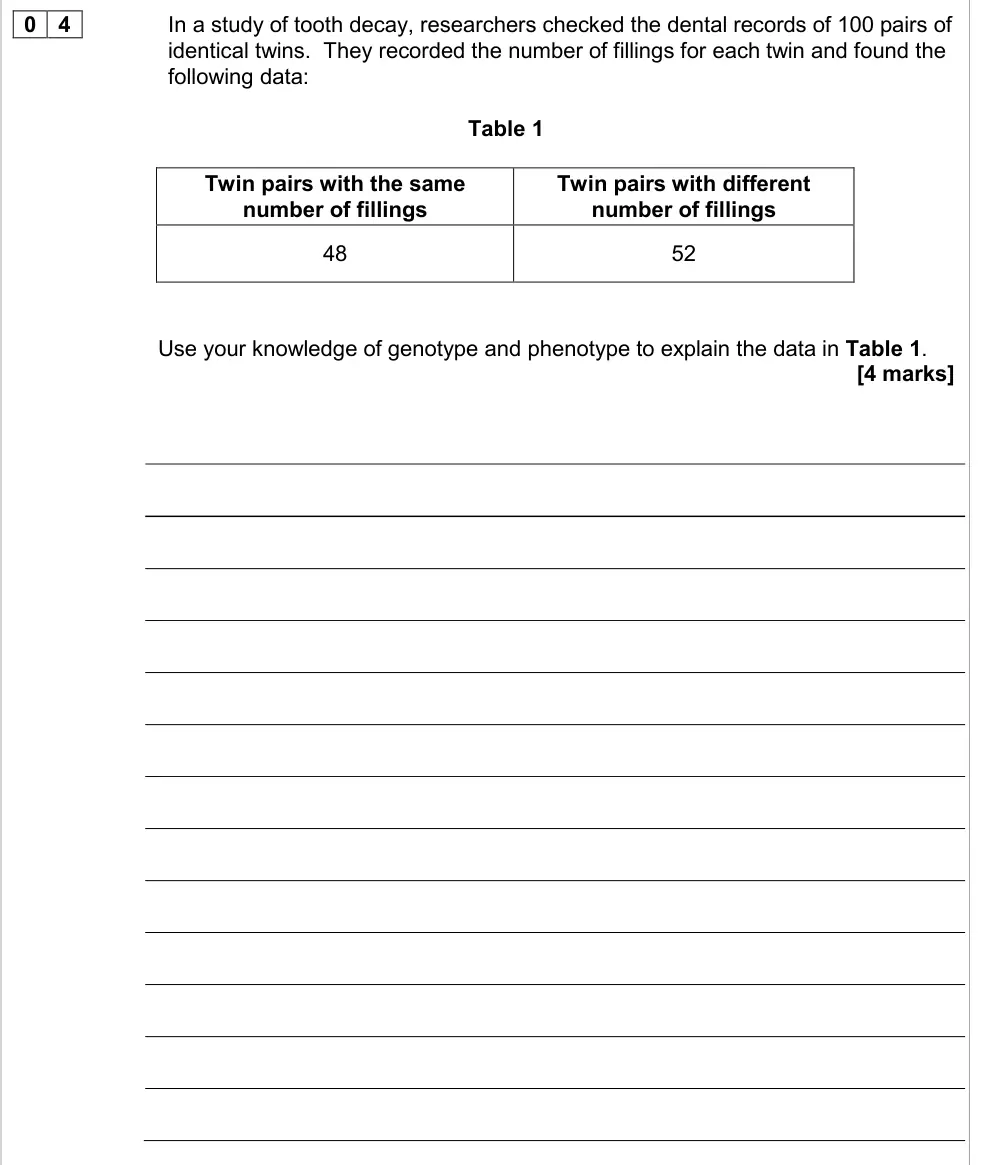
In a study of tooth decay, researchers checked the dental records of 100 pairs of
identical twins.  They recorded the number of fillings for each twin and found the
following data:
Table 1
Twin pairs with the same
Twin pairs with different
number of fillings
number of fillings
48
52
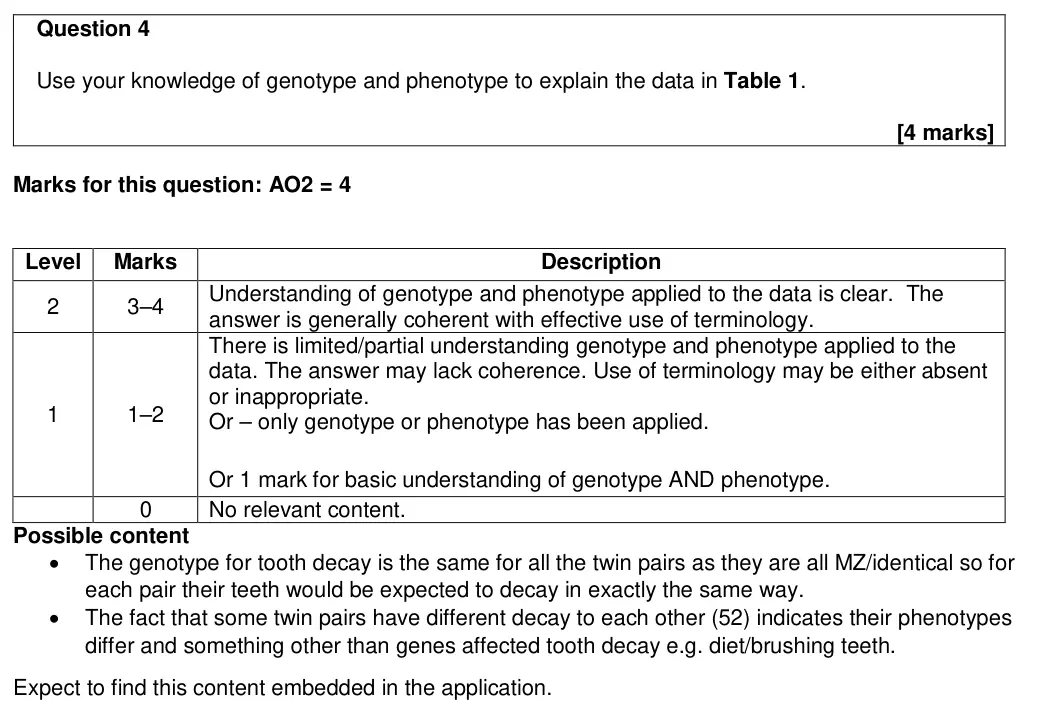
Use your knowledge of genotype and phenotype to explain the data in Table 1.
[4 marks]
June 2016 · AS Paper 2 · Q5 8 marks AO1=4, AO3=4 Extended writing approaches
0 5
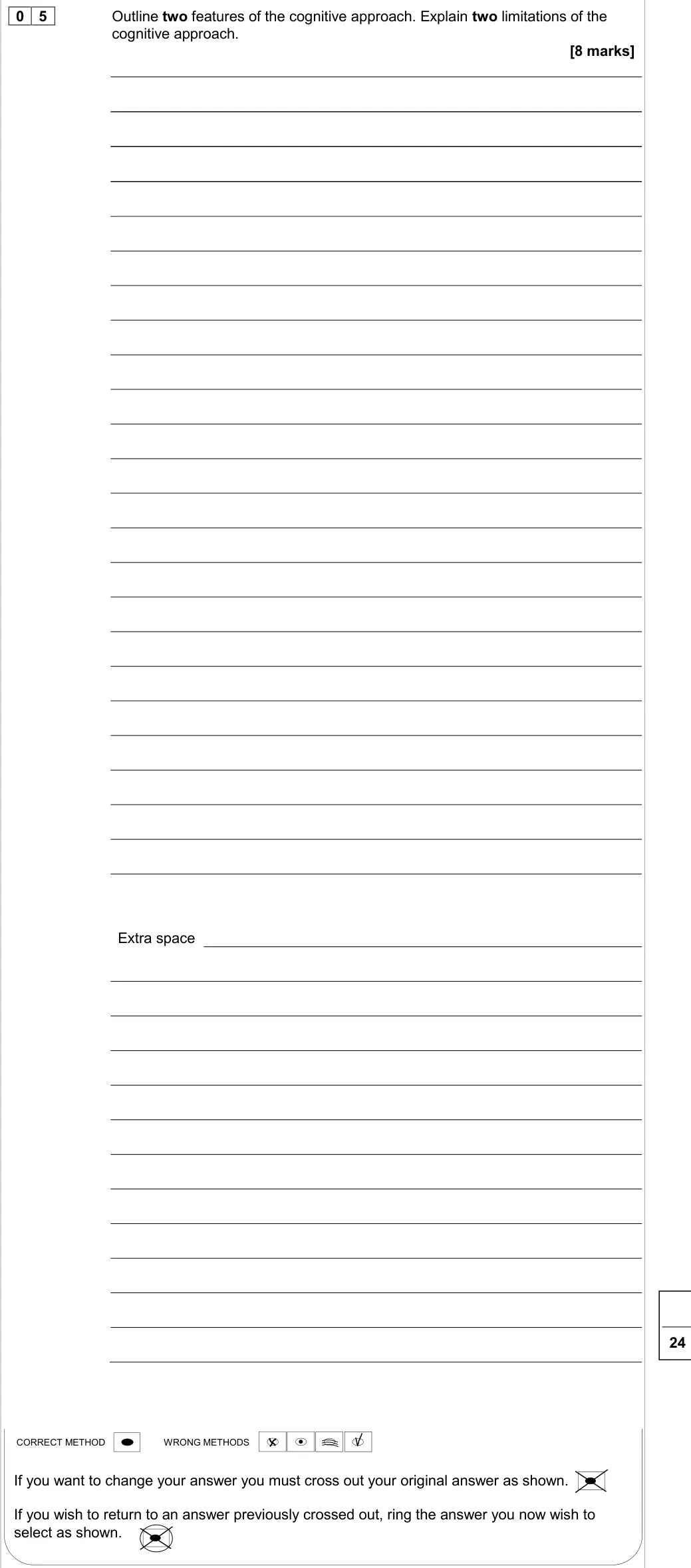
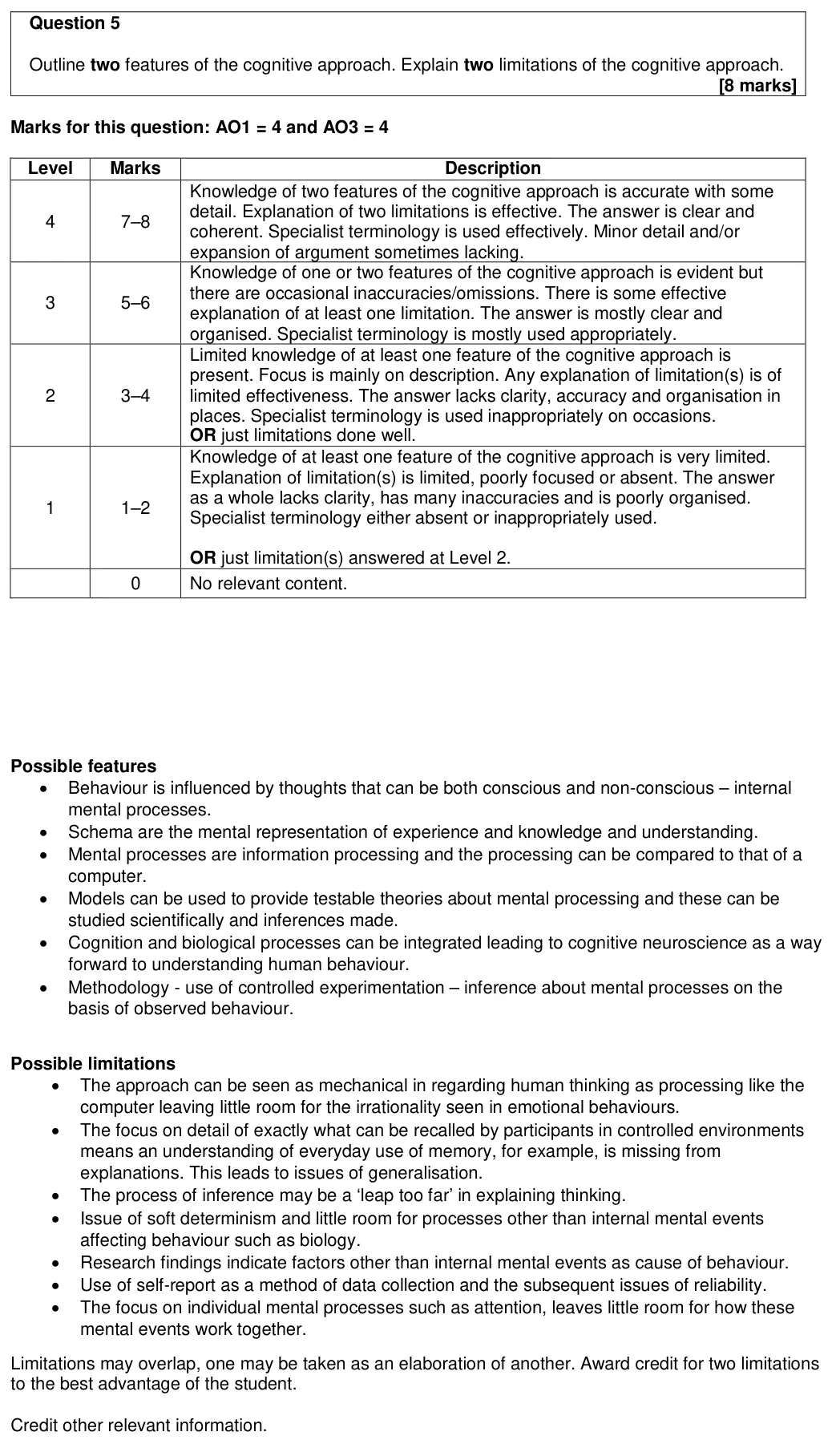
Outline two features of the cognitive approach. Explain two limitations of the
cognitive approach.
[8 marks]
Extra space
24
June 2016 · AS Paper 2 · Q6 3 marks AO1=3 Multiple choice clinical psychology
0 6
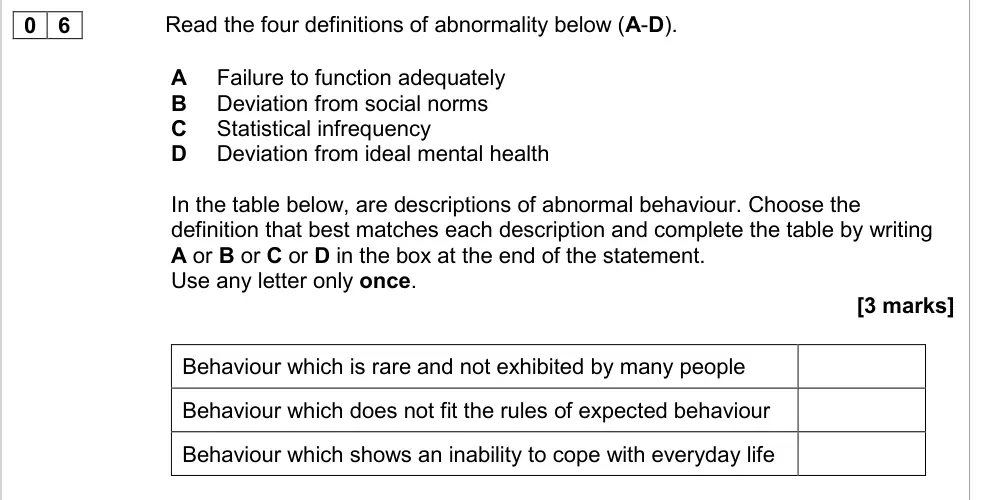
Read the four definitions of abnormality below (A-D).
A
Failure to function adequately
B
Deviation from social norms
C
Statistical infrequency
D
Deviation from ideal mental health
In the table below, are descriptions of abnormal behaviour. Choose the
definition that best matches each description and complete the table by writing
A or B or C or D in the box at the end of the statement.
Use any letter only once.
[3 marks]
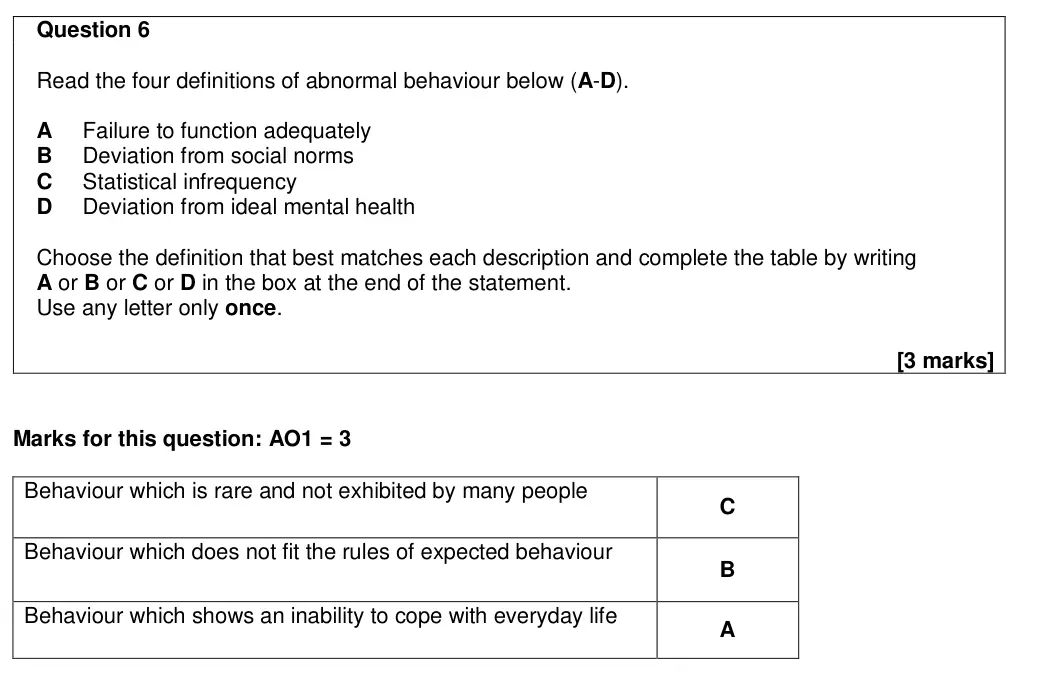
Behaviour which is rare and not exhibited by many people
Behaviour which does not fit the rules of expected behaviour
Behaviour which shows an inability to cope with everyday life
June 2016 · AS Paper 2 · Q7 4 marks AO1=4 Outline clinical psychology
0 7
Describe at least one strategy that might be used in cognitive behaviour therapy
for depression.
[4 marks]
Extra space
June 2016 · AS Paper 2 · Q8 1 mark AO3=1 Multiple choice clinical psychology
0 8
Below are four evaluative statements about cognitive behaviour therapy. Which
statement is correct?
Cognitive behaviour therapy…
A
can only be used in group situations.
B
allows the client some control over the therapy.
C
has many side effects.
D
does not need a trained therapist.
[1 mark]
June 2016 · AS Paper 2 · Q9 4 marks AO2=4 Application clinical psychology
0 9
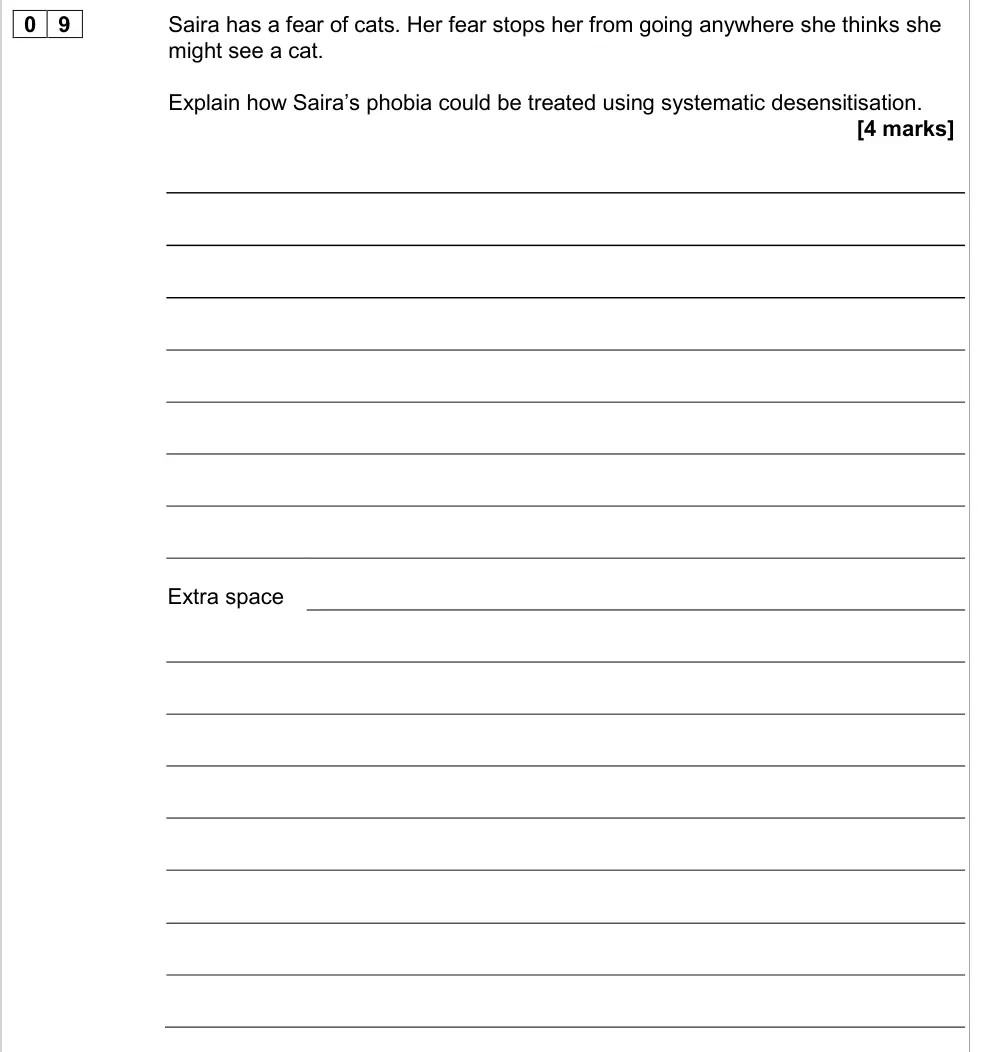
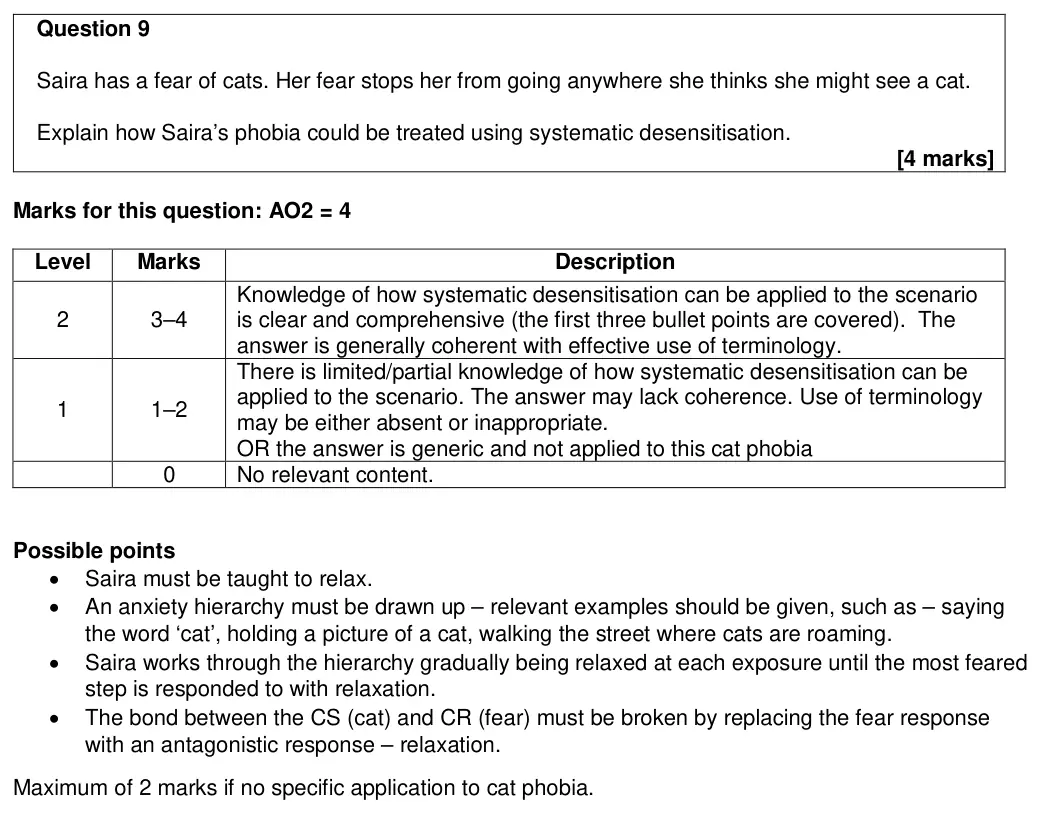
Saira has a fear of cats. Her fear stops her from going anywhere she thinks she
might see a cat.
Explain how Saira’s phobia could be treated using systematic desensitisation.
[4 marks]
Extra space
June 2016 · AS Paper 2 · Q10 12 marks AO1=6, AO2=2, AO3=4 Extended writing clinical psychology
1 0
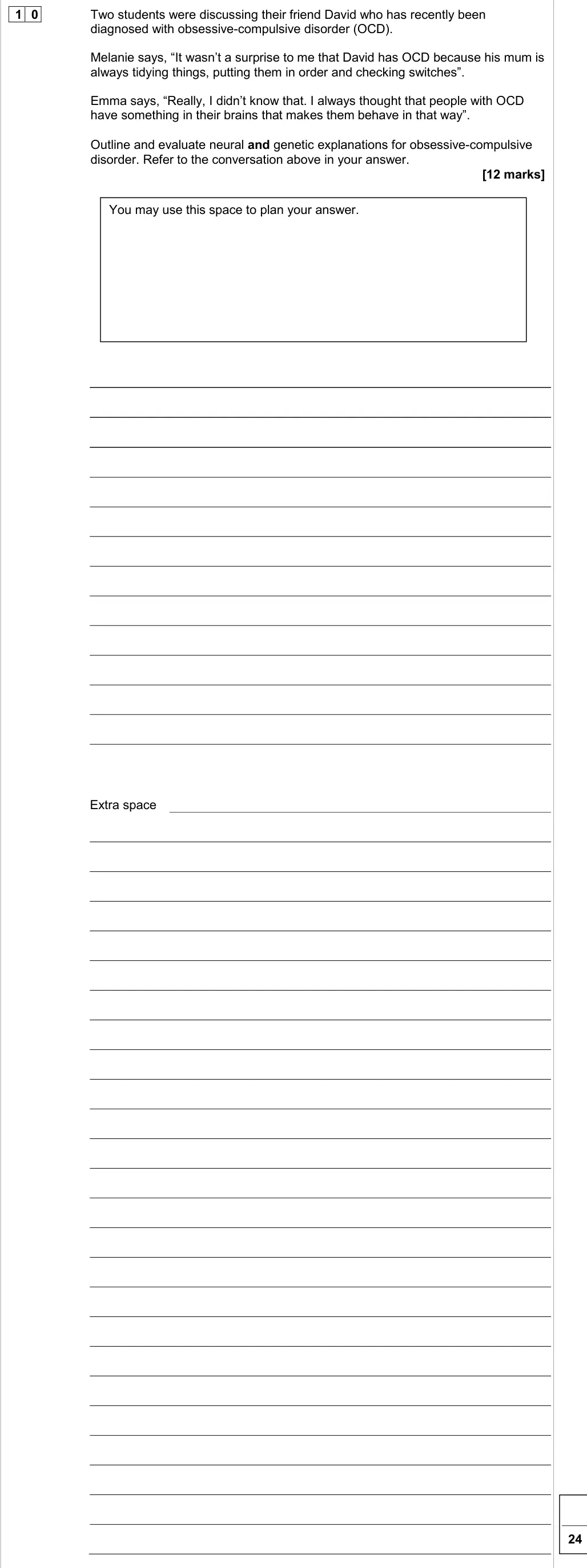
Two students were discussing their friend David who has recently been
diagnosed with obsessive-compulsive disorder (OCD).
Melanie says, “It wasn’t a surprise to me that David has OCD because his mum is
always tidying things, putting them in order and checking switches”.
Emma says, “Really, I didn’t know that. I always thought that people with OCD
have something in their brains that makes them behave in that way”.
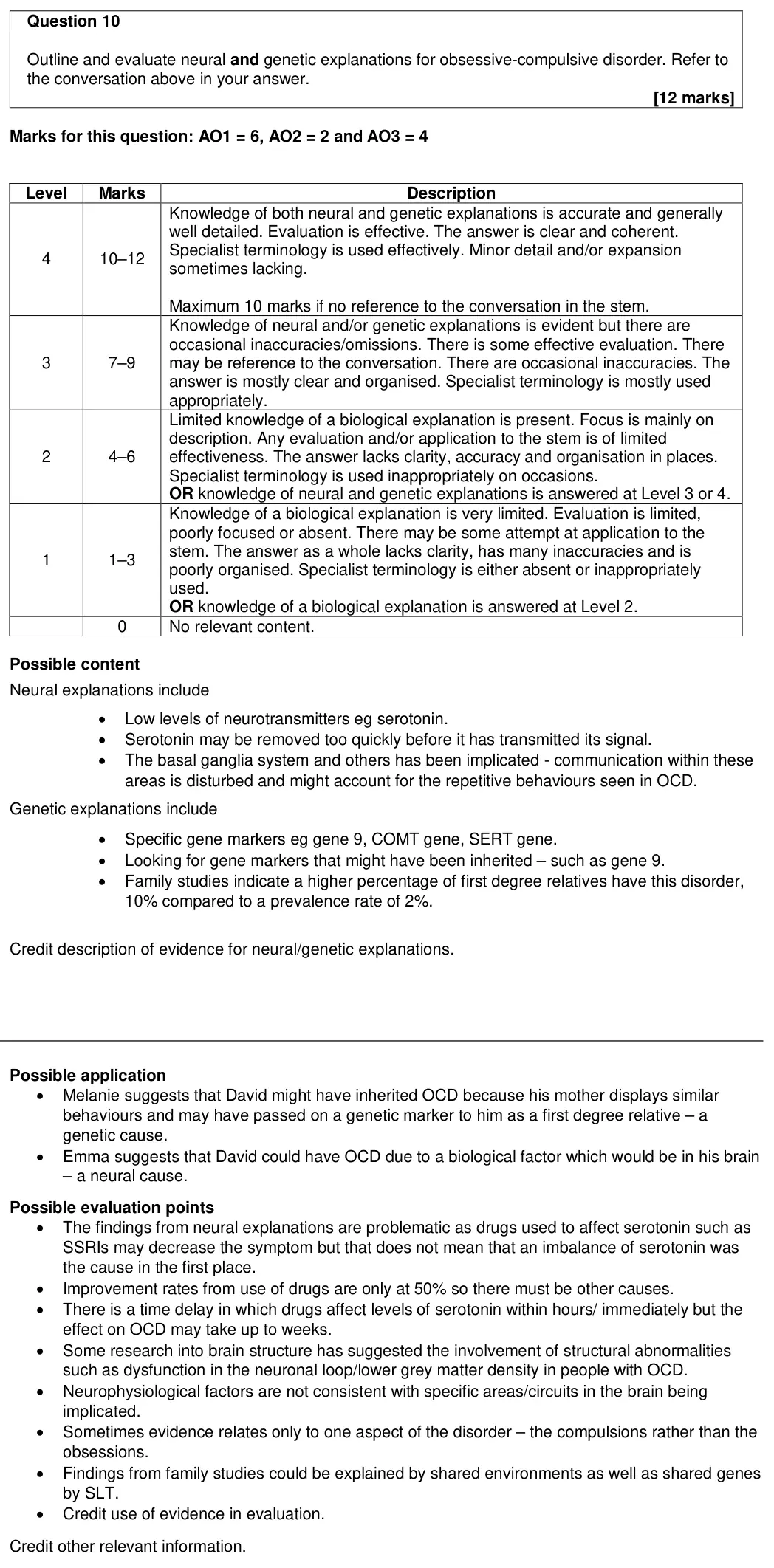
Outline and evaluate neural and genetic explanations for obsessive-compulsive
disorder. Refer to the conversation above in your answer.
[12 marks]
You may use this space to plan your answer.
Extra space
24
June 2016 · AS Paper 2 · Q11.1 2 marks AO2=2 Research methods scientific processes
1 1
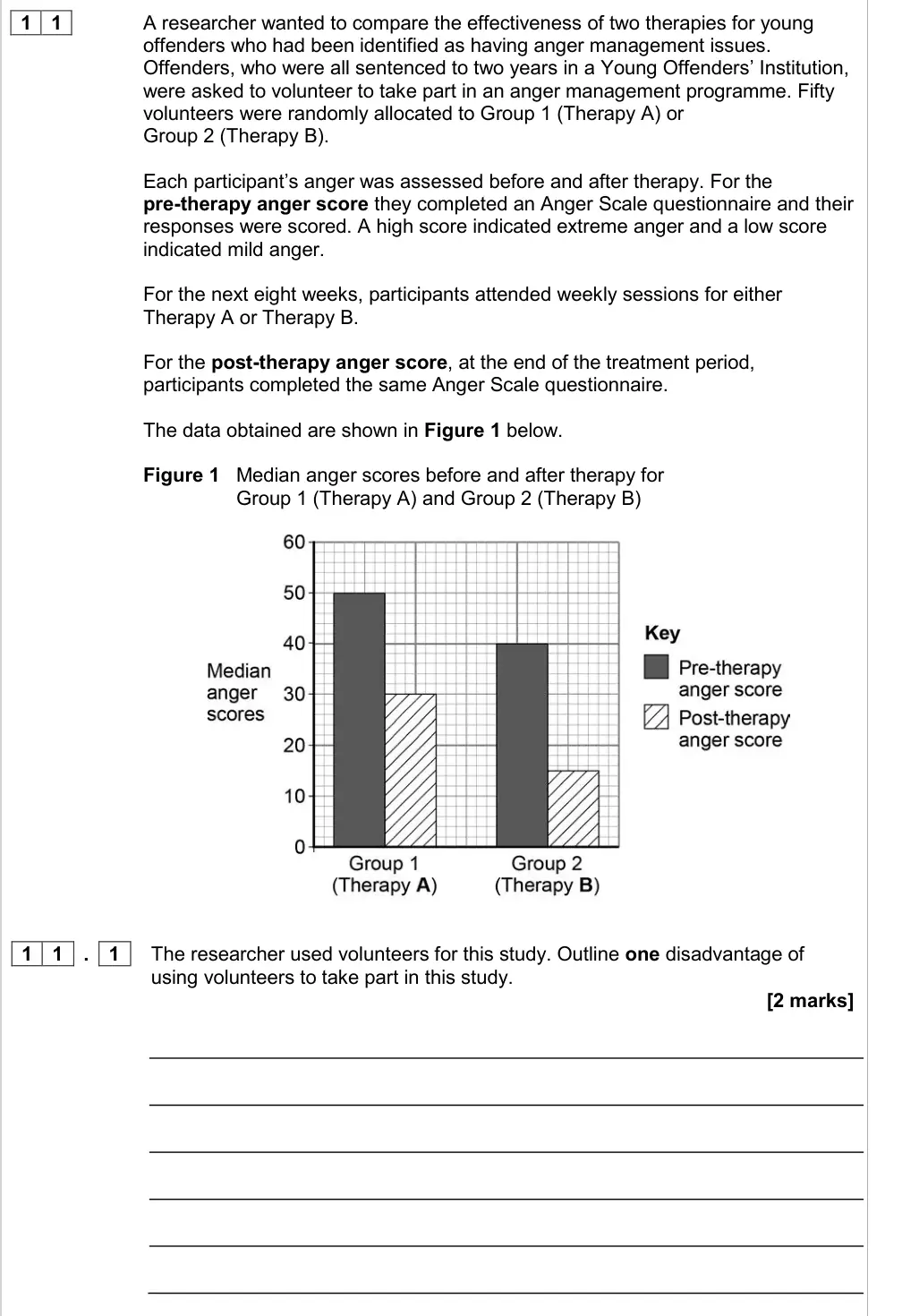
A researcher wanted to compare the effectiveness of two therapies for young
offenders who had been identified as having anger management issues.
Offenders, who were all sentenced to two years in a Young Offenders’ Institution,
were asked to volunteer to take part in an anger management programme. Fifty
volunteers were randomly allocated to Group 1 (Therapy A) or
Group 2 (Therapy B).
Each participant’s anger was assessed before and after therapy. For the
pre-therapy anger score they completed an Anger Scale questionnaire and their
responses were scored. A high score indicated extreme anger and a low score
indicated mild anger.
For the next eight weeks, participants attended weekly sessions for either
Therapy A or Therapy B.
For the post-therapy anger score, at the end of the treatment period,
participants completed the same Anger Scale questionnaire.
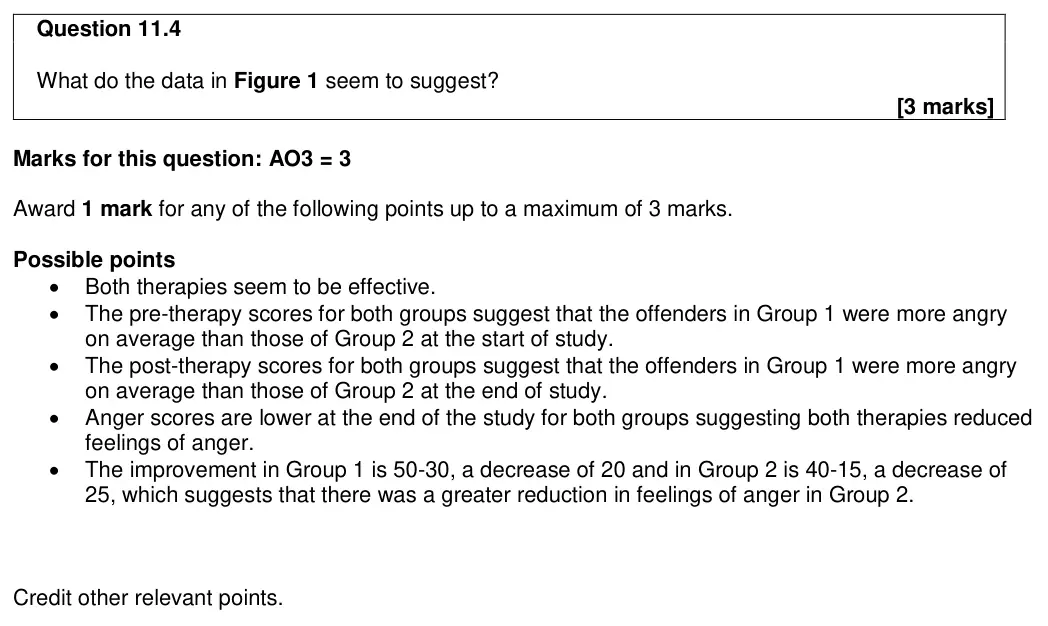
The data obtained are shown in Figure 1 below.
Figure 1   Median anger scores before and after therapy for
Group 1 (Therapy A) and Group 2 (Therapy B)
1 1 . 1
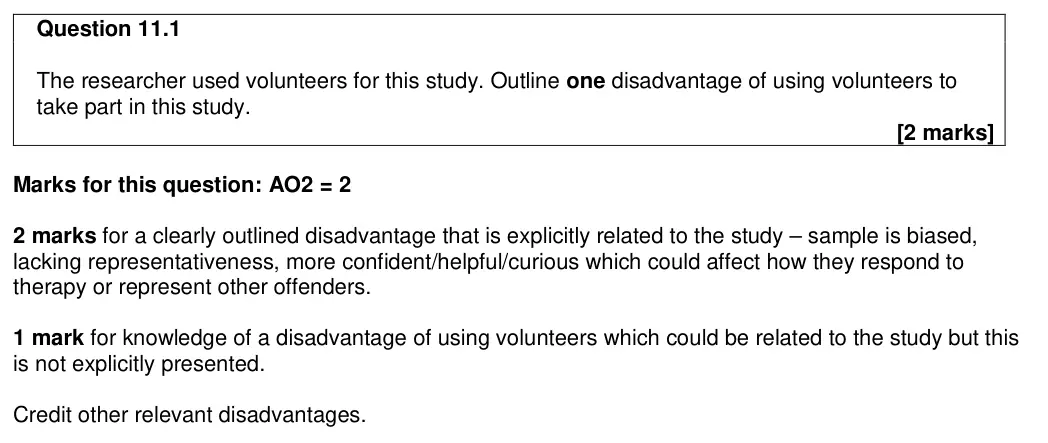
The researcher used volunteers for this study. Outline one disadvantage of
using volunteers to take part in this study.
[2 marks]
June 2016 · AS Paper 2 · Q11.2 3 marks AO2=3 Research methods scientific processes
1 1 . 2
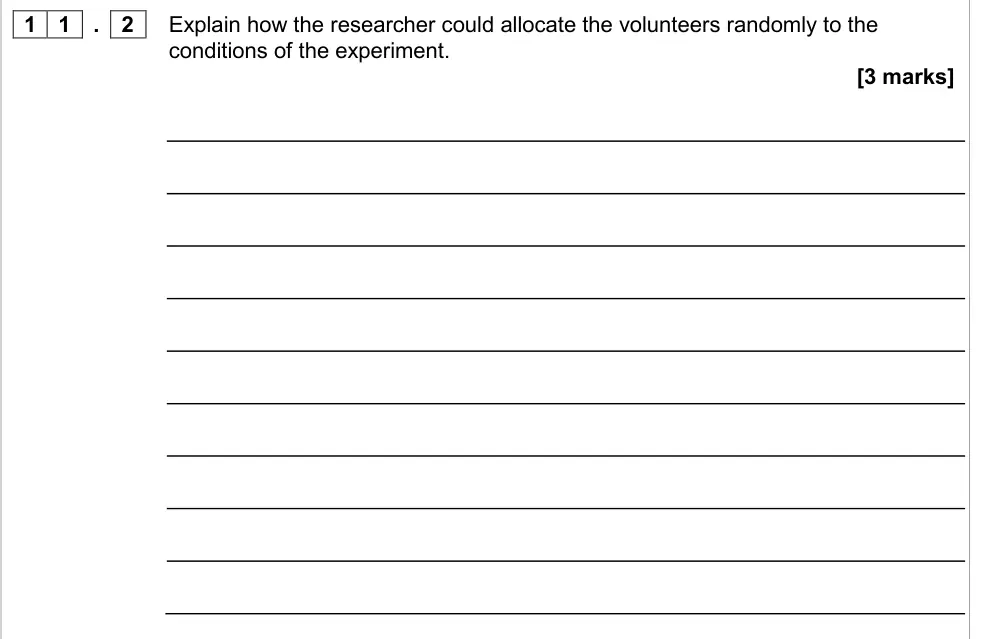
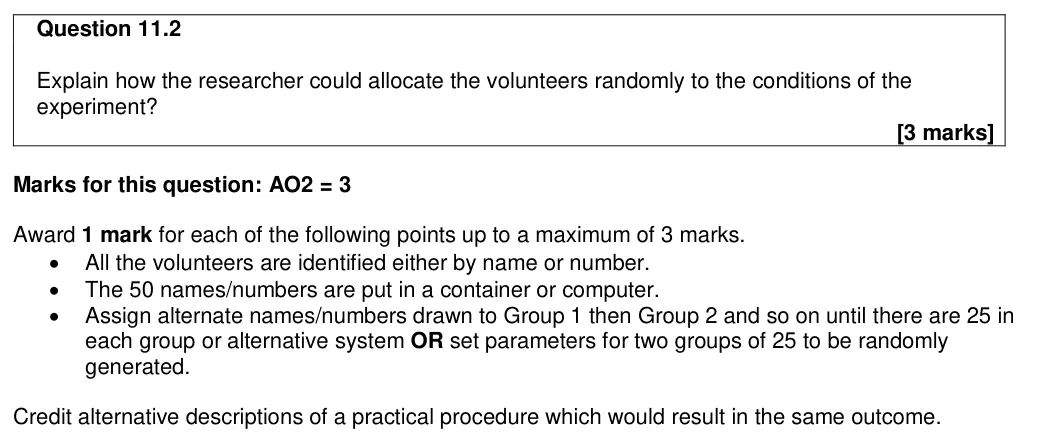
Explain how the researcher could allocate the volunteers randomly to the
conditions of the experiment.
[3 marks]
June 2016 · AS Paper 2 · Q11.3 3 marks AO2=3 Research methods scientific processes
1 1 . 3
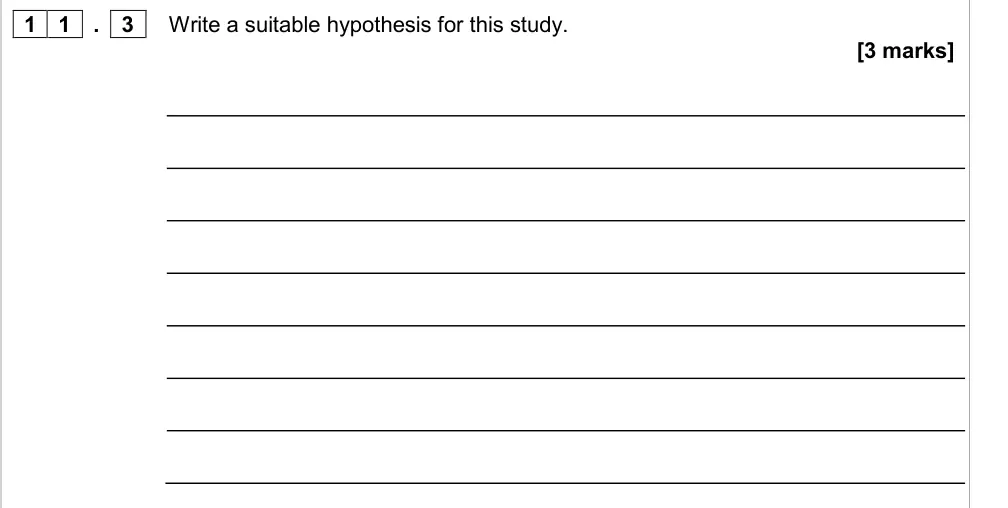
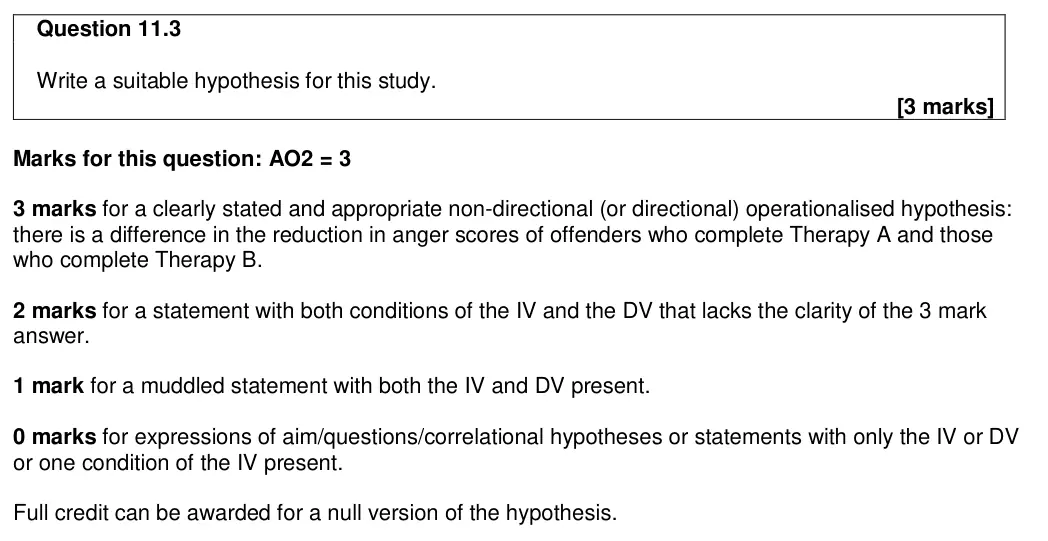
Write a suitable hypothesis for this study.
[3 marks]
June 2016 · AS Paper 2 · Q11.4 3 marks AO3=3 Research methods data handling
1 1 . 4
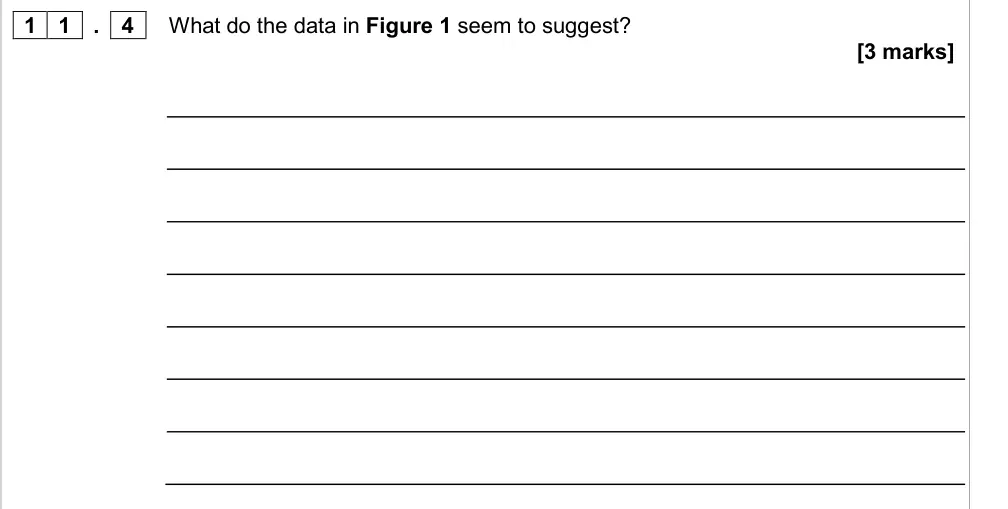
What do the data in Figure 1 seem to suggest?
[3 marks]
June 2016 · AS Paper 2 · Q11.5 4 marks AO3=4 Research methods scientific processes
1 1 . 5
Explain how the study might be improved by using a matched pairs design.
[4 marks]
June 2016 · AS Paper 2 · Q11.6 4 marks AO2=2, AO3=2 Research methods scientific processes
1 1 . 6
Outline one ethical issue that might have occurred in this study and explain how
the researcher could have dealt with this issue.
[4 marks]
June 2016 · AS Paper 2 · Q11.7 1 mark AO2=1 Research methods data handling
1 1 . 7
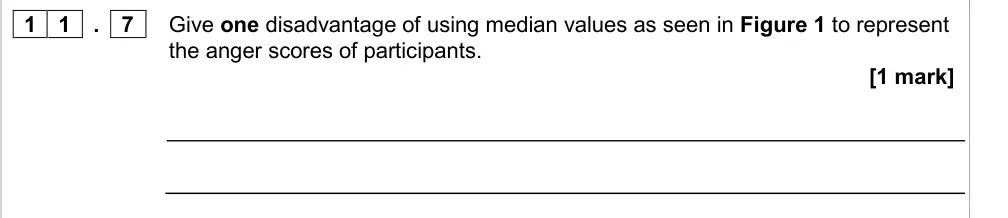
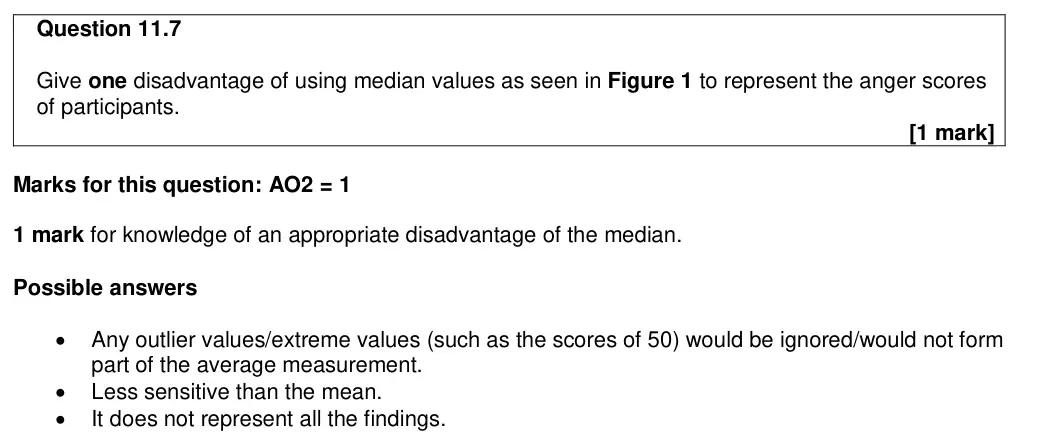
Give one disadvantage of using median values as seen in Figure 1 to represent
the anger scores of participants.
[1 mark]
June 2016 · AS Paper 2 · Q11.8 2 marks AO2=2 Research methods scientific processes
1 1 . 8
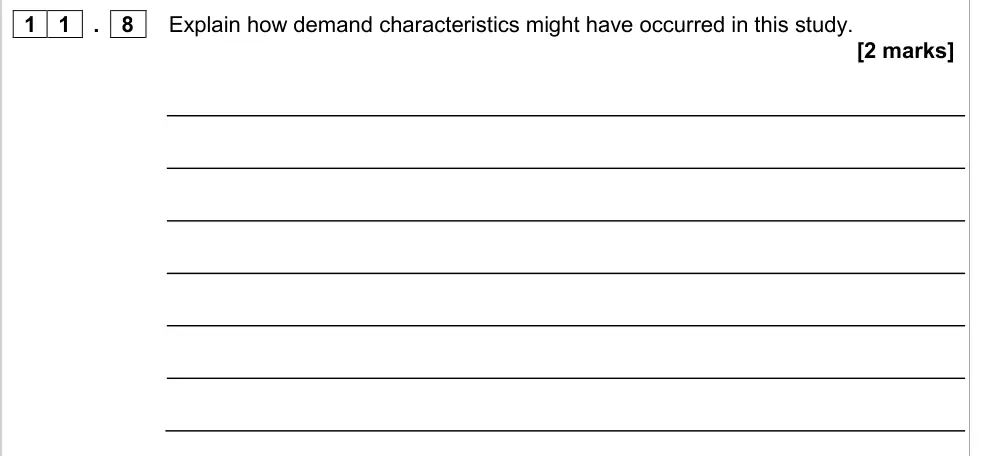
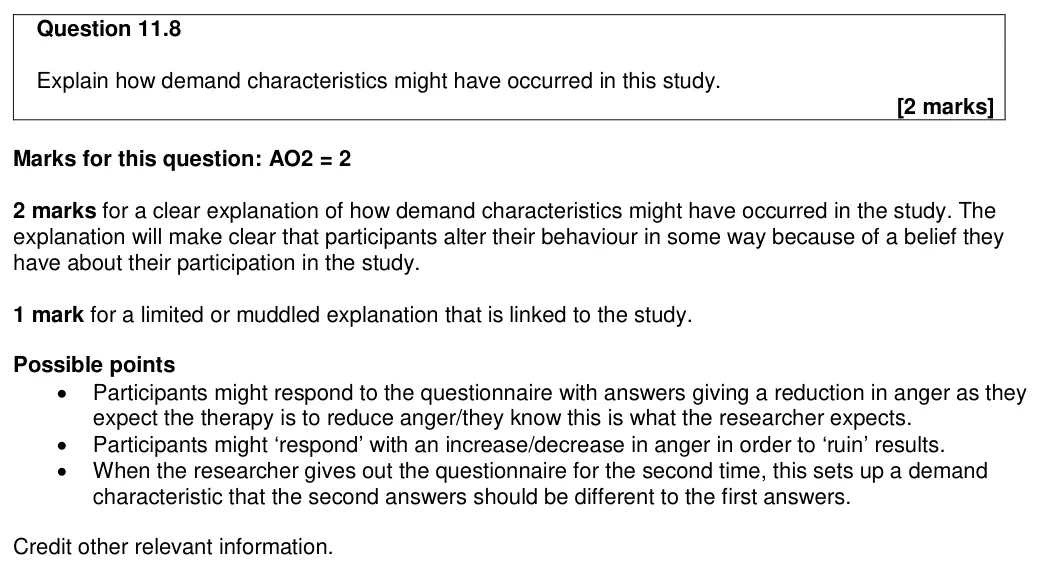
Explain how demand characteristics might have occurred in this study.
[2 marks]
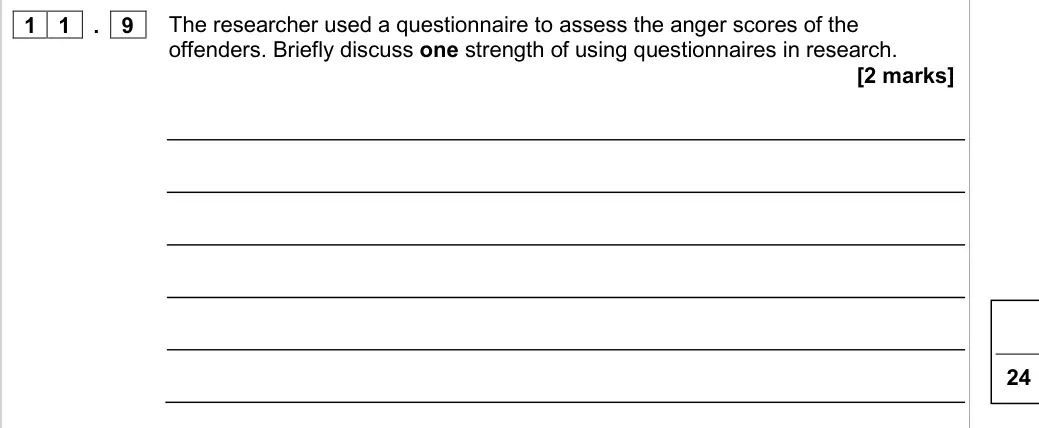
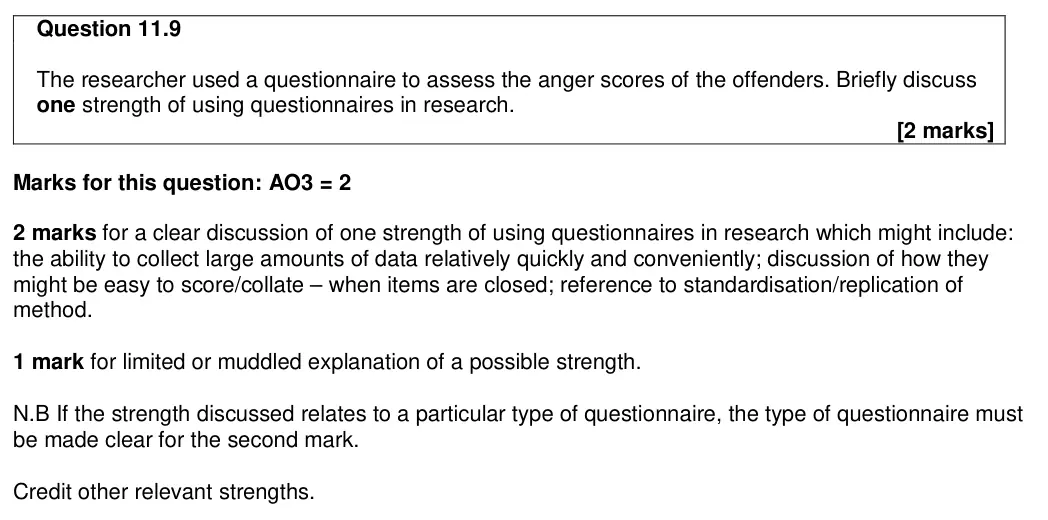
June 2016 · AS Paper 2 · Q11.9 2 marks AO3=2 Research methods research methods
1 1 . 9
The researcher used a questionnaire to assess the anger scores of the
offenders. Briefly discuss one strength of using questionnaires in research.
[2 marks]
24

Work with an AQA psychology tutor

Want a paper marked and gone through with you? Message us.

Prefer email? Send an enquiry

If you are under 18, please include a parent's contact details. Enquiries go to enquiries@alevelpsychologytutor.com and are deleted once handled. All tutoring is online.