Specimen set 1 · AS Paper 1 · Q12 marksAO1=2Multiple choiceOld spec onlysocial influence
Answer
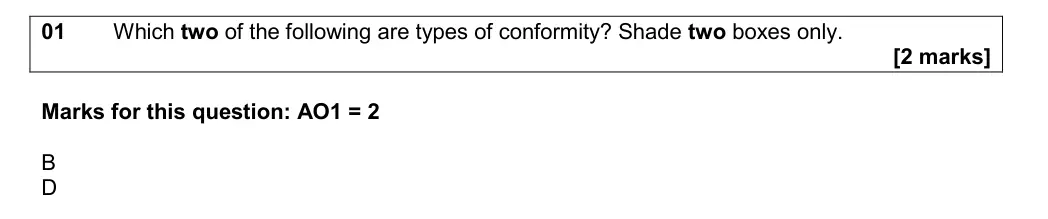
B and D
Mark scheme, including level descriptors and indicative content
Notes from the mark scheme and report
(correct answer D 'identification' as a type of conformity was removed in v1.4
B compliance still current)
distractors agentic state (obedience), group size and unanimity (variables affecting conformity)
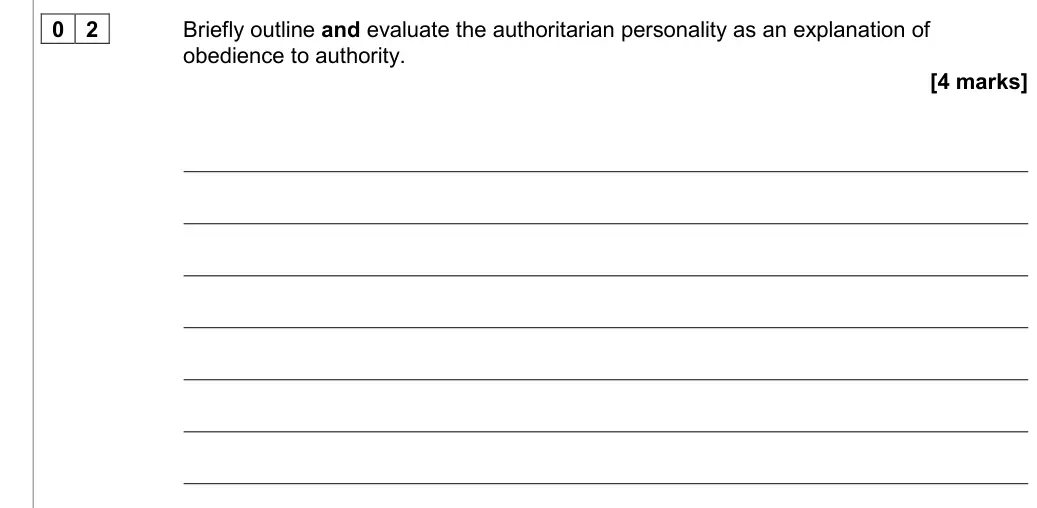
Specimen set 1 · AS Paper 1 · Q24 marksAO1=2, AO3=2Evaluate (short)social influence
Mark scheme, including level descriptors and indicative content
Notes from the mark scheme and report
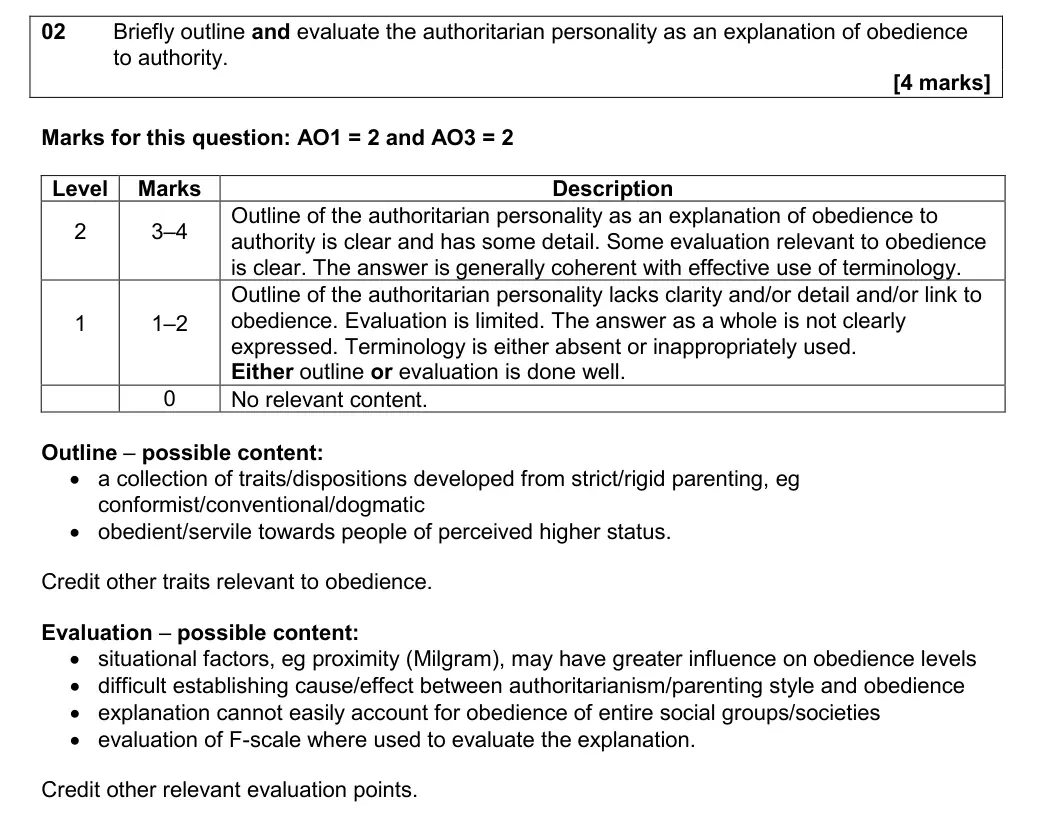
outline must link authoritarian personality traits to obedience
evaluation e.g. situational factors (Milgram proximity), cause/effect problems, cannot explain obedience of whole societies, F-scale
either outline or evaluation done well = max Level 1
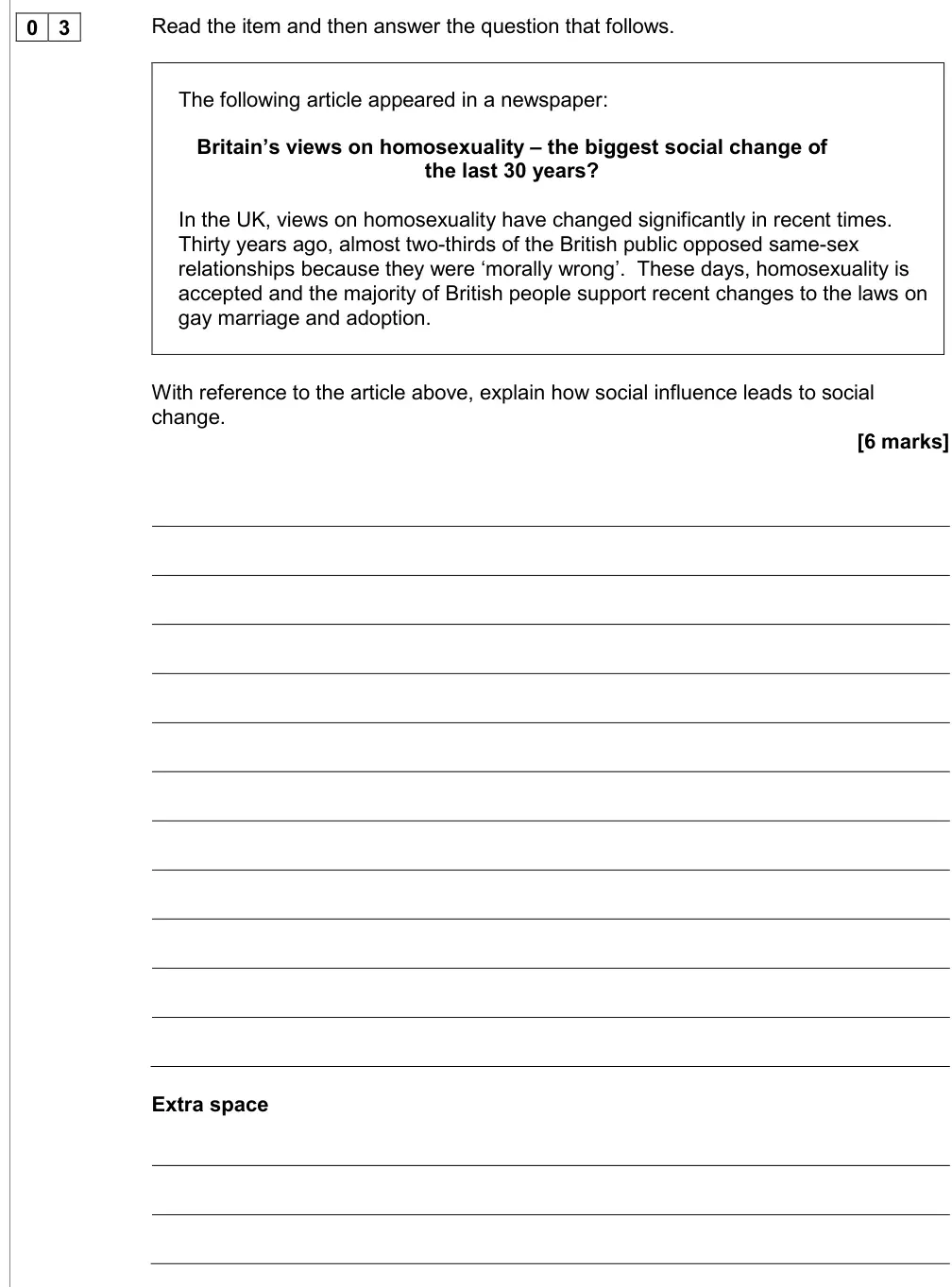
Specimen set 1 · AS Paper 1 · Q36 marksAO2=6ApplicationOld spec onlysocial influence
Not on the 2025 specification: role of social influence processes in social change, removed in v1.4
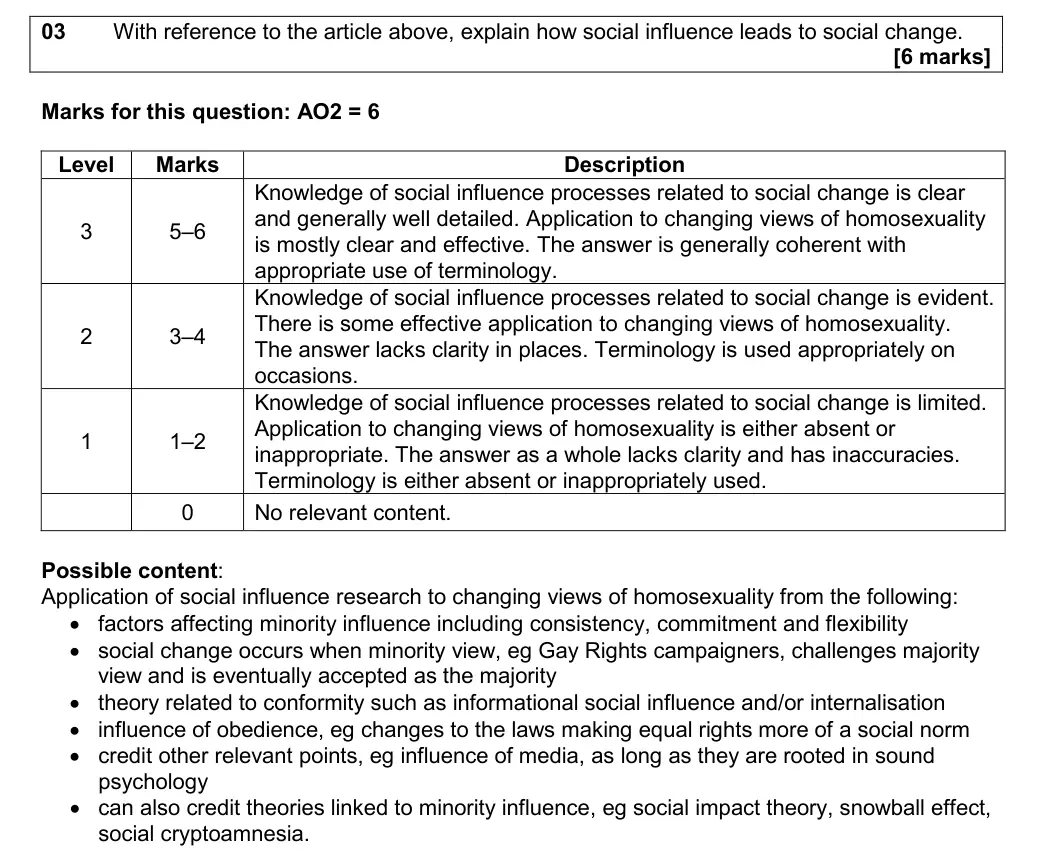
Mark scheme, including level descriptors and indicative content
Notes from the mark scheme and report
Off-spec: role of social influence processes in social change, removed in v1.4
MS credits minority influence (consistency, commitment, flexibility), ISI/internalisation, snowball effect, social cryptomnesia applied to changing views on homosexuality
all marks AO2 so application to the article is essential
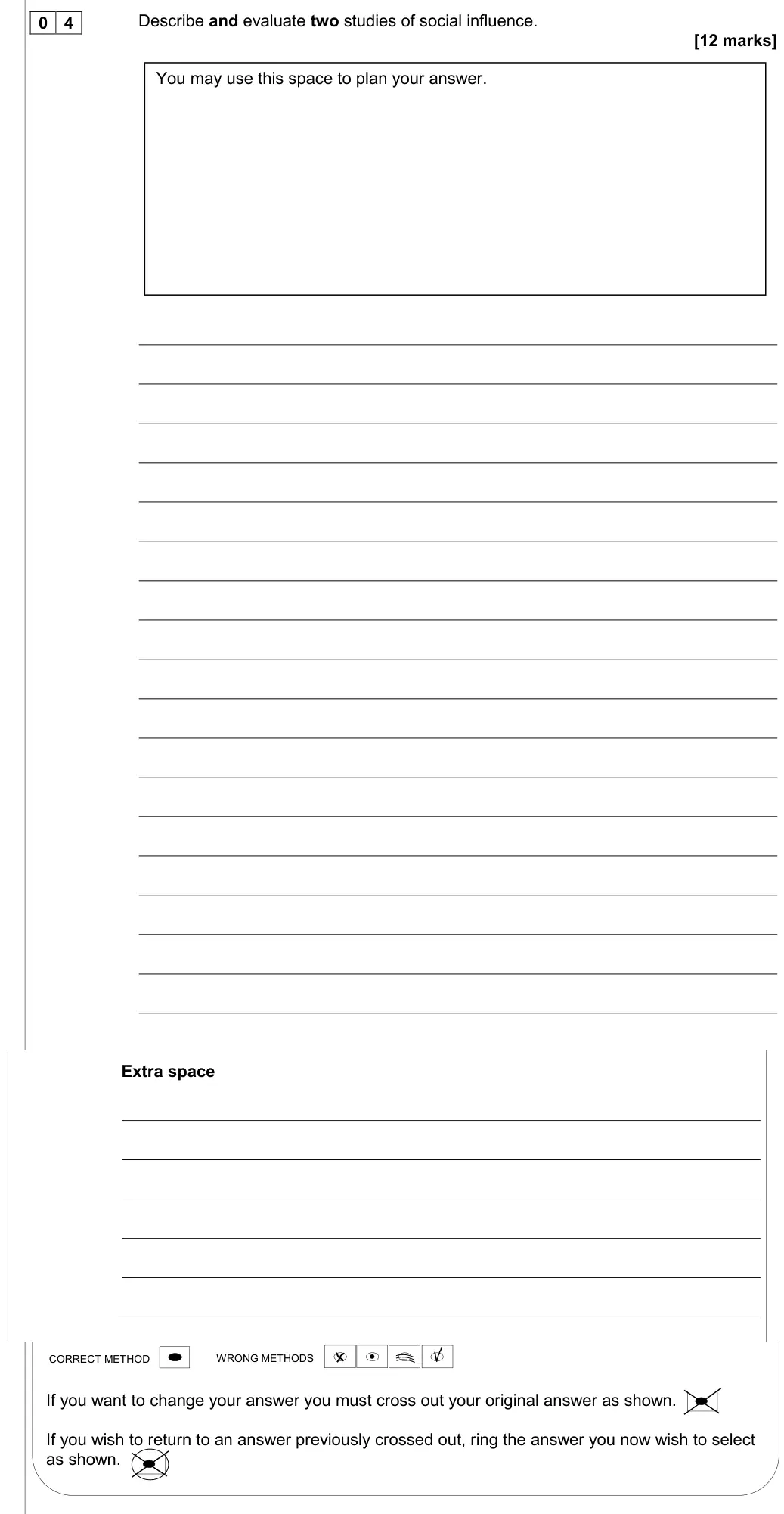
Specimen set 1 · AS Paper 1 · Q412 marksAO1=6, AO3=6Extended writingsocial influence
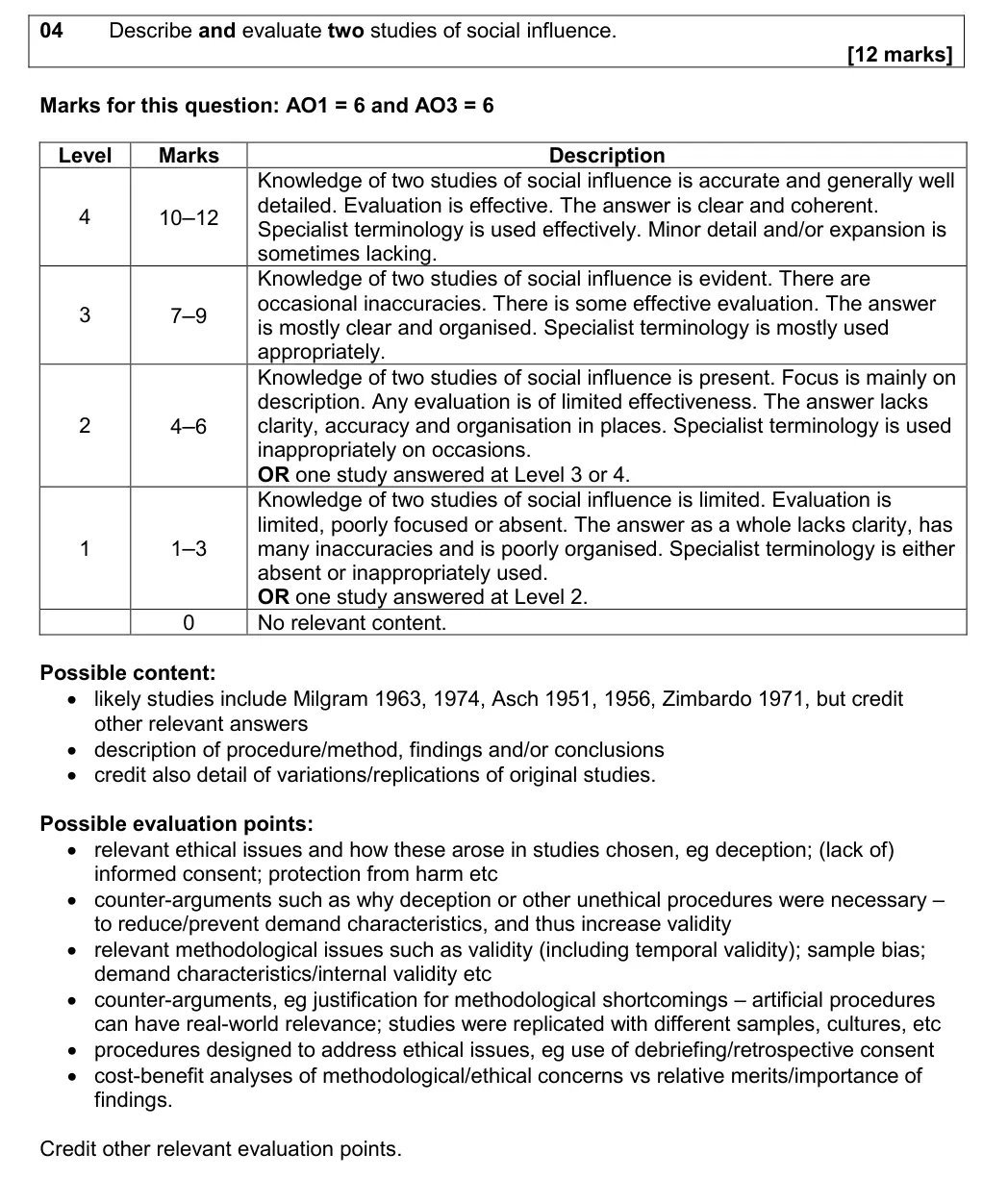
Mark scheme, including level descriptors and indicative content
Notes from the mark scheme and report
two studies needed
one study only = max Level 2 (if Level 3/4 quality)
likely Milgram and Asch
MS also credits Zimbardo (conformity to social roles, removed in v1.4)
evaluation via ethical and methodological issues of the chosen studies
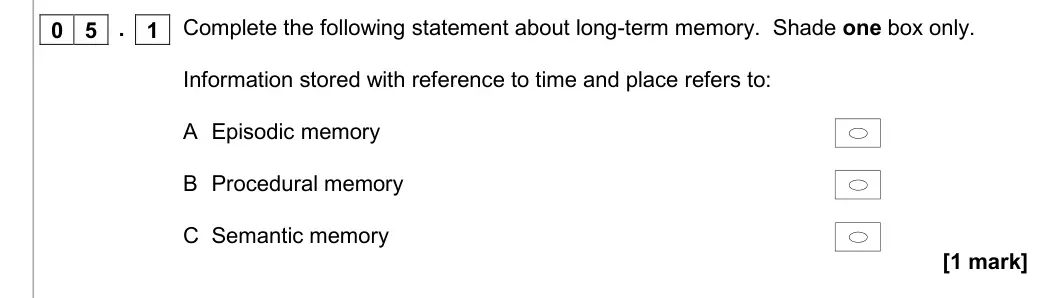
Specimen set 1 · AS Paper 1 · Q5.11 markAO1=1Multiple choiceOld spec onlymemory
Not on the 2025 specification: types of LTM - episodic memory - removed in v1.4
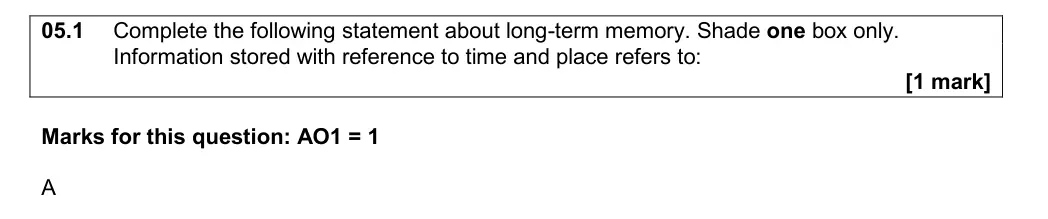
Answer
A
Mark scheme, including level descriptors and indicative content
Notes from the mark scheme and report
Off-spec: types of LTM - episodic memory - removed in v1.4
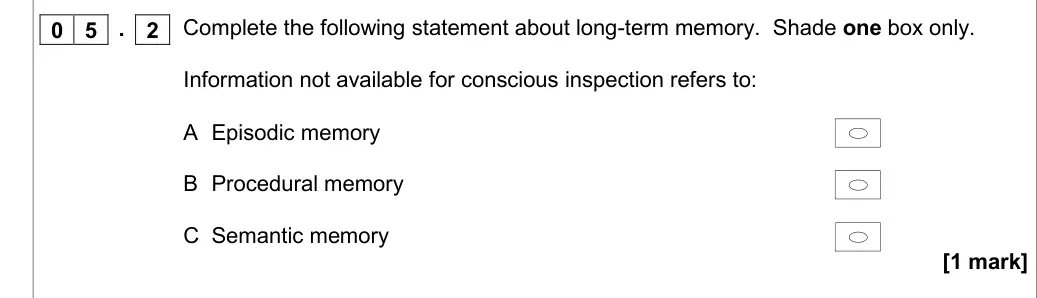
Specimen set 1 · AS Paper 1 · Q5.21 markAO1=1Multiple choiceOld spec onlymemory
Not on the 2025 specification: types of LTM - procedural memory - removed in v1.4
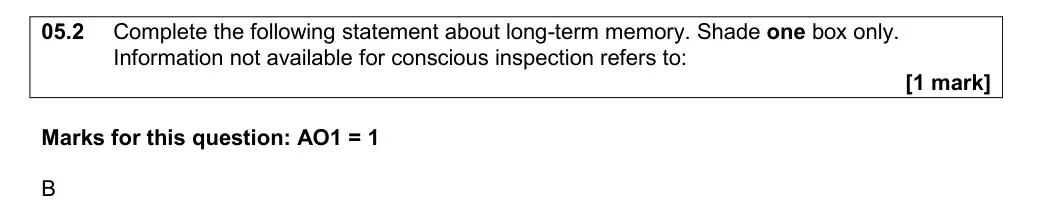
Answer
B
Mark scheme, including level descriptors and indicative content
Notes from the mark scheme and report
Off-spec: types of LTM - procedural memory - removed in v1.4
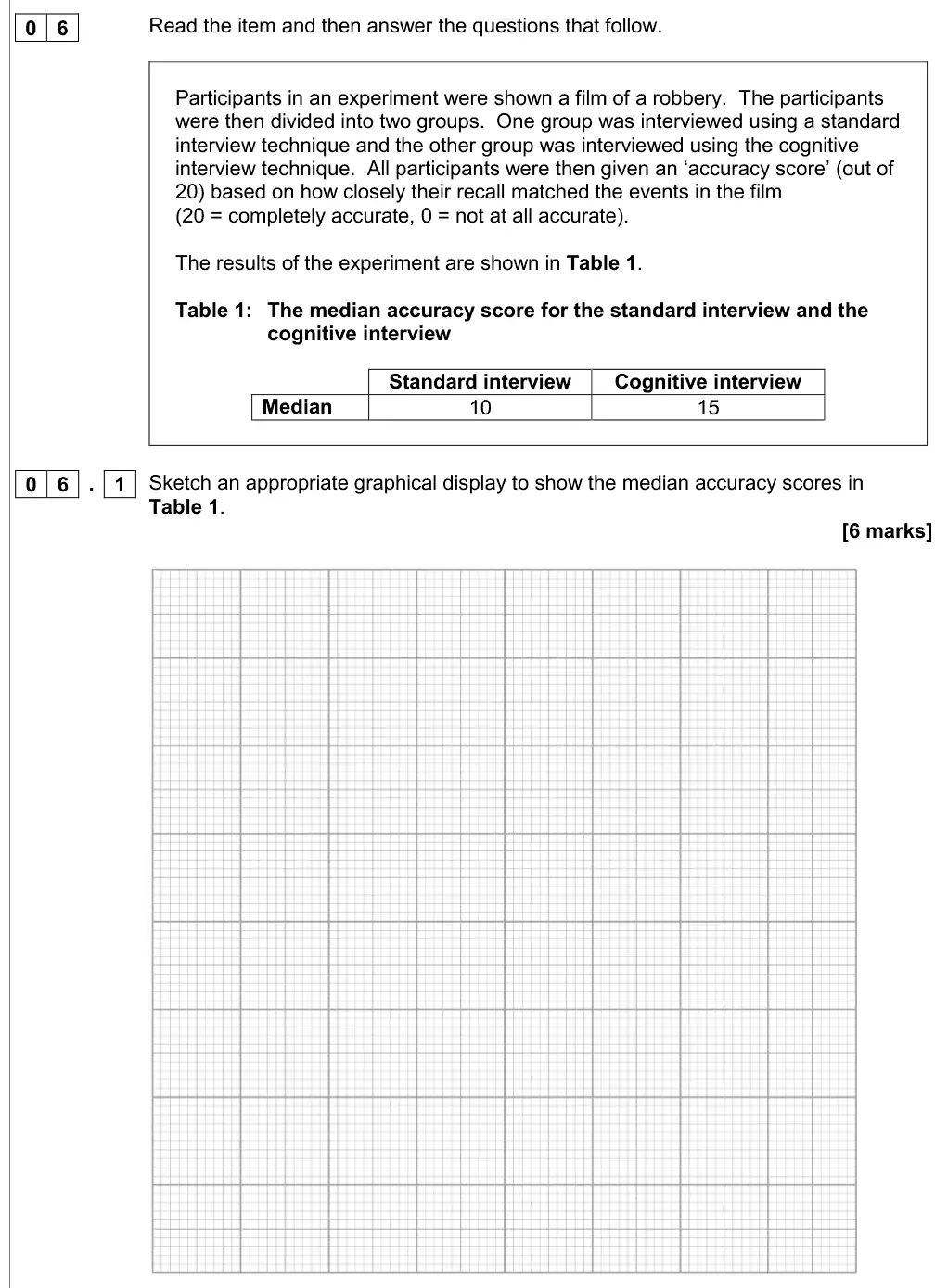
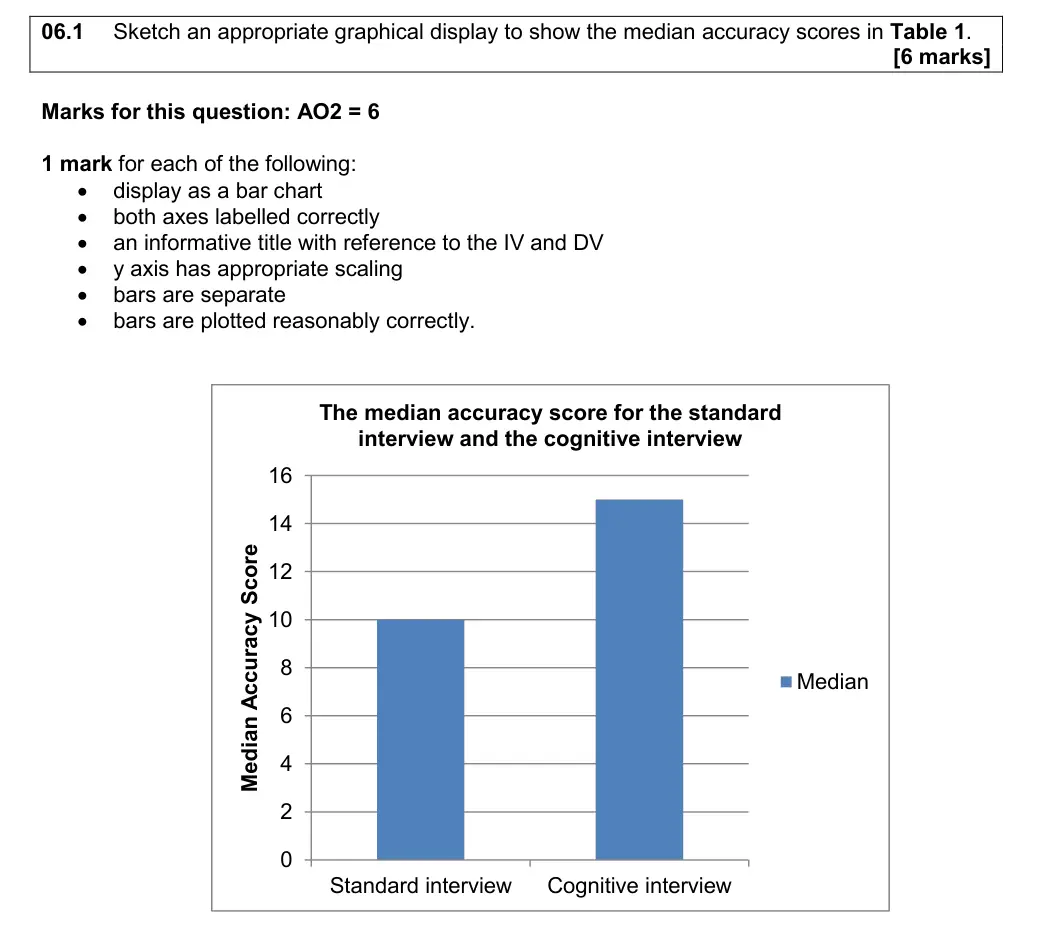
Specimen set 1 · AS Paper 1 · Q6.16 marksAO2=6Research methodsdata handling
Mark scheme, including level descriptors and indicative content
Notes from the mark scheme and report
1 mark each: bar chart, both axes labelled, informative title with IV and DV, appropriate y-axis scale, bars separate, bars plotted correctly
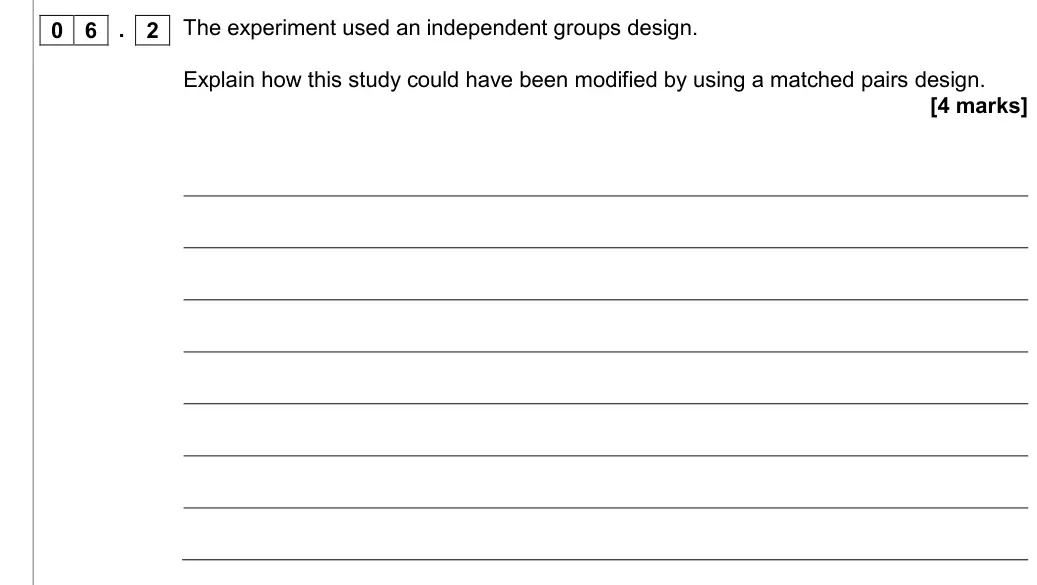
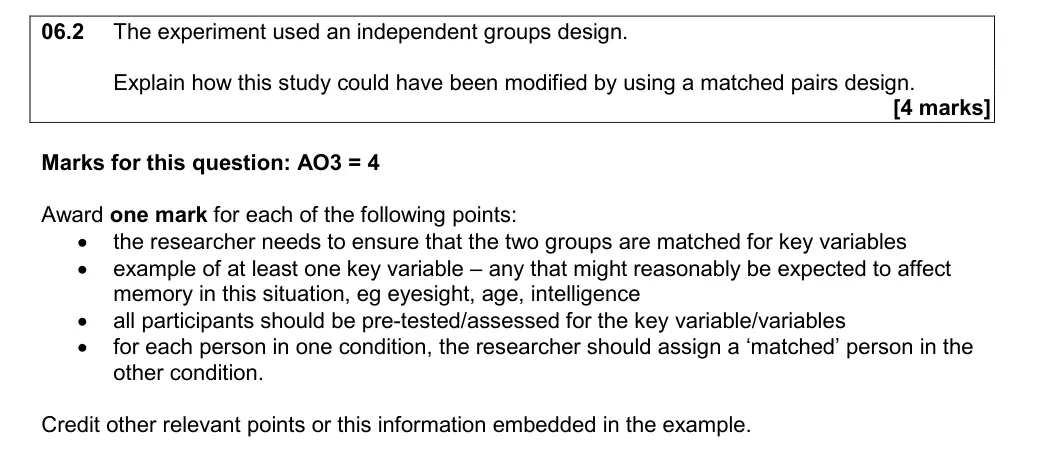
Specimen set 1 · AS Paper 1 · Q6.24 marksAO3=4Research methodsscientific processes
Mark scheme, including level descriptors and indicative content
Notes from the mark scheme and report
match on key variables relevant to memory (e.g. eyesight, age, intelligence)
pre-test participants
assign matched partner to other condition
must be applied to this EWT study
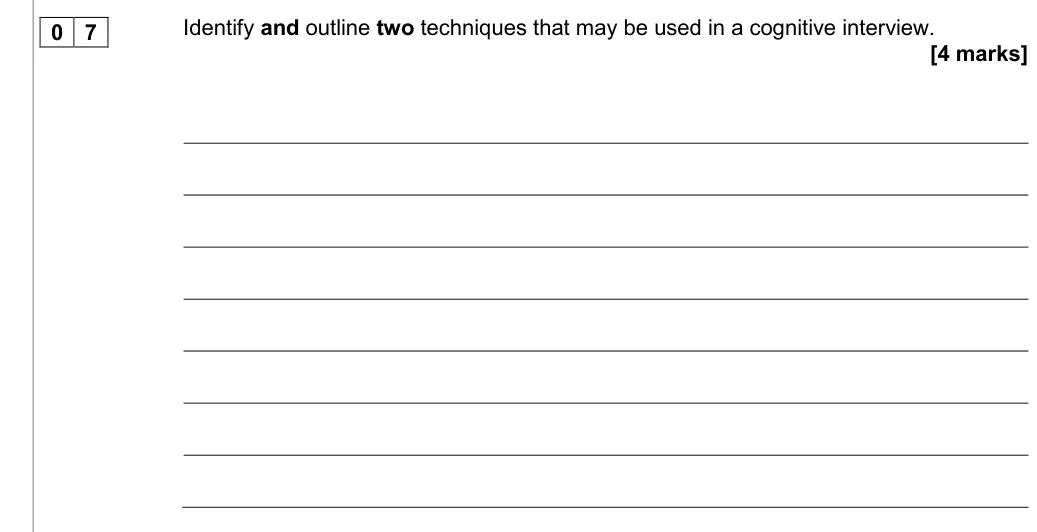
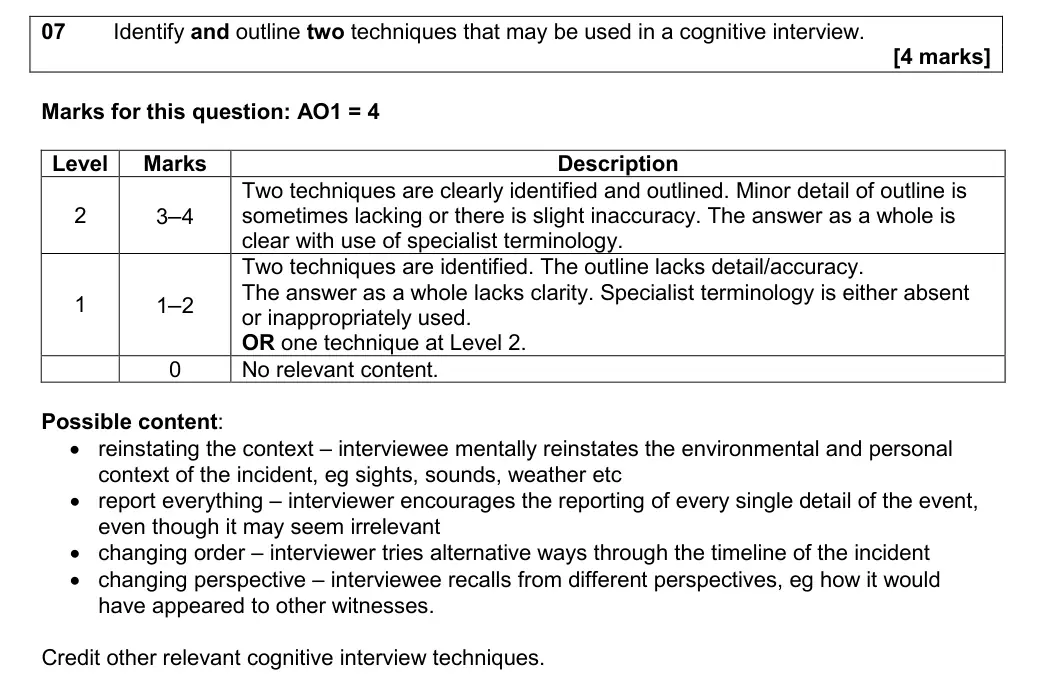
Specimen set 1 · AS Paper 1 · Q74 marksAO1=4Outlinememory
Mark scheme, including level descriptors and indicative content
Notes from the mark scheme and report
two techniques identified and outlined (context reinstatement, report everything, change order, change perspective)
one technique only = max 2
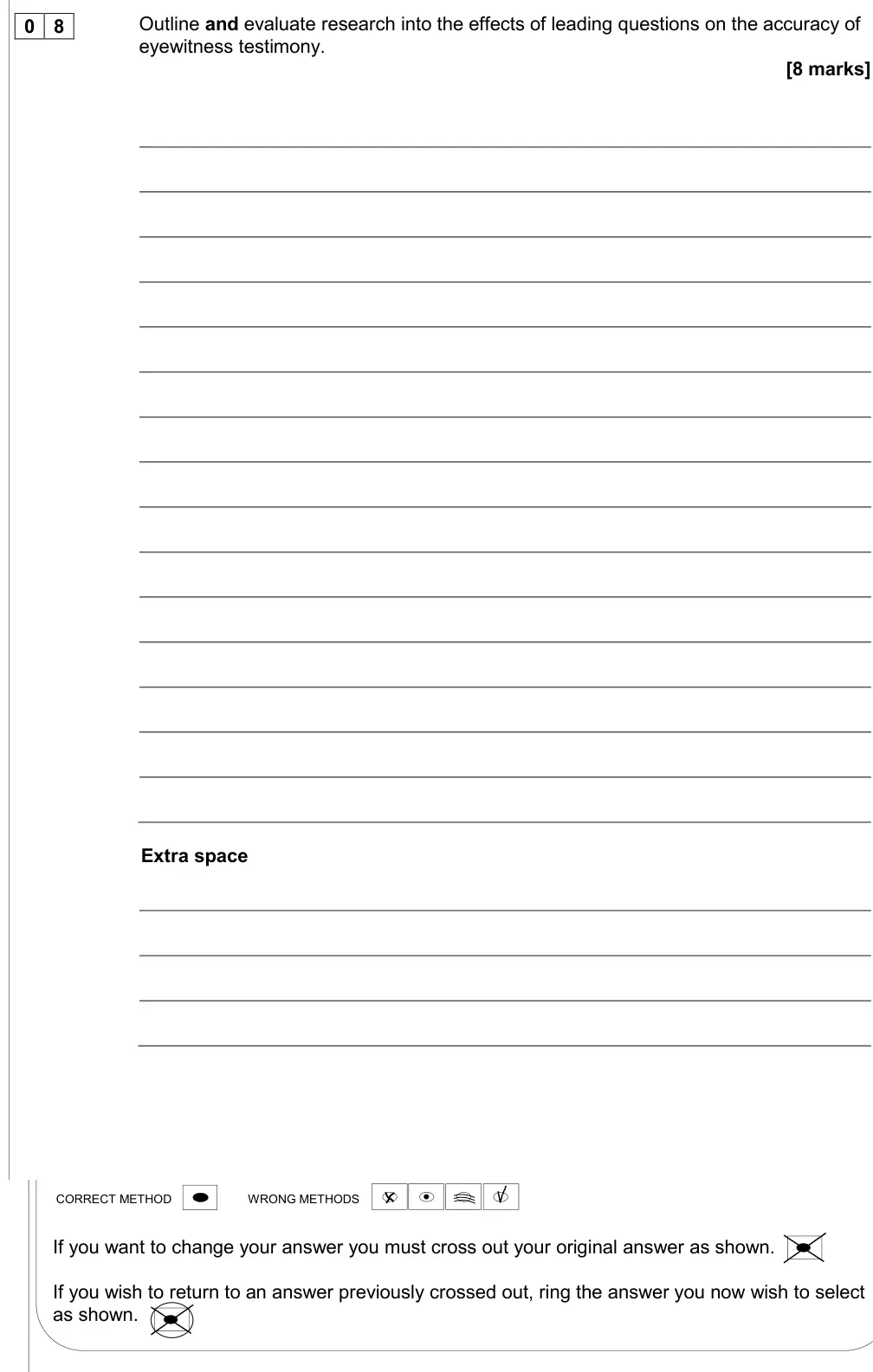
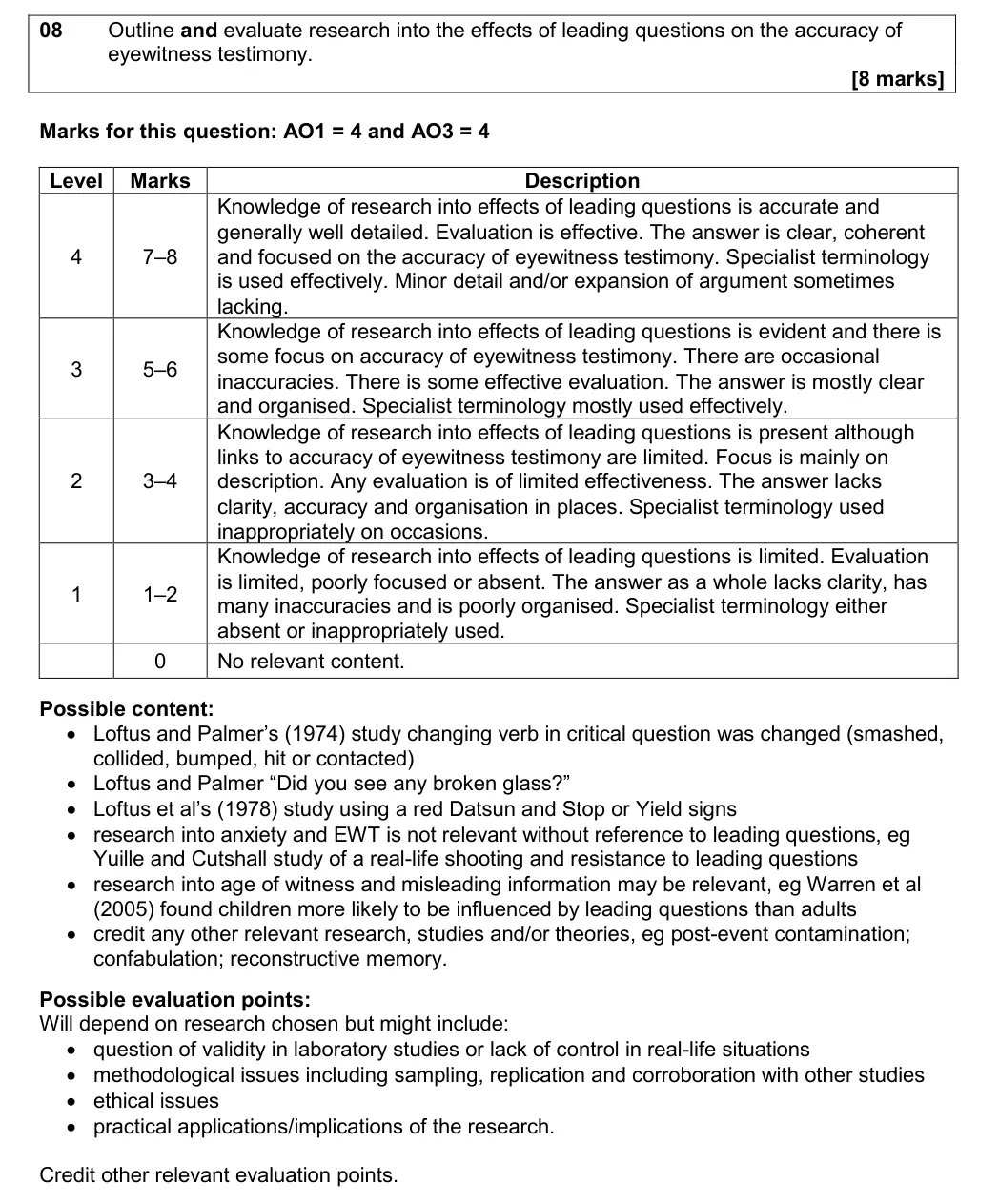
Specimen set 1 · AS Paper 1 · Q88 marksAO1=4, AO3=4Extended writingmemory
Mark scheme, including level descriptors and indicative content
Notes from the mark scheme and report
anxiety research (e.g. Yuille and Cutshall) only creditworthy if linked to leading questions
Loftus and Palmer most likely
MS also credits post-event contamination/misleading information - leading questions remain current although 'misleading information' heading removed in v1.4
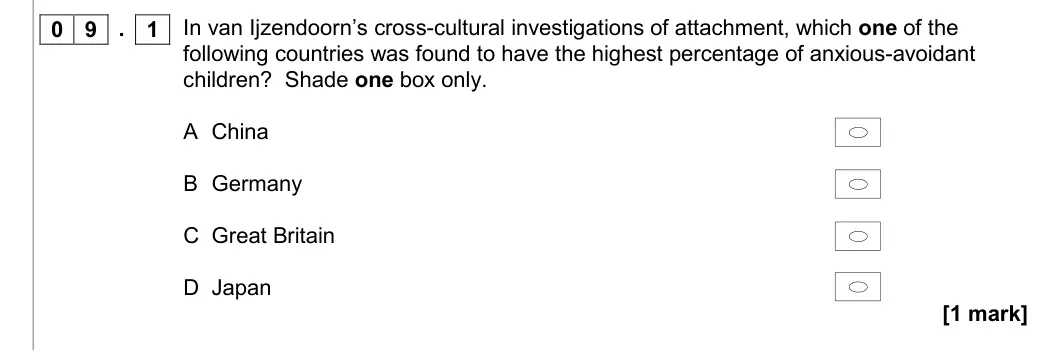
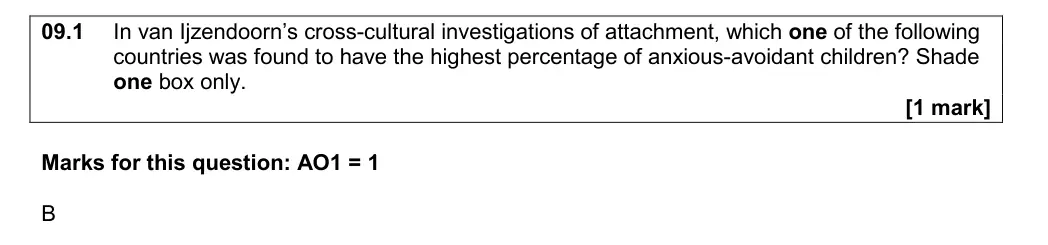
Specimen set 1 · AS Paper 1 · Q9.11 markAO1=1Multiple choiceattachment
Answer
B
Mark scheme, including level descriptors and indicative content
Notes from the mark scheme and report
correct answer B Germany
anxious-avoidant = insecure-avoidant
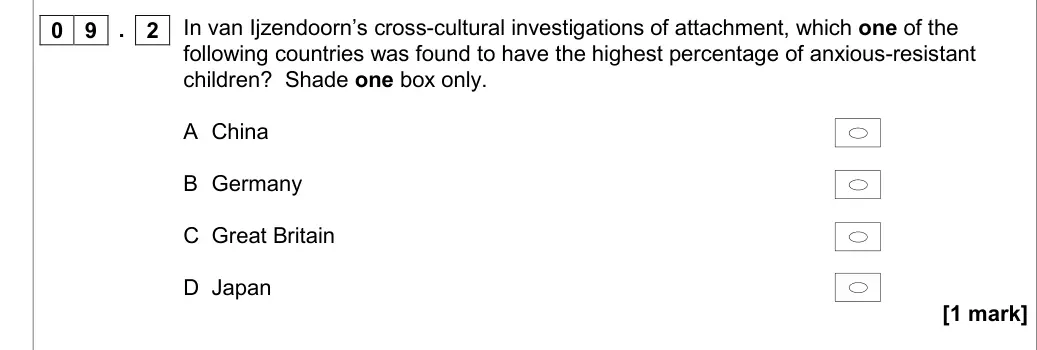
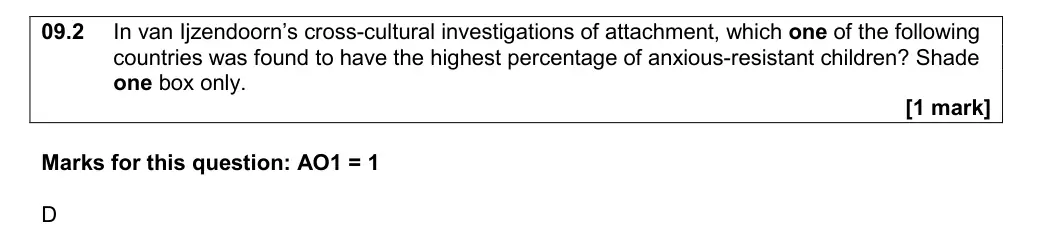
Specimen set 1 · AS Paper 1 · Q9.21 markAO1=1Multiple choiceattachment
Answer
D
Mark scheme, including level descriptors and indicative content
Notes from the mark scheme and report
correct answer D Japan
anxious-resistant = insecure-resistant
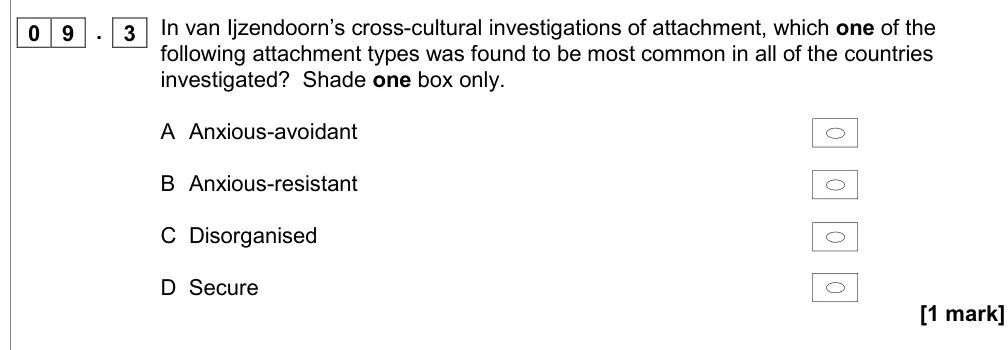
Specimen set 1 · AS Paper 1 · Q9.31 markAO1=1Multiple choiceattachment
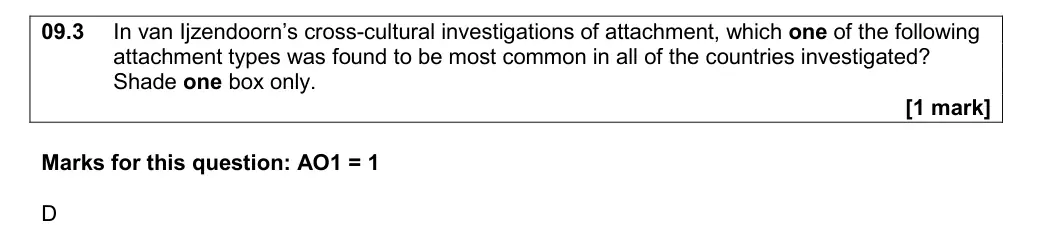
Answer
D
Mark scheme, including level descriptors and indicative content
Notes from the mark scheme and report
correct answer D secure
distractor 'disorganised' is not a spec attachment type
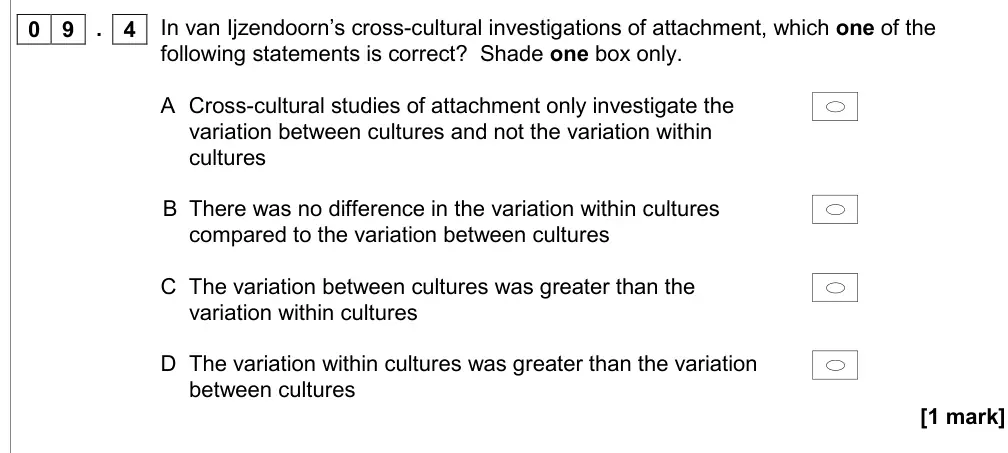
Specimen set 1 · AS Paper 1 · Q9.41 markAO1=1Multiple choiceattachment
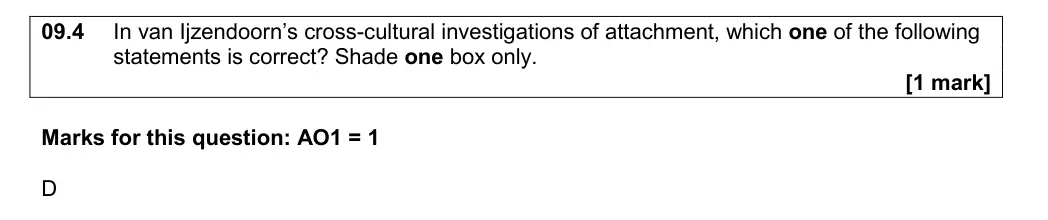
Answer
D
Mark scheme, including level descriptors and indicative content
Notes from the mark scheme and report
correct answer D: variation within cultures greater than between (van Ijzendoorn and Kroonenberg)
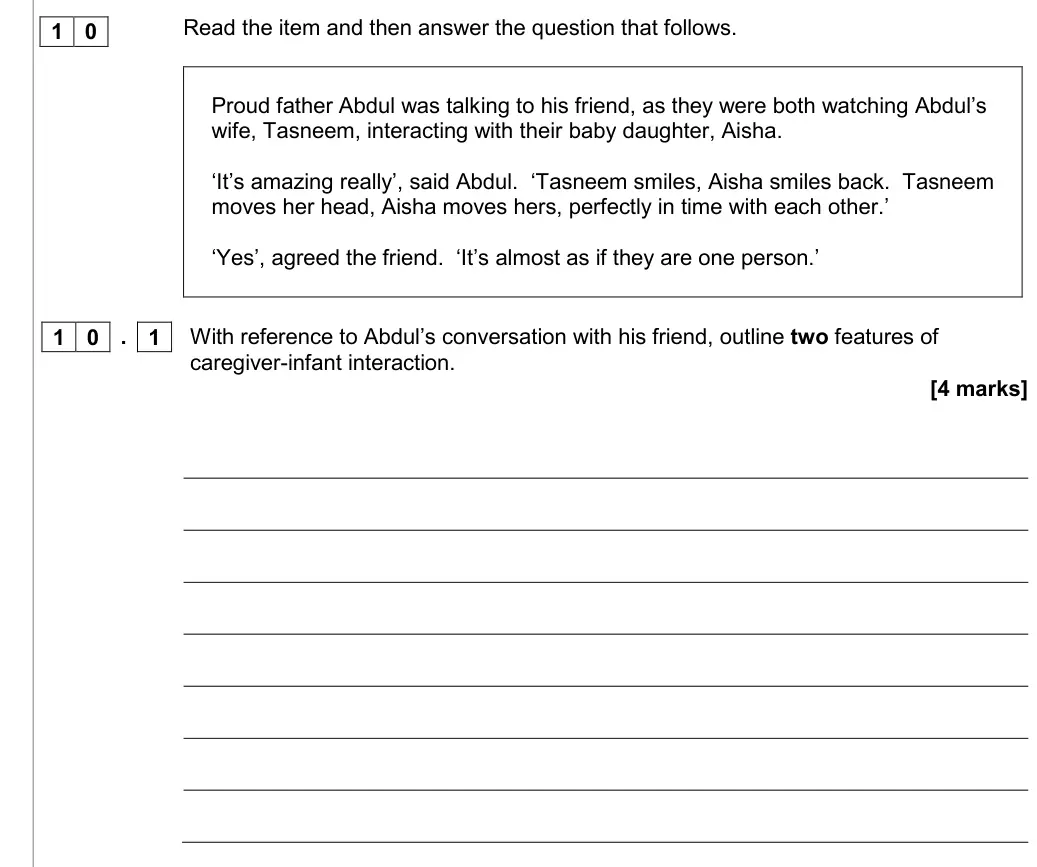
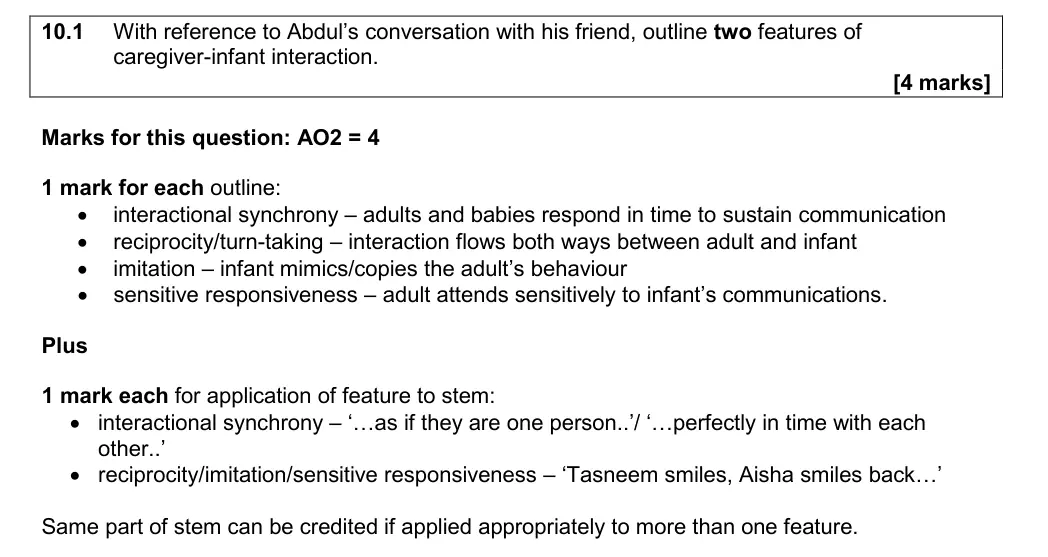
Specimen set 1 · AS Paper 1 · Q10.14 marksAO2=4ApplicationOld spec only
Not on the 2025 specification: caregiver-infant interactions: interactional synchrony, reciprocity - removed in v1.4
Mark scheme, including level descriptors and indicative content
Notes from the mark scheme and report
Off-spec: caregiver-infant interactions: interactional synchrony, reciprocity - removed in v1.4
1 mark per feature outline + 1 mark per application to the conversation
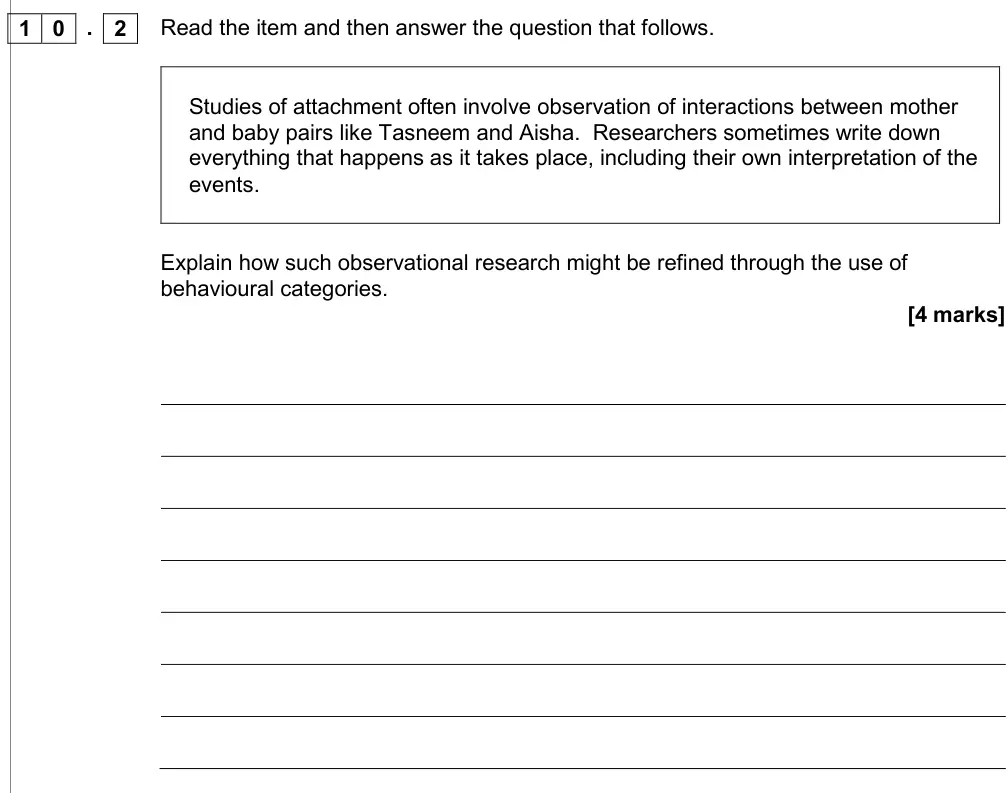
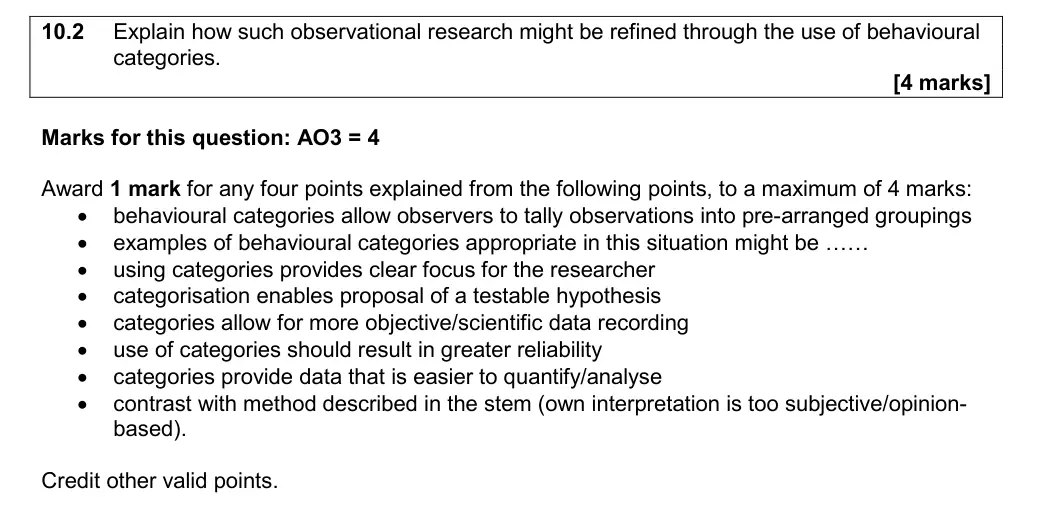
Specimen set 1 · AS Paper 1 · Q10.24 marksAO3=4Research methodsscientific processes
Mark scheme, including level descriptors and indicative content
Notes from the mark scheme and report
tallying into pre-arranged categories, example categories for mother-infant observation, objectivity, reliability, easier to quantify
contrast with subjective note-taking described in stem
stem set in caregiver-infant observation (removed in v1.4)
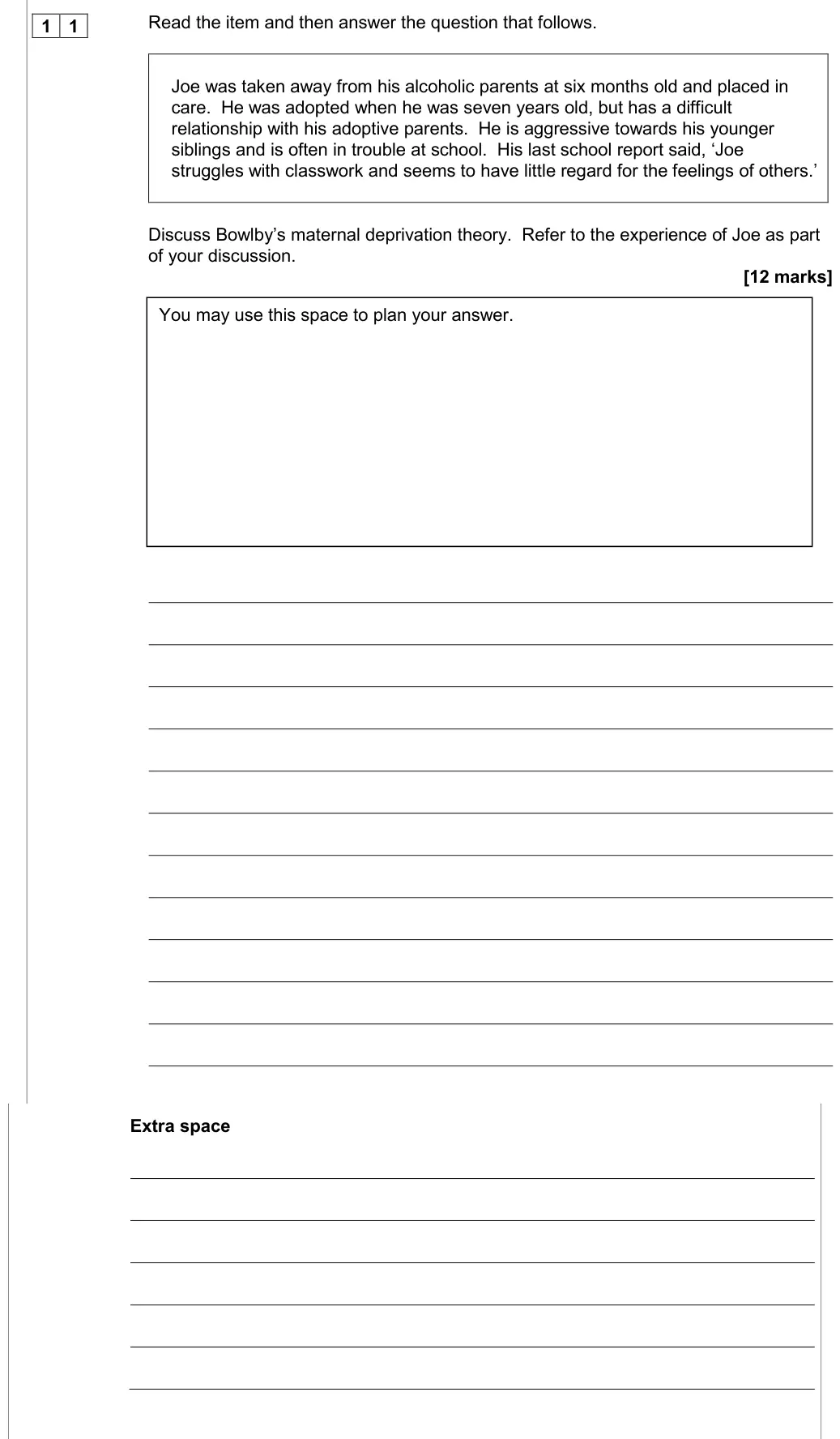
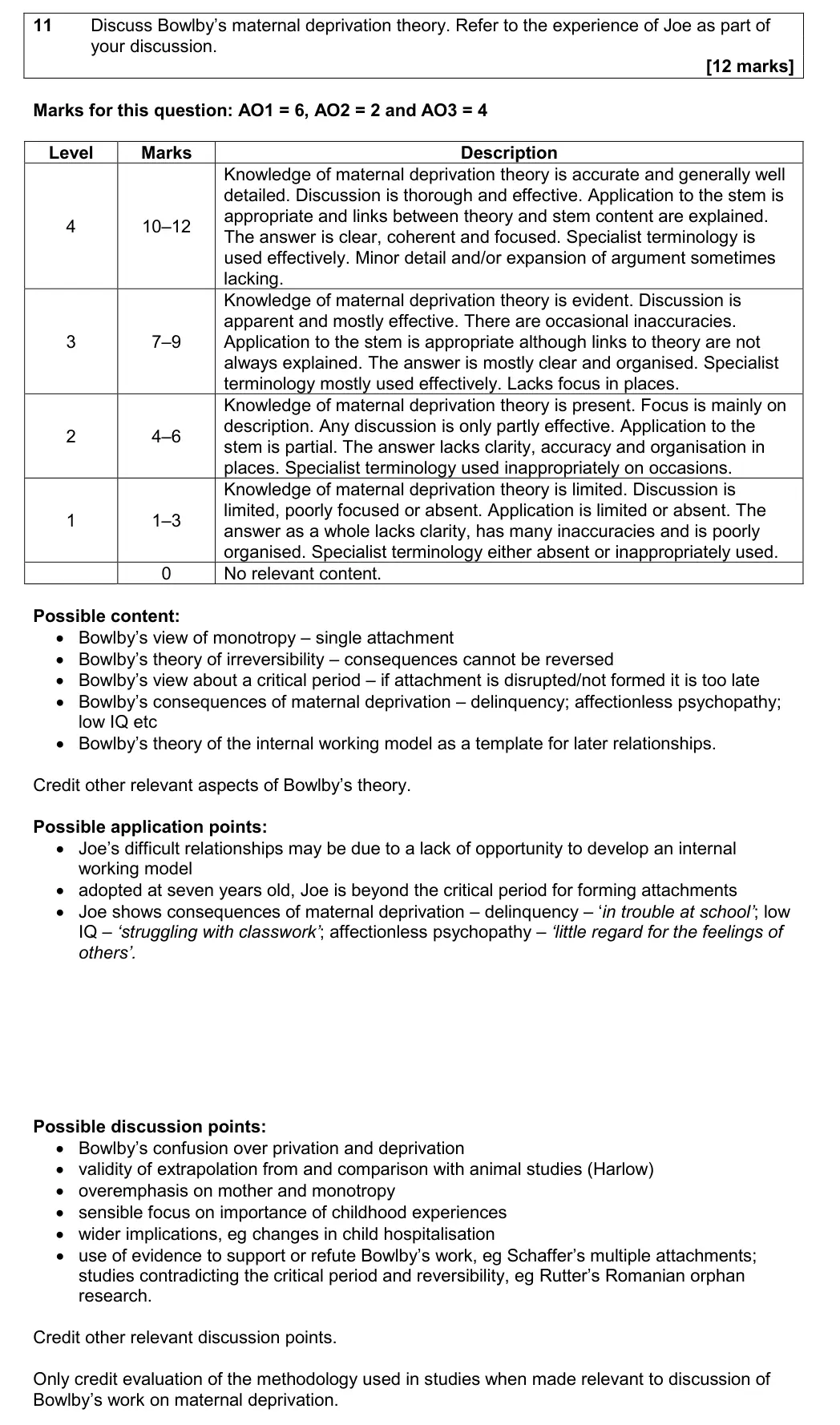
Specimen set 1 · AS Paper 1 · Q1112 marksAO1=6, AO2=2, AO3=4Extended writingattachment
Mark scheme, including level descriptors and indicative content
Notes from the mark scheme and report
AO2: apply to Joe (adopted at 7 = beyond critical period, delinquency, low IQ, affectionless psychopathy, internal working model)
methodological evaluation only creditworthy if linked to maternal deprivation
MS also credits Schaffer's multiple attachments as counter-evidence (removed in v1.4)
Romanian orphan research = ERA project
Work with an AQA psychology tutor
Want a paper marked and gone through with you? Message us.